EconlibThe LibraryOther Sites |
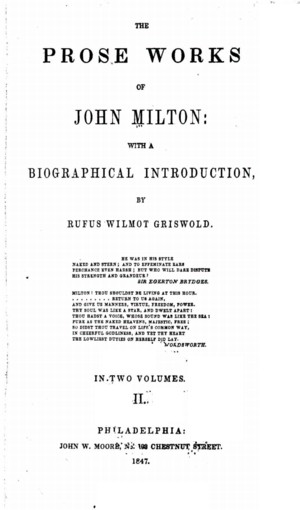
Front Page Titles (by Subject) LETTERS WRITTEN IN THE NAME OF OLIVER THE PROTECTOR. - The Prose Works of John Milton, vol. 2
Return to Title Page for The Prose Works of John Milton, vol. 2The Online Library of LibertyA project of Liberty Fund, Inc.Search this Title:Also in the Library:
LETTERS WRITTEN IN THE NAME OF OLIVER THE PROTECTOR. - John Milton, The Prose Works of John Milton, vol. 2 [1847]Edition used:The Prose Works of John Milton, With a Biographical Introduction by Rufus Wilmot Griswold. In Two Volumes (Philadelphia: John W. Moore, 1847). Vol. 2.
Part of: The Prose Works of John Milton, 2 vols.About Liberty Fund:Liberty Fund, Inc. is a private, educational foundation established to encourage the study of the ideal of a society of free and responsible individuals. Copyright information:The text is in the public domain. Fair use statement:This material is put online to further the educational goals of Liberty Fund, Inc. Unless otherwise stated in the Copyright Information section above, this material may be used freely for educational and academic purposes. It may not be used in any way for profit.
LETTERS WRITTEN IN THE NAME OF OLIVER THE PROTECTOR.To the Count ofOldenburgh.Most Illustrious Lord—By your letters dated January twenty, sixteen hundred and fifty-four, I have been given to understand, that the noble Frederick Matthias Wolisog and Christopher Griphiander were sent with certain commands from your illustrious lordship into England; who when they came to us, not only in your name congratulated our having taken upon us the government of the English republic, but also desired, that you and your territories might be comprehended in the peace which we are about to make with the Low Countries, and that we would confirm by our present authority the letters of safe conduct lately granted your lordship by the parliament. Therefore in the first place we return your lordship our hearty thanks for your friendly congratulation, as it becomes us; and these will let you know that we have readily granted your two requests. Nor shall you find us wanting upon any opportunity, which may at any time make manifest our affection to your lordship. And this we are apt to believe you will understand more at large from your agents, whose fidelity and diligence in this affair of yours, in our court, has been eminently conspicuous. As to what remains, we most heartily wish the blessings of prosperity and peace, both upon you and your affairs. Your illustrious lordship’s most affectionate,OLIVER, protector of England, Scotland, and Ireland, &c. To the Count ofOldenburgh.Most Illustrious Lord—We received your letters, dated May the second, from Oldenburgh, most welcome upon more than one account; as well for that they were full of singular civility and goodwill towards us, as because they were delivered by the hand of the most illustrious count Anthony, your beloved son; which we look upon as so much the greater honour, as not having trusted to report, but with our own eyes, and by our own observation, discerned his virtues becoming such an illustrious extraction, his noble manners and inclinations, and lastly, his extraordinary affection toward ourselves. Nor is it to be questioned but he displays to his own people the same fair hopes at home, that he will approve himself the son of a most worthy and most excellent father, whose signal virtue and prudence has all along so managed affairs, that the whole territory of Oldenburgh for many years has enjoyed a profound peace, and all the blessings of tranquillity, in the midst of the raging confusions of war thundering on every side. What reason therefore why we should not value such a friendship, that can so wisely and providentially shun the enmity of all men? Lastly, most illustrious lord, it is for your magnificent present* that we return you thanks; but it is of right, and your merits claim, that we are cordially, Westminster, June 29, 1654. Your illustrious lordship’s most affectionate,OLIVER, &c. Superscribed, To the most Illustrious Lord, Anthony Gunther, count in Oldenburgh and Delmenhorst, lord in Jehvern and Kniphausen. Oliver,Protector of the Commonwealth ofEngland, Scotland,andIreland,&c., To the most Serene Prince,Charles Gustavus,King of theSwedes, Goths,andVandals,Great Prince ofFinland,Duke ofEsthonia, Carelia, Breme, Verden, StettininPomerania, Cassubia,andVandalia;Prince ofRugia,Lord ofIngra, Wismaria,as also CountPalatineof theRhine,and Duke ofBavaria, Cleves,andMonts,&c., Greeting.Most Serene King—Though it be already divulged over all the world, that the kingdom of the Swedes is translated to your majesty with the extraordinary applause and desires of the people, and the free suffrages of all the orders of the realm; yet that your majesty should rather choose, that we should understand the welcome news by your most friendly letters, than by the common voice of fame, we thought no small argument both of your goodwill towards us, and of the honour done us among the first. Voluntarily therefore and of right we congratulate this accession of dignity to your egregious merits, and the most worthy guerdon of so much virtue. And that it may be lucky and prosperous to your majesty, to the nation of the Swedes, and the true Christian interest, which is also what you chiefly wish, with joint supplication we implore of God. And whereas your majesty assures us, that the preserving entire the league and alliance lately concluded between this republic and the kingdom of Sweden shall be so far your care, that the present amity may not only continue firm and inviolable, but, if possible, every day increase and grow to a higher perfection, to call it into question, would be a piece of impiety, after the word of so great a prince once interposed, whose surpassing fortitude has not only purchased your majesty an hereditary kingdom in a foreign land, but also could so far prevail, that the most august queen, the daughter of Gustavus, and a heroess so matchless in all degrees of praise and masculine renown, that many ages backward have not produced her equal, surrendered the most just possession of her empire to your majesty, neither expecting nor willing to accept it. Now therefore it is our main desire, your majesty should be every way assured, that your so singular affection toward us, and so eminent a signification of your mind, can be no other than most dear and welcome to us; and that no combat can offer itself to us more glorious, than such a one wherein we may, if possible, prove victorious in outdoing your majesty’s civility by our kind offices, that never shall be wanting. Your majesty’s most affectionate,Westminster, July 4, 1654. OLIVER, protector of the commonwealth of England, Scotland, and Ireland, &c. To the most Illustrious Lord,Lewis MendezdeHardo.What we have understood by your letters, most illustrious lord, that there is an embassador already nominated and appointed by the most serene king of Spain, on purpose to come and congratulate our having undertaken the government of the republic, is not only deservedly acceptable of itself, but rendered much more welcome and pleasing to us by your singular affection, and the speed of your civility, as being desirous we should understand it first of all from yourself. For, to be so beloved and approved by your lordship, who by your virtue and prudence have obtained so great authority with your prince, as to preside, his equal in mind, over all the most important affairs of that kingdom, ought to be so much the more pleasing to us, as well understanding that the judgment of a surpassing person cannot but be much to our honour and ornament. Now as to our cordial inclinations toward the king of Spain, and ready propensity to hold friendship with that kingdom, and increase it to a stricter perfection, we hope we have already satisfied the present embassador, and shall more amply satisfy the other so soon as he arrives. As to what remains, most illustrious lord, we heartily wish the dignity and favour, wherein you now flourish with your prince, perpetual to your lordship; and whatever affairs you carry on for the public good, may prosperously and happily succeed. Your illustrious lordship’s most affectionate,Whitehall, Sept. 1654. OLIVER, &c. To the most Serene Prince,Charles Gustavus Adolphus,King of theSwedes, Goths,andVandals,&c.Being so well assured of your majesty’s good will towards me by your last letters, in answer to which I wrote back with the same affection, methinks I should do no more than what our mutual amity requires, if as I communicate my grateful tidings to reciprocal joy, so when contrary accidents fall out, that I should lay open the sense and grief of my mind to your majesty, as my dearest friend. For my part, this is my opinion of myself, that I am now advanced to this degree in the commonwealth, to the end I should consult in the first place and as much as in me lies, for the common peace of the protestants. Which is the reason, that of necessity it behoves me more grievously to lay to heart what we are sorry to hear concerning the bloody conflicts and mutual slaughters of the Bremeners and Swedes. But this I chiefly bewail, that being both our friends, they should so despitefully combat one against another, and with so much danger to the interests of the protestants; and that the peace of Munster, which it was thought would have proved an asylum and safeguard to all the protestants, should be the occasion of such an unfortunate war, that now the arms of the Swedes are turned upon those, whom but a little before, among the rest, they most stoutly defended for religion’s sake; and that this should be done more especially at this time, when the papists are said to persecute the reformed all over Germany, and to return to their intermitted for some time oppressions, and their pristine violences. Hearing therefore, that a truce for some days was made at Breme, I could not forbear signifying to your majesty, upon this opportunity offered, how cordially I desire, and how earnestly I implore the God of peace, that this truce may prove successfully happy for the good of both parties, and that it may conclude in a most firm peace, by a commodious accommodation on both sides. To which purpose, if your majesty judges that my assistance may any ways conduce, I most willingly offer and promise it, as in a thing, without question, most acceptable to the most holy God. In the mean time, from the bottom of my heart, I beseech the Almighty to direct and govern all your counsels for the common welfare of the Christian interest, which I make no doubt but that your majesty chiefly desires. Whitehall, Octob. 26, 1654. Your majesty’s most affectionate,OLIVER, &c. To the Magnificent and most Noble, the Consuls and Senators of the City ofBreme.By your letters delivered to us by your resident Henry Oldenburgh, that there is a difference kindled between your city and a most potent neighbour, and to what straits you are thereby reduced, with so much the more trouble and grief we understand, by how much the more we love and embrace the city of Breme, so eminent above others for their profession of the orthodox faith. Neither is there any thing which we account more sacred in our wishes, than that the whole protestant name would knit and grow together in brotherly unity and concord. In the mean time, most certain it is, that the common enemy of the reformed rejoices at these our dissensions, and more haughtily every where exerts his fury. But in regard the controversy, which at present exercises your contending arms, is not within the power of our decision, we implore the Almighty God, that the truce begun may obtain a happy issue. Assuredly, as to what you desired, we have written to the king of the Swedes, exhorting him to peace and agreement, as being most chiefly grateful to Heaven, and have offered our assistance in so pious a work. On the other side, we likewise exhort yourselves to bear an equal mind, and by no means to refuse any honest conditions of reconciliation. And so we recommend your city to Divine Protection and Providence. Your lordships’ most affectionate,Whitehall, Oct. 26, 1654. OLIVER, protector of the commonwealth of England, &c. Oliver,Protector of the Republic ofEngland,To the most Illustrious Prince ofTarentum.Your love of religion apparently made known in your letters to us delivered, and your excelling piety and singular affection to the reformed churches, more especially considering the nobility and splendour of your character, and in a kingdom too, wherein there are so many and such abounding hopes proposed to all of eminent quality that revolt from the orthodox faith, so many miseries to be undergone by the resolute and constant, gave us an occasion of great joy and consolation of mind. Nor was it less grateful to us, that we had gained your good opinion, upon the same account of religion, which ought to render your highness most chiefly beloved and dear to ourselves. We call God to witness, that whatever hopes or expectations the churches according to your relation had of us, we may be able one day to give them satisfaction, if need require, or at least to demonstrate to all men, how much it is our desire never to fail them. Nor should we think any fruit of our labours, or of this dignity or supreme employment which we hold in our republic, greater than that we might be in a condition to be serviceable to the enlargement, or the welfare, or what is more sacred, to the peace of the reformed church. In the mean time, we exhort and beseech your lordship, to remain stedfast to the last minute in the orthodox religion, with the same resolution and constancy, as you profess it received from your ancestors with piety and zeal. Nor indeed can there be any thing more worthy yourself, or your religious parents, nor in consideration of what you have deserved of us, though we wish all things for your own sake, that we can wish more noble or advantageous to your lordship, than that you would take such methods, and apply yourself to such studies, that the churches, especially of your native country, under the discipline of which your birth and genius have rendered you illustriously happy, may be sensible of so much the more assured security in your protection, by how much you excel others in lustre and ability. Whitehall, April —, 1654. Oliver,the Protector, &c., To the most Serene Prince,ImmanuelDuke ofSavoy,Prince of Piemont, Greeting.Most Serene Prince—Letters have been sent us from Geneva, as also from the Dauphinate, and many other places bordering upon your territories, wherein we are given to understand, that such of your royal highness’s subjects, as profess the reformed religion, are commanded by your edict, and by your authority, within three days after the promulgation of your edict, to depart their native seats and habitations, upon pain of capital punishment, and forfeiture of all their fortunes and estates, unless they will give security to relinquish their religion within twenty days, and embrace the Roman catholic faith. And that when they applied themselves to your royal highness in a most suppliant manner, imploring a revocation of the said edict, and that being received into pristine favour, they might be restored to the liberty granted them by your predecessors, a part of your army fell upon them, most cruelly slew several, put others in chains, and compelled the rest to fly into desert places, and to the mountains covered with snow, where some hundreds of families are reduced to such distress, that it is greatly to be feared, they will in a short time all miserably perish through cold and hunger. These things, when they were related to us, we could not choose but be touched with extreme grief and compassion for the sufferings and calamities of this afflicted people. Now in regard we must acknowledge ourselves linked together not only by the same tie of humanity, but by joint communion of the same religion, we thought it impossible for us to satisfy our duty to God, to brotherly charity, or our profession of the same religion, if we should only be affected with a bare sorrow for the misery and calamity of our brethren, and not contribute all our endeavours to relieve and succour them in their unexpected adversity, as much as in us lies. Therefore in a great measure we most earnestly beseech and conjure your royal highness, that you would call back to your thoughts the moderation of your most serene predecessors, and the liberty by them granted and confirmed from time to time to their subjects the Vaudois. In granting and confirming which, as they did that which without all question was most grateful to God, who has been pleased to reserve the jurisdiction and power over the conscience to himself alone, so there is no doubt, but that they had a due consideration of their subjects also, whom they found stout and most faithful in war, and always obedient in peace. And as your royal serenity in other things most laudably follows the footsteps of your immortal ancestors, so we again and again beseech your royal highness, not to swerve from the path wherein they trod in this particular; but that you would vouchsafe to abrogate both this edict, and whatsoever else may be decreed to the disturbance of your subjects upon the account of the reformed religion; that you would ratify to them their conceded privileges and pristine liberty, and command their losses to be repaired, and that an end be put to their oppressions. Which if your royal highness shall be pleased to see performed, you will do a thing most acceptable to God, revive and comfort the miserable in dire calamity, and most highly oblige all your neighbours, that profess the reformed religion, but more especially ourselves, who shall be bound to look upon your clemency and benignity toward your subjects as the fruit of our earnest solicitation. Which will both engage us to a reciprocal return of all good offices, and lay the solid foundations not only of establishing, but increasing, alliance and friendship between this republic and your dominions. Nor do we less promise this to ourselves from your justice and moderation; to which we beseech Almighty God to incline your mind and thoughts. And so we cordially implore just Heaven to bestow upon your highness and your people the blessings of peace and truth, and prosperous success in all your affairs. Whitehall May —, 1655. Oliver,Protector of the Republic ofEngland,To the most Serene Prince ofTransilvania,Greeting.Most Serene Prince—By your letters of the sixteenth of November, sixteen hundred and fifty-four, you have made us sensible of your singular goodwill and affection towards us; and your envoy, who delivered those letters to us, more amply declared your desire of contracting alliance and friendship with us. Certainly for our parts we do not a little rejoice at this opportunity offered us, to declare and make manifest our affection to your highness, and how great a value we justly set upon your person. But after fame had reported to us your egregious merits and labours undertaken in behalf of the Christian republic, when you were pleased that all these things, and what you have farther in your thoughts to do in the defence and for promoting the Christian interest, should be in friendly manner imparted to us by letters from yourself, thus afforded us a more plentiful occasion of joy and satisfaction, to hear that God, in those remoter regions, had raised up to himself so potent and renowned a minister of his glory and provilence: and that this great minister of heaven, so famed for his courage and success, should be desirous to associate with us in the common defence of the protestant religion, at this time wickedly assailed by words and deeds. Nor is it to be questioned but that God, who has infused into us both, though separated by such a spacious interval of many climates, the same desires and thoughts of defending the orthodox religion, will be our instructor and author of the ways and means whereby we may be assistant and useful to ourselves and the rest of the reformed cities; provided we watch all opportunities, that God shall put into our hands, and be not wanting to lay hold of them. In the mean time we cannot without an extreme and penetrating sorrow forbear putting your highness in mind, how unmercifully the duke of Savoy has persecuted his own subjects, professing the orthodox faith in certain valleys, at the feet of the Alps: whom he has not only constrained by a most severe edict, as many as refuse to embrace the catholic religion, to forsake their native habitations, goods, and estates, but has fallen upon them with his army, put several most cruelly to the sword, others more barbarously tormented to death, and driven the greatest number to the mountains, there to be consumed with cold and hunger, exposing their houses to the fury, and their goods to the plunder, of his executioners. These things, as they have already been related to your highness, so we readily assure ourselves, that so much cruelty cannot but be grievously displeasing to your ears, and that you will not be wanting to afford your aid and succour to those miserable wretches, if there be any that survive so many slaughters and calamities. For our parts, we have written to the duke of Savoy, beseeching him to remove his incensed anger from his subjects; as also to the king of France, that he would vouchsafe to do the same; and lastly, to the princes of the reformed religion, to the end they might understand our sentiments concerning so fell and savage a piece of cruelty. Which, though first begun upon those poor and helpless people, however threatens all that profess the same religion, and therefore imposes upon all a greater necessity of providing for themselves in general, and consulting the common safety; which is the course that we shall always follow, as God shall be pleased to direct us. Of which your highness may be assured, as also of our sincerity and affection to your serenity, whereby we are engaged to wish all prosperous success to your affairs, and a happy issue of all your enterprises and endeavours, in asserting the liberty of the gospel, and the worshippers of it. Whitehall, May —, 1655. Oliver,Protector, To the most Serene Prince,Charles Gustavus Adolphus,King of theSwedes,Greeting.We make no question, but that the fame of that most rigid edict has reached your dominions, whereby the duke of Savoy has totally ruined his protestant subjects inhabiting the Alpine valleys, and commanded them to be exterminated from their native seats and habitations, unless they will give security to renounce their religion received from their forefathers, in exchange for the Roman catholic superstition, and that within twenty days at farthest: so that many being killed, the rest stripped to their skins, and exposed to most certain destruction, are now forced to wander over desert mountains, and through perpetual winter, together with their wives and children, half dead with cold and hunger: and that your majesty has laid it to heart, with a pious sorrow and compassionate consideration, we as little doubt. For that the protestant name and cause, although they differ among themselves in some things of little consequence, is nevertheless the same in general, and united in one common interest; the hatred of our adversaries, alike incensed against protestants, very easily demonstrates. Now there is nobody can be ignorant, that the kings of the Swedes have always joined with the reformed, carrying their victorious arms into Germany in defence of the protestants without distinction. Therefore we make it our chief request, and that in a more especial manner to your majesty, that you would solicit the duke of Savoy by letters; and, by interposing your intermediating authority, endeavour to avert the horrid cruelty of this edict, if possible, from people no less innocent than religious. For we think it superflous to admonish your majesty whither these rigorous beginnings tend, and what they threaten to all the protestants in general. But if he rather choose to listen to his anger, than to our joint entreaties and intercessions; if there be any tie, any charity or communion of religion to be believed and worshipped, upon consultations duly first communicated to your majesty, and the chief of the protestant princes, some other course is to be speedily taken, that such a numerous multitude of our innocent brethren may not miserably perish for want of succour and assistance. Which, in regard we make no question but that it is your majesty’s opinion and determination, there can be nothing in our opinion more prudently resolved, than to join our reputation, authority, counsel, forces, and whatever else is needful, with all the speed that may be, in pursuance of so pious a design. In the mean time, we beseech Almighty God to bless your majesty. Oliver,Protector, &c. To the High and Mighty Lords, the States of theUnited Provinces.We make no question, but that you have already been informed of the duke of Savoy’s edict, set forth against his subjects inhabiting the valleys at the feet of the Alps, ancient professors of the orthodox faith; by which edict they are commanded to abandon their native habitations, stripped of all their fortunes, unless within twenty days they embrace the Roman faith; and with what cruelty the authority of this edict has raged against a needy and harmless people, many being slain by the soldiers, the rest plundered and driven from their houses, together with their wives and children, to combat cold and hunger among desert mountains, and perpetual snow.—These things with what commotion of mind you heard related, what a fellow-feeling of the calamities of brethren pierced your breasts, we readily conjectured from the depth of our own sorrow, which certainly is most heavy and afflictive. For being engaged together by the same tie of religion, no wonder we should be so deeply moved with the same affections upon the dreadful and underserved sufferings of our brethren. Besides, that your conspicuous piety and charity toward the orthodox, wherever overborne and oppressed, has been frequently experienced in the most urging straits and calamities of the churches. For my own part, unless my thoughts deceive me, there is nothing wherein I should desire more willingly to be overcome, than in goodwill and charity toward brethren of the same religion, afflicted and wronged in their quiet enjoyments; as being one that would be accounted always ready to prefer the peace and safety of the churches before my particular interests. So far therefore as hitherto lay in our power, we have written to the duke of Savoy, even almost to supplication, beseeching him, that he would admit into his breast more placid thoughts and kinder effects of his favour toward his most innocent subjects and suppliants; that he would restore the miserable to their habitations and estates, and grant them their pristine freedom in the exercise of their religion. Moreover, we wrote to the chiefest princes and magistrates of the protestants, whom we thought most nearly concerned in these matters, that they would lend us their assistance to entreat and pacify the duke of Savoy in their behalf. And we make no doubt now but you have done the same, and perhaps much more. For this so dangerous a precedent, and lately renewed severity of utmost cruelty toward the reformed, if the authors of it meet with prosperous success, to what apparent dangers it reduces our religion, we need not admonish your prudence. On the other side, if the duke shall once but permit himself to be atoned and won by our united applications, not only our afflicted brethren, but we ourselves shall reap the noble and abounding harvest and reward of this laborious undertaking. But if he still persist in the same obstinate resolutions of reducing to utmost extremity those people, (among whom our religion was either disseminated by the first doctors of the gospel, and preserved from the defilement of superstition, or else restored to its pristine sincerity long before other nations obtained that felicity,) and determines their utter extirpation and destruction; we are ready to take such other course and counsels with yourselves, in common with the rest of our reformed friends and confederates, as may be most necessary for the preservation of just and good men, upon the brink of inevitable ruin; and to make the duke himself sensible, that we can no longer neglect the heavy oppressions and calamities of our orthodox brethren. Farewel. To the Evangelic Cities ofSwitzerland.We make no question, but the late calamity of the Piedmontois, professing our religion, reached your ears before the unwelcome news of it arrived with us: who being a people under the protection and jurisdiction of the duke of Savoy, and by a severe edict of their prince commanded to depart their native habitations, unless within three days they gave security to embrace the Roman religion, soon after were assailed by armed violence, that turned their dwellings into slaughter-houses, while others, without number, were terrified into banishment, where now naked and afflicted, without house or home, or any covering from the weather, and ready to perish through hunger and cold, they miserably wander thorough desert mountains, and depths of snow, together with their wives and children. And far less reason have we to doubt, but that so soon as they came to your knowledge, you laid these thing to heart, with a compassion no less sensible of their multiplied miseries than ourselves; the more deeply imprinted perhaps in your minds, as being next neighbours to the sufferers. Besides, that we have abundant proof of your singular love and affection for the orthodox faith, of your constancy in retaining it, and your fortitude in defending it. Seeing then, by the most strict communion of religion, that you, together with ourselves, are all brethren alike, or rather one body with those unfortunate people, of which no member can be afflicted without the feeling, without pain, without the detriment and hazard of the rest; we thought it convenient to write to your lordships concerning this matter, and let you understand, how much we believe it to be the general interest of us all, as much as in us lies, with our common aid and succour to relieve our exterminated and indigent brethren; and not only to take care for removing their miseries and afflictions, but also to provide, that the mischief spread no farther, nor encroach upon ourselves in general, encouraged by example and success. We have written letters to the duke of Savoy, wherein we have most earnestly besought him, out of his wonted clemency, to deal more gently and mildly with his most faithful subjects, and to restore them, almost ruined as they are, to their goods and habitations. And we are in hopes, that by these our entreaties, or rather by the united intercessions of us all, the most serene prince at length will be atoned, and grant what we have requested with so much importunity. But if his mind be obstinately bent to other determinations, we are ready to communicate our consultations with yours, by what most prevalent means to relieve and re-establish most innocent men, and our most dearly beloved brethren in Christ, tormented and overlaid with so many wrongs and oppressions; and preserve them from inevitable and undeserved ruin. Of whose welfare and safety, as I am assured, that you, according to your wonted piety, are most cordially tender; so for our own parts, we cannot but in our opinion prefer their preservation before our most important interests, even the safeguard of our own life.—Farewel. O. P. Westminster, May 19th, 1655. Superscribed, To the most Illustrious and Potent Lords, the Consuls and Senators of the Protestant Cantons and Confederate Cities of Switzerland, Greeting. To the most Serene and Potent Prince,Lewis,King ofFrance.Most Serene and Potent King—By your majesty’s letters, which you wrote in answer to ours of the twenty-fifth of May, we readily understand, that we failed not in our judgment, that the inhuman slaughter, and barbarous massacres of those men, who professed the reformed religion of Savoy, perpetrated by some of your regiments, were the effects neither of your orders nor commands. And it afforded us a singular occasion of joy, to hear that your majesty had so timely signified to your colonies and officers, whose violent precipitancy engaged them in those inhuman butcheries, without the encouragement of lawful allowance, how displeasing they were to your majesty; that you had admonished the duke himself to forbear such acts of cruelty; and that you had interposed with so much fidelity and humanity all the high veneration paid you in that court, your near alliance and authority, for restoring to their ancient abodes those unfortunate exiles. And it was our hopes, that that prince would in some measure have condescended to the good pleasure and intercessions of your majesty. But finding not any thing obtained, either by your own, nor the entreaties and importunities of other princes in the cause of the distressed, we deemed it not foreign from our duty, to send this noble person, under the character of our extraordinary envoy, to the duke of Savoy, more amply and fully to lay before him, how deeply sensible we are of such exasperated cruelties, inflicted upon the professors of the same religion with ourselves, and all this too out of a hatred of the same worship. And we have reason to hope a success of this negotiation so much the more prosperous, if your majesty would vouchsafe to employ your authority and assistance once again with so much the more urgent importunity; and as you have undertaken for those indigent people, that they will be faithful and obedient to their prince, so you would be graciously pleased to take care of their welfare and safety, that no farther oppressions of this nature, no more such dismal calamities, may be the portion of the innocent and peaceful. This being truly royal and just in itself, and highly agreeable to your benignity and clemency, which every where protects in soft security so many of your subjects professing the same religion, we cannot but expect, as it behoves us, from your majesty. Which act of yours, as it will more closely bind to your subjection all the protestants throughout your spacious dominions, whose affection and fidelity to your predecessors and yourself in most important distresses have been often conspicuously made known: so will it fully convince all foreign princes, that the advice or intention of your majesty were no way contributory to this prodigious violence, whatever inflamed your ministers and officers to promote it. More especially, if your majesty shall inflict deserved punishment upon those captains and ministers, who of their own authority, and to gratify their own wills, adventured the perpetrating such dreadful acts of inhumanity. In the mean while, since your majesty has assured us of your justly merited aversion to these most inhuman and cruel proceedings, we doubt not but you will afford a secure sanctuary and shelter within your kingdom to all those miserable exiles, that shall fly to your majesty for protection; and that you will not give permission to any of your subjects to assist the duke of Savoy to their prejudice. It remains that we make known to your majesty, how highly we esteem and value your friendship: in testimony of which, we farther affirm, there shall never be wanting upon all occasions the real assurances and effects of our protestation. Your majesty’s most affectionate,Whitehall, July 29, 1655 OLIVER, Protector of the Commonwealth of England, &c. To the most Eminent Lord, CardinalMazarine.Most Eminent Lord Cardinal—Having deemed it necessary to send this noble person to the king with letters, a copy of which is here enclosed, we gave him also farther in charge, to salute your excellency in our name, as having intrusted to his fidelity certain other matters to be communicated to your eminency. In reference to which affairs, I entreat your eminency to give him entire credit, as being a person in whom I have reposed a more than ordinary confidence. Your eminency’s most affectionate,Whitehall, July 29, 1655. OLIVER, Protector of the Commonwealth of England. Oliver,Protector of the Commonwealth ofEngland,To the most Serene Prince,Frederick III., King ofDenmark, Norway, &c.With what a severe and unmerciful edict Immanuel duke of Savoy has expelled from their native seats his subjects inhabiting the valleys of Piedmont, men otherwise harmless, only for many years remarkably famous for embracing the purity of religion; and after a dreadful slaughter of some numbers, how he has exposed the rest to the hardships of those desert mountains, stripped to their skins, and barred from all relief, we believe your majesty has long since heard, and doubt not but your majesty is touched with a real commiseration of their sufferings, as becomes so puissant a defender and prince of the reformed faith: for indeed the institutions of Christian religion require, that whatever mischiefs and miseries any part of us undergo, it should behove us all to be deeply sensible of the same: nor does any man better than your majesty foresee, if we may be thought able to give a right conjecture of your piety and prudence, what dangers the success and example of this fact portend to ourselves in particular, and to the whole protestant name in general. We have written the more willingly to yourself, to the end we might assure your majesty, that the same sorrow, which we hope you have conceived for the calamity of our most innocent brethren, the same opinion, the same judgment you have of the whole matter, is plainly and sincerely our own. We have therefore sent our letters to the duke of Savoy, wherein we have most importunately besought him, to spare those miserable people, that implore his mercy, and that he would no longer suffer that dreadful edict to be in force; which if your majesty and the rest of the reformed princes would vouchsafe to do, as we are apt to believe they have already done, there is some hope, that the anger of the most serene duke may be assuaged, and that his indignation will relent upon the intercession and importunities of his neighbour princes. Or if he persist in his determinations, we protest ourselves ready, together with your majesty, and the rest of our confederates of the reformed religion, to take such speedy methods, as may enable us, as far as in us lies, to relieve the distresses of so many miserable creatures, and provide for their liberty and safety. In the mean time we beseech Almighty God to bless your majesty with all prosperity. Whitehall, May —, 1655. Oliver,Protector of the Commonwealth ofEngland, &c., To the most Noble the Consuls and Senators of the City ofGeneva.We had before made known to your lordships our excessive sorrow for the heavy and unheard of calamities of the protestants, inhabiting the valleys of Piedmont, whom the duke of Savoy persecutes with so much cruelty; but that we made it our business, that you should at the same time understand, that we are not only affected with the multitude of their sufferings, but are using the utmost of our endeavours to relieve and comfort them in their distresses. To that purpose we have taken care for a gathering of alms to be made throughout this whole republic; which upon good grounds we expect will be such, as will demonstrate the affection of this nation toward their brethren, labouring under the burden of such horrid inhumanities; and that as the communion of religion is the same between both people, so the sense of their calamities is no less the same. In the mean time, while the collections of the money go forward, which in regard they will require some time to accomplish, and for that the wants and necessities of those deplorable people will admit of no delay, we thought it requisite to remit before-hand two thousand pounds of the value of England with all possible speed, to be distributed among such as shall be judged to be most in present need of comfort and succour. Now in regard we are not ignorant how deeply the miseries and wrongs of those most innocent people have affected yourselves, and that you will not think amiss of any labour or pains where you can be assisting to their relief, we made no scruple to commit the paying and distributing this sum of money to your care; and to give you this farther trouble, that according to your wonted piety and prudence, you would take care, that the said money may be distributed equally to the most necessitous, to the end that though the sum be small, yet there may be something to refresh and revive the most poor and needy, till we can afford them a more plentiful supply. And thus, not making any doubt but you will take in good part the trouble imposed upon ye, we beseech Almighty God to stir up the hearts of all his people professing the orthodox religion, to resolve upon the common defence of themselves, and the mutual assistance of each other against their imbittered and most implacable enemies: in the prosecution of which, we should rejoice that our helping hand might be any way serviceable to the church. Farewel. Fifteen hundred pounds of the foresaid two thousand will be remitted by Gerard Hench from Paris, and the other five hundred pounds will be taken care of by letters from the lord Stoup. June 8, 1655. Oliver,Protector of the Commonwealth ofEngland, &c., To the most Serene Prince, the Duke ofVenice.Most Serene Prince—As it has been always a great occasion of rejoicing to us, whenever any prosperous success attended your arms, but more especially against the common enemy of the Christian name; so neither are we sorry for the late advantage gained by your fleet, though, as we understand, it happened not a little to the detriment of our people: for certain of our merchants, William and Daniel Williams, and Edward Beale, have set forth in a petition presented to us, that a ship of theirs, called the Great Prince, was lately sent by them with goods and merchandise to Constantinople, where the said ship was detained by the ministers of the Porte, to carry soldiers and provisions to Crete; and that the said ship being constrained to sail along with the same fleet of the Turks, which was set upon and vanquished by the galleys of the Venetians, was taken, carried away to Venice, and there adjudged lawful prize by the judges of the admiralty. Now therefore in regard the said ship was pressed by the Turks, and forced into their service without the knowledge or consent of the owners directly or indirectly obtained, and that it was impossible for her, being shipped with soldiers, to withdraw from the engagement, we most earnestly request your serenity, that you will remit that sentence of your admiralty, as a present to our friendship, and take such care, that the ship may be restored to the owners, no way deserving the displeasure of your republic by any act of theirs. In the obtaining of which request, more especially upon our intercession, while we find the merchants themselves so well assured of your clemency, it behoves us not to question it. And so we beseech the Almighty God to continue his prosperous blessings upon your noble designs, and the Venetian republic. Your serenity’s and the Venetian republic’s most affectionateWestminster, Decemb. —, 1655. OLIVER, Protector of the Commonwealth of England, &c. Oliver,Protector of the Commonwealth ofEngland,&c., To the most Serene Prince,Lewis,King ofFrance.Most Serene King—Certain of our merchants, by name Samuel Mico, William Cockain, George Poyner, and several others, in a petition to us have set forth, That in the year 1650, they laded a ship of theirs, called the Unicorn, with goods of a very considerable value; and that the said ship being thus laden with silk, oil, and other merchandize, amounting to above thirty-four thousand of our pounds, was taken by the admiral and vice-admiral of your majesty’s fleet in the Mediterranean sea. Now it appears to us, that our people who were then in the ship, by reason there was at that time a peace between the French and us, that never had been violated in the least, were not willing to make any defence against your majesty’s royal ships, and therefore, overruled besides by the fair promises of the captains Paul and Terrery, who faithfully engaged to dismiss our people, they paid their obedience to the maritime laws, and produced their bills of lading. Moreover, we find that the merchants aforesaid sent their agent into France, to demand restitution of the said ship and goods: and then it was, that after above three years slipped away, when the suit was brought so far, that sentence of restitution or condemnation was to have been given, that his eminency cardinal Mazarine acknowledged to their factor Hugh Morel, the wrong that had been done the merchants, and undertook that satisfaction should be given, so soon as the league between the two nations, which was then under negotiation, should be ratified and confirmed. Nay, since that, his excellency M. de Bourdeaux, your majesty’s embassador, assured us in express words, by the command of your majesty and your council, That care should be taken of that ship and goods in a particular exception, apart from those controversies, for the decision of which a general provision was made by the league: of which promise, the embassador, now opportunely arrived here to solicit some business of his own, is a testimony no way to be questioned. Which being true, and the right of the merchants in redemanding their ship and goods so undeniably apparent, we most earnestly request your majesty, that they may meet with no delay in obtaining what is justly their due, but that your majesty will admit the grant of this favour, as the first fruits of our revived amity, and the lately renewed league between us. The refusal of which as we have no reason to doubt, so we beseech Almighty God to bless with all prosperity both your majesty and your kingdom. Your majesty’s most affectionate,Westminster, December —, 1655. OLIVER, Protector of the Commonwealth of England, Scotland, and Ireland, &c. To the Evangelic Cities ofSwitzerland.In what condition your affairs are, which is not the best, we are abundantly informed, as well by your public acts transmitted to us by our agent at Geneva, as also by your letters from Zuric, bearing date the twenty-seventh of December. Whereby, although we are sorry to find your peace, and such a lasting league of confederacy, broken; nevertheless since it appears to have happened through no fault of yours, we are in hopes that the iniquity and perverseness of your adversaries are contriving new occasions for ye to make known your long ago experienced fortitude and resolution in defence of the Evangelic faith. For as for those of the canton of Schwitz, who account it a capital crime for any person to embrace our religion, what they are might and main designing, and whose instigations have incensed them to resolutions of hostility against the orthodox religion, nobody can be ignorant, who has not yet forgot that most detestable slaughter of our brethren in Piedmont. Wherefore, most beloved friends, what you were always wont to be, with God’s assistance still continue, magnanimous and resolute; suffer not your privileges, your confederacies, the liberty of your consciences, your religion itself to be trampled under foot by the worshippers of idols; and so prepare yourselves, that you may not seem to be the defenders only of your own freedom and safety, but be ready likewise to aid and succour, as far as in you lies, your neighbouring brethren, more especially those most deplorable Piedmontois; as being certainly convinced of this, that a passage was lately intended to have been opened over their slaughtered bodies to your sides. As for our part be assured, that we are no less anxious and solicitous for your welfare and prosperity, than if this conflagration had broken forth in our republic; or as if the axes of the Schwitz Canton had been sharpened for our necks, or that their swords had been drawn against our breasts, as indeed they were against the bosoms of all the reformed. Therefore so soon as we were informed of the condition of your affairs, and the obstinate animosities of your enemies, advising with some sincere and honest persons, together with some ministers of the church most eminent for their piety, about sending to your assistance such succour as the present posture of our affairs would permit, we came to those results which our envoy Pell will impart to your consideration. In the mean time we cease not to implore the blessing of the Almighty upon all your counsels, and the protection of your most just cause, as well in war as in peace. Your lordships and worships most affectionate,Westminster, January —, 1655. OLIVER, Protector of the Commonwealth of England, &c. Oliver,Protector of the Commonwealth ofEngland,&c., To the most Serene Prince,Charles Gustavus,by the Grace of God King of theSwedes, Goths,andVandals,Great Prince ofFinland,&c.Most Serene King—Seeing it is a thing well known to all men, that there ought to be a communication of concerns among friends, whether in prosperity or adversity; it cannot but be most grateful to us, that your majesty should vouchsafe to impart unto us by your letters the most pleasing and delightful part of your friendship, which is your joy. In regard it is a mark of singular civility, and truly royal, as not to live only to a man’s self, so neither to rejoice alone, unless he be sensible that his friends and confederates partake of his gladness. Certainly then, we have reason to rejoice for the birth of the young prince born to such an excellent king, and sent into the world to be the heir of his father’s glory and virtue; and this at such a lucky season, that we have no less cause to congratulate the royal parent with the memorable omen that befell the famous Philip of Macedon, who at the same time received the tidings of Alexander’s birth, and the conquest of the Illyrians. For we make no question, but the wresting of the kingdom of Poland from papal subjection, as it were a horn dismembered from the head of the beast, and the peace, so much desired by all good men, concluded with the duke of Brandenburgh, will be most highly conducing to the tranquillity and advantage of the church. Heaven grant a conclusion correspondent to such signal beginnings; and may the son be like the father in virtue, piety, and renown, obtained by great achievements. Which is that we wish may luckily come to pass, and which we beg of the Almighty, so propitious hitherto to your affairs. Your majesty’s most affectionate,Westminster, February —, 1655. OLIVER, Protector of the Commonwealth of England, &c. To the King ofDenmark.Most Serene and Potent Prince—John Freeman and Philip Travess, citizens of this republic, by a petition presented to us, in their own and the name of several other merchants of London, have made a complaint, That whereas about the month of March, in the year 1653, they freighted a certain ship of Sunderburg, called the Saviour, Nicholas Weinskinks master, with woollen cloth, and other commodities to the value of above three thousand pound, with orders to the master, that he should sail directly up the Baltic for Dantzic, paying the usual tribute at Elsenore, to which purpose in particular they gave him money: nevertheless that the said master, perfidiously and contrary to the orders of the said merchants, slipping by Elsenore without paying the usual duty, thought to have proceeded in his voyage, but that the ship for this reason was immediately seized and detained with all her lading. After due consideration of which complaints, we wrote in favour of the merchants to your majesty’s embassador residing at London, who promised, as they say, that as soon as he returned to your majesty, he would take care that the merchants should be taken into consideration. But he being sent to negotiate your majesty’s affairs in other countries, the merchants attended upon him in vain, both before and after his departure; so that they were forced to send their agent to prosecute their right and claim at Copenhagen, and demand restitution of the ship and goods; but all the benefit they reaped by it was only to add more expenses to their former damages, and a great deal of labour and pains thrown away; the goods being condemned to confiscation, and still detained: whereas by the law of Denmark, as they set forth in their petition, the master is to be punished for his offence, and the ship to be condemned, but not the goods. And they look upon this misfortune to lie the more heavy upon them, in regard the duty which is to be paid at Elsenore, as they tell us, is but very small. Wherefore seeing our merchants seem to have given no cause of proscription, and for that the master confessed before his death, that this damage befell them only through his neglect; and the father of the master deceased, by his petition to your majesty, as we are given to understand, by laying all the blame on his son, has acquitted the merchants; we could not but believe the detaining of the said ship and goods to be most unjust; and therefore we are confident, that so soon as your majesty shall be rightly informed of the whole matter, you will not only disapprove of these oppressions of your ministers, but give command that they be called to an account, that the goods be restored to the owners or their factors, and reparation made them for the losses they have sustained. All which we most earnestly request of your majesty, as being no more than what is so just and consentaneous to reason, that a more equitable demand or more legal satisfaction cannot well be made, considering the justice of our merchants’ cause, and which your own subjects would think but fair and honest upon the like occasions. To the most Serene Prince,Johnthe Fourth, King ofPortugal,&c.Most Serene King—The peace and friendship which your majesty desired, by your noble and splendid embassy sent to us some time since, after certain negotiations begun by the parliament in whom the supreme power was vested at that time, as it was always most affectionately wished for by us, with the assistance of God, and that we might not be wanting in the administration of the government which we have now taken upon us, at length we brought to a happy conclusion, and as we hope, as a sacred act, have ratified it to perpetuity. And therefore we send back to your majesty your extraordinary embassador, the lord John Roderigo de Sita Meneses, count of Pennaguiada, a person both approved by your majesty’s judgment, and by us experienced to excel in civility, ingenuity, prudence, and fidelity, besides the merited applause which he has justly gained by accomplishing the ends of his embassy, which is the peace which he carries along with him to his country. But as to what we perceive by your letters dated from Lisbon the second of April, that is to say, how highly your majesty esteems our amity, how cordially you favour our advancement, and rejoice at our having taken the government of the republic upon us, which you are pleased to manifest by singular, testimonies of kindness and affection, we shall make it our business, that all the world may understand, by our readiness at all times to serve your majesty, that there could be nothing more acceptable or grateful to us. Nor are we less earnest in our prayers to God for your majesty’s safety, the welfare of your kingdom, and the prosperous success of your affairs. Your majesty’s most affectionate,OLIVER, &c. Oliver,Protector of the Commonwealth ofEngland,&c., To the High and Mighty States of theUnited Provinces.Most High and Mighty Lords, our Dearest Friends—Certain merchants, our countrymen, Thomas Bassel, Richard Beare, and others their copartners, have made their complaints before us, that a certain ship of theirs, the Edmund and John, in her voyage from the coast of Brazil to Lisbon, was set upon by a privateer of Flushing, called the Red Lion, commanded by Lambert Bartelson, but upon this condition, which the writing signed by Lambert himself testifies, that the ship and whatsoever goods belonged to the English should be restored at Flushing: where when the vessel arrived, the ship indeed with what peculiarly belonged to the seamen was restored, but the English merchants’ goods were detained and put forthwith to sale: for the merchants who had received the damage, when they had sued for their goods in the court of Flushing, after great expenses for five years together, lost their suit by the pronouncing of a most unjust sentence against them by those judges, of which some, being interested in the privateer, were both judges and adversaries, and no less criminal altogether. So that now they have no other hopes but only in your equity and uncorrupted faith, to which at last they fly for succour: and which they believed they should find the more inclinable to do them justice, if assisted by our recommendation. And men are surely to be pardoned, if, afraid of all things in so great a struggle for their estates, they rather call to mind what they have reason to fear from your authority and high power, than what they have to hope well of their cause, especially before sincere and upright judges: though for our parts we make no question, but that induced by your religion, your justice, your integrity, rather than by our entreaties, you will give that judgment which is just and equal, and truly becoming yourselves. God preserve both you and your republic to his own glory, and the defence and succour of his church. Westminster, April 1, 1656. OLIVER, Protector of the Commonwealth of England, &c. Oliver,Protector of the Commonwealth ofEngland, Scotland,andIreland,&c., To the Most Serene Prince,Charles Gustavus,King of theSwedes, Goths,andVandals,Great Prince ofFinland,Duke ofEsthonia, Carelia, Breme, Verden, Stettin, Pomerania, Cassubia,andVandalia,Prince ofRugia,Lord ofIngriaandWismaria,Count Palatine of theRhine,Duke ofBavaria, Juliers, Cleves,andMonts.Most Serene Prince—Peter Julius Coict having accomplished the affairs of his embassy with us, and so acquitted himself, that he is not by us to be dismissed without the ornament of his deserved praises, is now returning to your majesty. For he was most acceptable to us, as well and chiefly for your own sake, which ought with us to be of high consideration, as for his own deserts in the diligent acquittal of his trust. The recommendation therefore which we received from you in his behalf, we freely testify to have been made good by him, and deservedly given by yourself; as he on the other side is able with the same fidelity and integrity, to relate and most truly to declare our singular affection and observance toward your majesty. It remains for us to beseech the most merciful and all powerful God, to bless your majesty with all felicity, and perpetual course of victory over all the enemies of his church. Your majesty’s most affectionate,Westminster, April 17, 1656. OLIVER, Protector of the Commonwealth of England, &c. Oliver,Protector of the Commonwealth ofEngland,&c., To the Most Serene and Potent Prince,Lewis,King ofFrance.Most Serene Prince—John Dethic, mayor of the city of London for this year, and William Wakefield, merchant, have made their addresses to us by way of petition, complaining, that about the middle of October, sixteen hundred and forty-nine, they freighted a certain ship called the Jonas of London, Jonas Lightfoot master, with goods that were to be sent to Ostend; which vessel was taken in the mouth of the river Thames by one White of Barking, a pirate, robbing upon the seas by virtue of a commission from the son of King Charles deceased, and carried to Dunkirk, then under the jurisdiction of the French. Now in regard that by your majesty’s edict in the year sixteen hundred and forty-seven, renewed in sixteen hundred and forty-nine, and by some other decrees in favour of the parliament of England, as they find it recorded, it was enacted, that no vessel or goods taken from the English, in the time of that war, should be carried into any of your majesty’s ports, to be there put to sale; they presently sent their factor Hugh Morel to Dunkirk, to demand restitution of the said ship and goods from M. Lestrade then governor of the town; more especially finding them in the place for the most part untouched, and neither exchanged or sold. To which the governor made answer, that the king had bestowed that government upon him of his free gift or service done the king in his wars, and therefore he would take care to make the best of the reward of his labour. So that having little to hope from an answer so unkind and unjust, after a great expense of time and money, the factor returned home. So that all the remaining hopes, which the petitioners have, seem wholly to depend upon your majesty’s justice and clemency, to which they thought they might have the more easy access by means of our letters; and therefore, that neither your clemency nor your justice may be wanting to people despoiled against all law and reason, and contrary to your repeated prohibitions, we make it our request. Wherein, if your majesty vouchsafe to gratify us, since there is nothing required but what is most just and equitable, we shall deem it as obtained rather from your innate integrity, than any entreaty of ours. Your majesty’s most affectionate,Westminster, May —, 1656. OLIVER, Protector of the Commonwealth of England, &c. Oliver,Protector of the Commonwealth ofEngland,&c., To the High and Mighty Lords, the States of theUnited Provinces.Most High and Mighty Lords, our Dearest Friends—John Brown, Nicholas Williams, and others, citizens of London, have set forth in their petitions to us, that when they had every one brought in their proportions, and freighted a certain ship called the Good Hope of London, bound for the East Indies, they gave orders to their factor, to take up at Amsterdam two thousand four hundred Dutch pounds, to ensure the said ship; that afterwards this ship, in her voyage to the coast of India, was taken by a ship belonging to the East India Company; upon which they who had engaged to ensure the said vessel, refused to pay the money, and have for this six years by various delays eluded our merchants, who with extraordinary diligence, and at vast expenses, endeavoured the recovery of their just right. Which in regard it is an unjust grievance, that lies so heavy upon the petitioners, for that some of those who obliged themselves are dead or become insolvent; therefore that no farther losses may accrue to their former damages, we make it our earnest request to your lordships, that you will vouchsafe your integrity to be the harbour and refuge for people tossed so many years, and almost shipwrecked in your courts of justice, and that speedy judgment may be given according to the rules of equity and honesty in their cause, which they believe to be most just. In the mean time we wish you all prosperity to the glory of God, and the welfare of his church. Your high and mighty lordships’ most affectionate,Westminster, May —, 1656. OLIVER, Protector of the Commonwealth of England, &c. Oliver,Protector of the Commonwealth ofEngland,&c., To the High and Mighty Lords, the States of theUnited Provinces.Most High and Mighty Lords, our Dearest Friends—The same persons in whose behalf we wrote to your lordships in September the last year, Thomas and William Lower, the lawful heirs of Nicholas Lower deceased, make grievous complaints before us, that they are oppressed either by the favour or wealth of their adversaries, notwithstanding the justice of their cause; and when that would not suffice, although our letters were often pleaded in their behalf, they have not been able hitherto to obtain possession of the inheritance left them by their father’s will. From the court of Holland, where the suit was first commenced, they were sent to your court, and from thence hurried away into Zealand, (to which three places they carried our letters,) and now they are remanded, not unwillingly, back again to your supreme judicature; for where the supreme power is, there they expect supreme justice. If that hope fail them, eluded and frustrated, after being so long tossed from post to pillar for the recovery of their right, where at length to find a resting place they know not. For as to our letters, if they find no benefit of these the fourth time written, they can never promise themselves any advantage for the future from slighted papers. However it would be most acceptable to us, if yet at length, after so many contempts, the injured heirs might meet with some relief by a speedy and just judgment, if not out of respect to any reputation we have among ye, yet out of a regard to your own equity and justice. Of the last of which we make no question, and confidently presume you will allow the other to our friendship. Your high and mighty lordships’ most affectionate,Westminster, May —, 1656. OLIVER, Protector of the Commonwealth of England, &c. Oliver,Protector of the Commonwealth ofEngland,&c., To the most Serene Prince,John,King ofPortugal.Most Serene King—Whereas there is a considerable sum of money owing from certain Portugal merchants of the Brasile company to several English merchants, upon the account of freightage and demorage, in the years sixteen hundred and forty-nine, and sixteen hundred and fifty, which money is detained by the said company by your majesty’s command, the merchants before mentioned expected, that the said money should have been paid long since according to the articles of the last league, but now they are afraid of being debarred all hopes and means of recovering their debts; understanding your majesty has ordered, that what money was owing to them by the Brasile company shall be carried into your treasury, and that no more than one half of the duty of freightage shall be expended toward the payment of their debts; by which means the merchants will receive no more than the bare interest of their money, while at the same time they utterly lose their principal. Which we considering to be very severe and heavy upon them, and being overcome by their most reasonable supplications, have granted them these our letters to your majesty; chiefly requesting this at your hands, to take care that the aforesaid Brasile company may give speedy satisfaction to the merchants of this republic, and pay them not only the principal money which is owing to them, but the five years interest; as being both just in itself, and conformable to the league so lately concluded between us; which on their behalf in most friendly manner we request from your majesty. Your majesty’s most affectionate,From our Palace at Westminster, July —, 1656. OLIVER, Protector of the Commonwealth. Oliver,Proctector of the Commonwealth ofEngland,&c., To the most Serene Prince,Charles Gustavus,King of theSwedes, Goths,andVandals,&c.Most Serene King—As it is but just that we should highly value the friendship of your majesty, a prince so potent and so renowned for great achievements; so it is but equally reasonable that your extraordinary embassador, the most illustrious lord Christiern Bond, by whose sedulity and care a strict alliance is most sacredly and solemnly ratified between us, should be most acceptable to us, and no less deeply fixed in our esteem. Him therefore, having now most worthily accomplished his embassy, we thought it became us to send back to your majesty, though not without the high applause which the rest of his singular virtues merit; to the end, that he, who was before conspicious in your esteem and respect, may now be sensible of his having reaped still more abundant fruits of his sedulity and prudence from our recommendation. As for those things which yet remain to be transacted, we have determined in a short time to send an embassy to your majesty for the settling of those affairs. In the mean time, Almighty God preserve in safety so great a pillar of his church, and of Swedland’s welfare. Your majesty’s most affectionate,From our Palace at Westminster, July —, 1656. OLIVER, Protector of the Commonwealth of England, &c. Oliver,Protector of the Commonwealth ofEngland, &c., To the most Serene Prince,Lewis,King ofFrance.Most Serene King, our most dear Friend and Confederate—Certain merchants of London, Richard Baker and others, have made their complaint in a petition to us, that a certain hired ship of theirs, called the Endeavour, William Jop master, laden at Teneriff with three hundred pipes of rich Canary, and bound from thence for London, in her voyage between Palma and that island, upon the twenty-first of November, in the year sixteen hundred and fifty-five, was taken by four French vessels, seeming ships of burden, but fitted and manned like privateers, under the command of Giles de la Roche their admiral; and carried with all their freight, and the greatest part of the seamen, to the East Indies, whither he pretended to be bound, (fourteen excepted, who were put ashore upon the coast of Guiney,) which the said Giles affirmed he did with that intent, that none of them might escape from so remote and barbarous a country to do him any harm by their testimony. For he confessed he had neither any commission to take the English vessels, neither had he taken any, as he might have done before, well knowing there was a firm peace at that time between the French and our republic: but in regard he had designed to revictual in Portugal, from whence he was driven by contrary winds, he was constrained to supply his necessities with what he found in that vessel; and believed the owners of his ships would satisfy the merchants for their loss. Now the loss of our merchants amounts to sixteen thousand English pounds, as will easily be made appear by witnesses upon oath. But if it shall be lawful, upon such trivial excuses as these, for pirates to violate the most religious acts of princes, and make a sport of merchants for their particular benefits, certainly the sanctity of leagues must fall to the ground, all faith and authority of princes will grow out of date, and be trampled under foot. Wherefore we not only request your majesty, but believe it mainly to concern your honour, that they, who have ventured upon so slight a pretence to violate the league and most sacred oath of their sovereign, should suffer the punishment due to such perfidiousness and daring insolence; and that in the mean time the owners of those ships, though to their loss, should be bound to satisfy our merchants for the vast detriment, which they have so wrongfully sustained. So may the Almighty long preserve your majesty, and support the interest of France against the common enemy of us both. From our Palace at Westminster, Aug. —, 1656. Your majesty’s most affectionate,OLIVER, Protector, &c. Oliver,Protector of the Commonwealth ofEngland,To his Eminency CardinalMazarine.Most Eminent Lord—Having an occasion to send letters to the king, we thought it likewise an offered opportunity to write to your eminency. For we could not think it proper to conceal the subject of our writing from the sole and only person, whose singular prudence governs the most important interests of the French nation, and the most weighty affairs of the kingdom with equal fidelity, counsel, and vigilance. Not without reason we complain, in short, to find that league by yourself, as it were a crime to doubt, most sacredly concluded, almost the very same day contemned and violated by one Giles a Frenchman, a petty admiral of four ships, and his associates, equally concerned, as your eminency will readily find by our letters to the king, and the demands themselves of our merchants. Nor is it unknown to your excellency, how much it concerns not only inferior magistrates, but even royal majesty itself, that those first violaters of solemn alliances should be severely punished. But they, perhaps, by this time being arrived in the East Indies, whither they pretended to be bound, enjoy in undisturbed possession the goods of our people as lawful prize won from an enemy, which they robbed and pillaged from the owners, contrary to all law, and the pledged faith of our late sacred league. However, this is that which we request from your eminency, that whatever goods were taken from our merchants by the admiral of those ships, as necessary for his voyage, may be restored by the owners of the same vessels, which was no more than what the rovers themselves thought just and equal; which, as we understand, it lies within your power to do, considering the authority and sway you bear in the kingdom. Your eminency’s most affectionate,From our Palace at Westminster, Aug. —, 1656. OLIVER, Protector of the Commonwealth, &c. Oliver,Protector of the Commonwealth ofEngland, &c., To the most High and Mighty Lords, the States of theUnited Provinces.Most High and Mighty Lords, our dearest Friends and Confederates—We make no doubt but that all men will bear us this testimony, that no considerations, in contracting foreign alliances, ever swayed us beyond those of defending the truth of religion, or that we accounted any thing more sacred, than to unite the minds of all the friends and protectors of the protestants, and of all others who at least were not their enemies. Whence it come to pass, that we are touched with so much the more grief of mind, to hear that the protestant princes and cities, whom it so much behoves to live in friendship and concord together, should begin to be so jealous of each other, and so ill disposed to mutual affection; more especially, that your lordships and the king of Sweden, than whom the orthodox faith has not more magnanimous and courageous defenders, nor our republic confederates more strictly conjoined in interests, should seem to remit of your confidence in each other; or rather, that there should appear some too apparent signs of tottering friendship and growing discord between ye. What the causes are, and what progress this alienation of your affection has made, we protest ourselves to be altogether ignorant. However, we cannot but conceive an extraordinary trouble of mind for these beginnings of the least dissension arisen among brethren, which infallibly must greatly endanger the protestant interests. Which if they should gather strength, how prejudicial it would prove to protestant churches, what an occasion of triumph it would afford our enemies, and more especially the Spaniards, cannot be unknown to your prudence, and most industrious experience of affairs. As for the Spaniards, it has already so enlivened their confidence, and raised their courage, that they made no scruple by their embassador residing in your territories, boldly to obtrude their counsels upon your lordships, and that in reference to the highest concerns of your republic; presuming partly with threats of renewing the war, to terrify, and partly with a false prospect of advantage to solicit your lordships, to forsake your ancient and most faithful friends, the English, French, and Danes, and enter into a strict confederacy with your old enemy, and once your domineering tyrant, now seemingly atoned; but, what is most to be feared, only at present treacherously fawning to advance his own designs. Certainly he who of an inveterate enemy lays hold of so slight an occasion of a sudden to become your counsellor, what is it that he would not take upon him? Where would his insolency stop, if once he could but see with his eyes, what now he only ruminates and labours in his thoughts; that is to say, division and a civil war among the protestants? We are not ignorant that your lordships, out of your deep wisdom, frequently revolve in your minds what the posture of all Europe is, and what more especially the condition of the protestants: that the cantons of Switzerland adhering to the orthodox faith are in daily expectation of new troubles to be raised by their countrymen embracing the popish ceremonies; scarcely recovered from that war, which for the sake of religion was kindled and blown up by the Spaniards, who supplied their enemies both with commanders and money: that the councils of the Spaniards are still contriving to continue the slaughter and destruction of the Piedmontois, which was cruelly put in execution the last year: that the protestants under the jurisdiction of the emperor are most grievously harassed, having much ado to keep possession of their native homes: that the king of Sweden, whom God, as we hope, has raised up to be a most stout defender of the orthodox faith, is at present waging with all the force of his kingdom a doubtful and bloody war with the most potent enemies of the reformed religion: that your own provinces are threatened with hostile confederacies of the princes your neighbours, headed by the Spaniards: and lastly, that we ourselves are busied in a war proclaimed against the king of Spain. In this posture of affairs, if any contest should happen between your lordships and the king of Sweden, how miserable would be the condition of all the reformed churches over all Europe, exposed to the cruelty and fury of unsanctified enemies! These cares not slightly seize us; and we hope your sentiments to be the same; and that out of your continued zeal for the common cause of the protestants, and to the end the present peace between brethren professing the same faith, the same hope of eternity, may be preserved inviolable, your lordships will accommodate your counsels to those considerations, which are to be preferred before all others; and that you will leave nothing neglected, that may conduce to the establishing tranquillity and union between your lordships and the king of Sweden. Wherein if we can any way be useful, as far as our authority, and the favour you bear us will sway your lordships, we freely offer our utmost assistance, prepared in like manner to be no less serviceable to the king of Sweden, to whom we design a speedy embassy, to the end we may declare our sentiments at large concerning these matters. We hope moreover, that God will bend your minds on both sides to moderate counsels, and so restrain your animosities, that no provocation may be given, either by the one or the other, to fester your differences to extremity; but that on the other side both parties will remove whatever may give offence or occasion of jealousy to the other. Which if you shall vouchsafe to do, you will disappoint your enemies, prove the consolation of your friends, and in the best manner provide for the welfare of your republic. And this we beseech you to be fully convinced of, that we shall use our utmost care to make appear, upon all occasions, our extraordinary affection and goodwill to the states of the United Provinces. And so we most earnestly implore the Almighty God to perpetuate his blessings of peace, wealth, and liberty, upon your republic; but above all things to preserve it always flourishing in the love of the Christian faith, and the true worship of his name. Your high and mightinesses most affectionate,From our Palace at Westminster, Aug. —, 1656. OLIVER, Protector of the Commonwealth of England, &c. Oliver,Protector of the Commonwealth ofEngland, &c., To the most Serene Prince,John,King ofPortugal.Most Serene Prince—Upon the eleventh of July last, old style, we received by Thomas Maynard, the ratification of the peace negotiated at London by your extraordinary embassador; as also of the private and preliminary articles, all now confirmed by your majesty; and by our letters from Philip Meadows, our agent at Lisbon, dated the same time, we understand that our ratification also of the same peace and articles was by him, according to our orders sent him, delivered to your majesty: and thus the instruments of the forementioned ratification being mutually interchanged on both sides in the beginning of June last, there is now a firm and settled peace between both nations. And this pacification has given us no small occasion of joy and satisfaction, as believing it will prove to the common benefit of both nations, and to the no slight detriment of our common enemies, who as they found out a means to disturb the former league, so they left nothing neglected to have hindered the renewing of this. Nor do we question in the least that they will omit any occasion of creating new matter for scandals and jealousies between us. Which we however have constantly determined, as much as in us lies, to remove at a remote distance from our thoughts; rather we so earnestly desire, that this our alliance may beget a mutual confidence, greater every day than other, that we shall take them for our enemies, who shall by any artifices endeavour to molest the friendship by this peace established between ourselves and both our people. And we readily persuade ourselves, that your majesty’s thoughts and intentions are the same. And whereas it has pleased your majesty, by your letters dated the twenty-fourth of June, and some days after the delivery by our agent of the interchanged instrument of confirmed peace, to mention certain clauses of the league, of which you desired some little alteration, being of small moment to this republic, as your majesty believes, but of great importance to the kingdom of Portugal; we shall be ready to enter into a particular treaty in order to those proposals made by your majesty, or whatever else may conduce, in the judgment of both parties, to the farther establishment and more strongly fastening of the league: wherein we shall have those due considerations of your majesty and your subjects, as also of our own people, that all may be satisfied; and it shall be in your own choice, whether these things shall be negotiated at Lisbon, or at London. However, the league being now confirmed, and duly sealed with the seals of both nations, to alter any part of it would be the same thing as to annul the whole; which we are certainly assured your majesty by no means desires to do. We heartily wish all things lucky, all things prosperous to your majesty. Your majesty’s most affectionate,From our Palace at Westminster, August —, 1656. OLIVER, Protector of the Commonwealth of England, &c. Oliver,Protector of the Commonwealth ofEngland, &c., To the most Serene Prince,John,King ofPortugal.Most Serene King—We have received the unwelcome news of a wicked and inhuman attempt to have murdered our agent Philip Meadows, residing with your majesty, and by us sent upon the blessed errand of peace; the heinousness of which was such, that his preservation is only to be attributed to the protection of Heaven. And we are given to understand, by your letters dated the twenty-sixth of May last, and delivered to us by Thomas Maynard, that your majesty, justly incensed at the horridness of the fact, has commanded inquiry to be made after the criminals, to the end they may be brought to condign punishment: but we do not hear that any of the ruffians are yet apprehended, or that your commands have wrought any effect in this particular. Wherefore we thought it our duty openly to declare, how deeply we resent this barbarous outrage in part attempted, and in part committed: and therefore we make it our request to your majesty, that due punishment may be inflicted upon the authors, associates, and encouragers of this abominable fact. And to the end that this may be the more speedily accomplished, we farther demand, that persons of honesty and sincerity, wellwishers to the peace of both nations, may be entrusted with the examination of this business, that so a due scrutiny may be made into the bottom of this malicious contrivance, to the end both authors and assistants may be the more severely punished. Unless this be done, neither your majesty’s justice, nor the honour of this republic, can be vindicated; neither can there be any stable assurance of peace between both nations. We wish your majesty all things fortunate and prosperous. Your majesty’s most affectionate,From our Palace at Whitehall, Aug. —, 1656. OLIVER, Protector of the Commonwealth of England, &c. Oliver,Protector of the Commonwealth ofEngland,&c., To the most Illustrious Lord, theConde d’Odemira.Most Illustrious Lord—Your singular goodwill towards us and this republic has laid no mean obligation upon us, nor slightly tied us to acknowledgment. We readily perceived it by your letters of the twenty-fifth of June last, as also by those which we received from our agent Philip Meadows, sent into Portugal to conclude the peace in agitation, wherein he informed us of your extraordinary zeal and diligence to promote the pacification, of which we most joyfully received the last ratification; and we persuade ourselves, that your lordship will have no cause to repent either of your pains and diligence in procuring this peace, or of your goodwill to the English, or your fidelity towards the king, your sovereign; more especially considering the great hopes we have that this peace will be of high advantage to both nations, and not a little inconvenient to our enemies. The only accident that fell out unfortunate and mournful in this negotiation, was that unhallowed villany nefariously attempted upon the person of our agent, Philip Meadows: the concealed authors of which intended piece of inhumanity ought no less diligently to be sought after, and made examples to posterity, than the vilest of most openly detected assassinates. Nor can we doubt in the least of your king’s severity and justice in the punishment of a crime so horrid, nor of your care and sedulity to see, that there be no remissness of prosecution, as being a person bearing due veneration to the laws of God, and sanctity among men, and no less zealous to maintain the peace between both nations, which never can subsist if such inhuman barbarities as these escape unpunished and unrevenged. But your abhorrence and detestation of the fact is so well known, that there is no need of insisting any more at present upon this unpleasing subject. Therefore, having thus declared our goodwill and affection to your lordship, of which we shall be always ready to give apparent demonstrations, there nothing remains, but to implore the blessings of Divine favour and protection upon you, and all yours. Your lordship’s most affectionate,From our Palace at Westminster, Aug. —, 1656. OLIVER, Protector of the Common wealth of England, &c Oliver,Protector of the Commonwealth ofEngland,&c., To the most Serene Prince,Charles Gustavus,King of theSwedes, Goths,andVandals,&c.Most Serene King, our dearest Friend and Confederate—Being assured of your majesty’s concurrence both in thoughts and counsels for the defence of the protestant faith against the enemies of it, if ever, now at this time most dangerously vexatious; though we cannot but rejoice at your prosperous successes, and the daily tidings of your victories, yet on the other side we cannot but be as deeply afflicted, to meet with one thing that disturbs and interrupts our joy; we mean the bad news intermixed with so many welcome tidings, that the ancient friendship between your majesty and the States of the United Provinces looks with a dubious aspect, and that the mischief is exasperated to that height, especially in the Baltic sea, as seems to bode an unhappy rupture. We confess ourselves ignorant of the causes; but we too easily foresee, that the events, which God avert, will be fatal to the interests of the protestants. And therefore, as well in respect to that most strict alliance between us and your majesty, as out of that affection and love to the reformed religion, by which we all of us ought chiefly to be swayed, we thought it our duty, as we have most earnestly exhorted the States of the United Provinces to peace and moderation, so now to persuade your majesty to the same. The protestants have enemies every where enow and to spare, inflamed with inexorable revenge; they never were known to have conspired more perniciously to our destruction: witness the valleys of Piedmont, still reeking with the blood and slaughter of the miserable; witness Austria, lately turmoiled with the emperor’s edicts and proscriptions; witness Switzerland. But to what purpose is it, in many words to call back the bitter lamentations and remembrance of so many calamities? Who so ignorant, as not to know, that the counsels of the Spaniards, and the Roman pontiff, for these two years have filled all these places with conflagrations, slaughter, and vexation of the orthodox? If to these mischiefs there should happen an access of dissension among protestant brethren, more especially between two potent states, upon whose courage, wealth, and fortitude, so far as human strength may be relied upon, the support and hopes of all the reformed churches depend; of necessity the protestant religion must be in great jeopardy, if not upon the brink of destruction. On the other side, if the whole protestant name would but observe perpetual peace among themselves with that same brotherly union as becomes their profession, there would be no occasion to fear, what all the artifices or puissance of our enemies could do to hurt us, which our fraternal concord and harmony alone would easily repel and frustrate. And therefore we most earnestly request and beseech your majesty, to harbour in your mind propitious thoughts of peace, and inclinations ready bent to repair the breaches of your pristine friendship with the United Provinces, if in any part it may have accidentally suffered the decays of mistakes or misconstruction. If there be any thing wherein our labour, our fidelity, and diligence may be useful toward this composure, we offer and devote all to your service. And may the God of heaven favour and prosper your noble and pious resolutions, which together with all felicity, and a perpetual course of victory, we cordially wish your majesty. Your majesty’s most affectionate,From our Palace at Westminster, Aug. —, 1656. OLIVER, Protector of the Commonwealth of England, &c. Oliver,Protector of the Commonwealth ofEngland, &c., To the States ofHolland.Most High and Mighty Lords, our dearest Friends—It has been represented to us, by William Cooper, a minister of London, and our countryman, that John le Mai |

Titles (by Subject)