EconlibThe LibraryOther Sites |
Front Page Titles (by Subject) LETTERS WRITTEN IN THE NAME OF THE PARLIAMENT. - The Prose Works of John Milton, vol. 2
Return to Title Page for The Prose Works of John Milton, vol. 2The Online Library of LibertyA project of Liberty Fund, Inc.Search this Title:Also in the Library:
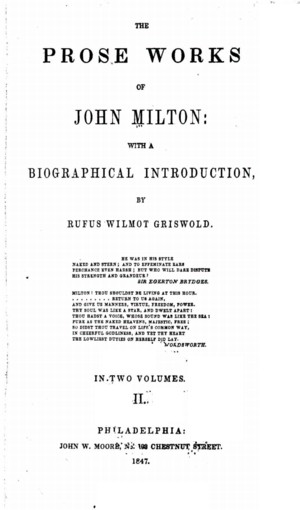
LETTERS WRITTEN IN THE NAME OF THE PARLIAMENT. - John Milton, The Prose Works of John Milton, vol. 2 [1847]Edition used:The Prose Works of John Milton, With a Biographical Introduction by Rufus Wilmot Griswold. In Two Volumes (Philadelphia: John W. Moore, 1847). Vol. 2.
Part of: The Prose Works of John Milton, 2 vols.About Liberty Fund:Liberty Fund, Inc. is a private, educational foundation established to encourage the study of the ideal of a society of free and responsible individuals. Copyright information:The text is in the public domain. Fair use statement:This material is put online to further the educational goals of Liberty Fund, Inc. Unless otherwise stated in the Copyright Information section above, this material may be used freely for educational and academic purposes. It may not be used in any way for profit.
LETTERS WRITTEN IN THE NAME OF THE PARLIAMENT.The Senate and People ofEngland,to the most noble Senate of the city ofHamborough.For how long a series of past years, and for what important reasons, the friendship entered into by our ancestors with your most noble city has continued to this day, we both willingly acknowledge, together with yourselves; nor is it a thing displeasing to us, frequently also to call to our remembrance. But as to what we understand by your letters dated the twenty-fifth of June, that some of our people deal not with that fidelity and probity, as they were wont to do in their trading and commerce among ye; we presently referred it to the consideration of certain persons well skilled in those matters, to the end they might make a more strict inquiry into the frauds of the clothiers, and other artificers of the woollen manufacture. And we farther promise, to take such effectual care, as to make you sensible of our unalterable intentions, to preserve sincerity and justice among ouselves, as also never to neglect any good offices of our kindness, that may redound to the welfare of your commonwealth. On the other hand, there is something likewise which we not only required, but which equity itself, and all the laws of God and man, demand of yourselves; that you will not only conserve inviolable to the merchants of our nation their privileges, but by your authority and power defend and protect their lives and estates, as it becomes your city to do. Which as we most earnestly desired in our former letters; so upon the repeated complaints of our merchants, that are daily made before us, we now more earnestly solicit and request it; they complaining, that their safety, and all that they have in the world, is again in great jeopardy among ye. For although they acknowledge themselves to have reaped some benefit for a short time of our former letters sent you, and to have had some respite from the injuries of a sort of profligate people; yet since the coming of the same Coc--m to your city, (of whom we complained before,) who pretends to be honoured with a sort of embassy from —, the son of the lately deceased king, they have been assaulted with all manner of ill language, threats, and naked swords of ruffians and homicides, and have wanted your accustomed protection and defence; insomuch, that when two or three of the merchants, together with the president of the society, were hurried away by surprise aboard a certain privateer, and that the rest implored your aid, yet they could not obtain any assistance from you, till the merchants themselves were forced to embody their own strength, and rescue from the hands of pirates the persons seized on in that river, of which your city is the mistress, not without extreme hazard of their lives. Nay, when they had fortunately brought them home again, and as it were by force of arms recovered them from an ignominous captivity, and carried the pirates themselves into custody; we are informed, that Coc--m was so audacious, as to demand the release of the pirates, and that the merchants might be delivered prisoners into his hands. We therefore again, and again, beseech and adjure you, if it be your intention, that contracts and leagues, and the very ancient commerce between both nations should be preserved, (the thing which you desire,) that our people may be able to assure themselves of some certain and firm support and reliance upon your word, your prudence, and authority; that you would lend them a favourable audience concerning these matters, and that you would inflict deserved punishment as well upon Coc--m, and the rest of his accomplices in that wicked act, as upon those who lately assaulted the preacher, hitherto unpunished, or command them to depart your territories; nor that you would believe, that expelled and exiled Tarquins are to be preferred before the friendship, and the wealth, and power of our republic. For if you do not carefully provide to the contrary, but that the enemies of our republic shall presume to think lawful the committing of any violences against us in your city, how unsafe, how ignominious the residence of our people there will be, do you consider with yourselves! These things we recommend to your prudence and equity, yourselves to the protection of Heaven. Westminster, Aug. 10, 1649. To the Senate ofHamborough.Your conspicuous favour in the doubtful condition of our affairs is now the reason, that after victory and prosperous success, we can no longer question your good-will and friendly inclination towards us. As for our parts, the war being almost now determined, and our enemies every where vanquished, we have deemed nothing more just, or more conducing to the firm establishment of the republic, than that they who by our means (the Almighty being always our captain and conductor) have either recovered their liberty, or obtained their lives and fortunes, after the pernicious ravages of a civil war, of our free gift and grace, should testify and pay in exchange to their magistrates allegiance and duty in a solemn manner, if need required: more especially when so many turbulent and exasperated persons, more than once received into protection, will make no end, either at home or abroad, of acting perfidiously, and raising new disturbances. To that purpose we took care, to enjoin a certain form of an oath, by which all who held any office in the commonwealth, or being fortified with the protection of the law, enjoyed both safety, ease, and all other conveniences of life, should bind themselves to obedience in words prescribed. This we also thought proper to be sent to all colonies abroad, or wherever else our people resided for the convenience of trade; to the end that the fidelity of those, over whom we are set, might be proved and known to us, as it is but reasonable and necessary. Which makes us wonder so much the more at what our merchants write from your city, that they are not permitted to execute our commands by some or other of your order and degree. Certainly what the most potent United Provinces of the Low Countries, most jealous of their power and their interests, never thought any way belonging to their inspection, namely, whether the English foreigners swore fidelity and allegiance to their magistrates at home, either in these or those words, how that should come to be so suspected and troublesome to your city, we must plainly acknowledge, that we do not understand. But this proceeding from the private inclinations or fears of some, whom certain vagabond Scots, expelled their country, are said to have enforced by menaces, on purpose to deter our merchants from swearing fidelity to us, we impute not to your city. Most earnestly therefore we entreat and conjure ye (for it is not now the interest of trade, but the honour of the republic itself that lies at stake) not to suffer any one among ye, who can have no reason to concern himself in this affair, to interpose his authority, whatever it be, with that supremacy which we challenge over our own subjects, not by the judgment and opinion of foreigners, but by the laws of our country; for who would not take it amiss, if we should forbid your Hamburghers, residing here, to swear fidelity to you, that are their magistrates at home? Farewel. Jan. 4, 1649. To the most Serene and Potent Prince,Philipthe Fourth, King ofSpain:the Parliament of the Commonwealth of England, Greeting.We send to your majesty Anthony Ascham, a person of integrity, learned, and descended of an ancient family, to treat of matters very advantageous, as we hope, as well to the Spanish, as to the English nation. Wherefore in friendly manner we desire, that you would be pleased to grant, and order him a safe and honourable passage to your royal city, and the same in his return from thence, readily prepared to repay the kindness when occasion offers. Or if your majesty be otherwise inclined, that it may be signified to him with the soonest, what your pleasure is in this particular, and that he may be at liberty to depart without molestation. Feb. 4, 1649. To the most Serene and Potent Prince,Philipthe Fourth, King ofSpain.the Parliament of the Commonwealth ofEngland,Greeting.What is the condition of our affairs, and by what heinous injuries provoked and broken, at length we began to think of recovering our liberty by force of arms; what constituted form of government we now make use of, can neither be concealed from your majesty, nor any other person, who has but cast an impartial eye upon our writings published on these occasions. Neither ought we to think it a difficult thing, among fit and proper judges of things, to render our fidelity, our equity, and patience, manifest to all men, and justly meriting their approbation; as also to defend our authority, honour, and grandeur, against the infamous tongues of exiles and fugitives. Now then, as to what is more the concern of foreign nations, after having subdued and vanquished the enemies of our country, through the miraculous assistance of Heaven, we openly and cordially profess ourselves readily prepared to have peace and friendship, more desirable than all enlargement of empire, with our neighbour nations. For these reasons we have sent into Spain, to your majesty, Anthony Ascham, of approved dexterity and probity, to treat with your majesty concerning friendship, and the accustomed commerce between both nations; or else, if it be your pleasure, to open a way for the ratifying of new articles and alliances. Our request therefore is, that you will grant him free liberty of access to your majesty, and give such order, that care may be taken of his safety and honour, while he resides a public minister with your majesty; to the end he may freely propose what he has in charge from us, for the benefit, as we hope, of both nations; and certify to us with the soonest, what are your majesty’s sentiments concerning these matters. Westminster, Feb. 4, 1649. To the most Serene Prince,Johnthe Fourth, King ofPortugal:the Parliament of the Commonwealth ofEngland,Greeting.After we had suffered many, and those the utmost, mischiefs of a faithless peace, and intestine war, our being reduced to those exigencies, that if we had any regard to the safety of the republic, there was a necessity of altering for the chiefest part the form of government; is a thing which we make no question, is well known to your majesty, by what we have both publicly written and declared in justification of our proceedings. To which, as it is but reason, if credit might be rather given than to the most malicious calumnies of loose and wicked men; perhaps we should find those persons more amicably inclined, who now abroad have the worst sentiments of our actions. For as to what we justify ourselves to have justly and strenuously performed after the example of our ancestors, in pursuance of our rights, and for recovery of the native liberty of Englishmen, certainly it is not the work of human force, or wit to eradicate the perverse and obstinate opinions of people wickedly inclined, concerning what we have done. But after all, in reference to what is common to us with all foreign nations, and more for the general interest on both sides, we are willing to let the world know, that there is nothing which we more ardently desire, than that the friendship and commerce, which our people have been accustomed to maintain with all our neighbours, should be enlarged and settled in the most ample and solemn manner. And whereas our people have always driven a very great trade, and gainful to both nations, in your kingdom; we shall take care, as much as in us lies, that they may not meet with any impediment to interrupt their dealings. However, we foresee that all our industry will be in vain, if, as it is reported, the pirates and revolters of our nation shall be suffered to have refuge in your ports, and after they have taken and plundered the laden vessels of the English, shall be permitted to sell their goods by public outcries at Lisbon. To the end therefore that a more speedy remedy may be applied to ths growing mischief, and that we may be more clearly satisfied concerning the peace which we desire, we have sent to your majesty the most noble Charles Vane, under the character of our agent, with instructions and a commission, a plenary testimonial of the trust we have reposed, and the employment we have conferred upon him. Him therefore we most earnestly desire your majesty graciously to hear, to give him credit, and to take such order, that he may be safe in his person and his honour within the bounds of your dominions. These things, as they will be most acceptable to us, so we promise, whenever occasion offers, that the same offices of kindness to your majesty shall be mutually observed on all our parts. Westminster, Feb. 4, 1649. To the most Serene Prince,Johnthe Fourth, King ofPortugal:the Parliament of the Commonwealth ofEngland,Greeting.Almost daily and most grievous complaints are brought before us, that certain of our seamen and officers, who revolted from us the last year, and treacherously and wickedly carried away the ships with the command of which they were entrusted, and who, having made their escape from the port of Ireland, where, being blocked up for almost a whole summer together, they very narrowly avoided the punishment due to their crimes, they have now betaken themselves to the coast of Portugal, and the mouth of the river Tagus: that there they practise furious piracy, taking and plundering all the English vessels they meet with sailing to and fro upon the account of trade; and that all the adjoining seas are become almost impassable, by reason of their notorious and infamous robberies. To which increasing mischief unless a speedy remedy be applied, who does not see, but that there will be a final end of that vast trade so gainful to both nations, which our people were wont to drive with the Portuguese? Wherefore we again and again request your majesty, that you would command those pirates and revolters to depart the territories of Portugal: and that, if any pretended embassadors present themselves from *******, that you will not vouchsafe to give them audience, but that you will rather acknowledge us, upon whom the supreme power of England, by the conspicuous favour and assistance of the Almighty, is devolved; and that the ports and rivers of Portugal may not be barred and defended against your friends and confederates fleet, no less serviceable to your emolument than the trade of the English. To the most Serene PrinceLeopold,Archduke ofAustria,Governor of theSpanishLow Countries, under KingPhilip.So soon as word was brought us, not without a most grievous complaint, that Jane Puckering, an heiress of an illustrious and opulent family, while yet by reason of her age she was under guardians, not far from the house wherein she then lived at Greenwich, was violently forced from the hands and embraces of her attendants; and of a sudden in a vessel to that purpose ready prepared, carried off into Flanders by the treachery of one Walsh, who has endeavoured all the ways imaginable, in contempt of law both human and divine, to constrain a wealthy virgin to marriage, even by terrifying her with menaces of present death: We deeming it proper to apply some speedy remedy to so enormous and unheard of piece of villany, gave orders to some persons to treat with the governors of Newport and Ostend (for the unfortunate captive was said to be landed in one of those two places) about rescuing the freeborn lady out of the hands of the ravisher. Who, both out of their singular humanity and love of virtue, lent their assisting aid to the young virgin in servitude, and by downright robbery rifled from her habitation: so that to avoid the violence of her imperious masters, she was as it were deposited in a nunnery, and committed to the charge of the governess of the society. Wherefore the same Walsh, to get her again into his clutches, has commenced a suit against her in the ecclesiastical court of the bishop of Ypre, pretending a matrimonial contract between him and her. Now in regard that both the ravisher and the ravished person are natives of our country, as by the witnesses upon their oaths abundantly appears; as also for that the splendid inheritance, after which most certainly the criminal chiefly gapes, lies within our territories; so that we conceive, that the whole cognizance and determination of this cause belongs solely to ourselves; therefore let him repair hither, he who calls himself the husband, here let him commence his suit, and demand the delivery of the person, whom he claims for his wife. In the mean time, this it is that we most earnestly request from your highness, which is no more than what we have already requested by our agent residing in Brussels, that you will permit an afflicted and many ways misused virgin, born of honest parents, but pirated out of her native country, to return, as far as lies in your power, with freedom and safety home again. This not only we, upon all opportunities offered, as readily prepared to return the same favour and kindness to your highness, but also humanity itself, and that same hatred of infamy, which ought to accompany all persons of virtue and courage, in defending the honour of the female sex, seem altogether jointly to require at your hands. Westminster, March 28, 1650. To the most Serene Prince,Johnthe Fourth, King of Portugal.Understanding that your majesty had both honourably received our agent, and immediately given him a favourable audience, we though it became us to assure your majesty without delay, by speedy letters from us, that nothing could happen more acceptable to us, and that there is nothing which we have decreed more sacred, than not to violate by any word or deed of ours, not first provoked, the peace, the friendship, and commerce, now for some time settled between us and the greatest number of other foreign nations, and among the rest with the Portuguese. Nor did we send the English fleet to the mouth of the river Tagus with any other intention or design, than in pursuit of enemies so often put to flight, and for recovery of our vessels, which being carried away from their owners by force and treachery, the same rabble of fugitives conducted to your coasts, and even to Lisbon itself, as to the most certain fairs for the sale of their plunder. But we are apt to believe, that by this time almost all the Portuguese are abundantly convinced, from the flagitious manners of those people, of their audaciousness, their fury, and their madness. Which is the reason we are in hopes, that we shall more easily obtain from your majesty, first, that you will, as far as in you lies, be assistant to the most illustrious Edward Popham, whom we have made admiral of our new fleet, for the subduing those detested freebooters; and that you will no longer suffer them, together with their captain, not guests, but pirates, not merchants, but the pests of commerce, and violaters of the law of nations, to harbour in the ports and under the shelter of the fortresses of your kingdom; but that wherever the confines of Portugal extend themselves, you will command them to be expelled as well by land as by sea. Or if you are unwilling to proceed to that extremity, at least that with your leave it may be lawful for us, with our proper forces to assail our own revolters and sea robbers; and if it be the pleasure of Heaven, to reduce them into our power. This, as we have earnestly desired in our former letters, so now again with the greatest ardency and importunity we request of your majesty. By this, whether equity, or act of kindness, you will not only enlarge the fame of your justice over all well-governed and civil nations, but also in a great measure bind both us and the people of England, who never yet had other than a good opinion of the Portuguese, to yourself and to your subjects. Farewel. Westminster, April 27, 1650. To theHamburghers.More than once we have written concerning the controversies of the merchants, and some other things which more nearly concern the dignity of our republic, yet no answer has been returned. But understanding that affairs of that nature can hardly be determined by letters only, and that in the mean time certain seditious persons have been sent to your city by *******, authorized with no other commission than that of malice and audaciousness, who make it their business utterly to extirpate the ancient trade of our people in your city, especially of those whose fidelity to their country is most conspicuous; therefore we have commanded the worthy and most eminent Richard Bradshaw, to reside as our agent among ye; to the end he may be able more at large to treat and negotiate with your lordships such matters and affairs, as are interwoven with the benefit and advantages of both republics. Him therefore we request ye with the soonest to admit to a favourable audience; and that in all things that credit may be given to him, that honour paid him, as is usual in all countries, and among all nations, paid to those that bear his character. Westminster, April 2, 1650. To theHamburghers.Most Noble, Magnificent, and Illustrious, our dearest Friends—That your sedulities in the reception of our agent were so cordial and so egregious, we both gladly understand, and earnestly exhort ye that you would persevere in your good will and affection towards us. And this we do with so much the greater vehemence, as being informed, that the same exiles of ours, concerning whom we have so frequently written, now carry themselves more insolently in your city than they were wont to do, and that they not only openly affront, but give out threatening language in a most despiteful manner against our resident. Therefore once more by these our letters we would have the safety of his person, and the honour due to his quality, recommended to your care. On the other side, if you inflict severe and timely punishment upon those fugitives and ruffians, as well the old ones as the new-comers, it will be most acceptable to us, and becoming your authority and prudence. Westminster, May 31, 1650. ToPhilipthe Fourth, King ofSpain.To our infinite sorrow we are given to understand, that Anthony Ascham, by us lately sent our agent to your majesty, and under that character most civilly and publicly received by your governors, upon his first coming to your royal city, naked of all defence and guard, was most bloodily murdered in a certain inn, together with John Baptista de Ripa his interpreter, butchered at the same time. Wherefore we most earnestly request your majesty, that deserved punishment may be speedily inflicted upon those parricides, already apprehended, as it is reported, and committed to custody; who have not only presumed to wound ourselves through his sides, but have also dared to stab, as it were, to the very heart, your faith of word and royal honour. So that we make no question, but what we so ardently desire would nevertheless be done effectually, by a prince of his own accord so just and pious, though nobody required it. As to what remains, we make it our further suit, that the breathless carcass may be delivered to his friends and attendants to be brought back and interred in his own country, and that such care may be taken for the security of those that remain alive, as is but requisite; till having obtained an answer to these letters, if it may be done, they shall return to us the witnesses of your piety and justice. Westminster, June 28th, 1650. ToPhilipthe Fourth, King ofSpain.How heinously, and with what detestation, your majesty resented the villanous murder of our agent Anthony Ascham, and what has hitherto been done in the prosecution and punishment of his assassinates, we have been given to understand, as well by your majesty’s own letters, as from your ambassador don Alphonso de Cardenos. Nevertheless so often as we consider the horridness of that bloody fact, which utterly subverts the very foundations of correspondence and commerce, and of the privilege of embassadors, most sacred among all nations, so villanously violated without severity of punishment; we cannot but with utmost importunity repeat our most urgent suit to your majesty, that those parricides may with all the speed imaginable be brought to justice, and that you would not suffer their merited pains to be suspended any longer by any delay or pretence of religion. For though most certainly we highly value the friendship of a potent prince; yet it behoves us to use our utmost endeavours, that the authors of such an enormous parricide should receive the deserved reward of their impiety. Indeed, we cannot but with a greateful mind acknowledge that civility, of which by your command our people were not unsensible, as also your surprising affection for us, which lately your ambassador at large unfolded to us: nor will it be displeasing to us, to return the same good offices to your majesty, and the Spanish nation, whenever opportunity offers.—Nevertheless, if justice be not satisfied without delay, which we still most earnestly request, we see not upon what foundations a sincere and lasting friendship can subsist. For the preservation of which, however, we shall omit no just and laudable occasion; to which purpose we are likewise apt to believe, that the presence of your embassador does not a little conduce. To theSpanishEmbassador.Most Excellent Lord—The council of State, so soon as their weighty affairs would permit them, having carried into parliament the four writings, which it pleased your excellency to impart to the council upon the nineteenth of December last, have received in command from the parliament, to return this answer to the first head of those writings, touching the villanous assassinates of their late agent, Anthony Ascham. The parliament have so long time, so often, and so justly demanded their being brought to deserved punishment, that there needs nothing further to be said on a thing of so great importance, wherein (as your excellency well observed) his royal majesty’s authority itself is so deeply concerned, that, unless justice be done upon such notorious offenders, all the foundations of human society, all the ways of preserving friendship among nations, of necessity must be overturned and abolished. Nor can we apprehend by any argument drawn from religion, that the blood of the innocent, shed by a propensely malicious murder, is not to be avenged. The parliament therefore once more most urgently presses, and expects from his royal majesty, according to their first demands, that satisfaction be given them effectually and sincerely in this matter. To the most ExcellentLord Anthony John Lewis de la Cerda,Duke ofMedina Celi,Governor ofAndalusia:the Council of State constituted by authority of Parliament, Greeting.We have received advice from those most accomplished persons, whom we lately sent with our fleet into Portugal, in pursuit of traitors, and for the recovery of our vessels, that they were most civilly received by your excellency, as often as they happened to touch upon the coasts of Gallæcia, which is under your government, and assisted with all things necessary to those that perform long voyages. This civility of yours, as it was always most acceptable to us, so it is now more especially at this time, while we are sensible of the illwill of others in some places towards us without any just cause given on our side: therefore we make it our request to your illustrious lordship, that you will persevere in the same good-will and affection to us, and that you would continue your favour and assistance to our people, according to your wonted civility, as often as our ships put in to your harbours: and be assured, that there is nothing which we desire of your lordship in the way of kindness, which we shall not be ready to repay both to you and yours, whenever the like occasion shall be offered us. Sealed with the seal of the council,J. Bradshaw, President. Westminster, Nov. 7th, 1650. To the Illustrious and Magnificent Senate of the City ofDantzick.Magnificent and most Noble Lords, our dearest Friends—Many letters are brought us from our merchants trading upon the coast of Borussia, wherein they complain of a grievous tribute imposed upon them in the grand council of the Polanders, enforcing them to pay the tenth part of all their goods for the relief of the king of Scots, our enemy. Which in regard it is plainly contrary to the law of nations, that guests and strangers should be dealt withal in such a manner; and most unjust, that they should be compelled to pay public stipends in a foreign commonwealth to him from whom they are, by God’s assistance, delivered at home; we make no question, but that out of respect to that liberty, which as we understand you yourselves enjoy, you will not suffer so heavy a burden to be laid on merchants in your city, wherein they have maintained a continual amity and commerce, to the extraordinary advantage of the place for many years together. If therefore you think it convenient, to undertake the protection of our merchants trading among ye, which we assuredly expect, as well from your prudence and equity, as from the dignity and grandeur of your city; we shall take that care, that you shall be sensible from time to time of our grateful acceptance of your kindness, as often as the Dantzickers shall have any dealings within our territories, or their ships, as frequently it happens, put into our ports. Westminster, Febr. 6, 1650. To thePortugalAgent.Most Illustrious Lord—We received your letters dated from Hampton the fifteenth of this month, wherein you signify, that you are sent by the king of Portugal to the parliament of the commonwealth of England; but say not under what character, whether of embassador, or agent, or envoy, which we would willingly understand by your credential letters from the king, a copy of which you may send us with all the speed you can. We would also further know, whether you come with a plenary commission, to give us satisfaction for the injuries, and to make reparation for the damages, which your king has done this republic, protecting our enemy all the last summer in his harbours, and prohibiting the English fleet, then ready to assail rebels and fugitives, which our admiral had pursued so far; but never restraining the enemy from falling upon ours. If you return us word, that you have ample and full commission to give us satisfaction concerning all these matters, and send us withal a copy of your recommendatory letters, we shall then take care, that you may with all speed repair to us upon the Public Faith: at which time, when we have read the king’s letters, you shall have liberty freely to declare what further commands you have brought along with you. The Parliament of the Commonwealth ofEngland,to the most Serene Prince D. Ferdinand,Grand Duke ofTuscany,&c.We have received your highness’s letters, dated April twenty-two, sixteen hundred and fifty-one, and delivered to us by your resident, Signor Almeric Salvetti, wherein we readily perceive how greatly your highness favours the English name, and the value you have for this nation; which not only our merchants, that for many years have traded in your ports, but also certain of our young nobility, either travelling through your cities, or residing there for the improvement of their studies, both testify and confirm. Which as they are things most grateful and acceptable to us, we also on our parts make this request to your highness, that your serenity will persevere in your accustomed good-will and affection towards our merchants, and other citizens of our republic, travelling through the Tuscan territories. On the other side, we promise and undertake, as to what concerns the parliament, that nothing shall be wanting, which may any way conduce to the confirmation and establishment of that commerce and mutual friendship, that now has been of long continuance between both nations, and which it is our earnest wish and desire should be preserved to perpetuity, by all offices of humanity, civility, and mutual observance. Sealed with the seal of the parliament, and subscribed by William Lenthall, speaker of the parliament of the commonwealth of England.Westminster, Jan. 20, 1651. The Parliament of the Commonwealth ofEngland,to the Illustrious and Magnificent Senate of the City ofHamborough.Most Noble, Magnificent, and Illustrious, our dearest Friends—The parliament of the commonwealth of England, out of their earnest desire to continue and preserve the ancient friendship and mutual commerce between the English nation and your city, not long since sent thither Richard Bradshaw, Esq., with the character of our resident; and among other instructions tending to the same purpose, gave him an express charge to demand justice against certain persons within your jurisdiction, who endeavoured to murder the preacher belonging to the English society, and who likewise laid impious hands upon the deputy president, and some of the principal merchants of the same company, and hurried them away aboard a privateer. And although the aforesaid resident, upon his first reception and audience, made known to your lordships in a particular manner the commands which he received from us; upon which it was expected, that you would have made those criminals ere this a severe example of your justice; yet when we understood our expectations were not answered, considering with ourselves what danger both our people and their estates were in, if sufficient provision were not made for their security and protection against the malice of their enemies, we again sent orders to our aforesaid resident, to represent to your lordships our judgment upon the whole matter; as also to exhort and persuade ye, in the name of this republic, to be careful of preserving the friendship and alliance contracted between this commonwealth and your city, as also the traffic and commerce no less advantageous for the interest of both: and to that end, that you would not fail to protect our merchants, together with their privileges, from all violation, and more particularly against the insolences of one Garmes, who has carried himself contumeliously toward this republic, and publicly cited to the Chamber of Spire certain merchants of the English company residing in your city, to the great contempt of this commonwealth, and trouble of our merchants; for which we expect such reparation, as shall be consentaneous to equity and justice. To treat of these heads, and whatever else more largely belongs to the common friendship of both republics, we have ordered our resident aforesaid to attend your lordships, requesting that ample credit may be given to him in such matters, as he shall propose relating to these affairs. Westminster, March 12, 1651. Sealed with the parliament seal, and subscribed, Speaker, &c.The Parliament of the Commonwealth ofEngland,to the most SereneChristiana,Queen of theSwedes, Goths,andVandals, &c., Greeting.Most Serene Queen—We have received and read your majesty’s letters to the parliament of England, dated from Stockholm, the twenty-sixth of September last, and delivered by Peter Spering Silvercroon; and there is nothing which we more vehemently and cordially desire, than that the ancient peace, traffic, and commerce of long continuance between the English and Swedes may prove diuturnal, and every day increase. Nor did we question, but that your majesty’s embassador was come amply instructed to make those proposals chiefly, which should be most for the interest and honour of both nations, and which we were no less readily prepared to have heard, and to have done effectually that which should have been thought most secure and beneficial on both sides. But it pleased the Supreme Moderator and Governor of all things, that before he had desired to be heard as to those matters, which he had in charge from your majesty to propound to the parliament, he departed this life, (whose loss we took with that heaviness and sorrow, as it became persons whom it no less behoved to acquiesce in the will of the Almighty,) whence it comes to pass, that we are prevented hitherto from knowing your majesty’s pleasure, and that there is a stop at present put to this negotiation. Wherefore we thought we could do no less than by these our letters, which we have given to our messenger on purpose sent with these unhappy tidings, to signify to your majesty, how acceptable your letters, how grateful your public minister were to the parliament of the commonwealth of England; as also how earnestly we expect your friendship, and how highly we shall value the amity of so great a princess; assuring your majesty, that we have those thoughts of increasing the commerce between this republic and your majesty’s kingdom, as we ought to have of a thing of the highest importance, which for that reason will be most acceptable to the parliament of the commonwealth of England. And so we recommend your majesty to the protection of the Divine Providence. Westminster, March —, 1651. Sealed with the parliament seal, and subscribed, Speaker, &c.The Parliament of the Commonwealth ofEngland,to the most Serene and Potent Prince,Philipthe Fourth, King ofSpain,Greeting.The merchants of this commonwealth, who trade in your majesty’s territories, make loud complaints of extraordinary violence and injuries offered them, and of new tributes imposed upon them by the governors and other officers of your ports and places where they traffic, and particularly in the Canary islands, and this against the articles of the league solemnly ratified by both nations on the account of trade; the truth of which complaints they have confirmed by oath. And they make it out before us, that unless they can enjoy their privileges, and that their losses be repaired; lastly, that except they may have some certain safeguard and protection for themselves and their estates against those violences and injuries, they can no longer traffic in those places. Which complaints of theirs being duly weighed by us, and believing the unjust proceedings of those ministers either not at all to have reached your knowledge, or else to have been untruly represented to your majesty, we deemed it convenient to send the complaints themselves, together with these our letters, to your majesty. Nor do we question, but that your majesty, as well out of your love of justice, as for the sake of that commerce no less gainful to your subjects than our people, will command your governors to desist from those unjust oppressions of our merchants, and so order it, that they may obtain speedy justice, and due satisfaction for those injuries done them by Don Pedro de Carillo de Guzman, and others; and that your majesty will take care, that the merchants aforesaid may reap the fruit of those articles; and be so far under your protection, that both their persons and their estates may be secure and free from all manner of injury and vexation. And this they believe they shall for the greatest part obtain if your majesty will be pleased to restore them that expedient, taken from them, of a judge-conservator, who may be able to defend them from a new consulship more uneasy to them; lest if no shelter from injustice be allowed them, there should follow a necessity of breaking off that commerce, which has hitherto brought great advantages to both nations, while the articles of the league are violated in such a manner. Westminster, August —, 1651. To the most Serene Prince, the Duke ofVenice,and the most Illustrious Senate.Most Serene Prince, most Illustrious Senate, our dearest Friends—Certain of our merchants, by name John Dickins, and Job Throckmorton, with others, have made their complaints to us, that upon the twenty-eighth of November, sixteen hundred and fifty-one, having seized upon a hundred butts of caviare in the vessel called the Swallow, riding in the Downs, Isaac Taylor master, which were their own proper goods, and laden aboard the same ship in the Muscovite Bay of Archangel, and this by the authority of our court of admiralty; in which court, the suit being there depending, they obtained a decree for the delivery of the said butts of caviare into their possession, they having first given security to abide by the sentence of that court: and that the said court, to the end the said suit might be brought to a conclusion, having written letters, according to custom, to the magistrates and judges of Venice; wherein they requested liberty to cite John Piatti to appear by his proctor in the English court of admiralty, where the suit depended, and prove his right: nevertheless, that the said Piatti and one David Rutts a Hollander, while this cause depends here in our court, put the said John Dickins, and those other merchants, to a vast deal of trouble about the said caviare, and solicit the seizure of their goods and estates as forfeited for debt. All which things, and whatever else has hitherto been done in our foresaid court is more at large set forth in those letters of request aforementioned; which after we had viewed, we thought proper to be transmitted to the most serene republic of Venice, to the end they might be assistant to our merchants in this cause. Upon the whole therefore, it is our earnest request to your highness, and the most illustrious senate, that not only those letters may obtain their due force and weight; but also, that the goods and estates of the merchants, which the foresaid Piatti and David Rutts have endeavoured to make liable to forfeiture, may be discharged; and that the said defendants may be referred hither to our court, to try what right they have in their claim to this caviare. Wherein your highness and the most serene republic will do as well what is most just in itself, as what is truly becoming the spotless amity between both republics: and lastly, what will gratefully be recompensed by the goodwill and kind offices of this republic, whenever occasions offer. Whitehall, February —, 1652. Sealed with the seal of the council, and subscribed President of the council.To the Spanish Embassador.Most Excellent Lord—The council of state, according to a command from the parliament, dated the second of March, having taken into serious deliberation your excellency’s paper of the fifteenth of February, delivered to the commissioners of this council, wherein it seemed good to your excellency to propose, that a reply might be given to two certain heads therein specified as previous, returns the following answer to your excellency. The parliament, when they gave an answer to those things which were proposed by your excellency at your first audience, as also in those letters which they wrote to the most serene king of Spain, gave real and ample demonstrations, how grateful and how acceptable that friendship and that mutual alliance, which was offered by his royal majesty, and by yourself in his name, would be to them; and how fully they were resolved, as far as in them lay, to make the same returns of friendship and good offices. After that, it seemed good to your excellency, at your first audience in council upon the nineteenth of December old style, to propound to this council, as a certain ground or method for an auspicious commencement of a stricter amity, that some of their body might be nominated, who might hear what your excellency had to propose; and who having well weighed the benefit, that might redound from thence, should speedily report the same to the council. To which request of yours that satisfaction might be given, the council appointed certain of their number to attend your excellency, which was done accordingly. But instead of those things which were expected to have been propounded, the conference produced no more than the above mentioned paper: to which the answer of the council is this. When the parliament shall have declared their minds, and your excellency shall have made the progress as above expected, we shall be ready to confer with your excellency, and to treat of such matters as you shall propose in the name of the king your master, as well in reference to the friendship already concluded, as the entering into another more strict and binding; or as to any thing else, which shall be offered by ourselves in the name of this republic: and when we descend to particulars, we shall return such answers as are most proper, and the nature of the thing proposed shall require. Whitehall, March 21, 1652. The Parliament of the Commonwealth ofEngland,to the most Serene PrinceFrederickthe Third, King ofDenmark,&c. Greeting.Most Serene and Potent King—We have received your majesty’s letters, dated from Copenhagen the twenty-first of December last, and delivered to the parliament of the commonwealth of England by the noble Henry Willemsem Rosenwyng de Lynsacker, and most gladly perused them, with that affection of mind, which the matters therein propounded justly merit, and request your majesty to be fully persuaded of this, that the same inclinations, the same desires of continuing and preserving the ancient friendship, commerce, and alliance, for so many years maintained between England and Denmark, which are in your majesty, are also in us. Not being ignorant, that though it has pleased Divine Providence, beholding this nation with such a benign and favourable aspect, to change for the better the received form of the former government among us; nevertheless, that the same interests on both sides, the same common advantages, the same mutual alliance and free traffic, which produced the former leagues and confederacies between both nations, still endure and obtain their former force and virtue, and oblige both to make it their common study by rendering those leagues the most beneficial that may be to each other, to establish also a nearer and sounder friendship for the time to come. And if your majesty shall be pleased to pursue those counsels, which are manifested in your royal letters, the parliament will be ready to embrace the same with all alacrity and fidelity, and to contribute all those things to the utmost of their power, which they shall think may conduce to that end. And they persuade themselves, that your majesty for this reason will take those counsels in reference to this republic, which may facilitate the good success of those things propounded by your majesty to ourselves so desirous of your amity. In the mean time, the parliament wishes all happiness and prosperity to your majesty and people. Under the seal of the parliament, and subscribed in its name, and by the authority of it, Speaker, &c.Westminster, April —, 1652. The Parliament of the Commonwealth ofEngland,to the most Illustrious and Magnificent, the Proconsuls and Senators of theHanse Towns,Greeting.Most Noble, Magnificent, and Illustrious, our dearest Friends—The parliament of the commonwealth of England has both received and perused your letters of the sixteenth of January last, delivered by your public minister Leo ab Aysema, and by their authority have given him an audience; at what time he declared the cordial and friendly inclinations of your cities toward this republic, and desired that the ancient friendship might still remain on both sides. The parliament therefore, for their parts, declare and assure your lordships, that they deem nothing more grateful to themselves, than that the same friendship and alliance, which has hitherto been maintained between this nation and those cities, should be renewed, and firmly ratified; and that they will be ready, upon all occasions fitly offered, what they promise in words solemnly to perform in real deeds; and expect that their ancient friends and confederates should deal by them with the same truth and integrity. But as to those things, which your resident has more particularly in charge in regard they were by us referred entire to the council of state, and his proposals were to be there considered, they transacted with him there, and gave him such answers, as seemed most consentaneous to equity and reason, of which your resident is able to give you an account; whose prudence and conspicuous probity proclaim him worthy the public character by you conferred upon him. Westminster, April —, 1652. Under the seal of the parliament, in the name, and by the authority of it, subscribed, Speaker, &c.The Parliament of the Commonwealth ofEngland,to the Illustrious and Magnificent Senate of the City ofHamborough,Greeting.Most Noble, Magnificent, and Illustrious, our dearest Friends—The parliament of the commonwealth of England has received and perused your letters, dated from Hamborough the fifteenth of January last, and delivered by the noble Leo ab Aysema, yours and the rest of the Hanseatic cities resident, and by their own authority gave him audience; and as to what other particular commands he had from your city, they have referred them to the council of state, and gave them orders to receive his proposals, and to treat with him as soon as might be, concerning all such things as seemed to be just and equal: which was also done accordingly. And as the parliament has made it manifest, that they will have a due regard to what shall be proposed by your lordships, and have testified their singular good-will toward your city, by sending their resident thither, and commanding his abode there; so on the other side they expect, and deservedly require from your lordships, that the same equity be returned to them, in things which are to the benefit of this republic, either already proposed, or hereafter to be propounded by our said resident in their name to your city, anciently our friend and confederate. Westminster, April —, 1652. Under the seal of the parliament, in the name, and by the authority of it, subscribed, Speaker, &c.The Council of State of the Republic ofEngland,to the most Serene PrinceFerdinandthe Second, Grand Duke ofTuscany,Greeting.The council of state being informed by letters from Charles Longland, who takes care of the affairs of the English in your highness’s court of Leghorn, that lately fourteen men of war belonging to the United Provinces came into that harbour, and openly threatened to sink or burn the English ships that were riding in your port; but that your Serenity, whose protection and succour the English merchants implored, gave command to the governor of Leghorn, that he should assist and defend the English vessels: they deemed it their duty to certify to your highness how acceptable that kindness and protection, which you so favourably afforded the English nation, was to this republic; and do promise your highness, that they will always keep in remembrance the merit of so deserving a favour, and will be ready upon all occasions to make the same returns of friendship and good offices to your people, and to do all things else, which may conduce to the preservation and continuance of the usual amity and commerce between both nations. And whereas the Dutch men of war, even in the time of treaty offered by themselves, were so highly perfidious as to fall upon our fleet in our own roads, (in which foul attempt, God, as most just arbiter, showed himself offended and opposite to their design,) but also in the ports of foreigners endeavoured to take or sink our merchant vessels; we thought it also necessary to send this declaration also of the parliament of the commonwealth of England to your highness, the publishing of which was occasioned by the controversies at present arisen between this republic and the United Provinces. By which your highness may easily perceive how unjust and contrary to all the laws of God and of nations those people have acted against this republic; and how cordially the parliament laboured, for the sake of public tranquillity, to have retained their pristine friendship and alliance. Whitehall, July 29, 1652. In the name, and by the authority of the Council, subscribed, President.To theSpanishEmbassador.Most Excellent Lord—The council of state, upon mature deliberation of that paper which they received from your excellency, 27th May,6th June, 1652, as also upon that which your excellency at your audience the 616 of this month delivered to the council, return this answer to both those papers: that the parliament, &c. was always very desirous of preserving the firm friendship and good peace settled at present between this republic and his royal majesty of Spain, from the time that first your excellency signified the tendency of his majesty’s inclinations that way, and was always ready to ratify and confirm the same to the benefit and advantage of both nations. And this the council of state in the name, and by command of the parliament, in their papers ofttimes made known to your excellency; and particularly, according to your excellency’s desire, made choice of commissioners to attend and receive from your excellency such proposals as might conduce to the same purpose. At which meeting, instead of making such proposals, it seemed good to your excellency only to propound some general matters, as it were previous to a future conference, concerning which it seemed to the council that the parliament had in former papers fully made known their sentiments. Nevertheless for more ample and accumulative satisfaction, and to remove all scruples from your excellency concerning those matters which they at that time proposed, the council in that paper, dated 31 March,10 April, declared themselves ready to come to a conference with your excellency, concerning those things which you had in charge from his royal majesty, as well in reference to the pristine amity, as to any farther negotiation; as also touching such matters as should be exhibited by us, in the name of this republic; and when we came to such particulars as were to the purpose, and the nature of the thing required, then to give convenient answers. To which it seemed good to your excellency to make no reply, nor to proceed any farther in that affair for almost two months. About that time the council received from your excellency your first paper, dated 27 May,6 June, wherein you only made this proposal, that the articles of peace and league between the late King Charles and your master, dated the 616 of November, 1630, might be reviewed, and that the several heads of it might be either enlarged or left out, according to the present condition of times and things, and the late alteration of government. Which being no more than what we ourselves briefly and clearly signified in our foresaid paper of the 31 March,10 April, the council expected, that some particular articles would have been propounded out of that league, with those amplifications and alterations of which you made mention; since otherwise it is impossible for us to return any other answer concerning this matter, than what we have already given. And whereas your excellency in your last paper seems to charge us with delay, the council therefore took a second review of the foresaid paper of the 27 May,6 June, and of what was therein propounded, and are still of opinion, that they have fully satisfied your excellency in that former paper: to which they can only farther add, that so soon as your excellency shall be pleased, either out of the leagues already made, or in any other manner, to frame such conditions as shall be accommodated to the present state of things and times, upon which you desire to have the foundations of friendship laid on your side, they will immediately return you such answers as by them shall be thought just and reasonable, and which shall be sufficient testimonials, that the parliament still perseveres in the same desires of preserving an untainted and firm amity with the king your master, and that on their parts they will omit no honest endeavours, and worthy of themselves, to advance it to the highest perfection. Furthermore, the council deems it to be a part of their duty, that your excellency should be put in mind of that paper of ours, dated January 30, 1651, to which in regard your excellency has returned no answer as yet, we press and expect that satisfaction be given to the parliament, as to what is therein mentioned. The answer of the Council of State to the Reply of the Lords Embassadors Extraordinary from the King ofDenmarkandNorway,delivered to the Commissioners of the Council, to the Answer which the Council gave to their fourteen Demands.To the end that satisfaction may be given to the foresaid lords embassadors in reference to the answer of the council to the fifth, sixth, seventh, eighth, and ninth article, the council consents, that this following clause shall be added at the end of their answers: that is to say, besides such colonies, islands, ports, and places, under the dominion of either party, to which it is by law provided that nobody shall resort upon the account of trade or commerce, unless upon special leave first obtained of that party to which that colony, island, port, or places belong. The receiving of any person into any ship, that shall be driven in by stress of weather into the rivers, ports, or bays, belonging to either party, shall not render that vessel liable to any trouble or search, by the answer of the council to the eleventh article, as the aforesaid lords embassadors in their reply seem to have understood, unless it be where such a receiving shall be against the laws, statutes, or customs of that place where the vessel put in, wherein it seems to the council, that there is nothing of severity ordained, but what equally conduces to the security of both republics. As to the proving of property of such ships and goods as shall be cast ashore by shipwreck, the council deems it necessary that an oath be administered in those courts which are already, or shall hereafter be constituted, where the claimers may be severally heard and every body’s right be determined and adjudged; which cannot be so clearly and strictly done by written certificates, whence many scruples and doubts may arise, and many frauds and deceits creep into that sort of proof, which it concerns both parties to prevent. The council also deems it just, that a certain time be prefixed, before which time, whoever does not prove himself the lawful owner of the said goods, shall be excluded, to avoid suits. But as to the manner of putting perishable goods to sale, that are cast ashore by shipwreck, the council thinks it meet to propose the of way selling by inch of candle, as being the most probable means to procure the true value of the goods for the best advantage of the proprietors. Nevertheless, if the foresaid lords embassadors shall propose any other method already found out, which may more properly conduce to this end, the council will be no hindrance, but that what is just may be put in practice. Neither is it to be understood, that the consideration of this matter shall put any stop to the treaty. As to the punishment of those, who shall violate the propounded treaty, the council has made that addition, which is mentioned in their answer to the fourteenth article, for the greater force and efficacy of that article, and thereby to render the league itself more firm and lasting. As to the last clause of the fourteenth article, we think it not proper to give our assent to those leagues and alliances, of which mention is made in the aforesaid answers, and which are only generally propounded, before it be more clearly apparent to us what they are. But when your excellencies shall be pleased to explain those matters more clearly to the council, we may be able to give a more express answer to those particulars. A Reply of the Council of State to the Answer of the foresaid Lords Embassadors, which was returned to the six Articles propounded by the Council aforesaid, in the name of the Republic ofEngland.The council, having viewed the commissions of the foresaid lords embassadors, giving them power to transact with the parliament or their commissioners, concerning all things expedient to be transacted in order to the reviving the old leagues, or adding new ones, believed indeed the foresaid lords to have been furnished with that authority, as to be able to return answers, and negotiate all things, as well such as should be propounded by this republic, as on the behalf of the king of Denmark and Norway, and so did not expect the replies, which it has pleased the foresaid lords embassadors to give to the first, second, third, and fifth demand of the council, whereby of necessity a stop will be put to this treaty, in regard it is but just in itself, and so resolved on in council, to comprehend the whole league, and to treat at the same time as well concerning those things which regard this republic, as those other matters, which concern the king of Denmark and Norway. Wherefore it is the earnest desire of the council, that your excellencies would be pleased to return an answer to our first, second, third, and fifth demand. As to the fourth article concerning the customs of Gluckstadt, in regard they are now abolished, as your excellencies have mentioned in your answer, the council presses that their abrogation may be ratified by this treaty, lest they should be reimposed hereafter. As to the sixth article concerning piracy, the council inserted it, as equally appertaining to the benefit of both, and to the establishing of trade in common, which is much disturbed by pirates and searobbers. And whereas the answer of the lords embassadors, as to this article, relates only to enemies, but makes no mention of pirates, the council therefore desires a more distinct reply to it. And whereas the foresaid lords embassadors in their reply to the answer of the council have passed over both their tenth article, and the answer of the council to it; the council have thought it necessary to add this following article, to their following demands. That the people and inhabitants of the republic of England trading into any kingdoms, regions, or territories of the king of Denmakr and Norway, shall not for the future pay any more customs, tribute, taxes, duties, or stipends, or in any other manner, than the people of the United Provinces, or any other foreign nation, that pays the least, coming in or going out of harbour; and shall enjoy the same, and as equally ample freedom, privileges, and immunities, both coming and going, and so long as they shall reside in the country, as also in fishing, trading, or in any other manner which any other people of a foreign nation enjoys, or may enjoy in the foresaid kingdoms, and throughout the whole dominions of the said king of Denmark and Norway: which privileges also the subjects of the king of Denmark and Norway shall equally enjoy throughout all the territories and dominions of the republic of England. The council of State of the Republic ofEngland,to the most Serene Prince,Ferdinandthe Second, Grand Duke ofTuscany,Greeting.Most Serene Prince, our dearest Friend—The council of State understanding, as well by your highness’s agent here residing, as by Charles Longland, chief factor for the English at Leghorn, with what affection and fidelity your highness undertook the protection of the English vessels putting into the port of Leghorn for shelter, against the Dutch men of war threatening them with nothing but ransack and destruction, by their letters of the twenty-ninth of July (which they hope are by this time come to your highness’s hands) have made known to your highness how grateful and how acceptable it was to them; and at the same time sent to your serenity a declaration of the parliament of the commonwealth of England, concerning the present differences between this Republic and the United Provinces.—And whereas the council has again been informed by the same Charles Longland, what further commands your highness gave for the security and defence of the English vessels, notwithstanding the opposite endeavours of the Dutch, they deemed this opportunity not to be passed over, to let your highness understand once more, how highly they esteem your justice and singular constancy in defending their vessels, and how acceptable they took so great a piece of service. Which being no mean testimony of your solid friendship and affection to this republic, your highness may assure yourself, that the same offices of kindness and goodwill towards your highness shall never be wanting in us; such as may be able to demonstrate how firmly we are resolved to cultivate both long and constantly, to the utmost of our power, that friendship which is between your serenity and this republic. In the mean time, we have expressly commanded all our ships, upon their entrance into your ports, not to fail of paying the accustomed salutes by firing their guns, and to give all other due honours to your highness. Whitehall, Sept. —, 1652. Sealed with the Council-Seal, and subscribed, President.To theSpanishEmbassador,Alphonso De Cardenas.Most Excellent Lord—Your excellency’s letters of the 111 of November, 1652, delivered by your secretary, together with two petitions enclosed, concerning the ships, the Sampson and San Salvadore, were read in council. To which the council returns this answer, That the English man of war meeting with the aforesaid ships not in the Downs, as your excellency writes, but in the open sea, brought them into port as enemies’ ships, and therefore lawful prize; and the court of admiralty, to which it properly belongs to take cognizance of all causes of this nature, have undertaken to determine the right in dispute; where all parties concerned on both sides shall be fully and freely heard, and you may be assured that right shall take place. We have also sent your excellency’s request to the judges of that court, to the end we may more certainly understand what progress they have made in their proceeding to judgment. Of which, so soon as we are rightly informed, we shall take care that such orders shall be given in this matter, as shall correspond with justice, and become the friendship that is between this republic and your king. Nor are we less confident, that his royal majesty will by no means permit the goods of the enemies of this commonwealth to be concealed, and escape due confiscation under the shelter of being owned by his subjects. Whitehall, Nov. 11, 1652. Sealed with the Council-Seal, and subscribedWilliam Masham, President. To theSpanishEmbassador.Most Excellent Lord—But lately the council has been informed by captain Badiley, admiral of the fleet of this republic in the Straits, that after he himself, together with three other men of war, had for two days together engaged eleven of the Dutch, put into Porto Longone, as well to repair the damages he had received in the fight, as also to supply himself with warlike ammunition; where the governor of the place performed all the good offices of a most just and courteous person, as well towards his own, as the rest of the men of war under his conduct. Now in regard that that same place is under the dominion of the most serene king of Spain, the council cannot but look upon the singular civility of that garrison to be the copious fruit of that stricter mutual amity so auspiciously commenced; and therefore deem it to be a part of their duty, to return their thanks to his majesty for a kindness so opportunely received, and desire your excellency to signify this to your most serene king, and to assure him, that the parliament of the commonwealth of England will be always ready to make the same returns of friendship and civility upon all occasions offered. Westminster, Nov. 11, 1652. Sealed with the Council-Seal, and subscribed,William Masham, President. The Parliament of the Commonwealth ofEngland,to the most Serene PrinceFerdinandthe Second, Grand Duke ofTuscany,Greeting.Most Serene Prince, our dearest Friend—The Parliament of the Commonwealth of England has received your letters dated from Florence, August 17, concerning the restitution of a certain ship laden with rice, which ship is claimed by captain Cardi of Leghorn. And though the judges of our admiralty have already pronounced sentence in that cause against the aforesaid Cardi, and that there be an appeal depending before the delegates; yet upon your highness’s request, the parliament, to testify how much they value the goodwill and alliance of a prince so much their friend, have given order to those who are entrusted with this affair, that the said ship, together with the rice, or at least the full price of it, be restored to the aforesaid captain Cardi; the fruit of which command his proctor here has effectually already reaped. And as your highness by favourably affording your patronage and protection to the ships of the English in your port of Leghorn, has in a more especial manner tied the parliament to your serenity; so will they, on the other side, take care, as often as opportunity offers, that all their offices of sincere friendship and goodwill towards your highness may be solidly effectual and permanent; withal recommending your highness to the divine benignity, and protection of the Almighty. Westminster, Nov. 1652. Sealed with the Seal of the Commonwealth, and subscribed, Speaker, &c.The Parliament of the Commonwealth ofEngland,to the most Serene and Potent Prince, King ofDenmark,&c.Most Serene and Potent King—The Parliament of the Commonwealth of England have received information from their admiral of that fleet so lately sent to Copenhagen, your majesty’s port, to convoy our merchants homeward bound, that the foresaid ships are not permitted to return along with him, as being detained by your majesty’s command; and upon his producing your royal letters, declaring your justifications of the matter of fact, the parliament denies, that the reasons laid down in those letters for the detaining of those ships are any way satisfactory to them. Therefore that some speedy remedy may be applied in a matter of so great moment, and so highly conducing to the prosperity of both nations, for preventing a greater perhaps ensuing mischief, the parliament have sent their resident at Hambrough, Richard Bradshaw, esquire, a person of great worth and known fidelity, with express commands to treat with your majesty, as their agent also in Denmark, concerning this affair: and therefore we entreat your majesty, to give him a favourable audience and ample credit in whatever he shall propose to your majesty, on our behalf, in reference to this matter; in the mean time recommending your majesty to the protection of Divine Providence. Westminster, Nov. 6, 1652. Under the Seal of the Parliament, and in their Names, and by their Authority, subscribed, Speaker, &c.The Parliament of the Commonwealth ofEngland,to the most Serene Prince, the Duke ofVenice,Greeting.The Parliament of the Commonwealth of England has received your highness’s letters, dated June 1, 1652, and delivered by Lorenzo Pallutio, wherein they not only gladly perceive both yours, and the cordial inclination of the senate towards this republic, but have willingly laid hold of this opportunity to declare their singular affection and goodwill towards the most Serene Republic of Venice; which they shall be always ready to make manifest both really and sincerely, as often as opportunity offers. To whom also all the ways and means, that shall be propounded to them for the preserving or increasing mutual friendship and alliance, shall be ever most acceptable. In the mean time we heartily pray, that all things prosperous, all things favourable, may befall your highness and the most serene Republic. Westminster, Dec. 1652. Sealed with the Parliament Seal, and subscribed, Speaker, &c.The Parliament of the Republic ofEngland,to the most Serene Prince,Ferdinandthe Second, Grand Duke ofTuscany,Greeting.Although the parliament of the republic of England some time since redoubled their commands to all the chief captains and masters of ships arriving in the ports belonging to your highness, to carry themselves peacefully and civilly, and with becoming observance and duty to a most serene prince, whose friendship this republic so earnestly endeavours to preserve, as having been obliged by so many great kindnesses; an accident altogether unexpected has fallen out, through the insolence, as they hear, of captain Appleton, in the port of Leghorn, who offered violence to the sentinel then doing his duty upon the mole, against the faith and duty which he owes this republic, and in contempt of the reverence and honour which is justly owing to your highness: the relation of which action, as it was really committed, the parliament has understood by your letters of the seventh and ninth of December, dated from Florence; as also more at large by the most worthy Almeric Salvetti, your resident here. And they have so sincerely laid to heart your highness’s honour, which is the main concern of this complaint, that they have referred it to the Council of State, to take care that letters be sent to captain Appleton, to come away without stop or stay by land, in order to his giving an account of this unwonted and extraordinary act, (a copy of which letters is sent herewith enclosed,) who so soon as he shall arrive, and be accused of the fact, we promise, that such a course shall be taken with him, as may sufficiently testify that we no less heinously brook the violation of your right than the infringement of our own authority. Moreover, upon mature debate concerning the recovered ship, called the Phœnix of Leghorn, which affair is also related and pressed by your highness and your resident here, to have been done by captain Appleton, contrary to promise given, whereby he was obliged not to fall upon even the Hollanders themselves within sight of the lantern; and that your highness, trusting to that faith, promised security to the Hollanders upon your word; and therefore that we ought to take care for the satisfaction of those, who suffer damage under the protection of your promise; the parliament begs of your excellency to be assured, that this fact, as it was committed without their advice or command, so it is most remote from their will and intention, that your highness should undergo any detriment or diminution of your honour by it. Rather they will make it their business, that some expedient may be found out for your satisfaction, according to the nature of the fact, upon examination of the whole matter. Which that they may so much the more fully understand, they deem it necessary, that captain Appleton himself should be heard, who was bound by the same faith, and is thought by your excellency at least to have consented to the violation of it; especially since he is so suddenly to return home. And so soon as the parliament has heard him, and have more at large conferred with your resident concerning this matter of no small moment, they will pronounce that sentence that shall be just, and consentaneous to that extreme goodwill, which they bear to your highness, and no way unworthy the favours by you conferred upon them. Of which that your highness might not make the least question in the mean time, we were willing to certify your highness by this express on purpose sent, that we shall omit no opportunity, to testify how greatly we value your friendship. Westminster, Dec. 14, 1652. Sealed with the Parliament Seal, and subscribed, Speaker, &c.The Council of State of the Republic of England, to the most Serene Prince,Frederick,Heir ofNorway,Duke ofSleswick, Holsatia, Stormaria, Ditmarsh,Count inOldenburgh,andDelmenhorst,Greeting.Though it has pleased the most wise God, and most merciful Moderator of all things, besides the burden which he laid upon us in common with our ancestors, to wage most just wars in defence of our liberty against tyrannical usurpation, signally also to succour us with those auspices and that divine assistance, beyond what he afforded to our predecessors, that we have been able not only to extinguish a civil war, but to extirpate the causes of it for the future, as also to repel the unexpected violences of foreign enemies; nevertheless, with grateful minds, as much as in us lies, acknowledging the same favour and benignity of the Supreme Deity towards us, we are not so puffed up with the success of our affairs, but that rather instructed in the singular justice and providence of God, and having had long experience of ourselves, we abominate the thoughts of war, if possible to be avoided, and most eagerly embrace peace with all men. Therefore, as hitherto we never were the first that violated or desired the violation of that friendship, or those ancient privileges of leagues, that have been ratified between us and any princes or people whatever; so your highness, in consideration of your ancient amity with the English, left us by our ancestors, may, with a most certain assurance, promise both yourself and your people all things equitable, and all things friendly from us. Lastly, as we highly value, which is no more than what is just and reasonable, the testimonies of your affection and good offices offered us, so we shall make it our business, that you may not at any time be sensible of the want of ours, either to yourself or yours. And so we most heartily recommend your highness to the omnipotent protection of the Almighty God. Whitehall, July —, 1653. Sealed with the Council Seal, and subscribed, President.To the Count ofOldenburgh.Most Illustrious Lord—The parliament of the commonwealth of England have received an extraordinary congratulation from your excellency, most kindly and courteously delivered to us by word of mouth by Herman Mylius, your counsellor and doctor of laws: who wished all things lucky and prosperous, in your name, to the parliament and English interest, and desired that the friendship of this republic might remain inviolable within your territories. He also desired letters of safe conduct, to the end your subjects may the more securely trade and sail from place to place; together with our orders to our public ministers abroad, to be aiding and assisting to your excellency and your interests with their good offices and counsels. To which requests of his we willingly consented, and granted both our friendship, the letters desired, and our orders to our public ministers under the seal of the parliament. And though it be some months ago since your public minister first came to us, however that delay neither arose from any unwillingness on our part to assent to the request made in your excellency’s name, or that your deputy was at any time wanting in his sedulity, (whose solicitations were daily and earnest with all the diligence and importunity that became him, to the end he might be dispatched,) but only it happened so, that at that time the greatest and most weighty affairs of the republic were under debate and serious negotiation. Of which we thought meet to certify your illustrious lordship, lest any body, through a false construction of this delay, should think those favours unwillingly or hardly obtained, which were most gladly granted by the parliament of the commonwealth of England. In whose name these are commanded to be signed. Henry Scobel, Clerk of the Parliament. To the most Illustrious and Noble Senators,Scultets, Landam,and Senators of the Evangelic Cantons ofSwitzerland, Zurick, Bern, Glaris, Bale, Schaffhusen, Appenzel,also the Confederates of the same Religion in the country of theGrisons,ofGeneva, St. Gall, Malhausen,andBienne,our dearest friends;Your letters, most illustrious lords and dearest confederates, dated December twenty-four, full of civility, goodwill, and singular affection towards us and our republic, and what ought always to be greater and more sacred to us, breathing fraternal and truly Christian charity, we have received. And in the first place, we return thanks to Almighty God, who has raised and established both you and so many noble cities, not so much intrenched and fortified with those enclosures of mountains, as with your innate fortitude, piety, most prudent and just administration of government, and the faith of mutual confederacies, to be a firm and inaccessible shelter for all the truly orthodox. Now then that you who over all Europe were the first of mortals, who after deluges of barbarous tyrants from the north, Heaven prospering your valour, recovered your liberty, and being obtained, for so many years have preserved it untainted, with no less prudence and moderation; that you should have such noble sentiments of our liberty recovered; that you, such sincere worshippers of the gospel, should be so constantly persuaded of our love and affection for the orthodox faith, is that which is most acceptable and welcome to us. But as to your exhorting us to peace, with a pious and affectionate intent, as we are fully assured, certainly such an admonition ought to be of great weight with us, as well in respect of the thing itself which you persuade, and which of all things is chiefly to be desired, as also for the great authority, which is to be allowed your lordships above others in this particular, who in the midst of loud tumultuous wars on every side enjoy the sweets of peace both at home and abroad, and have approved yourselves the best example to all others of embracing and improving peace; and lastly, for that you persuade us to the very thing, which we ourselves of our own accords, and that more than once, consulting as well our own, as the interest of the whole evangelical communion, have begged by embassadors, and other public ministers, namely, friendship and a most strict league with the United Provinces. But how they treated our embassadors sent to them to negotiate, not a bare peace, but a brotherly amity and most strict league; what provocations to war they afterwards gave us; how they fell upon us in our own roads, in the midst of their embassador’s negotiations for peace and allegiance, little dreaming any such violence; you will abundantly understand by our declaration set forth upon this subject, and sent you together with these our letters. But as for our parts, we are wholly intent upon this, by God’s assistance, though prosperous hitherto, so to carry ourselves, that we may neither attribute any thing to our own strength or forces, but all things to God alone, nor be insolently puffed up with our success; and we still retain the same ready inclinations to embrace all occasions of making a just and honest peace. In the mean time yourselves, illustrious and most excellent lords, in whom this noble and pious sedulity, out of mere evangelical affection, exerts itself to reconcile and pacify contending brethren, as ye are worthy of all applause among men, so doubtless will ye obtain the celestial reward of peace-makers with God; to whose supreme benignity and favour, we heartily recommend in our prayers both you and yours, no less ready to make returns of all good offices both of friends and brethren, if in any thing we may be serviceable to your lordships. Westminster, Octob. 1653. Sealed with the Parliament Seal, and subscribed, Speaker, &c.To theSpanishEmbassador.Most Illustrious Lord—Upon grievous complaints brought before us by Philip Noel, John Godal, and the society of merchants of Foy in England, that a certain ship of theirs called the Ann of Foy, an English ship by them fitted out and laden with their own goods, in her return home to the port of Foy about Michaelmas last, was unjustly and without any cause set upon and taken by a certain privateer of Ostend, Erasmus Bruer commander, and the seamen unworthily and barbarously used: the council of state wrote to the marquis of Leda concerning it, (a copy of which letter we also send enclosed to your excellency,) and expected from him, that without delay orders would have been given for the doing of justice in this matter. Nevertheless after all this, the foresaid Noel, together with the said company, make further heavy complaint, that although our letters were delivered to the marquis, and that those merchants from that time forward betook themselves to Bruges to the court there held for maritime causes, and there asserted and proved their right, and the verity of their cause, yet that justice was denied them; and that they were so hardly dealt with, that, though the cause had been ripe for trial above three months, nevertheless they could obtain no sentence from that court, but that their ship and goods are still detained, notwithstanding the great expenses they have been at in prosecuting their claim. Now your excellency well knows it to be contrary to the law of nations, of traffic, and that friendship which is at present settled between the English and Flemings, that any Ostender should take any English vessel, if bound for England with English goods; and that whatever was inhumanly and barbarously done to the English seamen by that commander, deserves a rigorous punishment. The council therefore recommends the whole matter to your excellency, and makes it their request, that you would write into Flanders concerning it, and take such speedy care, that this business may no longer be delayed, but that justice may be done in such a manner that the foresaid ship, together with the damages, costs, and interest, which the English have sustained and been out of purse, by reason of that illegal seizure, may be restored and made good to them by the authority of the court, or in some other way; and that care be taken, that hereafter no such violence be committed, but that the amity between our people and the Flemings may be preserved without any infringement. Signed in the name, and by the command of the council of state, appointed by authority of parliament.To the Marquis ofLeda.Great complaints are brought before us by Philip Noel, John Godal, and the company of Foy merchants, concerning a ship of theirs, called the Ann of Foy, which being an English vessel by them fitted out, and laden with their own goods, in her return home to her own port about Michaelmas last, was taken unawares by a freebooter of Ostend, Erasmus Bruer commander. It is also further related, that the Ostenders, when the ship was in their power, used the seamen too inhumanly, by setting lighted match to their fingers, and plunging the master of the ship in the sea till they almost drowned him, on purpose to extort a false confession from him, that the ship and goods belonged to the French. Which though the master and the rest of the ship’s crew resolutely denied, nevertheless the Ostenders carried away the ship and goods to their own port. These things, upon strict inquiry and examination of witnesses, have been made manifest in the admiralty court in England, as will appear by the copies of the affidavits herewith sent your lordship. Now in regard that that same ship, called the Ann of Foy, and all her lading of merchandise and goods, belong truly and properly to the English, so that there is no apparent reason why the Ostender should seize by force either the one or the other, much less carry away the master of the ship, and use the seamen so unmercifully: and whereas according to the law of nations, and in respect of the friendship between the Flemings and the English, that ship and goods ought to be restored: we make it our earnest request to your excellency, that the English may have speedy justice done, and that satisfaction may be given for their losses, to the end the traffic and friendship which is between the English and Flemings, may be long and inviolably preserved. To theSpanishEmbassador.The parliament of the commonwealth of England, understanding that several of the people of this city daily resort to the house of your excellency, and other embassadors and public ministers from foreign nations here residing, merely to hear mass, gave order to the council of state, to let your excellency understand, that whereas such resort is prohibited by the laws of the nation, and of very evil example in this our republic, and extremely scandalous; that they deem it their duty to take care that no such thing be permitted henceforward, and to prohibit all such assemblies for the future. Concerning which, it is our desire, that your excellency should have a fair advertisement, to the end that henceforth your excellency may be more careful of admitting any of the people of this republic to hear mass in your house. And as the parliament will diligently provide that your excellency’s rights and privileges shall be preserved inviolable, so they persuade themselves, that your excellency during your abode here, would by no means, that the laws of this republic should be violated by yourself or your attendants.
|

Titles (by Subject)