EconlibThe LibraryOther Sites |
Front Page Titles (by Subject) 7.: a perswasive to Moderation to Church-Dissenters, in Prudence and Conscience: Humbly submitted to the KING and His Great Council (1686) - The Political Writings of William Penn
Return to Title Page for The Political Writings of William PennThe Online Library of LibertyA project of Liberty Fund, Inc.Search this Title:Also in the Library:
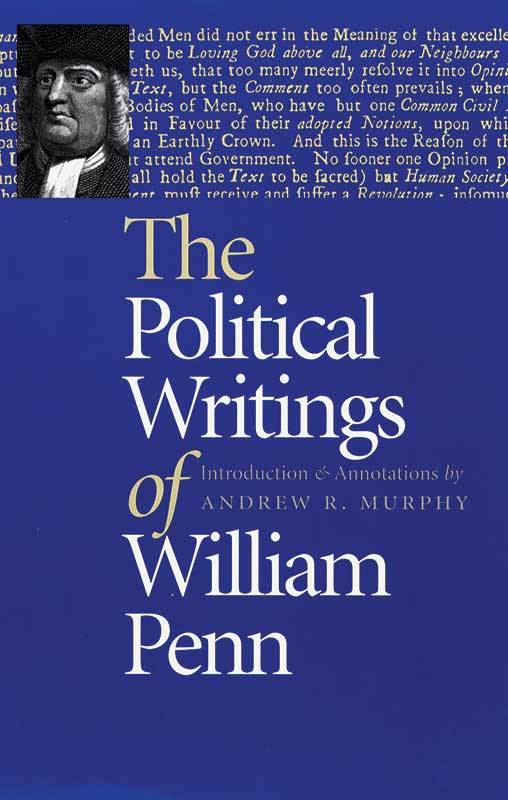
7.: a perswasive to Moderation to Church-Dissenters, in Prudence and Conscience: Humbly submitted to the KING and His Great Council (1686) - William Penn, The Political Writings of William Penn [1670]Edition used:The Political Writings of William Penn, introduction and annotations by Andrew R. Murphy (Indianapolis: Liberty Fund, 2002).
About Liberty Fund:Liberty Fund, Inc. is a private, educational foundation established to encourage the study of the ideal of a society of free and responsible individuals. Copyright information:The copyright to this edition, in both print and electronic forms, is held by Liberty Fund, Inc. Fair use statement:This material is put online to further the educational goals of Liberty Fund, Inc. Unless otherwise stated in the Copyright Information section above, this material may be used freely for educational and academic purposes. It may not be used in any way for profit.
7.a perswasive to Moderation to Church-Dissenters, in Prudence and Conscience: Humbly submitted to the KING and His Great Council (1686)The EPISTLE.HAVING of late Time observ’d the Heat, Aversion and Scorn with which some Men have treated all Thoughts of Ease to Church Dissenters, I confess I had a more than ordinary Curiosity to examine the Grounds those Gentlemen went upon: For I could not tell how to think Moderation should be a Vice, where Christianity was a Virtue, when the Great Doctor of that Religion commands, that Our Moderation be known unto all Men; and why? For the Lord is at Hand:1 And what to do? but to judge our Rancor, and retaliate and punish our Bitterness of Spirit. And, to say true, ’tis a severe Reflection we draw upon our selves, that though Pagan Emperors could endure the Addresses of Primitive Christians, and Christian Caesars receive the Apologies of Infidels, for Indulgence, yet it should be thought, of some Men, an Offence to seek it, or have it of a Christian Prince, whose Interest I dare say it is, and who himself so lately wanted it: But the Consideration of the Reason of this Offence, will increase our Admiration; for they tell us, ’tis dangerous to the Prince to suffer it, while the Prince is himself a Dissenter: This Difficulty is beyond all Skill to remove, that it should be against the Interest of a Dissenting Prince to indulge Dissent. For though it will be granted there are Dissenters on differing Principles from those of the Prince, yet they are still Dissenters, and Dissent being the Prince’s Interest, it will naturally follow, that those Dissenters are in the Interest of the Prince, whether they think on it or no. Interest will not lye: Men embark’d in the same Vessel, seek the Safety of the Whole in their Own, whatever other Differences they may have. And Self-Safety is the highest worldly Security a Prince can have; for though all Parties would rejoyce their own Principles prevailed, yet every one is more solicitous about it’s own Safety, than the other’s Verity. Wherefore it cannot be unwise, by the Security of All, to make it the Interest as well as Duty of All, to advance that of the Publick. Angry Things, then, set aside, As Matters now are, What is best to be done? This I take to be the Wise Man’s Question, as to consider and answer it, will be his Business. Moderation is a Christian Duty, and it has ever been the Prudent Man’s Practice. For those Governments that have used it in their Conduct, have succeeded best in all Ages. I remember it is made in Livy the Wisdom of the Romans, that they relaxed their Hand to the Privernates, and thereby made them most faithful to their Interest. And it prevailed so much with the Petilians, that they would endure any Extremity from Hannibal, rather than desert their Friendship, even then, when the Romans discharged their Fidelity, and sent them the Despair of knowing they could not relieve them.2 So did one Act of Humanity overcome the Falisci above Arms: Which confirms that noble Saying of Seneca, Mitius imperanti Melius paretur, the mildest Conduct is best obeyed.3 A Truth Celebrated by Grotius and Campanella:4 Practised, doubtless, by the bravest Princes: For CYRUS exceeded, when he built the Jews a Temple, and himself no Jew: ALEXANDER astonished the Princes of his Train with the profound Veneration he paid the High Priest of that People: And AUGUSTUS was so far from suppressing the Jewish Worship, that he sent Hecatombs to Jerusalem to increase their Devotion.5Moderation fill’d the Reigns of the most Renowned Caesars: And Story says, they were Neros and Caligulas that loved Cruelty. But others tell us that Dissenters are mostly Antimonarchical, and so not to be indulged, and that the Agreement of the Church of England and Rome in Monarchy and Hierarchy, with their Nearness in other Things should oblige her to grant the Roman Catholicks a special Ease, exclusive of the other Dissenters. But with the Leave of those Worthy Gentlemen, I would say, no Body is against that which is for him: And that the Aversion apprehended to be in some against the Monarchy, rather comes from Interest than Principle: For Governments were never destroy’d by the Interests they preserve. In the next Place, it is as plain, that there is a Fundamental Difference between those Churches in Religion and Interest. In Religion, it appears by a Comparison of the Thirty Nine Articles with the Doctrine of the Council of Trent.6 In Interest, they differ; Fundamentally, because our Church is in the Actual Possession of the Churches and Livings that the other Church claims. What better Mixture then can these two Churches make than that of Iron and Clay? Nor do I think it well judged, or wise, in any that pretend to be Sons of the Church of England, to seek an Accommodation from the Topick of Affinity, since ’tis that some of her Dissenters have always objected, and she as constantly deny’d to be true. I say, this Way of Reconciling or Indulging Roman Catholicks stumbles far greater Numbers of People of nearer Creeds, and gives the Church of England the Lye. But suppose the Trick took, and they only of all Dissenters had Indulgence, yet Their Paucity considered, I am sure, a Pair of Sir Kenelm Digby’s Breeches would set with as good a Grace upon the late Lord Rochester’s Dwarf. Upon the whole Matter, Let Men have Ease, and they will keep it; For those that might plot to get it, would not plot to lose it. Men love the Bridge they need and pass: And that Prince who has his People fast by Interest, holds them by the strongest human Tye; for other Courses have failed as often as they have been tried. Let us then once try a True Liberty: Never did the Circumstances of any Kingdom lye more open and fair to so blessed an Accommodation than we do at this Time. But we are told, The King has promised to maintain the Church of England: I grant it: But if the Church of England claims the King’s Promise of Protection, her Dissenters cannot forget That of his Clemency: And as they were both great, and admirably distinguished, so by no Means are they inconsistent or impracticable. Will not his Justice let him be wanting in the One? And can his Greatness of Mind let him leave the Other behind him in the Storm, unpity’d and unhelp’d? Pardon me, we have not to do with an insensible Prince, but one that has been Touch’d with our Infirmities:7 More than any Body fit to judge our Cause, by the Share he once had in it. Who should give Ease like the Prince that has wanted it? To suffer for his own Conscience, looked Great; but to deliver other Men’s, were Glorious. It is a Sort of paying the Vows of his Adversity, and it cannot therefore be done by any one else, with so much Justice and Example. Far be it from me to solicite any Thing in Diminution of the Just Rights of the Church of England: Let her rest protected where she is. But I hope, none will be thought to intend her Wrong, for refusing to understand the King’s Promise to her, in a Ruinous Sense to all Others; and I am sure she would understand her own Interest better, if she were of the same Mind. For it is morally impossible that a Conscientious Prince can be thought to have ty’d himself to compel others to a Communion, that himself cannot tell how to be of; or that any thing can oblige him to shake the Firmness of those he has confirmed by his own Royal Example. Having then so Illustrious an Instance of Integrity, as the Hazard of the Loss of Three Crowns for Conscience. Let it at least excuse Dissenters Constancy, and provoke the Friends of the Succession to Moderation, that no Man may lose his Birth-Right for his Perswasion, and us to live Dutifully, and so Peaceably under our own Vine, and under our own Fig-Tree, with Glory to God on High, to the King Honour, and Good-will to all Men. A Perswasive to Moderation, &c.MODERATION, the Subject of this Discourse, is in plainer English, Liberty of Conscience to Church Dissenters: A Cause I have, with all Humility, undertaken to plead, against the Prejudices of the Times. That there is such a Thing as Conscience, and the Liberty of it, in Reference to Faith and Worship towards God, must not be denied, even by those, that are most scandal’d at the Ill Use some seem to have made of such Pretences. But to settle the Terms: By Conscience, I understand the Apprehension and Perswasion a Man has of his Duty to God: By Liberty of Conscience, I mean, A Free and Open Profession and Exercise of that Duty; especially in Worship: But I always premise this Conscience to keep within the Bounds of Morality, and that it be neither Frantick nor Mischievous, but a Good Subject, a Good Child, a Good Servant, in all the Affairs of Life: As exact to yield to Caesar the Things that are Caesar’s, as jealous of withholding from God the Thing that is God’s. In brief, he that acknowledges the civil Government under which he lives, and that maintains no Principle hurtful to his Neighbour in his Civil Property. For he that in any Thing violates his Duty to these Relations, cannot be said to observe it to God, who ought to have his Tribute out of it. Such do not reject their Prince, Parent, Master or Neighbour, but God who enjoyns that Duty to them. Those Pathetick Words of Christ will naturally enough reach the Case, In that ye did it not to them, ye did it not to me;8 for Duty to such Relations hath a Divine Stamp: And Divine Right runs through more Things of the World, and Acts of our Lives, than we are aware of: And Sacrilege may be committed against more than the Church. Nor will a Dedication to God, of the Robbery from Man, expiate the Guilt of Disobedience: For though Zeal could turn Gossip to Theft, his Altars would renounce the Sacrifice. The Conscience then that I state, and the Liberty I pray, carrying so great a Salvo and Deference to publick and private Relations, no ill Design can, with any Justice, be fix’d upon the Author, or Reflection upon the Subject, which by this Time, I think, I may venture to call a Toleration. But to this so much craved, as well as needed, Toleration, I meet with two Objections of weight, the solving of which will make Way for it in this Kingdom. And the first is a Disbelief of the Possibility of the Thing. Toleration of Dissenting Worships from that establish’d, is not practicable (say some) without Danger to the State, with which it is interwoven. This is Political. The other Objection is, That admitting Dissenters to be in the Wrong, (which is always premised by the National Church) such Latitude were the Way to keep up the Dis-union, and instead of compelling them into a better Way, leave them in the Possession and Pursuit of their old Errors, This is Religious. I think I have given the Objections fairly, ’twill be my next Business to answer them as fully. The Strength of the first Objection against this Liberty, is the Danger suggested to the State; the Reason is, the National Form being interwoven with the Frame of the Government. But this seems to me only said, and not only (with Submission) not prov’d, but not true: For the Establish’d Religion and Worship are no other Ways interwoven with the Government, than that the Government makes Profession of them, and by divers Laws has made them the Currant Religion, and required all the Members of the State to conform to it. This is nothing but what may as well be done by the Government, for any other Perswasion, as that. ’Tis true, ’tis not easy to change an Established Religion, nor is that the Question we are upon; but State Religions have been chang’d without the Change of the States. We see this in the Governments of Germany and Denmark upon the Reformation: But more clearly and near our selves, in the Case of Henry the Eighth, Edward the Sixth, Queen Mary and Elizabeth; for the Monarchy stood, the Family remained and succeeded under all the Revolutions of State-Religion, which could not have been, had the Proposition been generally true. The Change of Religion then, does not necessarily change the Government, or alter the State; and if so, a fortiori, Indulgence of Church-Dissenters, does not necessarily hazard a Change of the State, where the present State-Religion or Church remains the same; for That I premise. Some may say, That it were more facile to change from one National Religion to another, than to maintain the Monarchy and Church, against the Ambition and Faction of divers Dissenting Parties. But this is improbable at least. For it were to say, That it is an easier Thing to change a whole Kingdom, than with the Sovereign Power, followed with Armies, Navies, Judges, Clergy, and all the Conformists of the Kingdom, to secure the Government from the Ambition and Faction of Dissenters, as differing in their Interests within themselves, as in their Perswasions; and were they united, have neither Power to awe, nor Rewards to allure to their Party. They can only be formidable, when headed by the Sovereign. They may stop a Gap, or make, by his Accession, a Ballance: Otherwise, ’till ’tis harder to fight broken and divided Troops, than an entire Body of an Army, it will be always easier to maintain the Government under a Toleration of Dissenters, than in a total Change of Religion, and even then it self has not fail’d to have been preserved. But whether it be more or less easy, is not our Point; if they are many, the Danger is of Exasperating, not of making them easy; for the Force of our Question is, Whether such Indulgence be safe to the State? And here we have the first and last, the best and greatest Evidence for us, which is Fact and Experience, the Journal and Resolves of Time, and Treasure of the Sage. For, First, The Jews, that had most to say for their Religion, and whose Religion was Twin to their State, (both being joined, and sent with Wonders from Heaven) Indulged Strangers in their Religious Dissents. They required but the Belief of the Noachical Principles, which were common to the World: No Idolater, and but a Moral Man, and he had his Liberty, ay, and some Privileges too, for he had an Apartment in the Temple, and this without Danger to the Government. Thus Maimonides, and others of their own Rabbies, and Grotius out of them.9 The Wisdom of the Gentiles was very admirable in this, that though they had many Sects of Philosophers among them, each dissenting from the other in their Principles, as well as Discipline, and that not only in Physical Things, but Points Metaphysical, in which some of the Fathers were not free, the School-men deeply engaged, and our present Academies but too much perplexed; yet they indulged them and the best Livers with singular Kindness: The greatest Statesmen and Captains often becoming Patrons of the Sects they best affected, honouring their Readings with their Presence and Applause. So far were those Ages, which we have made as the Original of Wisdom and Politeness, from thinking Toleration an Error of State, or dangerous to the Government. Thus Plutarch, Strabo, Laertius, and others.10 To these Instances I may add the Latitude of Old Rome, that had almost as many Deities as Houses: For Varro tells us of no less than Thirty Thousand several Sacra, or Religious Rites among her People, and yet without a Quarrel:11 Unhappy Fate of Christianity! the best of Religions, and yet her Professors maintain less Charity than Idolaters, while it should be peculiar to them. I fear, it shews us to have but little of it at Heart. But nearer Home, and in our own Time, we see the Effects of a discreet Indulgence, even to Emulation. Holland, that Bog of the world, neither Sea nor dry Land, now the Rival of tallest Monarchs; not by Conquests, Marriages, or Accession of Royal Blood, the usual Ways to Empire, but by her own superlative Clemency and Industry; for the one was the Effect of the other: She cherished her People, whatsoever were their Opinions, as the reasonable Stock of the Country, the Heads and Hands of her Trade and Wealth; and making them easy in the main Point, their Conscience, she became Great by them; This made her fill with People, and they filled her with Riches and Strength. And if it should be said, She is upon her Declension for all that. I answer, All States must know it, nothing is here Immortal. Where are the Babylonian, Persian, and Grecian Empires? And are not Lacedaemon, Athens, Rome and Carthage gone before her? Kingdoms and Commonwealths have their Births and Growths, their Declensions and Deaths, as well as private Families and Persons. But ’tis owing neither to the Armies of France, nor Navies of England, but her own Domestick Troubles. Seventy Two sticks in her Bones yet: The growing Power of the Prince of Orange, must, in some Degree, be an Ebb to that State’s Strength; for they are not so unanimous and vigorous in their Interest as formerly: But were they secure against the Danger of their own Ambition and Jealousy, any Body might insure their Glory at five per Cent. But some of their greatest Men apprehending they are in their Climacterical Juncture, give up the Ghost, and care not, if they must fall, by what Hand it is. Others chuse a Stranger, and think one afar off will give the best Terms, and least annoy them: Whilst a considerable Party have chosen a Domestick Prince, Kin to their early Successes by the Fore-father’s Side (the Gallantry of his Ancestors) And that his own Greatness and Security are wrapt up in theirs, and therefore modestly hope to find their Account in his Prosperity. But this is a Kind of Digression, only before I leave it, I dare venture to add, that if the Prince of Orange changes not the Policies of that State, he will not change her Fortune, and he will mightily add to his own. But perhaps I shall be told, That no Body doubts that Toleration is an agreeable Thing to a Commonwealth, where every one thinks he has a Share in the Government; ay, that the one is the Consequence of the other, and therefore most carefully to be avoided by all Monarchical States. This indeed were shrewdly to the Purpose, in England, if it were but true. But I don’t see how there can be one true Reason advanc’d in Favour of this Objection: Monarchies, as well as Commonwealths, subsisting by the Preservation of the People under them. But, First, if this were true, it would follow, by the Rule of Contraries, that a Republick could not subsist with Unity and Hierarchy, which is Monarchy in the Church; but it must, from such Monarchy in Church, come to Monarchy in State too. But Venice, Genoa, Lucca, seven of the Cantons of Switzerland, (and Rome her self, for she is an Aristocracy) all under the loftiest Hierarchy in Church, and where is no Toleration, shew in Fact, that the contrary is true. But, Secondly, This Objection makes a Commonwealth the better Government of the Two, and so overthrows the Thing it would establish. This is effectually done, if I know any thing, since a Commonwealth is hereby rendred a more copious, powerful and beneficial Government to Mankind, and is made better to answer Contingencies and Emergencies of State, because this subsists either Way, but Monarchy not, if the Objection be true. The one prospers by Union in Worship and Discipline, and by Toleration of Dissenting Churches from the National. The other only by an Universal Conformity to a National Church. I say, this makes Monarchy (in it self, doubtless, an admirable Government) less Powerful, less Extended, less Propitious, and finally less Safe to the People under it, than a Commonwealth; In that no Security is left to Monarchy under Diversity of Worships, which yet no Man can defend or forbid, but may often arrive, as it hath in England, more than five Times, in the Two Last Ages. And truly ’tis natural for Men to chuse to settle where they may be safest from the Power and Mischief of such Accidents of State. Upon the whole Matter, it is to reflect the last Mischief upon Monarchy, the worst Enemies it has could hope to disgrace, or endanger it by; since it is to tell the People under it, that they must either conform, or be destroy’d, or to save themselves, turn Hypocrites, or change the Frame of the Government they live under. A Perplexity both to Monarch and People, that nothing can be greater, but the Comfort of knowing the Objection is False. And that which ought to make every reasonable Man of this Opinion, is the Cloud of Witnesses that almost every Age of Monarchy affords us. I will begin with that of Israel, the most exact and sacred Pattern of Monarchy, begun by a valiant Man, translated to the best, and improv’d by the wisest of Kings, whose Ministers were neither Fools, nor Fanaticks: Here we shall find Provision for Dissenters: Their Proselyti Domicilii were so far from being compelled to their National Rites, that they were expresly forbid to observe them. Such were the Egyptians that came with them out of Egypt, the Gibeonites and Canaanites, a great People, that after their several Forms, worshipt in an Apartment of the same Temple. The Jews with a Liturgy, they without one: The Jews had Priests, but these none: The Jews had Variety of Oblations, these People burnt Offerings only. All that was required of them was the natural Religion of Noah, in which the Acknowledgment and Worship of the true God, was, and it still ought to be, the main Point; nay, so far were they from Coercive Conformity, that they did not so much as oblige them to observe their Sabbath, though one of the Ten Commandments: Grotius and Selden say more. Certainly this was great Indulgence, since so unsuitable an Usage lookt like prophaning their Devotion, and a common Nusance to their National Religion. One would think by this, that their Care lay on the Side of preserving their Cult from the Touch or Accession of Dissenters, and not of forcing them, by undoing Penalties, to conform. This must needs be evident: For if God’s Religion and Monarchy (for so we are taught to believe it) did not, and would not, at a Time when Religion lay less in the Mind, and more in Ceremony, compel Conformity from Dissenters, we hope we have got the best Presidents on our side. But if this Instance be of most Authority, we have another very exemplary, and to our Point Pertinent; for it shews what Monarchy may do: It is yielded us from the famous Story of Mordecai.12 He, with his Jews, were in a bad plight with the King Ahasuerus, by the ill Offices Haman did them: The Arguments he used were drawn from the common Topicks of Faction and Sedition, That they were an odd and dangerous People, under differing Laws of their own, and refused Obedience to his; So denying his Supremacy. Dissenters with a witness: Things most tender to any Government. The King thus incensed, commands the Laws to be put in Execution, and decrees the Ruin of Mordecai with all the Jews: But the King is timely intreated, his Heart softens, the Decree is revok’d, and Mordecai and his Friends saved. The Consequence was, as extream Joy to the Jews, so Peace and Blessings to the King. And that which heightens the Example, is the Greatness and Infidelity of the Prince: Had the Instance been in a Jew, it might have been placed to his greater Light, or Piety: In a petty Prince, to the Paucity or Intireness of his Territories: But that an Heathen, and King of One Hundred and seven and twenty Provinces, should throughout his vast Dominions not fear, but practise Toleration with good Success, has something admirable in it. If we please to remember the Tranquility, and Success of those Heathen Roman Emperours, that allowed Indulgence; that Augustus sent Hecatombs to Jerusalem, and the wisest honoured the Jews, and at least spared the divers Sects of Christians, it will certainly oblige us to think, that Princes, whose Religions are nearer of kin, to those of the Dissenters of our Times, may not unreasonably hope for quiet from a discreet Toleration, especially when there is nothing peculiar in Christianity to render Princes unsafe in such an Indulgence. The admirable Prudence of the Emperour Jovianus, in a quite contrary Method to those of the Reigns of his Predecessors, settled the most Imbroiled Time of the Christian World, almost to a Miracle; for though he found the Heats of the Arrians and Orthodox carried to a barbarous Height, (to say nothing of the Novatians, and other dissenting Interests) the Emperour esteeming those Calamities the Effect of Coercing Conformity to the Prince’s or State’s Religion, and that this Course did not only waste Christians, but expose Christians to the Scorn of Heathens, and so scandal those whom they should convert, he resolutely declared, That he would have none molested for the different Exercise of their Religious Worship; which (and that in a trice (for he reigned but seven Months) calm’d the impetuous Storms of Dissention, and reduced the Empire, before agitated with the most uncharitable Contests) to a wonderful Security and Peace; Thus a kindly Amity brought a Civil Unity to the State; which endeavours for a forc’d Unity never did to the Church, but had formerly filled the Government with incomparable Miseries, as well as the Church with Incharity: And which is sad, I must needs say, that those Leaders of the Church that should have been the Teachers and Examples of Peace, in so singular a Juncture of the Churches ferment, did, more than any, blow the Trumpet, and kindle the Fire of Division. So dangerous is it to Super-fine upon the Text, and then Impose it upon Penalty, for Faith. Valentinian the Emperour (we are told by Socrates Scholasticus) was a great Honourer of those that favoured his own Faith; but so, as he molested not the Arrians at all. And Marcellinus farther adds in his Honour, That he was much Renown’d for his Moderate Carriage during his Reign; insomuch, that amongst sundry Sects of Religion, he troubled no Man for his Conscience, imposing neither This nor That to be observed; much less, with menacing Edicts and Injunctions, did he compel others, his Subjects, to bow the Neck, or conform to that which himself Worshipped, but left such Points as clear and untoucht as he found them.13 Gratianus, and Theodosius the Great, Indulg’d divers Sorts of Christians; but the Novatians of all the Dissenters were prefer’d: Which was so far from Insecuring, that it preserv’d the Tranquility of the Empire. Nor till the Time of Celestine Bishop of Rome, were the Novatians disturbed; And the Persecution of them, and the Assumption of the secular Power, began much at the same Time. But the Novatians at Constantinople were not dealt withal; for the Greek Bishops continued to permit them the quiet Enjoyment of their dissenting Assemblies; as Socrates tells us in his fifth and seventh Books of Ecclesiastical Story. I shall descend nearer our own Times; for notwithstanding no Age has been more furiously moved, than that which Jovianus found, and therefore the Experiment of Indulgence was never better made, yet to speak more in View of this Time of Day, we find our Contemporaries, of remoter Judgments in Religion, under no manner of Difficulty in this Point. The Grand Seignior, Great Mogul, Czars of Muscovia, King of Persia; the Great Monarchs of the East have long allow’d and prosper’d with a Toleration: And who does not know that this gave Great Tamerlane his mighty Victories? In these Western Countries we see the same Thing. Cardinal d’Ossat in his 92d Letter to Villeroy, Secretary to Henry the Fourth of France, gives us Doctrine and Example for the Subject in hand;14 Besides (says he) that Necessity has no Law, be it in what Case it will; our Lord Jesus Christ instructs us by his Gospel, To let the Tares alone, lest removing them may endanger the Wheat. That other Catholick Princes have allow’d it without Rebuke. That particularly the Duke of Savoy, who (as great a Zealot as he would be thought for the Catholick Religion) Tolerates the Hereticks in three of his Provinces, namely, Angroyne, Lucerne and Perone. That the King of Poland does as much, not only in Sweedland, but in Poland it self. That all the Princes of the Austrian Family, that are celebrated as Pillars of the Catholick Church, do the like, not only in the Towns of the Empire, but in their proper Territories, as in Austria it self, from whence they take the Name of their Honour. In Hungary, Bohemia, Moravia, Lusatia, Stirria, Camiolia and Croatia the like. That Charles the Fifth, Father of the King of Spain, was the Person that taught the King of France, and other Princes, how to yield to such Emergencies. That his Son, the present King of Spain, who is esteemed Arch Catholick, and that is, as the Atlas of the Catholick Church, Tolerates notwithstanding at this Day, in his Kingdoms of Valentia and Granada, the Moors themselves in their Mahometism, and has offered to those of Zealand, Holland, and other Hereticks of the Low Countries, the free Exercise of their pretended Religion, so that they will but acknowledge and Obey him in Civil Matters. It was of those Letters of this extraordinary Man, for so he was (whether we regard him in his Ecclesiastical Dignity, or his greater Christian and Civil Prudence) that the great Lord Fulkland said, A Minister of State should no more be without Cardinal d’Ossat’s Letters, than a Parson without his Bible. And indeed, if we look into France, we shall find the Indulgence of those Protestants, hath been a flourishing to that Kingdom, as their Arms a Succour to their King. ’Tis true, that since they helpt the Ministers of his Greatness to Success, that haughty Monarch has chang’d his Measures, and resolves their Conformity to his own Religion, or their Ruin; but no Man can give another Reason for it, than that he thinks it for his Turn to please that Part of his own Church, which are the present necessary and unwearied Instruments of his absolute Glory. But let us see the End of this Conduct, it will require more Time to approve the Experiment. As it was the Royal Saying of Stephen, King of Poland, That he was a King of Men, and not of Conscience; a Commander of Bodies, and not of Souls. So we see a Toleration has been practised in that Country of a long Time, with no ill Success to the State; the Cities of Cracovia, Racovia, and many other Towns of Note, almost wholly dissenting from the common Religion of the Kingdom, which is Roman Catholick, as the others are Socinian and Calvinist, mighty opposite to that, as well as to themselves. The King of Denmark, in his large Town of Altona, but about a Mile from Hamburgh, and therefore called so, that is, All-to-near, is a pregnant Proof to our Point. For though his Seat be so remote from that Place, another strong and insinuating State so near, yet under his Indulgence of divers Perswasions, they enjoy their Peace, and he that Security, that he is not upon better Terms in any of his more immediate and Uniform Dominions. I leave it to the thinking Reader, if it be not much owing to this Freedom, and if a contrary Course were not the Way for him to furnish his Neighbours with Means to Depopulate that Place, or make it uneasie and chargeable to him to keep? If we look into other Parts of Germany, where we find a Stout and Warlike People, fierce for the Thing they opine, or believe, we shall find, the Prince Palatine of the Rhine has been safe, and more potent by his Indulgence, witness his Improvements at Manheim: And as (believe me) he acted the Prince to his People in other Things, so in this to the Empire; for he made bold with the Constitution of it in the Latitude he gave his Subjects in this Affair. The Elector of Brandenburg is himself a Calvinist, his People mostly Lutheran, yet in Part of his Dominions, the Roman Catholicks enjoy their Churches quietly. The Duke of Newburg, and a strict Roman Catholick, Brother in Law to the present Emperor, in his Province of Juliers, has, not only at Dewsburg, Mulheim, and other Places, but in Duseldorp it self, where the Court resides, Lutheran, and Calvinist, as well as Roman Catholick, Assemblies. The Elector of Saxony, by Religion a Lutheran, in his City of Budissin, has both Lutherans and Roman Catholicks in the same Church, parted only by a Grate. In Ausburg, they have two chief Magistrates, as their Duumvirat, one must always be a Roman Catholick, and the other a Lutheran. The Bishop of Osnabrug is himself a Lutheran, and in the Town of his Title, the Roman Catholicks, as well as Lutherans, have their Churches: And which is more, the next Bishop must be a Catholick too: For like the Buckets in the Well, they take turns: One way to be sure, so that one be but in the Right. From hence we will go to Sultzbach, a small Territory, but has a great Prince, I mean, in his own extraordinary Qualities; for, among other Things, we shall find him act the Moderator among his People. By Profession he is a Roman Catholick, but has Simultaneum Religionis Exercitium,15 not only Lutherans and Roman Catholicks enjoy their different Worships, but alternatively in one and the same Place, the same Day; so ballancing his Affection by his Wisdom, that there appears neither Partiality in him, nor Envy in them, though of such opposite Perswasions. I will end these Foreign Instances with a Prince and Bishop, all in one, and he a Roman Catholick too, and that is the Bishop of Mentz; who admits, with a very peaceable Success such Lutherans, with his Catholicks, to enjoy their Churches, as live in his Town of Erford. Thus doth Practice tell us, that neither Monarchy nor Hierarchy are in danger from a Toleration. On the contrary, the Laws of the Empire, which are the Acts of the Emperour, and the Soveraign Princes of it, have Tolerated these three Religious Perswasions, viz. The Roman Catholick, Lutheran and Calvinist, and they may as well tolerate three more, for the same Reasons, and with the same Success. For it is not their greater Nearness or consistency in Doctrine, or in Worship; on the contrary, they differ much, and by that, and other Circumstances, are sometimes engaged in great Controversies, yet is a Toleration practicable, and the Way of Peace with them. And which is closest to our Point, at home it self, we see that a Toleration of the Jews, French and Dutch in England, all Dissenters from the National Way: And the Connivance that has been in Ireland: and the down-right Toleration in most of the Kings Plantations abroad, prove the Assertion, That Toleration is not dangerous to Monarchy. For Experience tells us, where it is in any Degree admitted, the King’s Affairs prosper most; People, Wealth and Strength being sure to follow such Indulgence. But after all that I have said in Reason and Fact, why Toleration is safe to Monarchy, Story tells us that worse Things have befallen Princes in Countries under Ecclesiastical Union, than in Places under divided Forms of Worship; and so Tolerating Countries stand to the Prince, upon more than equal Terms with Conforming ones. And where Princes have been exposed to hardship in tolerating Countries, they have as often come from the Conforming, as Non-conforming Party; and so the Dissenter is upon equal Terms, to the Prince or State, with the Conformist. The first is evident in the Jews, under the Conduct of Moses; their Dissention came from the Men of their own Tribes, such as Corah, Dathan and Abiram, with their Partakers.16 To say nothing of the Gentiles. The Miseries and Slaughters of Mauritius the Emperor, prove my Point, who by the greatest Church-men of his Time was withstood, and his Servant that perpetrated the Wickedness, by them, substituted in his Room, because more officious to their Grandure. What Power but that of the Church, dethroned Childerick, King of France, and set Pepin in his Place? The Miseries of the Emperours, Henry the fourth and fifth, Father and Son, from their rebellious Subjects, raised and animated by the Power of Conformists, dethroning both, as much as they could, are notorious. ’Tis alledg’d, that Sigismund King of Sweedland, was rejected by that Lutheran Country, because he was a Roman Catholick. If we come nearer home, which is most suitable to the Reasons of the Discourse, we find the Church-men take part with William Rufus, and Henry the first, against Robert their elder Brother; and after that, we see some of the greatest of them made Head against their King, namely Anselm Arch-Bishop of Canterbury, and his Party, as did his Successor Thomas of Becket to the second Henry. Stephen usurp’d the Crown when there was a Church Union: And King John lived miserable for all that, and at last died by one of his own Religion too. The Dissentions that agitated the Reign of his Son Henry the third, and the Barons War, with Bishop Grosteeds Blessing to Mumford their General: The Deposition and Murther of the second Edward, and Richard, and sixth Henry, and his Son the Prince. The Usurpation of Richard the Third, and the Murther of the Sons of Edward the fourth, in the Tower of London. The civil War that followed between him and the Earl of Richmond, afterwards our Wise Henry the seventh, were all perpetrated in a Country of one Religion, and by the Hands of Conformists. In short, if we will but look upon the civil War that so long raged in this Kingdom, between the Houses of York and Lancaster, and consider that they professed but one and the same Religion, and both back’t with Numbers of Church-men too (to say nothing of the Miserable end of many of our Kings princely Ancestors in Scotland, especially the first and third James) we shall find Cause to say, That Church-Uniformity is not a Security for Princes to depend upon. If we will look next into Countries where Dissenters from the National Church are Tolerated, we shall find the Conformist not less Culpable than the Dissenter. The Disorders among the Jews, after they were settled in the Land that God had given them, came not from those they tolerated, but themselves. They cast off Samuel, and the Government of the Judges. ’Twas the Children of the National Church, that fell in with the Ambition of Absolom, and animated the Rebellion against their Father David. They were the same that revolted from Solomon’s Son, and cryed in behalf of Jeroboam, To your Tents, O Israel!17 Not two Ages ago, the Church of France, too generally fell in with the Family of Guise, against their lawful Soveraign, Henry the Fourth: Nor were they without Countenance of the greatest of their Belief, who stiled it an Holy War: At that Time, fearing (not without Cause) the Defection of that Kingdom from the Roman See. In this Conjuncture, the Dissenters made up the best Part of that King’s Armies, and by their Loyalty and Blood, preserv’d the Blood Royal of France, and set the Crown on the Head of that Prince. That King was twice Assassinated, and the last Time Murdered, as was Henry the third, his Predecessor; but they fell, one by the Hand of a Churchman, the other, at least by a Conformist. ’Tis true, that the next civil War was between the Catholicks and the Huguenots, under the Conduct of Cardinal Richlieu, and the Duke of Rohan: But as I will not justifie the Action, so their Liberties and Cautions so solemnly settled by Henry the Fourth, as the Reward of their singular Merit, being by the Ministry of that Cardinal invaded, they say, they did but defend their Security, and that rather against the Cardinal, than the King, whose Softness suffered him to become a Property to the great Wit and Ambition of that Person: And there is this Reason to believe them, that if it had been otherwise, we are sure that King Charles the First would not in the least have countenanced the Quarrel. However, the Cardinal, like himself, wisely knew when to stop. For though he thought it the Interest of the Crown, to moderate their Greatness, and check their Growth, yet having fresh in Memory the Story of the foregoing Age, he saw, ’Twas Wise to have a Ballance upon Occasion. But this was more than recompenc’d in their fixt Adhesion to the Crown of France, under the Ministry and Direction of the succeeding Cardinal, when their Perswasion had not only Number, and many good Officers to value it self upon, but yielded their King the ablest Captain of the Age, namely, Turene: It was an Huguenot then, at the Head of almost an Huguenot Army, that fell in with a Cardinal himself (see the Union Interest makes) to maintain the Imperial Crown of France, and that on a Roman-Catholick’s Head: And together with their own Indulgence, that Religion, as National too, against the Pretences of a Roman-Catholick Army, headed by a Prince Brave and Learned of the same Religion. I mention not this, to prefer one Party to another; for contrary Instances may be given else-where, as Interests have varied. In Sweedland a Prince was rejected by Protestants; And in England and Holland, and many of the Principalities of Germany, Roman-Catholicks have approv’d themselves Loyal to their Kings, Princes and States. But this suffices to us that we gain the Point; for it is evident in Countries where Dissenters are Tolerated, the Insecurity of the Prince and Government may as well come from the Conforming, as Dissenting Party, and that it comes not from Dissenters, because such. But how Happy and Admirable was this Civil Union between the Cardinal and Turene? Two most opposite Religions, both follow’d by People of their own Perswasion: One says his Mass, t’other his Directory: Both invoke One Deity, by several Ways, for One Success, and it followed with Glory, and a Peace to this Day. O why should it be otherwise now! What has been may be: Methinks Wisdom and Charity are on that Side still. It will doubtless be objected, That the Dissenting Party of England, fell in with the State-Dissenter in our late Civil, but Unnatural War: And this seems to be against us, yet Three Things must be confessed: First, That the War rather made the Dissenters, than the Dissenters made the War. Secondly, That those that were then in being, were not Tolerated, as in France, but prosecuted. And, Lastly, That they did not lead, but follow great Numbers of Church-Goers, of all Qualities, in that unhappy Controversie; and which began upon other Topicks than Liberty for Church-Dissenters. And though they were herein blameable, Reason is Reason, in all Climates and Latitudes. This does not affect the Question: Such Calamities are no necessary Consequences of Church-Dissent, because they would then follow in all Places where Dissenters are Tolerated, which we see they do not: But these may sometimes indeed be the Effects of a violent Endeavour of Uniformity, and that under all Forms of Government, as I fear they were partly here under our Monarchy. But then, this teaches us to conclude, that a Toleration of those, that a contrary Course makes uneasie and desperate, may prevent or cure Intestine Troubles; as Anno Forty Eight; it ended the Strife, and settled the Peace of Germany.18 For ’tis not now the Question, How far Men may be provoked, or ought to resent it; but, Whether Government is Safe in a Toleration, especially Monarchy: And to this Issue we come in Fact, That ’tis Safe, and that Conformists (generally speaking) have, for their Interests, as rarely known their Duty to their Prince, as Dissenters for their Consciences. So that the Danger seems to lye on this Side, of forcing Uniformity against Faith, upon severe Penalties, rather than of a discreet Toleration. In the next Place, I shall endeavour to shew the Prudence and Reasonableness of a Toleration, by the great Benefits that follow it. Toleration, which is an Admission of Dissenting Worships, with Impunity to the Dissenters, secures Property, which is Civil Right, and That Eminently the Line and Power of the Monarchy: For if no Man suffer in his Civil Right for the Sake of such Dissent, the Point of Succession is settled without a Civil War, or a Recantation; since it were an absurd Thing to imagine, that a Man born to Five Pounds a Year, should not be liable to forfeit his Inheritance for Non-Conformity, and yet a Prince of the Blood, and an Heir to the Imperial Crown, should be made incapable of Inheritance for his Church-Dissent. The Security then of Property, or Civil Right, from being forfeitable for Religious Dissent, becomes a Security to the Royal Family, against the Difficulties lately labour’d under in the Business of the Succession.19 And though I have no Commission for it, besides the great Reason and Equity of the Thing it self, I dare say, there can hardly be a Dissenter at this Time of Day so void of Sense and Justice, as well as Duty and Loyalty, as not to be of the same Mind. Else it were to deny that to the Prince, which he needs, and prays for from him. Let us not forget the Story of Sigismund of Sweedland, of Henry the Fourth of France, and especially of our Own Queen Mary. Had Property been fix’t, the Line of those Royal Families could not have met with any Let or Interruption. ’Twas this Consideration that prevail’d with Judge Hales, though a strong Protestant, after King Edward’s Death, to give his Opinion for Queen Mary’s Succession, against that of all the Rest of the Judges to the contrary: Which Noble President, was recompenc’d in the Loyalty of Archbishop Heath, a Roman Catholick, in favour of the Succession of Queen Elizabeth: And the same Thing would be done again, in the like Case, by Men of the same Integrity. I know it may be said, That there is little Reason now for the Prince to regard this Argument in Favour of Dissenters, when it was so little heeded in the Case of the Presumptive Heir to the Crown. But as this was the Act and Heat of Conforming Men within Doors, so if it were, in Counsel or Desire, the Folly and Injustice of any Dissenters without Doors, shall many entire Parties pay the Reckoning of the few busie Offenders? They would humbly hope, that the singular Mildness and Clemency, which make up so great a Part of the King’s publick Assurances, will not leave him in his Reflection here. ’Tis the Mercies of Princes, that above all their Works, give them the nearest Resemblance to Divinity in their Administration. Besides, it is their Glory to measure their Actions by the Reason and Consequence of Things, and not by the Passions that possess and animate private Breasts: For it were fatal to the Interest of a Prince, that the Folly or Undutifulness of any of his Subjects, should put him out of the Way, or tempt him to be unsteady to his Principle and Interest: And yet, with Submission, I must say, it would be the Consequence of Coercion: For, by exposing Property for Opinion, the Prince exposes the Consciences and Property of his own Family, and plainly Disarms them of all Defence, upon any Alteration of Judgment. Let us remember, That several of the same Gentlemen, who at first Sacrificed Civil Rights for Non-Conformity in common Dissenters, fell at last to make the Succession of the Crown the Price of Dissent in the next Heir of the Royal Blood. So dangerous a Thing it is to hazard Property to serve a Turn for any Party, or suffer such Examples in the Case of the meanest Person in a Kingdom. Nor is this all the Benefit that attends the Crown by the Preservation of Civil Rights; for the Power of the Monarchy is kept more Entire by it. The King has the Benefit of his whole People, and the Reason of their Safety is owing to their Civil, and not Ecclesiastical Obedience: Their Loyalty to Caesar, and not Conformity to the Church. Whereas the other Opinion would have it, That no Conformity to the Church, No Property in the State: Which is to clog and narrow the Civil Power, for at this Rate, No Church-Man, No English-Man; and, No Conformist, No Subject. A Way to alien the King’s People, and practise an Exclusion upon him, from, it may be, a Fourth Part of his Dominions. Thus it may happen, that the ablest Statesman, the bravest Captain, and the best Citizen may be disabled, and the Prince forbid their Employment to his Service. Some Instances of this we have had since the late King’s Restoration: For upon the first Dutch-War, Sir William Penn being commanded to give in a List of the ablest Sea-Officers in the Kingdom, to serve in that Expedition, I do very well remember he presented our present King with a Catalogue of the knowingest and bravest Officers the Age had bred, with this Subscrib’d, These Men, if his Majesty will please to admit of their Perswasions, I will answer for their Skill, Courage and Integrity. He pickt them by their Ability, not their Opinions; and he was in the Right; for that was the best Way of doing the King’s Business. And of my own Knowledge, Conformity robb’d the King at that Time of Ten Men, whose greater Knowledge and Valour, than any One Ten of that Fleet, had in their Room, been able to have saved a Battel, or perfected a Victory. I will Name Three of them: The First was Old Vice Admiral Goodson, than whom, No-body was more Stout, or a Seaman. The Second, Captain Hill, that in the Saphire, beat Admiral Everson Hand to Hand, that came to the Relief of Old Trump. The Third, was Captain Potter, that in the Constant Warwick, took Captain Beach, after Eight Hours smart Dispute. And as evident it is, That if a War had proceeded between this Kingdom and France Seven Years ago, the Business of Conformity had deprived the King of many Land-Officers, whose Share in the late Wars of Europe, had made knowing and able. But which is worst of all, such are not Safe, with their Dissent, under their own Extraordinary Prince. For, though a Man were a Great Honourer of his King, a Lover of his Country, an Admirer of the Government: In the Course of his Life, Sober, Wise, Industrious and Useful, if a Dissenter from the Establisht Form of Worship, in that Condition there is no Liberty for his Person, nor Security to his Estate: As Useless to the Publick, so Ruin’d in himself. For this Net catches the Best. Men True to their Conscience, and who indulged, are most like to be so to their Prince; whilst the rest are left to cozen him by their Change; for that is the Unhappy End of Forc’d Conformity in the Poor Spirited Compliers. And this must always be the Consequence of necessitating the Prince to put more and other Tests upon his People, than are requisite to secure him of their Loyalty. And when we shall be so Happy in our Measures, as to consider this Mischief to the Monarchy, it is to be hop’d, it will be thought expedient to dis-intangle Property from Opinion, and cut the untoward Knot some Men have tyed, that hath so long hamper’d and gaul’d the Prince as well as People. It will be then, when Civil Punishments shall no more follow Church Faults, that the Civil Tenure will be recover’d to the Government, and the Natures of Acts, Rewards and Punishments, so distinguish’d, as Loyalty shall be the Safety of Dissent, and the whole People made useful to the Government. It will, perhaps, be objected, That Dissenters can hardly be obliged to be True to the Crown, and so the Crown unsafe in their very Services; for they may easily turn the Power given them to serve it, against it, to Greaten themselves. I am willing to obviate every Thing, that may with any Pretence be offerr’d against our intreated Indulgence. I say No, and appeal to the King himself (against whom the Prejudices of our late Times ran highest, and who therefore has most Reason to Resent) If ever He was better Lov’d or Serv’d, than by the Old Round-headed Seamen, the Earl of Sandwich, Sir William Penn, Sir J. Lawson, Sir G. Ascue, Sir R. Stanier, Sir J. Smith, Sir J. Jordan, Sir J. Harmon, Sir Christopher Minns, Captain Sansum, Curtins, Clark, Robinson, Molton, Wager, Tern, Parker, Haward, Hubbard, Fen, Langhorn, Daws, Earl, White; to say nothing of many yet Living, of Real Merit, and many Inferior Officers, Expert and Brave. And to do our Prince Justice, He deserv’d it from them, by his Humility, Plainness and Courage, and the Care and Affection that he always shew’d them. If any say, That most of these Men were Conformists, I presume to tell them, I know as well as any Man, they Serv’d the King never the Better for that: On the contrary, ’twas all the Strife that some of them had in themselves, in the doing that Service, that they must not serve the King without it; and if in that they could have been Indulged, they had perform’d it with the greatest Alacrity. Interest will not lye. Where People find their Reckoning, they are sure to be True. For ’tis Want of Wit that makes any Man false to himself. ’Twas he that knew all Men’s Hearts, that said, Where the Treasure is, there will the Heart be also.20 Let Men be easie, safe, and upon their Preferment with the Prince, and they will be Dutiful, Loyal, and most Affectionate. Mankind by Nature fears Power, and melts at Goodness. Pardon my Zeal, I would not be thought to plead for Dissenters Preferment; ’tis enough they keep what they have, and may live at their own Charges. Only I am for having the Prince have Room for his Choice, and not be crampt and stinted by Opinion; but imploy those who are best able to serve him: And, I think out of Six Parties, ’tis better picking, than out of One, and therefore the Prince’s Interest is to be Head of all of them, which a Toleration effects in a Moment, since those Six (divided Interests, within themselves) having but One Civil Head, become one intire Civil Body to the Prince. And I am sure, I have Monarchy on my Side, if Solomon and his Wisdom may stand for it, who tells us, That the Glory of a King is in the Multitude of his People.21 Nor is this all, for the Consequences of such an Universal Content, would be of infinite Moment to the Security of the Monarchy, both at Home and Abroad. At Home, for it would Behead the Factions without Blood, and Banish the Ringleaders without going abroad. When the Great Bodies of Dissenters see the Care of the Government for their Safety, they have no Need of their Captains, nor these any Ground for their Pretences: For as they us’d the People to value themselves, and raise their Fortunes with the Prince, so the People follow’d their Leaders to get that Ease, they see their Heads promised, but could not, and the Government can, and does give them. Multitudes cannot Plot, they are too many, and have not Conduct for it, they move by another Spring. Safety is the Pretence of their Leaders: If once they see they enjoy it, they have yet Wit enough not to hazard it for any Body: For the Endeavours of Busie Men are then discernable; but a State of Severity gives them a Pretence, by which the Multitude is easily taken. Men may indiscreetly Plot to get what they would never Plot to lose. So that Ease is not only their Content, but the Prince’s Security. This I say, upon a Supposition, That the Dissenters could agree against the Government; which is a begging of the Question: For it is improbable (if not impossible without Conformists) since, besides the Distance they are at in their Perswasions and Affections, they dare not hope for so Good Terms from one another, as the Government gives: And that Fear, with Emulation, would draw them into that Duty, that they must all fall into a Natural Dependence, which I call, Holding of the Prince, as the Great Head of the State. From Abroad, we are as Safe as from within our selves: For if Leading Men at Home are thus disappointed of their Interest in the People, Foreigners will find here no Interpreters of their dividing Language, nor Matter (if they could) to work upon. For the Point is gain’d, the People they would deal in, are at their Ease, and cannot be bribed; and those that would, can’t deserve it. It is this that makes Princes live Independent of their Neighbours: And, to be loved at Home, is be feared Abroad: One follows necessarily the other. Where Princes are driven to seek a foreign Assistance, the Issue either must be the Ruin of the Prince, or the absolute Subjection of the People; not without the Hazard of becoming a Province to the Power of that Neighbour that turns the Scale. These Consequences have on either Hand an ill Look, and should rebate Extremes. The Greatness of France carries those Threats to all her Neighbours, that, politically speaking, ’tis the Melancholiest Prospect England has had to make since Eighty Eight:22 The Spaniard at that Time, being shorter in all Things but his Pride and Hope, than the French King is now, of the same Universal Monarchy. This Greatness, begun with the Eleventh Lewis, some will have it, has not been so much advanced by the Wisdom of Richlieu, and Craft of Mazarene, no, nor the Arms of the present Monarch, as by the Assistance or Connivance of England, that has most to lose by him. O. Cromwell began, and gave him the Scale against the Spaniard. The Reason of State he went upon, was the Support of Usurp’d Dominion: And he was not out in it; for the Exile of the Royal Family was a great Part of the Price of that Aid: In which we see, how much Interest prevails above Nature. It was not Royal Kindred could shelter a King against the Solicitations of an Usurper with the Son of his Mother’s Brother. But it will be told us by some People, We have not degenerated, but exactly followed the same Steps ever since, which has given such an Increase to those Beginnings, that the French Monarchy is almost above our Reach. But suppose it were true, What’s the Cause of it? It has not been old Friendship, or nearness of Blood, or Neighbourhood. Nor could it be from an Inclination in our Ministers, to bring Things here to a like Issue, as some have suggested; for then we should have clogged his Successes, instead of helping them in any Kind, lest in so doing, we should have put it into his Power to hinder our own. But perhaps our Cross Accidents of State may sometimes have compelled us into his Friendship, and his Councils have carefully improved the one, and husbanded the other to great Advantages, and that this was more than made for our English Interest: And yet ’tis but too true, that the extreme Heats of some Men, that most inveighed against it, went too far to strengthen that Understanding, by not taking what would have been granted, and creating an Interest at Home, that might naturally have dissolv’d that Correspondence Abroad. I love not to revive Things that are uneasily remembred, but in Points most tender to the late King, he thought himself sometimes too closely pressed, and hardly held; and we are all wise enough now to say, a milder Conduct had succeeded better: For if reasonable Things may be reasonably prest, and with such private Intentions, as induce a Denial, Heats about Things doubtful, unwise or unjust, must needs harden and prejudice. Let us then create an Interest for the Prince at Home, and Foreign Friendships (at best, uncertain and dangerous) will fall of Course; for if it be allowed to Private Men, shall it be forbid to Princes only, to know and to be true to their own Support? It is no more than what every Age makes us to see in all Parties of Men. The Parliaments of England, since the Reformation, giving no Quarter to Roman Catholicks, have forc’d them to the Crown for Shelter. And to induce the Monarchy to yield them the Protection they have needed, they have with mighty Address and Skill, recommended themselves as the Great Friends of the Prerogative, and so successfully too, that it were not below the Wisdom of that Constitution, to reflect what they have lost by that Costiveness of theirs to Catholicks. On the other Hand, the Crown having treated the Protestant Dissenters with the Severity of the Laws that affected them, suffering the Sharpest of them to fall upon their Persons and Estates, they have been driven successively to Parliaments for Succour, whose Priviledges, with equal Skill and Zeal, they have abetted: And our late Unhappy Wars are too plain a Proof, how much their Accession gave the Scale against the Power and Courage of both Conformists and Catholicks, that adhered to the Crown. Nor must this Contrary Adhesion be imputed to Love or Hatred, but Necessary Interest: Refusal in one Place, makes Way for Address in another. If the Scene be changed, the Parts must follow; for as well before, as after Cromwell’s Usurpation, the Roman Catholicks did not only promise, The most ready Obedience to that Government, in their Printed Apologies for Liberty of Conscience; but actually treated by some of their Greatest Men, with the Ministers of those Times, for Indulgence, upon the Assurances they offer’d to give of their Good Behaviour to the Government, as then Establish’d. On the other Hand, we see the Presbyterians, That in Scotland began the War, and in England promoted and upheld it to Forty Seven, when ready to be supplanted by the Independents, wheel to the King. In Scotland they Crown him, and come into England with an Army to restore him, where their Brethren joyn them; but being defeated, They Help, by Private Collections, to support him Abroad; and after the Overthrow of Sir George Booth’s Attempt, to almost a Miracle, restore him. And which is more, a Great Part of that Army too, whose Victories came from the Ruin of the Prince they restored. But to give the last Proofs our Age has of the Power of Interest, against the Notion oppos’d by this Discourse. First, the Independents themselves, held the Greatest Republicans of all Parties, were the most Lavish and Superstitious Adorers of Monarchy in Oliver Cromwell, because of the Regard he had to them; allowing him, and his Son after him, to be Custos Utriusque Tabulae, over all Causes, as well Ecclesiastical as Civil, Supreme Governour. And next, the Conformists in Parliament, reputed the most Loyal and Monarchical Men, did more than any Body question and oppose the late King’s Declaration of Indulgence; even They themselves would not allow so much Prerogative to the Crown, but pleaded and opposed his Political Capacity. This proves the Power of Interest, and that All Perswasions center with it: And when they see the Government engaging them with a Fix’d Liberty of Conscience, they must for their own Sakes seek the Support of it, by which it is maintained. This Union, directed under the Prince’s Conduct, would Awe the Greatness of our Neighbours, and soon restore Europe to its Ancient Ballance, and that into his Hand too: So that He may be the Great Arbiter of the Christian World. But if the Policy of the Government, places the Security of it’s Interest in the Destruction of the Civil Interest of the Dissenters, it is not to be wondred at, if they are less found in the Praises of it’s Conduct, than others, to whom they are offered up a Sacrifice by it. I know it will be insinuated, That there is Danger in Building upon the Union of divers Interests; and this will be aggravated to the Prince, by such as would engross His Bounty, and intercept His Grace from a great Part of his People. But I will only oppose to that meer Suggestion, Three Examples to the contrary, with this Challenge, That if after Rummaging the Records of all Time, they find one Instance to contradict me, I shall submit the Question to their Authority. The First, is given by those Christian Emperors, who admitted all Sorts of Dissenters into their Armies, Courts and Senates. This, the Ecclesiastical Story of those Times, assures us, and particularly Socrates, Evagrius, and Onuphrius. The next Instance, is that of Prince William of Orange, who by a timely Indulgence, united the scattered Strength of Holland, and, all animated by the Clemency, as well as Valour of their Captain, crown’d his Attempts with an extraordinary Glory; and, what makes, continues Great. The last; is given us by Livy, in his Account of Hannibal’s Army; “That they consisted of divers Nations, Languages, Customs and Religions: That under all their Successes of War and Peace, for Thirteen Years together, they never mutiny’d against their General, nor fell out among themselves.”23 What Livy relates for a Wonder, the Marquis Virgilio Malvetzy gives the Reason of, to wit, their Variety and Difference, well managed by their General; for, said he, “It was impossible for so many Nations, Customs and Religions to combine, especially when the General’s equal Hand gave him more Reverence with them, than they had of Affection for one another. This (says he) some would wholly impute to Hannibal; but however great he was, I attribute it to the Variety of People in the Army: For (adds he) Rome’s Army was ever less given to Mutiny, when ballanced with Auxiliary Legions, than when intirely Roman.” Thus much in his Discourse upon Cornelius Tacitus.24 And they are neither few, nor of the weakest Sort of Men, that have thought the Concord of Discords a firm Basis for Government to be built upon. The Business is to Tune them well, and that must be the Skill of the Musician. In Nature we see all Heat consumes, all Cold kills: That three Degrees of Cold to two of Heat, allays the Heat, but introduces the contrary Quality, and over-cools by a Degree; but two Degrees of Cold to two of Heat, makes a Poize in Elements, and a Ballance in Nature. And in those Families where the evenest Hand is carried, the Work is best done, and the Master is most reverenced. This brings me to another Benefit, which accrues to the Monarchy by a Toleration, and that is a Ballance at Home: For though it be improbable, it may so happen, that either the Conforming or Non-conforming Party may be undutiful; the one is then a Ballance of the other. This might have prevented much Mischief to our second and third Henry, King John, the second Edward, and Richard, and unhappy Henry the Sixth, as it undeniably saved the Royal Family of France, and secured Holland, and kept it from Truckling under the Spanish Monarchy. While all hold of the Government, ’tis that which gives the Scale to the most Dutiful; but still, no farther than to shew it’s Power, and awe the Disorderly into Obedience, not to destroy the Ballance, lest it should afterwards want the Means of Over-poizing Faction. That this is more than Fancy, plain it is, that the Dissenter must firmly adhere to the Government for his Being, while the Church-man is provided for. The one subsists by it’s Mercy, the other by it’s Bounty. This is tied by Plenty, but that by Necessity, which being the last of Tyes, and strongest Obligation, the Security is greatest from him, that it is fancy’d most unsafe to Tolerate. But besides this, the Tranquility which it gives at Home, will both oblige those that are upon the Wing for Foreign Parts, to pitch here again; and at a Time when our Neighbouring Monarch is wasting his People, excite those Sufferers into the King’s Dominions, whose Number will encrease that of his Subjects, and their Labour and Consumption, the Trade and Wealth of his Territories.25 For what are all Conquests, but of People? And if the Government may by Indulgence add the Inhabitants of Ten Cities to those of it’s own, it obtains a Victory without Charge. The Ancient Persecution of France and the Low Countries, has furnish’d us with an invincible Instance; for of those that came hither on that Account, we were instructed in most useful Manufactures, as by Courses of the like Nature, we lost a great Part of our Woollen Trade. And as Men, in Times of Danger, draw in their Stock, and either transmit it to other Banks, or bury their Talent at Home for Security (that being out of Sight, it may be, out of Reach too, and either is fatal to a Kingdom) so this Mildness obtained, setting every Man’s Heart at rest, every Man will be at Work, and the Stock of the Kingdom employ’d: which, like the Blood, that hath it’s due Passage, will give Life and Vigour to every Member in the publick Body. And here give me Leave to mention the Experiment made at Home by the late King, in his Declaration of Indulgence. No Matter how well or ill built that Act of State was, ’tis no Part of the Business in Hand, but what Effect the Liberty of it had upon the Peace and Wealth of the Kingdom, may have Instruction in it to our present Condition. ’Twas evident, that all Men laboured cheerfully, and traded boldly, when they had the Royal Word to keep what they got, and the King himself became the Universal Insurer of Dissenters Estates. Whitehall, then, and St. James’s, were as much visited and courted by their respective Agents, as if they had been of the Family: For that which eclipsed the Royal Goodness, being by his own Hand thus remov’d, his benign Influences drew the Returns of Sweetness and Duty from that Part of his Subjects, that the Want of those Influences had made barren before. Then it was that we look’d like the Members of one Family, and Children of one Parent. Nor did we envy our eldest Brother, Episcopacy, his Inheritance, so that we had but a Child’s Portion: For not only Discontents vanish’d, but no Matter was left for ill Spirits, foreign or domestick, to brood upon, or hatch to Mischief. Which was a plain Proof, that it is the Union of Interests, and not of Opinions, that gives Peace to Kingdoms. And with all Deference to Authority, I would speak it, the Liberty of the Declaration seems to be our English Amomum at last: The Sovereign Remedy to our English Constitution. And, to say true, we shifted Luck (as they call it) as soon as we had lost it; like those that lose their Royal Gold, their Evil Returns. For all Dissenters seemed then united in their Affection to the Government, and followed their Affairs without Fear or Distraction. Projects, then, were stale and unmerchantable, and no Body cared for them, because no Body wanted any: That gentle Opiate, at the Prince’s Hand, laid the most Busy and Turbulent to Sleep: But when the Loss of that Indulgence made them uncertain, and that uneasy; Their Persons and Estates being again exposed to pay the Reckoning of their Dissent, no doubt but every Party shifted then as they could: Most grew selfish, at least, jealous, fearing one should make Bargains apart, or exclusive of the other. This was the fatal Part Dissenters acted to their common Ruin: And I take this Partiality to have had too great a Share in our late Animosities; which, by fresh Accidents falling in, have swelled to a mighty Deluge, such an one as hath over-whelmed our former civil Concord and Serenity. And pardon me, if I say, I cannot see that those Waters are like to asswage, ’till this Olive-Branch of Indulgence be some Way or other restored: The Waves will still cover our Earth, and a Spot of Ground will hardly be found in this glorious Isle, for a great Number of useful People to set a quiet Foot upon. And, to pursue the Allegory, What was the Ark it self, but the most apt and lively Emblem of Toleration? A Kind of Natural Temple of Indulgence. In which we find two of every living Creature dwelling together, of both Sexes too, that they might propagate; and that as well of the unclean as clean Kind: So that the baser and less useful Sort were saved.26 Creatures never like to change their Nature, and so far from being whipt and punish’d to the Altar, that they were expresly forbid. These were Saved, these were Fed and Restored to their Ancient Pastures. Shall we be so mannerly as to complement the Conformists with the Stile of Clean, and so humble as to take the Unclean Kind, to our selves, who are the less Noble, and more Clownish Sort of People? I think verily we may do it, if we may but be saved too by the Commander of our English Ark. And this the Peaceable and Virtuous Dissenter has the less Reason to fear, since Sacred Text tells us, ’Twas Vice, and Not Opinion, that brought the Deluge upon the rest. And here (to drop our Allegory) I must take Leave to hope, that though the Declaration be gone, if the Reason of it remain, I mean the Interest of the Monarchy, the King and His Great Council will graciously please to think a Toleration, no Dangerous nor Obsolete Thing. But as it has many Arguments for it, that are drawn from the Advantages that have and would come to the Publick by it, so there are divers Mischiefs that must unavoidably follow the Persecution of Dissenters, that may reasonably disswade from such Severity. For they must either be ruined, fly, or conform; and perhaps the last is not the Safest. If they are Ruin’d in their Estates, and their Persons Imprisoned, modestly computing, a Fourth of the Trade and Manufactury of the Kingdom sinks; and those that have helped to maintain the Poor, must come upon the Poor’s Book for Maintenance. This seems to be an Impoverishing of the Publick. But if to avoid this, they transport themselves, with their Estates, into other Governments; nay, though it were to any of the King’s Plantations, the Number were far too great to be spared from Home. So much principal Stock wanting to turn the yearly Traffick, and so many People too, to consume our yearly Growth, must issue fatally to the Trade one Way, and to the Lands and Rents of the Kingdom the other Way. And lastly, If they should resolve, neither to suffer nor fly, but conform to prevent both. It is to be enquired, if this Cure of Church-Division be safe to the State; or not rather, a raking up Coals under Ashes, for a future Mischief? He whom Fear or Policy hath made Treacherous to his own Conscience, ought not to be held True to any thing but his own Safety and Revenge. His Conformity gives him the first, and his Resentment of the Force that compels it, will on no Occasion let him want the last. So that Conformity cozens no Body but the Government: For the State Fanatick (which is the unsafe Thing to the State) being christen’d by Conformity, he is eligible every where, with Persons the most devoted to the Prince: And all Men will hold themselves protected in their Votes by it. A Receipt to make Faction keep, and preserve Disloyalty against all Weathers. For whereas the Nature of Tests is to discover, this is the Way to conceal the Inclinations of Men from the Government. Plain Dissent is the Prince with a Candle in his Hand: He sees the Where and What of Persons and Things: He discriminates, and makes that a Rule of Conduct: But forc’d Conformity is the Prince in the Dark: It blows out his Candle, and leaves him without Distinction. Such Subjects are like Figures in Sand, when Water is flapt upon them, they run together, and are indiscernible: Or written Tradition, made illegible by writing the Oaths and Canons upon it: The safest Way of blotting out Danger. I know not how to forbear saying, that this necessary Conformity makes the Church dangerous to the State: For even the Hypocrisy that follows, makes the Church both conceal and protect the Hypocrites, which, together with their Liberality to the Parson, Charity to the Poor, and Hospitality to their Neighbours, recommends them to the first Favour they have to bestow. That Fort is unsafe, where a Party of the Garrison consists of disguised Enemies; for when they take their Turns at the Watch, the Danger is hardly evitable. It would then certainly be for the Safety of the Fort, that such Friends in Masquerade were industriously kept out, instead of being whipt in. And it was something of this, I remember, that was made an Argument for the Declaration of Indulgence, in the Preamble, to wit, the greater Safety of the Government, from Open and Publick, than Private, dissenting Meetings of Worship; as indeed the rest bear the same Resemblance. For these were the Topicks, Quieting the People, Encouraging Strangers to come and live among us, and Trade by it; and lastly, Preventing the Danger that might arise to the Government by Private Meetings:27 Of greater Reason then from Private Men, not less discontented, but more concealed and secure by the Great Brake of Church Conformity. It is this will make a Comprehension of the next Dissenters to the Church dangerous, tho’ it were practicable, of which Side soever it be. For in an Age, the present Frame of Government shall feel the Art and Industry of the Comprehended. So that a Toleration is in Reason of State to be prefer’d. And if the Reasons of the Declaration were ever good, they are so still, because the Emergencies of State that made them so, remain; and our Neighbours are not less powerful to improve them to our Detriment. But it will be now said, Though the Government should find it’s Account in what has been last alledged, this were the Way to overthrow the Church, and encourage Dissenters to continue in their Errors. Which is that second main Objection I proposed at first, to answer in it’s proper Place, and that I think is this: I humbly say, if it prove the Interest of the three considerable Church-Interests in this Kingdom, a Relaxation, at least, can hardly fail us. The three Church Interests are, That of the Church of England; That of the Roman Catholick Dissenter; and, That of the Protestant Dissenter. That the Church of England ought in Conscience and Prudence to consent to the Ease desired. I pray, first, that it be considered, how great a Reflection it will be upon her Honour, that from a Persecuted, she should be accounted a Persecuting Church: An Overthrow none of her Enemies have been able to give to her many excellent Apologies. Nor will it be excused, by her saying, She is in the Right, which her Persecutors were not; since this is a Confidence not wanting in any of them, or her Dissenters: And the Truth is, it is but the Begging of a Question, that will by no Means be granted. No body ought to know more than Churchmen, that Conscience cannot be forced. That Offerings against Conscience, are as odious to God, as uneasie to them that make them. That God loves a free Sacrifice. That Christ forbad Fire, though from Heaven (it self) to punish Dissenters; and commanded that the Tares should grow with the Wheat till the Harvest. In fine, that we should love Enemies themselves: And to exclude worldly Strife for Religion; That his Kingdom is not of this World. This was the Doctrine of the Blessed Saviour of the World.28 Saint Paul pursues the same Course: Is glad Christ is Preached, be it of Envy; the worst Ground for Dissent that can be. It was he that ask’t that hard, but just Question, Who art thou that judgest another Man’s Servant? To his own Lord he standeth or falleth. He allows the Church a Warfare, and Weapons to perform it, but they are not Carnal, but Spiritual. Therefore it was so advised, that every Man in Matters of Religion, should be fully perswaded in his own Mind, and if any were short or mistaken, God would, in his Time, Inform them better. He tells us of Schismaticks and Hereticks too, and their Punishment, which is to the Point in Hand: He directs to a first and second Admonition, and if that prevail not, reject them: That is, refuse them Church Fellowship, disown their Relation, and deny them Communion. But in all this there is not a Word of Fines or Imprisonments, nor is it an excuse to any Church, that the Civil Magistrate executes the Severity, while they are Members of her Communion, that make or execute the Laws.29 But if the Church could gain her Point, I mean Conformity, unless she could gain Consent too, ’twere but Constraint at last. A Rape upon the Mind, which may encrease her Number, not her Devotion. On the contrary, the rest of her Sons are in danger by their Hypocrisie. The most close, but watchful and Revengeful Thing in the World. Besides, the Scandal can hardly be removed: To over value Coin, and Rate Brass to Silver, Beggars any Country; and to own them for Sons she never begat, debases and destroys any Church. ’Twere better to indulge foreign Coin of intrinsick Value, and let it pass for it’s Weight. ’Tis not Number, but Quality: Two or three sincere Christians, that form an Evangelical Church: And though the Church were less, more Charity on the one Hand, and Piety on the other, with exact Church-Censure, and less civil Coercion, would give her Credit with Conscience in all Sects; without which, their Accession it self would be no Benefit, but disgrace, and hazard to her Constitution. And to speak prudently in this Affair, ’tis the Interest of the Church of England, not to suffer the Extinction of Dissenters, that she may have a Counter-Ballance to the Roman Catholicks, who, though few in Number, are great in Quality, and greater in their foreign Friendships and Assistance. On the other Hand, it is her Interest to Indulge the Roman Catholick, that by his Accession, she may at all Times have the Ballance in her own Hand, against the Protestant Dissenter, leaning to either, as she finds her Doctrine undermined by the one, or her Discipline by the other; or lastly, her Civil Interest endangered from either of them. And it is certainly the Interest of both those Extremes of Dissent, that She, rather than either of them should hold the Scale. For as the Protestant Dissenter cannot hope for any Tenderness, exclusive of Roman Catholicks, but almost the same Reasons may be advanced against him. So on the other Hand, it would look imprudent, as well as unjust, in the Roman Catholicks, to solicite any Indulgence exclusive of Protestant Dissenters. For besides that, it keeps up the Animosity, which it is their Interest to bury; the Consequence will be, to take the Advantage of Time, to snatch it from one another, when an united Request for Liberty, once granted, will oblige both Parties, in all Times, for Example-sake, to have it Equally preserved. Thus are all Church Interests of Conformists and Dissenters rendered consistent and safe in their Civil Interest one with the other. But it will last of all, doubtless, be objected, That tho’ a Toleration were never so desirable in it self, and in it’s Consequence beneficial to the Publick, yet the Government cannot allow it, without Ruin to the Church of England, which it is obliged to maintain. But I think this will not affect the Question at all, unless by maintaining the Church of England, it is understood that he should force whole Parties to be of her Communion, or knock them on the Head: Let us call to mind, that the Religion that is true, allows no Man to do Wrong, that Right may come of it. And that nothing has lessen’d the Credit of any Religion more, than declining to support it self by it’s own Charity and Piety, and taking Sanctuary in the Arms, rather than the Understandings of Men. Violences are ill Pillars for Truth to rest upon. The Church of England must be maintain’d: Right, but can’t that be done without the Dissenter be destroyed? In vain then did Christ command Peter to put up his Sword, with this Rebuke, They that take the Sword, shall perish with the Sword, if his Followers are to draw it again. He makes killing for Religion, Murder, and deserving Death: Was he then in the Right, Not to call Legions to his Assistance?30 And are not his Followers of these Times in the Wrong, to seek to uphold their Religion by any Methods of Force. The Church of England must be maintain’d, therefore the Dissenters, that hold almost the same Doctrine, must be Ruin’d. A Consequence most unnatural, as it is almost impossible. For besides that, the Drudgery would unbecome the civil Magistrate, who is the Image of divine Justice and Clemency, and that it would fasten the Character of a False Church, upon one that desires to be esteemed a True One; she puts the Government upon a Task that is hard to be performed. Kings can no more make Brick without Straw, than Slaves:31 The Condition of our Affairs is much chang’d, and the Circumstances our Government are under, differ mightily from those of our Ancestors. They had not the same Dissents to deal with, nor those Dissents the like Bodies of People to render them formidable, and their Prosecution mischievous to the State. Nor did this come of the Prince’s Neglect or Indulgence: There are other Reasons to be assigned, of which, the Opportunities Domestick Troubles gave to their Increase and Power, and the Severities used to suppress them, may go for none of the least. So that it was as involuntary in the Prince, as to the Church Anxious. And under this Necessity to tye the Magistrate to old Measures, is to be regardless of Time, whose fresh Circumstances give Aim to the Conduct of Wise Men in their present Actions. Governments, as well as Courts, change their Fashions: The same Clothes will not always serve: And Politicks made Obsolete by new Accidents, are as unsafe to follow, as antiquated Dresses are ridiculous to wear. Thus Sea-men know, and teach us in their daily Practice: They humour the Winds, though they will lie as near as they can, and trim their Sails by their Compass: And by Patience under these constrained and uneven Courses, they gain their Port at last. This justifies the Government’s change of Measures from the change of Things; for res nolunt malè Administrari.32 And to be free, it looks more than Partial, to Elect and Reprobate too. That the Church of England is prefer’d, and has the Fat of the Earth, the Authority of the Magistrate, and the Power of the Sword in her Sons Hands, which comprehend all the Honours, Places, Profits, and Powers of the Kingdom, must not be repined at: Let her have it, and keep it all, and let none dare seek or accept an Office that is not of her. But to ruin Dissenters to compleat her Happiness, (pardon the Allusion) is Calvinism in the worst Sense; for this is that Horrendum Decretum reduc’d to Practice: And to pursue that ill-natur’d Principle, Men are civilly Damn’d for that they cannot help, since Faith is not in Man’s Power, though it sometimes exposes one to it.33 It is a severe Dilemma, that a Man must either renounce That of which he makes Conscience in the Sight of God, or be Civilly and Ecclesiastically Reprobated: There was a Time, when the Church of England her self stood in need of Indulgence, and made up a great Part of the Non-Conformists of this Kingdom, and what she then wanted, she pleaded for, I mean a Toleration, and that in a general Style, as divers of the Writings of her Doctors tell us: Of which let it be enough but to mention that excellent Discourse of Dr. Taylor, Bishop of Down, entituled, Liberty of Prophecy.34 And that which makes Severity look the worse in the Members of the Church of England, is the Modesty she professes about the Truth of the Things she believes: For though perhaps it were indefensible in any Church to compel a Man to that which she were infallibly assured to be true, unless she superseded his Ignorance by Conviction, rather than Authority, it must, doubtless, look rude, to punish Men into Conformity to that, of the Truth of which, the Church her self pretends no Certainty. Not that I would less believe a Church so cautious, than one more confident; but I know not how to help thinking Persecution harsh, when they Ruin People for not believing that, which they have not in themselves the Power of believing, and which she cannot give them, and of which her self is not infallibly assured. The Drift of this is Moderation, which well becomes us poor Mortals, That for every Idle Word we speak, must give an Account at the Day of Judgment, if our Saviour’s Doctrine have any credit with us.35 It would much mitigate the Severity, if the Dissent were Sullen, or in Contempt: But if Men can’t help or hinder their Belief, they are rather Unhappy than Guilty, and more to be pitied than blamed. However they are of the reasonable Stock of the Country, and tho’ they were unworthy of Favour, they may not be unfit to live. ’Tis Capital, at Law, to destroy Bastards, and By-blows are laid to the Parish to keep: They must maintain them at last: And shall not these natural Sons, at least, be laid at the Door of the Kingdom? Unhappy Fate of Dissenters! to be less heeded, and more destitute than any Body. If this should ever happen to be the Effect of their own Folly, with Submission, it can never be the Consequence of the Government’s Engagements. Election does not necessarily imply a Reprobation of the rest. If God hath elected some to Salvation, it will not follow of course, that he hath absolutely rejected all the rest. For tho’ he was God of the Jews, he was God of the Gentiles too, and they were his People, tho’ the Jews were his peculiar People. God respects not Persons, says St. Peter, the good of all Nations are accepted. The Difference at last, will not be of Opinion, but Works: Sheep or Goats, All, of all Judgments will be found: And Come, Well done; or Go ye Workers of Iniquity, will conclude, their Eternal State: Let us be careful therefore of an Opinion-Reprobation of one another.36 We see the God of Nature hath taught us softer Doctrine in his great Book of the World: His Sun shines, and his Rain falls upon all. All the Productions of Nature are by Love, and shall it be proper to Religion only to propagate by Force? The poor Hen instructs us in Humanity, who, to defend her feeble Young, refuses no Danger. All the Seeds and Plants that grow for the use of Man, are produced by the kind and warm Influences of the Sun. ’Tis Kindness that upholds Humane Race. People don’t Multiply in Spight: And if it be by gentle and friendly Ways, that Nature produces and matures the Creatures of the World, certainly Religion should teach us to be Mild and Bearing. Let your Moderation be known to all Men, was the saying of a great Doctor of the Christian Faith, and his Reason for that Command Cogent, For the Lord is at Hand.37 As if he had said, Have a care what you do, be not bitter nor violent, for the Judge is at the Door: Do as you would be done to, lest what you deny to others, God should refuse to you. And after all this, shall the Church of England be less tender of Men’s Consciences, than our common Law is of their Lives, which had rather a Thousand Criminals should escape, than that One Innocent should perish? Give me leave to say, that there are many Innocents (Conscience excepted) now exposed, Men honest, peaceable and useful; free of ill Designs; that pray for Caesar, and pay their Tribute to Caesar. If any tell us, They have, or may, ill use their Toleration. I say, this must be look’t to, and not Liberty therefore refused; for the English Church cannot so much forget her own Maxim to Dissenters, That Propter abusum non est Tollendus usus.38 It suffices to our Argument, ’tis no necessary Consequence, and that Fact and Time are for us. And if any misuse such Freedom, and entitle Conscience to Misbehaviour, we have other Laws enough to catch and punish the Offenders, without treating One Party with the Spoils of Six. And when Religion becomes no Man’s Interest, it will hardly ever be any Man’s Hypocrisy. Men will chuse by Conscience, which at least preserves Integrity, though it were mistaken: And if not in the wrong, Truth recompences Inquiry, and Light makes amends for Dissent. And since a plain Method offers it self, from the Circumstances of our ease, I take the Freedom to present it for the Model of the intreated Toleration. Much has been desired, said and prest, in Reference to the late King’s being Head of a Protestant League, which takes in but a Part of the Christian World; the Roman and Grecian Christians being excluded. But I most humbly offer, that our Wise Men would please to think of another Title for our King, and that is Head of a Christian League, and give the Experiment here at Home in his own Dominions. The Christian Religion is admired of All in the Text, and by All acknowledged in the Apostle’s Creed. Here every Party of Christians meet, and center as in a General. The several Species of Christians, that this Genus divideth it self into, are those divers Perswasions we have within this Kingdom; The Church of England, Roman-Catholicks, Grecians, Lutherans, Presbyterians, Independents, Anabaptists, Quakers, Socinians: These I call so many Orders of Christians, that unite in the Text, and differ only in the Comment; All owning One Deity, Saviour and Judge, Good Works, Rewards and Punishments: Which Bodies once Regulated, and holding of the Prince as Head of the Government, Maintaining Charity, and Pressing Piety, will be an Honour to Christianity, a Strength to the Prince, and a Benefit to the Publick: For in Lieu of an unattainable, (at best an unsincere) Uniformity, we shall have in Civils Unity, and Amity in Faith. The Jews before, and in the Time of Herod, were divided into divers Sects. There were Pharisees, Sadducees, Herodians, and Essenes. They maintain’d their Dissent without Ruin to the Government: And the Magistrates fell under no Censure from Christ for that Toleration. The Gentiles, as already has been observed, had their Divers Orders of Philosophers, as Disagreeing as ever Christians were, and that without Danger to the Peace of the State. The Turks themselves show us, that both other Religions, and divers Sects of their own, are very Tolerable, with Security to their Government. The Roman Church is a considerable Instance to our Point; for She is made up of divers Orders of both Sexes, of very differing Principles, fomented sometimes to great Feuds and Controversies; as between Franciscans, Dominicans, Jesuits, and Sorbonists; yet without Danger to the Political State of the Church. On the contrary, She therefore cast her self into that Method, That She might safely give Vent to Opinion and Zeal, and suffer both without Danger of Schism. And these Regulars are, by the Pope’s Grants, priviledg’d with an Exemption from Episcopal Visitation and Jurisdiction. GOD Almighty inspire the King’s Heart, and the Hearts of His Great Council, to be the Glorious Instruments of this Blessing to the Kingdom. I shall conclude this PERSWASIVE, with the Judgment of some Pious Fathers, and Renowned Princes.QUADRATUS and Aristides wrote Two Apologies to Adrian, for the Christian Faith, and against the Persecution of it.39 Justin Martyr, an Excellent Philosopher and Christian, writ Two Learned Disswasives against Persecution, which he Dedicated (as I take it) to Antoninus Pius, and Marcus Aurelius Antoninus.40 Melito, Bishop of Sardis, a Good and Learned Man, writ a smart Defence for the Christian Religion, and a Toleration, Dedicated to Verus.41 Tertullian, in his most sharp and excellent Apology for the Christians, fastens Persecution upon the Gentiles, as an inseparable Mark of Superstition and Error, as he makes the Christian Patience a Sign of Truth. In his Discourse to Scapula, he says, ’Tis not the Property of Religion to Persecute for Religion; She should be received for Her self, not Force.42 Hilary, an early and learned Father, against Auxentius, saith, The Christian Church does not persecute, but is persecuted.43 Atticus, Bishop of Constantinople, would by no Means have the Minister of Nice to respect any Opinion or Sect whatsoever, in the Distribution of the Money sent by him for the Relief of Christians; and by no Means to prejudice those that practise a contrary Doctrine and Faith to theirs: That he should be sure to relieve those that Hunger and Thirst, and have not wherewith to help themselves, and make that the Rule of his Consideration. In short, he made the Hereticks to have his Wisdom in Admiration, in that he would by no Means trouble or molest them.44 Proclus (another Bishop of Constantinople) was of this Opinion, That it was far easier by fair Means to allure unto the Church, than by Force to compel: He determined to vex no Sect whatever, but restored to the Church the Renowned Virtue of Meekness, required in Christian Ministers.45 If we will next hear the Historian’s own Judgment upon a Toleration, I am of Opinion (says he) that he is a Persecutor, that in any Kind of Way, molesteth such Men as lead a Quiet and Peaceable Life: Thus Socrates in his Third Book: In his Seventh he tells us, That the Bishop of Sinada, indeed, did banish the Hereticks, but neither did he this (says he) according to the Rule of the Catholick Church, which is not accustomed to persecute, lib. 7.46 Lactantius tells the angry Men of his Time, thus, If you will with Blood, Evil and Torments, defend your Worship, it shall not thereby be defended, but polluted.47 Chrysostom saith expresly, That it is not the Manner of the Children of God, to persecute about their Religion, but an evident Token of Antichrist. Thus the Fathers and Doctors of the first Ages. That Emperors and Princes have thus believed, let us hear some of Greatest Note, and most pressing to us. Jerom, a Good and Learned Father, saith, That Heresie must be Cut off with the Sword of the Spirit.48 Constantius, the Father of Constantine the Great, laid this down for a Principle, That those that were Disloyal to God, would never be Trusty to their Prince. And which is more, he liv’d thus, and so dy’d, as his Great Speech to his Great Son, on his Death-Bed, amply evidences. Constantine the Great, in his Speech to the Roman Senate, tells them, There is this Difference between Humane and Divine Homage and Service, that the one is compell’d, and the other ought to be free. Eusebius Pamphilus, in the Life of Constantine, tells us, that in his Prayer to God, he said, Let thy People, I beseech thee, desire and maintain Peace, Living free from Sedition to the common Good and Benefit of all the world; and those that are led away with Error, let them desire to live in Peace and Tranquility with the Faithful: For Friendly Humane Society and Commerce with them, will very much avail to bring them to the Right Way. Let no Man molest another, but let every one follow the Perswasion of their own Conscience: But let those that have a True Opinion concerning God, be perswaded, that such as regulate their Lives by God’s Holy Laws, do lead an Holy and Upright Life: But those that will not conform thereunto, may have Liberty to erect and set up Altars. But we will Maintain the Church and True Religion, which thou hast committed to our Defence. Moreover, we desire that they may Joyfully receive and welcome this General Offer of Peace and Concord.49 This was the Judgment of the Most Celebrated Emperor that ever professed the Christian Faith. I have cited other Emperors in the Body of this Discourse; but because the Worst are to be commended when they do well, Valens himself, charm’d with the Sweetness and Strength of the Philosopher Themistius, in his Elegant Oration, grew Moderate towards the Orthodox, whom a little before he had severely treated: Of which these were the Heads; That he Persecuted without Reason People of Good Lives: That it was no Crime to think or believe otherwise than the Prince believed: That he ought not to be troubled at the Diversity of Opinions: That the Gentiles were much more divided in their Judgment than the Christians: That it sufficeth, that every Sect aimed at the Truth, and lived virtuously.50 We have had Modern Royal Examples too. Stephen, King of Poland, declared his Mind in the Point controverted, thus, I am King of Men, and not of Conscience; a Commander of Bodies, and not of Souls. The King of Bohemia was of Opinion, That Mens Consciences ought in no Sort to be violated, urged, or constrained. And Lastly, let me add (as what is, or should be of more Force) the Sense of King James and King Charles the First, Men, as of Supreme Dignity, so famed for their Great Natural Abilities and acquired Learning; It is a sure Rule in Divinity (said King James) that God never loves to Plant his Church by Violence and Bloodshed. And in his Exposition on the Twentieth of the Revelations, he saith, That Persecution is the Note of a False Church.51 And in the Advice of King Charles the First, to the late King, he says, Take Heed of abetting any Factions; your Partial adhering to any one Side, gains you not so great Advantages in some Men’s Hearts, (who are Prone to be of their King’s Religion) as it loseth you in others, who think themselves, and their Profession, first despised, then persecuted by you. Again, Beware of Exasperating any Factions, by the Crosness and Asperity of some Men’s Passions, Humours, or Private Opinions, imployed by you, grounded only upon their Difference, in lesser Matters, which are but the Skirts and Suburbs of Religion; wherein a Charitable Connivence and Christian Toleration, often dissipates their Strength, whom rougher Opposition fortifies, and puts the despised and oppressed Party into such Combinations, as may most enable them to get a full Revenge on those they count their Persecutors, who are commonly assisted by that Vulgar Commiseration that attends all that are said to suffer under the Notion of Religion. Always keep up Solid Piety, and those Fundamental Truths (which mend both Hearts and Lives of Men) with impartial Favour and Justice. Your Prerogative is best shown and exercised in Remitting, rather than Exacting the Rigour of Laws; there being nothing worse than Legal Tyranny.52 [1. ]Philippians 4:5. [2. ]Livy, History of Rome, bk. 8, ch. 21 (Petilians); bk. 23, ch. 20 (Privernates). [3. ]Niccolò Machiavelli, Discourses, bk. 3, ch. 20; Seneca, in Sir Edward Coke, Third part of the Institutes (London, 1644), ch. 2. [4. ]Hugo Grotius, Politick maxims and observations (London, 1654). [5. ]On Cyrus, see the book of Ezra; on Alexander, see Josephus, Antiquities of the Jews, bk. 11, ch. 8; Augustus (62 b.c.e.–14 c.e.) was the first Roman emperor. [6. ]The Thirty-Nine Articles form the doctrinal basis of the Anglican Church; for the Council of Trent, see ch. 3, p. 101, n. 17. [7. ]Hebrews 4:15; and Matthew 8:17. [8. ]Matthew 25:40, 45. [9. ]Moses Maimonides (1135–1204), Jewish philosopher and exegete; and Hugo Grotius (1583–1645), Dutch jurist and humanist. [10. ]Plutarch (ca. 45–120), Lives of the Noble Greeks and Romans; Strabo (ca. 64 b.c.e.–23 c.e.), Geography; Diogenes Laertius (fl. 3d century c.e.), Lives and Opinions of Eminent Philosophers. [11. ]On Varro, see ch. 3, p. 105, n. 19. [12. ]On Mordechai, see Esther, esp. ch. 3. [13. ]Socrates Scholasticus, Ecclesiastical History, bk. 5, ch. 1; Ammianus Marcellinus (ca. 330–94 c.e.), History, bk. 30, ch. 9, sec. 5. [14. ]Cardinal Arnaud d’Ossat (1536–1604). A number of versions of d’Ossat’s letters would have been available to Penn in French editions, including Lettres d’illustrissime et reverendissime Cardinal d’Ossat, 2 vols. (Paris, 1624). [15. ]The simultaneous exercise of religion. [16. ]Numbers 16. [17. ]On casting off Samuel’s government, see 1 Samuel 7:15–8:22; on Absalom, 2 Samuel 15–18; and on Jeroboam’s rebellion against Rehoboam, 1 Kings 12. [18. ]The Peace of Westphalia (1648) ended the Thirty Years’ War. [19. ]That is, the Exclusion Crisis (see the introduction). [20. ]Matthew 6:21; and Luke 12:34. [21. ]Proverbs 14:28. [22. ]That is, the Spanish Armada. [23. ]Livy, History of Rome, bk. 28, ch. 12. [24. ]Virgilio Malvezzi, Discourses upon Cornelius Tacitus, trans. Sir Richard Baker (London, 1642), discourse 59, pp. 475–77. [25. ]In 1685, Louis XIV revoked the Edict of Nantes, which had guaranteed French Protestants the right to worship since its promulgation by Henry IV in 1598. [26. ]Genesis 6–9. [27. ]Preamble to 1672 Declaration of Indulgence, in J. P. Kenyon, Stuart Constitution 2d ed. (Cambridge, 1986), 382. [28. ]Psalms 54:6. On Christ refusing to call down fire, see Luke 9:51–56; on the tares and wheat, see Matthew 13:24–30; on loving enemies, see Matthew 5:44, Luke 6:27, 35; and on the otherworldliness of Christ’s kingdom, see John 18:36. [29. ]On envy, see Philippians 1:15; on judging, see Romans 2:1–2; on spiritual weapons, see 2 Corinthians 10:4; on persuasion, see Romans 14:5; and on admonitions, see Titus 3:10–11. [30. ]Matthew 26:52–54. [31. ]The reference is to Exodus 5. [32. ]The affair refuses to be badly managed. [33. ]On Calvin’s horrendum decretum, see ch. 2, p. 57, n. 36. [34. ]Jeremy Taylor, Theologike eklektike (London, 1647). [35. ]Matthew 12:36. [36. ]For the citation to Peter, see Acts 10:34; on sheep and goats, see Matthew 25:31–46. [37. ]Philippians 4:5. [38. ]Use (or a practice) must not be destroyed on account of its being abused. [39. ]Quadratus presented his apology (which survives only in fragments) to Hadrian ca. 125; Aristides, an Athenian Christian, ca. 140. [40. ]Justin Martyr, First Apology and Second Apology. [41. ]Melito, bishop of Sardis, wrote during the 170s. [42. ]Tertullian, Apology; and Ad Scapulam, ch. 2. [43. ]Hilary of Poitiers, Contra Auxentium Arrianum. [44. ]Atticus, Patriarch of Constantinople, 406–25. [45. ]Proclus, Patriarch of Constantinople (d. 446 or 447). [46. ]Socrates Scholasticus, Ecclesiastical History, bk. 3, ch. 12; bk. 7, ch. 3. [47. ]Lactantius, Divine Institutes, bk. 5, ch. 20. [48. ]Jerome (ca. 340–420); possibly a reference to “To Pammachius against John of Jerusalem,” sec. 3, which refers to the Arians as “pierced by the sword of the Spirit.” [49. ]Eusebius, Life of Constantine, bk. 2, ch. 56. [50. ]Themistius, Oration 5. [51. ]James I, “Speech to Parliament 21 March 1609/10,” in King James VI and I: Political Writings, ed. Johann P. Sommerville (Cambridge, 1994), p. 199; James I, Ane fruitfull meditatioun (Edinburgh, 1588). [52. ]Charles I, Eikon Basilike (London, 1649), ch. 27. |

Titles (by Subject)