|
|
Front Page Titles (by Subject) APPENDIX 8: Washington's Letter of Transmittal to the President of the Continental Congress * In Convention, September 17, 1787 - The Federalist (Gideon ed.)
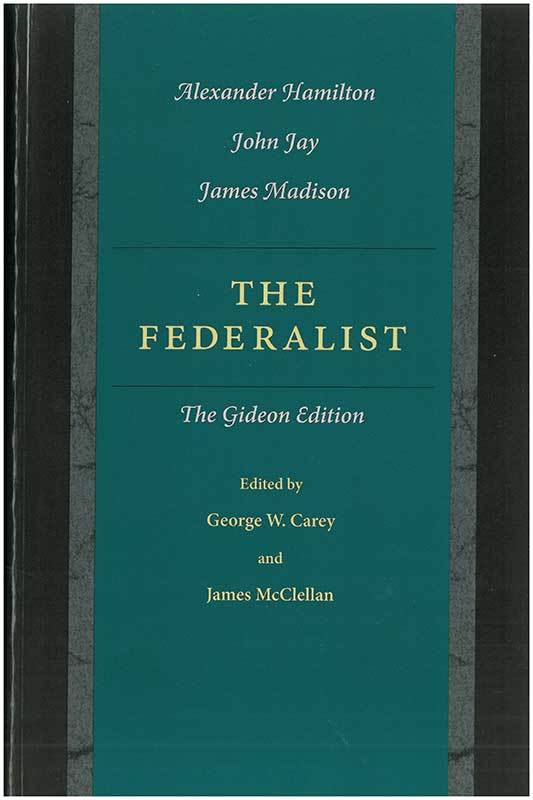
APPENDIX 8: Washington’s Letter of Transmittal to the President of the Continental Congress * In Convention, September 17, 1787 - George W. Carey, The Federalist (Gideon ed.) [1818]Edition used:The Federalist (The Gideon Edition), Edited with an Introduction, Reader’s Guide, Constitutional Cross-reference, Index, and Glossary by George W. Carey and James McClellan (Indianapolis: Liberty Fund, 2001).
About Liberty Fund:Liberty Fund, Inc. is a private, educational foundation established to encourage the study of the ideal of a society of free and responsible individuals. Copyright information:The copyright to this edition, in both print and electronic forms, is held by Liberty Fund, Inc.
Fair use statement:
This material is put online to further the educational goals of Liberty Fund, Inc. Unless otherwise stated in the Copyright Information section above, this material may be used freely for educational and academic purposes. It may not be used in any way for profit.
- Editors’ Introduction
- Reader’s Guide to the Federalist
- Preface to the Gideon Edition (1818)
- The Federalist
- No. 1: Introduction
- No. 2: Concerning Dangers From Foreign Force & Influence
- No. 3: The Same Subject Continued
- No. 4: The Same Subject Continued
- No. 5: The Same Subject Continued
- No. 6: Concerning Dangers From War Between the States
- No. 7: The Subject Continued, and Particular Causes Enumerated
- No. 8: The Effects of Internal War In Producing Standing Armies, and Other Institutions Unfriendly to Liberty
- No. 9: The Utility of the Union As a Safeguard Against Domestic Faction and Insurrection
- No. 10: The Same Subject Continued
- No. 11: The Utility of the Union In Respect to Commerce and a Navy
- No. 12: The Utility of the Union In Respect to Revenue
- No. 13: The Same Subject Continued, With a View to Economy
- No. 14: An Objection Drawn From the Extent of Country, Answered
- No. 15: Concerning the Defects of the Present Confederation, In Relation to the Principle of Legislation For the States In Their Collective Capacities
- No. 16: The Same Subject Continued, In Relation to the Same Principles
- No. 17: The Subject Continued, and Illustrated By Examples, to Show the Tendency of Federal Governments, Rather to Anarchy Among the Members, Than Tyranny In the Head
- No. 18 *: the Subject Continued, With Further Examples
- No. 19: The Subject Continued, With Further Examples
- No. 20: The Subject Continued, With Further Examples
- No. 21: Further Defects of the Present Constitution
- No. 22: The Same Subject Continued, and Concluded
- No. 23: The Necessity of a Government, At Least Equally Energetic With the One Proposed
- No. 24: The Subject Continued, With an Answer to an Objection Concerning Standing Armies
- No. 25: The Subject Continued, With the Same View
- No. 26: The Subject Continued With the Same View
- No. 27: The Subject Continued, With the Same View
- No. 28: The Same Subject Continued
- No. 29: Concerning the Militia
- No. 30: Concerning Taxation
- No. 31: The Same Subject Continued
- No. 32: The Same Subject Continued
- No. 33: The Same Subject Continued
- No. 34: The Same Subject Continued
- No. 35: The Same Subject Continued
- No. 36: The Same Subject Continued
- No. 37: Concerning the Difficulties Which the Convention Must Have Experienced In the Formation of a Proper Plan
- No. 38: The Subject Continued, and the Incoherence of the Objections to the Plan, Exposed
- No. 39: The Conformity of the Plan to Republican Principles: an Objection In Respect to the Powers of the Convention, Examined
- No. 40: The Same Objection Further Examined
- No. 41: General View of the Powers Proposed to Be Vested In the Union
- No. 42: The Same View Continued
- No. 43: The Same View Continued
- No. 44: The Same View Continued and Concluded
- No. 45: A Further Discussion of the Supposed Danger From the Powers of the Union, to the State Governments
- No. 46: The Subject of the Last Paper Resumed; With an Examination of the Comparative Means of Influence of the Federal and State Governments
- No. 47: The Meaning of the Maxim, Which Requires a Separation of the Departments of Power, Examined and Ascertained
- No. 48: The Same Subject Continued, With a View to the Means of Giving Efficacy In Practice to That Maxim
- No. 49: The Same Subject Continued, With the Same View
- No. 50: The Same Subject Continued, With the Same View
- No. 51: The Same Subject Continued, With the Same View, and Concluded
- No. 52: Concerning the House of Representatives, With a View to the Qualifications of the Electors and Elected, and the Time of Service of the Members
- No. 53: The Same Subject Continued, With a View of the Term of Service of the Members
- No. 54: The Same Subject Continued, With a View to the Ratio of Representation
- No. 55: The Same Subject Continued, In Relation to the Total Number of the Body
- No. 56: The Same Subject Continued, In Relation to the Same Point
- No. 57: The Same Subject Continued, In Relation to the Supposed Tendency of the Plan of the Convention to Elevate the Few Above the Many
- No. 58: The Same Subject Continued, In Relation to the Future Augmentation of the Members
- No. 59: Concerning the Regulation of Elections
- No. 60: The Same Subject Continued
- No. 61: The Same Subject Continued, and Concluded
- No. 62: Concerning the Constitution of the Senate, With Regard to the Qualifications of the Members; the Manner of Appointing Them; the Equality of Representation; the Number of the Senators, and the Duration of Their Appointments
- No. 63: A Further View of the Constitution of the Senate, In Regard to the Duration of the Appointment of Its Members
- No. 64: A Further View of the Constitution of the Senate, In Regard to the Power of Making Treaties
- No. 65: A Further View of the Constitution of the Senate, In Relation to Its Capacity, As a Court For the Trial of Impeachments
- No. 66: The Same Subject Continued
- No. 67: Concerning the Constitution of the President: a Gross Attempt to Misrepresent This Part of the Plan Detected
- No. 68: The View of the Constitution of the President Continued, In Relation to the Mode of Appointment
- No. 69: The Same View Continued, With a Comparison Between the President and the King of Great Britain, On the One Hand, and the Governor of New York, On the Other
- No. 70: The Same View Continued, In Relation to the Unity of the Executive, and With an Examination of the Project of an Executive Council
- No. 71: The Same View Continued, In Regard to the Duration of the Office
- No. 72: The Same View Continued, In Regard to the Re-eligibility of the President
- No. 73: The Same View Continued, In Relation to the Provision Concerning Support, and the Power of the Negative
- No. 74: The Same View Continued, In Relation to the Command of the National Forces, and the Power of Pardoning
- No. 75: The Same View Continued, In Relation to the Power of Making Treaties
- No. 76: The Same View Continued, In Relation to the Appointment of the Officers of the Government
- No. 77: The View of the Constitution of the President Concluded, With a Further Consideration of the Power of Appointment, and a Concise Examination of His Remaining Powers
- No. 78: A View of the Constitution of the Judicial Department In Relation to the Tenure of Good Behaviour
- No. 79: A Further View of the Judicial Department, In Relation to the Provisions For the Support and Responsibility of the Judges
- No. 80: A Further View of the Judicial Department, In Relation to the Extent of Its Powers
- No. 81: A Further View of the Judicial Department, In Relation to the Distribution of Its Authority
- No. 82: A Further View of the Judicial Department, In Reference to Some Miscellaneous Questions
- No. 83: A Further View of the Judicial Department, In Relation to the Trial By Jury
- No. 84: Concerning Several Miscellaneous Objections
- No. 85: Conclusion
- Glossary
- Appendixes
- Appendix 1: The Declaration of Independence * In Congress, July 4, 1776
- Appendix 2: Articles of Confederation * March 1, 1781
- Appendix 3: Virginia Resolution Proposing the Annapolis Convention * January 21, 1786
- Appendix 4: Proceedings of the Annapolis Convention *
- Appendix 5: Virginia Resolution Providing For Delegates to the Federal Convention of 1787 * November 23, 1786
- Appendix 6: Call By the Continental Congress For the Federal Convention of 1787 * Wednesday Feby. 21, 1787
- Appendix 7: Resolution of the Federal Convention Submitting the Constitution to the Continental Congress * In Convention Monday September 17th 1787
- Appendix 8: Washington’s Letter of Transmittal to the President of the Continental Congress * In Convention, September 17, 1787
- Appendix 9: Resolution of the Continental Congress Submitting the Constitution to the Several States * Friday Sept 28. 1787
- Appendix 10: Letter of the Secretary of the Continental Congress Transmitting Copy of the Constitution to the Several Governors *
- The Constitution of the United States (cross-referenced With the Federalist ) *
- The Amendments
APPENDIX 8
Washington’s Letter of Transmittal to the President of the Continental Congress
In Convention, September 17, 1787
Sir,
We have now the honor to submit to the consideration of the United States in Congress assembled, that Constitution which has appeared to us the most adviseable.
The friends of our country have long seen and desired, that the power of making war, peace, and treaties, that of levying money and regulating commerce, and the correspondent executive and judicial authorities should be fully and effectually vested in the general government of the Union: But the impropriety of delegating such extensive trust to one body of men is evident—Hence results the necessity of a different organization.
It is obviously impracticable in the federal government of these states, to secure all rights of independent sovereignty to each, and yet provide for the interest and safety of all: Individuals entering into society, must give up a share of liberty to preserve the rest. The magnitude of the sacrifice must depend as well on situation and circumstance, as on the object to be obtained. It is at all times difficult to draw with precision the line between those rights which must be surrendered, and those which may be reserved; and on the present occasion this difficulty was encreased by a difference among the several states as to their situation, extent, habits, and particular interests.
In all our deliberations on this subject we kept steadily in our view, that which appears to us the greatest interest of every true American, the consolidation of our Union, in which is involved our prosperity, felicity, safety, perhaps our national existence. This important consideration, seriously and deeply impressed on our minds, led each state in the Convention to be less rigid on points of inferior magnitude, than might have been otherwise expected; and thus the Constitution, which we now present, is the result of a spirit of amity, and of that mutual deference and concession which the peculiarity of our political situation rendered indispensible.
That it will meet the full and entire approbation of every state is not perhaps to be expected; but each will doubtless consider, that had her interest been alone consulted, the consequences might have been particularly disagreeable or injurious to others; that it is liable to as few exceptions as could reasonably have been expected, we hope and believe; that it may promote the lasting welfare of that country so dear to us all, and secure her freedom and happiness, is our most ardent wish.
With great respect, We have the honor to be, Sir, Your Excellency’s most obedient and humble servants,George Washington, President By unanimous Order of the Convention His Excellency the President of Congress
|