EconlibThe LibraryOther Sites |
Front Page Titles (by Subject) EXPOSITION AND PROTEST - Union and Liberty: The Political Philosophy of John C. Calhoun
Return to Title Page for Union and Liberty: The Political Philosophy of John C. CalhounThe Online Library of LibertyA project of Liberty Fund, Inc.Search this Title:Also in the Library:
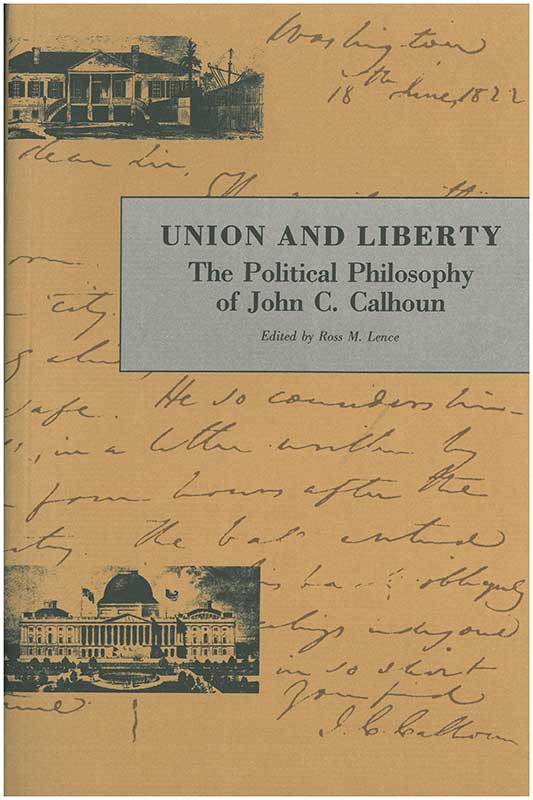
EXPOSITION AND PROTEST - John C. Calhoun, Union and Liberty: The Political Philosophy of John C. Calhoun [1811]Edition used:Union and Liberty: The Political Philosophy of John C. Calhoun, ed. Ross M. Lence (Indianapolis: Liberty Fund, 1992).
About Liberty Fund:Liberty Fund, Inc. is a private, educational foundation established to encourage the study of the ideal of a society of free and responsible individuals. Copyright information:The text is in the public domain. Fair use statement:This material is put online to further the educational goals of Liberty Fund, Inc. Unless otherwise stated in the Copyright Information section above, this material may be used freely for educational and academic purposes. It may not be used in any way for profit.
EXPOSITION AND PROTEST[December 19, 1828] Although it is common to refer to the “Exposition and Protest” as two parts of a single document, such is not the case. The “Exposition” is an essay enumerating South Carolina’s grievances against the “American System” of protective tariffs and calling for constitutional safeguards to protect the states from the abuse of federal power. The “Protest” consists of the actual formal resolutions adopted by the General Assembly of South Carolina. Both appeared anonymously. Returning to the language of the Virginia and Kentucky Resolutions of 1798, the “Exposition” reiterates the doctrine of interposition, which recognizes a state’s right to interpose state authority between the citizens of that state and the laws of the United States, declaring such laws null and void. This right of interposition, argues the “Exposition,” is the only possible constitutional remedy for settling disputes between the states and the federal government. Many of the elements of Calhoun’s theories about majority tyranny, which later appear in his Disquisition and Discourse, are already evident in the pages of the “Exposition.” Concurring with Publius, Calhoun identifies this tyranny as the problem of democratic governments, but he explicitly rejects Publius’s claim that extensiveness of the republic offers a cure to the mischiefs of faction. Only through a judicious exercise of the reserved powers of the states and the amending process of the U.S. Constitution can liberty in America be preserved. Calhoun’s draft bore the title, “Rough Draft of What Is Called the South Carolina Exposition.” When he compiled his 1851–1856 edition of Calhoun’s Works, editor Richard K. Crallé used Calhoun’s original title, as does this volume (see page 313). While the draft of the “Exposition” is in Calhoun’s own hand, there is no such extant copy of the “Protest” that would confirm Calhoun’s contributions to that document. Following the precedent found in the sixth volume of Crallé ’s edition of Calhoun’s Works, however, both documents have been reprinted here. |

Titles (by Subject)