EconlibThe LibraryOther Sites |
Front Page Titles (by Subject) chapter 13: English Law—Righteous and Unrighteous - The Story of the Law
Return to Title Page for The Story of the LawThe Online Library of LibertyA project of Liberty Fund, Inc.Search this Title:Also in the Library:
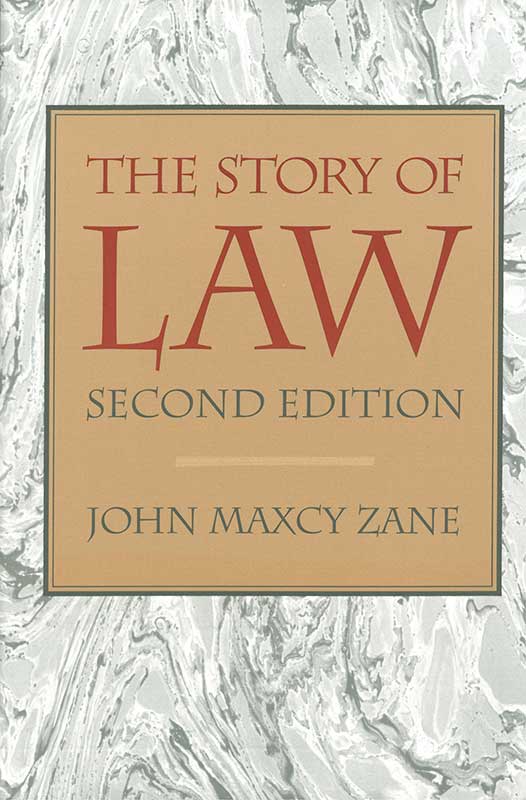
chapter 13: English Law—Righteous and Unrighteous - John Maxcy Zane, The Story of the Law [1927]Edition used:The Story of Law, 2nd ed., Introduction by James M. Beck. New Foreword, Annotations, and Bibliographies by Charles J. Reid, Jr. (Indianapolis: Liberty Fund 1998).
About Liberty Fund:Liberty Fund, Inc. is a private, educational foundation established to encourage the study of the ideal of a society of free and responsible individuals. Copyright information:The copyright to this edition, in both print and electronic forms, is held by Liberty Fund, Inc. Fair use statement:This material is put online to further the educational goals of Liberty Fund, Inc. Unless otherwise stated in the Copyright Information section above, this material may be used freely for educational and academic purposes. It may not be used in any way for profit.
chapter 13English Law—Righteous and UnrighteousA sketch of the development of particular rules or doctrines of English law would require too much space for the purposes of this book; but it is necessary in the first place to show those changes in the general form of administration of the law which caused the common law, in the very flower of its development, voluntarily to resign a large part of the field of law to another court. This is in itself an extraordinary fact. The common law of England, which has been the subject of so much laudation, really does not deserve, mainly because of this conspicuous failure, the eulogiums that it has uniformly received from its practitioners. About the year 1300 it became tied down by a number of wholly artificial restrictions which left it confessedly incapable of doing justice in a large number of legal relations, many of them of ordinary occurrence. Another court assumed the abdicated jurisdiction in order to fill the gap and to remedy the admitted inability of the law courts. This other court was the court of the Lord Chancellor and its system of law was called equity. We in America have become so used to this monstrosity in law, that we do not see it in all its absurdity. For centuries in England was presented the spectacle of one set of courts doing all sorts of injustice that another court might remedy the injustice. All the money spent by England over hundreds of years in foolish dynastic wars to obtain or to preserve territory on the continent of Europe would not equal the incalculable sums that this double system of courts cost English litigants. Both systems professed to emanate from the same king as the fountain of justice, both claimed to exert the same judicial power, both worshiped at the same legal shrine, and both professed to dispense justice in accordance with law. One system enforced in many legal relations rules which the other system pronounced to be unjust and unrighteous, and boldly set at naught. It is apparent that the actual law of England was not administered in those matters by the common law courts, but was in fact determined by the rules of law in that court which had the power to pronounce the common law unrighteous and which enforced that power. The law of England was in those respects most emphatically not the common law. Some legal writers who are ill informed have undertaken to say that this situation was analogous to the doctrine of Aristotle regarding reasonableness as applied to legal rules, but it is not the case, for the court that was applying the legal rule used the doctrine of reasonableness in its application of the rule. No double system of courts was required. The same legal writers have said that this double system was the same as the Roman law, in its one law for the citizens of Rome and its other pretorian law. Nothing could be further from the truth, and nothing could be more characteristic of the superficial way in which Roman law is considered. Those legal writers have been misled into an error intended to excuse this English system of double courts. The fact is that the Roman law called the jus civile was the law which was applied to the Roman citizens in their controversies and legal relations with one another, while the pretorian law was applied to Roman citizens in their disputes or relations with foreigners or in the controversies of foreigners with one another in the courts of the Roman praetor. There was no conflict in the law at Rome as applied to a particular legal relation between particular persons, while in England the exact converse was true. The litigants in an action received one rule of law in the common law courts, but in many cases the same litigants in the same dispute would receive a contrary rule of law in the chancery court. As a common instance of this description we may take the case of one who had executed a bond (which was, of course, a sealed instrument), whereby he had agreed to pay to another a certain sum of money, and on the day fixed for payment the debtor, like an honest man, had paid the bond in full, but in the stress or hurry of circumstances or perhaps out of ignorance, the debtor had failed to obtain from the creditor a release under seal. A dishonest creditor could sue on this paid obligation in the common law courts and obtain judgment. The common law answered the swindled debtor who had paid with the words that a sealed instrument could be discharged only by another sealed instrument. Thus the justice of the matter was sacrificed to mere form. A plea of payment would be held to be insufficient and the dishonest creditor would take judgment upon the bond although it had in fact been paid. But the defrauded debtor had a refuge in the chancellor, who was considered to have in his keeping the conscience of the king. He sat in a court of conscience. To such a judge the enforced double payment was abhorrent, for he had read in the Roman Digest that good faith does not suffer that the same thing should be twice exacted. The chancellor was, with two exceptions during several centuries, a bishop or an archbishop, a great prelate of the Church. He knew something of the elevated spirit of the Roman law in its superiority to mere form and he had none of the rigid notions of the common law judges. The complaining debtor, swindled by the law of the law courts, would present his bill in chancery, piously addressed to his “Dear Fader in God,” telling the circumstances, either that he had been sued and judgment had been given against him or that he was about to be sued upon a bond that he had paid. The chancellor would issue his writ of subpoena to the creditor and enforce his attendance and require him to answer under oath, as to the payment. The creditor would object that the holy and righteous common law gave no remedy. The chancellor would answer that he sat in a court of conscience and of God, and cared nothing for the arbitrary rule of the common law which made a payment no payment. The creditor would object that the debtor should not have been such a fool as to pay without a sealed release. The chancellor would shortly answer as he did in one case, “God is the protector of fools,” and would force an answer. If the creditor admitted the payment, the chancellor said: “Deliver up your bond and we shall cancel it.” If the creditor had a common law judgment, the chancellor issued a writ of injunction forbidding the creditor to proceed further under the judgment. If the creditor denied the payment, the evidence was taken. Under the Hebrew law, long before imported into the Roman law as the canon law, the payment must be proved by two witnesses. If it were so proved, the same injunctional decree of the chancellor prevented the collection of the bond or forbade suit in the common law court. The common law judges foamed with indignation, but the chancellor said that he did not interfere with them, that he worked upon the party, that his decree required the creditor to do only what equity and good conscience demanded, and that if the party tried to collect a paid bond by using the unrighteous process of the common law court, he would lay this violator of honesty and good conscience by the heels. Thus, what Shakespeare called “old Father Antic, the law,” said to the common law court that it could go ahead and do its worst with its unrighteous law and then said to the chancellor that he must remedy the attempted injustice by his righteous law. But is it not plain that the law of England was that payment a second time could not be enforced, and that the law unnecessarily took this expensive, awkward, devious, splay-footed method of arriving at justice? There was never any sound reason for the common law to descend to such depths of ineptitude. Men of more liberality of mind, of more vision in adjusting law to conditions, of more insight into juristic method, with a keener sense of right and justice, with more knowledge, ability, tact, and skill in handling their legal devices would never have allowed themselves to get into such a position. Some have said that the common law courts were of limited jurisdiction and could not afford a remedy but this is a mistake, for the limitation was not one of jurisdiction. It was one of self-imposed incorrectness. It was thus also in the field of contract. A contract not evidenced by a document under seal, the common law courts would not look at, because of their profound disgust with wager of law and the rascally compurgators, and because they did not see how their courts could decide a question upon such a contract without witnesses. Hence all such contracts went to the local courts like the county courts, where the multitude insisted on their God-given right to adduce perjury by the wager of law. But a party with such a contract could go to the chancellor, and say that he had a good contract, but that if he went into any of the law courts, he would be met with wager of law. The chancellor would give him justice and would pay no attention to the old wager of law, but would listen to the testimony of witnesses. Thus again the Roman law rescued the law of England from the slough of its common law courts and approached the rule of justice. These are instances of a very ordinary condition. Other instances will be later stated. This result was brought about, as will now be explained, by the adoption of the jury as a necessary part of a law court. The story of this common law débâcle must be preceded by a short description of the common law in its golden age, when it was showing a capacity to redress every civil wrong, and to protect every civil right. If no writ then existed under which an action could be instituted, a new one was invented. It must be kept in mind that the relations of life were comparatively simple; the communities were small and the main object of litigation was land. Land could not pass without livery of seisen, which was a public act, or by a death which was no less public. The neighborhood knew all about such facts. Legal rules and remedies grow as the intricacy of relations of men in society increases. Two hundred years after the Conquest the condition of society was vastly improved over what it had been under the Norman kings or even in the times of the first Plantagenets, but the relations among men were still simple. Just at this period of two hundred years after the Conquest, about 1260, in the reign of Henry III, a great English law book was written by a priestly judge whom we know as Bracton. His true name was Bratton. By a fortunate discovery, the manuscript which was his collection of cases for writing his book has been identified. Its discovery by the Russian who lived in England for many years and became the greatest English legal scholar of his time, Paul Vinogradoff, deserves to rank with Niebuhr’s more famous discovery of the lost Institutes of Gaius. The manuscript, as Bracton’s Note Book, has been printed in its Latin form, but has never been translated. Bracton evidently tried to find every kind of case that had arisen and his book and his cases show the common law courts administering every kind of remedy. Like all the lawyer-priests Bracton had considerable knowledge of the Roman law. He had read the Summa of Azo, at least in one of its parts, but there was no manuscript of the Roman Digest in England, nor probably any manuscript of more than a part of the Code. Printing, of course, was then unknown and manuscripts were rare and costly. With his material of cases taken out of the court rolls, Bracton, using the Roman law and its classification, tried to fit into the field of law the English cases. In his day the priestly judges were passing away and laymen were taking their places. Bracton says that the judges of his time were inferior men. Soon afterwards Edward I made a general fining and discharge of his judges. This fact seems to prove Bracton’s statement. Bracton for his cases goes back to the decisions of two great priestly judges who were on the bench in his early years, Pateshull and Raleigh. It is not necessary to describe the whole field of the recognized law as shown in Bracton’s book. It suffices here to say that every kind of case that had yet arisen in England could be disposed of on some writ. About the only objectionable thing in the law was the degraded Anglo-Saxon wager of law, still permitted in the actions of debt and of detinue, which were really two forms of one action called debt. We may take two cases out of Bracton’s Note Book, very far apart in their character, as instances of the widespread jurisdiction of the common law courts. In one case there is a situation that looks like a family scandal in high circles.1 John de Montacute and Lucy, his wife, were cited into court by the male heir apparent of John to answer why they were bringing up a girl (garcia) and representing her as their daughter, when she was not their daughter, to the manifest wrong and prejudice of the demandant, who by the law of England would succeed to John’s lands. John kept silent, for he had sold the wardship of the girl as if she were his daughter, but Lucy came, bringing before the court the alleged supposititious daughter Katherine, and asserted that Katherine was her daughter, born on the eve of St. Katherine and therefore named Katherine. Lucy adduced a string of witnesses, a bishop and barons with great Norman names, one of whom had purchased the wardship and marriage of Katherine from her parents. The witnesses traced the history of Katherine from her early years, and stated by whom she had been brought up. It was proven that both John and Lucy had declared her to be their daughter. The court decided what is still the law, that since Katherine was born while husband and wife were living in wedlock and had been acknowledged by them, the demandant would not be heard to prove the fact to be otherwise and the male heir was amerced for his false claim. The case looks very much as if Katherine was Lucy’s daughter, but not John de Montacute’s. But here the law is seen in its flexibility; no jury was necessary nor was one used; witnesses were heard and the case decided on the proposition that the privacies of wedded life would not be inquired into. The peculiar thing is that the heir had no present right, he had no estate in the lands, he might not succeed in any event if he died before John, or if John had a child, even if Katherine was not the daughter of John. The case cannot be a slander of title, for the heir had no title. When John should die, the controversy would arise, and not until then; yet the court entertained the complaint on the principle that it was better to decide the controversy beforehand, and the court settled what would be the rights of the parties upon John’s death. In our day this Montacute case would be called a pure case of declaratory judgment, that settles a controversy by declaring the present status of the right. It will be seen that this is a precocious legal development, anticipating by centuries the present idea of wild legal reformers who think that a party proves that he has a cause of action by stating that he has none at present, but hopes and expects, if he survives, that he will have one in the future. It is no wonder that courts are finding laws authorizing declaratory judgments to be unconstitutional. Another case is just as extraordinary from the present common law standpoint. A landowner had a mill. Certain persons owed from time out of mind suit and service at the mill, which meant, at least, that they must patronize the mill. In the then language of the law, the mill owner was seized of these services. This, of course, was a valuable right. The mill owner brought a suit to recover the suit and services just as if they were land, saying that they had been withdrawn. It turned out that certain persons, probably in the interest of some other mill, were trying to persuade the peasants owing suit and service to the plaintiff’s mill to withdraw their patronage. The court said to the mill owner that he could not recover, for he had shown no suit or service subtracted; but it added that it would give him a writ forbidding any one to interfere with the suitors to his mill. This is a pure case of injunction granted to protect a man in his rights. All the common law could do in the after days of its supine weakness was to say to the mill owner: “Wait until this outsider has persuaded some one to breach his duty to your mill and then sue the persuader and get a money judgment for your damages. That is all this court of common law can do. But if you wish preventive relief, go to the chancellor; he will issue an injunction and protect your rights.” To-day a court with chancery power will enjoin any third party interfering wrongly with the employees’ relation to the employer or attempting to bring about any breach of contract on their part or attempting to take away customers by deception, or by persuasion to induce a breach of contract. The two instances are as far as possible from any common law jurisdiction of later times. The common law from this time forward became tied down to a judgment only for money or to a recovery of specific real or personal property. Even when it gave a judgment in replevin or detinue for personal property, the judgment was in the alternative for the personal property or its value as fixed in the judgment. It could give no other form of judgment. Yet at this period of Henry III the law courts would grant all kinds of specific relief, that is to say relief other than a money judgment. They would cancel a document, they would compel the delivery of deeds, they would compel the delivery of specific personal property, they could grant the specific performance of a contract under seal. They would take and state an account of long involved dealings. They would try questions of freedom. They would restore a serf to his owner, they would liberate a man wrongly held as a serf. A tenant for years had his remedy for eviction. All sorts of remedies were provided as to freehold lands. They were the old petty assizes, the writs of entry, the actions upon the form of the deed. A widow could obtain the specific relief of having her dower lands measured off to her and of having possession of them. The heir was compelled by a mandatory writ to do this. If a man was sued for land he could implead the one who sold to him and make him defend. If this grantor failed to show his title, the one who had bought the land by poor title, could in the same action have judgment against his grantor for equivalent lands in lieu of those lost. There was no reason why the common law by further writs should not develop the law as new situations arose, had it not been that the law courts became wedded to a jury. The courts under the priestly judges had made a procedure where the judge of the court made the judgment. There was also a method of settling the pleadings borrowed from the Roman law. On the return day of the writ, the plaintiff’s counsel stated orally to the court what his cause of complaint was. If the court considered it bad in substance, it said so, and if the plaintiff by additional statements could not make it good to the court, the plaintiff was amerced for his false claim (pro falso clamore) and the defendant went without day. If the court said that the count or statement of claim was good, it said to the defendant, “Answer over.” The defendant’s counsel thereupon stated his defenses. If he denied the plaintiff’s claim he said, “Ready to deny,” and the issue was formed, and written on the record by the clerks. But the defendant might have exceptions, as they were called by the Roman law, to show why the plaintiff should not have a trial. If his first statement of defense or exception—called later his plea—was not good, the court told him so and he tried another, until he had exhausted his matters of exception. Then if he was not prepared to deny the plaintiff’s claim by saying that it was untrue, judgment went against him. In his pleading the defendant might state as an exception some matter admitting the plaintiff’s claim, but avoiding that claim by showing something that overcame it. If it were so, the court called upon the plaintiff to answer as to this new matter brought in. If he could not answer it, judgment went against him. If he could answer it he did so, but at that time it was usually by denying it, and thus an issue was formed. This pleading was all done orally and after it was over the clerk of the court wrote up the record. If an issue had been formed on some question of fact, the court used any method of deciding the facts that it saw fit. In some instances the case went out to the assizes in the proper shire to be tried. If the case were on a writ of assize or the case were of a kind where the jury could pass on the facts, the twelve men were called in to state the facts. In every criminal case the method of trial would be what the court forced the defendant to take. If he refused to agree to a jury trial he was subjected to peine forte et dure, which was simply torture. Long afterwards judges boasted that the common law never knew torture, but it was ignorant boasting. When the case came to an assize or a jury there was never any trial by witnesses or upon evidence. The jury was called in and sworn, it was assumed to know the facts, it was asked for its verdict and it gave it. Magna Charta provided that the king’s judges must visit each shire at least once a year to dispose of business. They in fact held a session of what had been the old county court and what remained the old county court, if the king’s judges were not present. There was another form of the visit of the king’s judges to the shire. It was called an eyre, and by written articles from the king the judges were directed to clean up all the judicial business in the shire. They looked into the whole legal administration. No king’s writ ran in the county during the eyre. The judges could and would entertain any kind of complaint and grant any appropriate relief. Some of the cases proposed to them were what afterwards were called equity causes. In order to show the method of trial then in vogue by a jury, it may be well to describe an actual lawsuit about 1300. It is a case which shows both an original jury trial and a new trial by a larger jury. The question was as to certain land in dispute. Under the then new statute creating estates tail, a controversy had arisen and an assize of novel disseisin had been tried between Frank de Scoland and William de Grandison. The facts were that Frank had had an uncle Geoffrey de Scoland. This uncle Geoffrey had an illegitimate son Richard, who, of course, was not an heir of his father Geoffrey, for by English law a bastard was “no one’s son.” Geoffrey had granted to his illegitimate son Richard certain land to hold unto Richard and the heirs of his body forever. This created an estate tail in Richard which would cease if and when all descendants of the bastard Richard should cease to exist. When this happened Geoffrey or his heir would take the land. Geoffrey was gathered unto his fathers. His nephew Frank succeeded to all the estate except this land granted to his bastard cousin. Then Richard, the bastard, died without any descendants, and the fee tail in him ceased, and Frank in succession to Geoffrey, who had granted the fee tail and had thus retained the reversion, was entitled as heir, because he had inherited Geoffrey’s reversion. Frank took possession. But now came William de Grandison. He was chief lord of the fee. Of him the land was held by the Scolands. He said that he was entitled to the land by escheat because Geoffrey before he died had released to the bastard Richard the reversion after the fee tail and this reversion merging with the fee tail was the whole estate in the land and gave a fee simple to Richard, and, therefore, when Richard died Frank did not succeed by any reversion, and Richard, being a bastard, could have no collateral heirs. The fee simple thus in Richard, he asserted, had ceased on Richard’s death, and he, William de Grandison, had gotten the title by escheat. Acting on this asserted state of facts Grandison ousted Frank. This was a neat case and well put up from Grandison’s standpoint, but it was not true. The jury when called in the novel disseisin case brought by Frank could say whether a release had been given. Their statement was final on that point until attainted. The case was tried upon the novel disseisin writ, and the jury (assize) found that the release was made as William de Grandison claimed. William’s title by escheat was good if the verdict was true. The verdict was a special verdict, stating only the release, and homage made by Richard to William de Grandison and the damages. Judgment was entered on the verdict for Grandison. Frank tried a new suit on the title and was beaten, and then he obtained from the judges a writ of attaint, upon which a jury of twenty-four knights would be empaneled to say whether the first jury had returned a false verdict. Upon this writ the sheriff summoned Grandison and the jury that had passed on the case. Seven of the jury appeared, three were dead and two defaulted, and the attaint trial came on. The scene was as picturesque as medieval life. Sitting upon the bench were the king’s judges, called justices in eyre. Spigurnel was the chief of the court, and with him sat other judges, one of whom was named Harvey de Staunton, called by the irreverent Year Book reporters, Harvey the Hastie, from his tendency to speak too quickly. Each of the judges was arrayed in his crimson gown or robe edged with spotless miniver, as they called ermine. The serjeants at law stood before the bench. They were arrayed in sober parti-colored gowns and had not yet descended to the deadness of black. Each serjeant wore a white cap or coif, which he had the privilege of wearing even in the presence of the king. The serjeants had the sole right of audience, that is of being heard, in the Common Pleas court, and they were called the Order of the Coif. French advocates to this day always wear their caps when pleading in the courts, but if they read from a book or a document they take off the cap. The rule that is carried out on academic occasions in this country has an ancient pedigree. Attending upon the court were the twenty-four knights, wearing their swords and the rich gowns of the period. Standing as culprits at the bar were the seven jurors of the jury charged with having rendered a false verdict. William de Grandison was there, attended by his serjeant. Thereupon the trial began. Every one who spoke in court used Norman French and every case reported in the Year Books was in Norman French. The clerks who were sitting in court to record the proceedings made their record in Latin and the record continued to be made in Latin until the middle of the eighteenth century. Frank de Scoland’s serjeant at law stated the particulars wherein the verdict was false, first, that it falsely found the release; secondly, that it falsely found that the dead Richard had done homage to Grandison and held from him; thirdly, that it falsely found the damages. This was the pleading for the plaintiff which the clerks wrote down. Then began the oral exceptions for Grandison. First, the point of law was made that the whole twelve of the jury to be attainted were not present. This was overruled as a matter of course. The proposition that the death of any of the jurors destroyed the remedy for a false verdict was as astonishing as would be a plea by a burglar that his partner in crime was dead and, therefore, he could not be tried. Next it was objected that the former judgment, sought to be attainted, was not fully performed. But Frank’s serjeant produced the record, showing that judgment fully satisfied. Next the serjeant of Grandison objected by the plea or exception that the writ of attaint was not presented at the opening of the eyre, as required by the articles of the eyre. This was overruled because the justices in eyre could grant writs of attaint and had done so in this case. The clerks took down none of these pleas since they were bad. Here one of the counsel for Grandison asked for a bill of exception on this plea. One of the justices replied: “We will make no exception, you have the testimony of the whole court, so lodge your bill.” This was the offered and rejected plea written out. Vellum cost money in those days and the counsel for Grandison tried to shift the cost on the court. The court neatly circumvented him by telling him to write it out himself. Finally it was objected that Grandison’s tenant was made a party, and he had not been a party to the assize in which the verdict was rendered. This was overruled, for the tenant was liable for the damages accruing since William de Grandison went into possession. Here, through his counsel, Serjeant Hartlepool, Grandison said to the court: “By your leave we will imparl [consult] with the accused jurors.” Staunton the Hastie, not waiting for his chief to speak, at once courteously replied: “We pray you to do so.” The defendant and the accused jury went out and consulted and came back and made another objection which was: “The false oath is assigned to the release, homage, and damages, but not to the whole issue of disseisin.” Spigurnel, the chief justice, ruled shortly: “All findings of fact are open to be attainted.” The defendants now having exhausted themselves, the oath was administered to the twenty-four knights, one by one. Each juryman said: “Hear, ye Justices, I will speak the truth of this assize and of the freehold of which I have had the view by command of the king, and of the oath of the twelve and in naught will I fail.” It will be noted that the jury had already gone to see the land in dispute. Thereupon Spigurnel stated to the attainting jury of twenty-four the pleadings at the former trial and the verdict of the twelve, and charged the twenty-four knights to say whether or not the twelve had made a false oath in the particulars of the release and the homage and the damages. The twenty-four answered on the spot that the twelve had made a false oath as to the release, and as to the damages, and as to Richard holding of William de Grandison, but not as to the homage. The judges at once ruled that the homage was immaterial. Then Spigurnel said: “Gentlemen, tell us Frank’s damages since the assize,” that is to say, since the verdict put him out of possession. The jurymen answered: “Seven score marks.” Thereupon by judgment Frank was given his seisin, his damages of fifteen marks paid at the first trial, and his amercement and costs paid on that trial and his further damages of one hundred and forty marks, and his costs in this attaint trial. The mark was thirteen and a half shillings and money had then twenty times the purchasing power of to-day. William de Grandison paid well for the neat case which he had concocted. This actual picture of a trial shows a remarkably businesslike way of holding court. In this trial, as contrasted with a trial of to-day, the pleadings are seen to be oral and if disallowed are disregarded. No evidence whatever is offered, no witnesses testify, the jury are the only witnesses and speak from their own knowledge already gained. The lawyers make no statements or argument to the jury. Plainly such a jury could be used with advantage only regarding matters of general knowledge. But there was a reason why this kind of trial should have urged itself upon the judges. There is a tendency in most men to avoid responsibility. Nothing could be more attractive to the average judge than this ability to shift all responsibility upon the jury as to the facts, the really difficult matter to settle in every lawsuit. Lawyers of the present day have seen much of this tendency in judges. At any rate the fact is clear that the common law courts without any statute forced the parties in every case to a jury trial. No matter what the issue was, the pleading was forced into such a groove that it could be referred to a jury to decide the disputed facts. This natural tendency to rely upon a jury was aided by the apparent inclination of Magna Charta to insist upon a judgment of “the peers” of a litigant. When a woman who had lost a suit called the judge by the accurate terms, in her judgment, of “traitor, felon, and robber,” the jury impaneled to try the question and to try her for her accusation, was composed of serjeants at law, considered to be the peers of the judge. The idea became disseminated that a jury was the best means for ascertaining facts. It was popular with the great mass of people, for it magnified their importance and made them a constituent part of a court. Originally introduced in a limited way to decide facts as to the seisin of real property, which were almost certain to be matters of general neighborhood knowledge, the jury became by the insistence of the judges the means of trial in every law case. Too great a burden was put upon the jury. In many cases the jury called could not possibly have the requisite knowledge, but must go out and try to find it. The form of pleadings was made such that the final pleading of adverse facts on either side was concluded by each party putting himself upon a jury trial. The legal phrase was that the pleading concluded to the country, i.e., a jury, and the other party did the like, called the similiter. This tendency to a jury trial was aided by the new creation of a parliament as a law-making device. When the barons under Simon de Montfort were fighting with King Henry III in the thirteenth century, Simon, in order to strengthen his position, called together a parliament made up of the barons as lords and of representatives of the shires and boroughs as the commons. This was a new kind of assembly in England, a new adaptation of the representative feature. Heretofore we have seen that in the history of law before language was written the laws were wholly customary and knowledge of the customs belonged to the priests. When written language came into use the customs were written down, and in an uncritical age, their origin not being known, they were naturally ascribed to God by the priests. Then came the Greeks with their original belief in a mythical lawgiver who had molded the older customs, supposed to come from God, to suit later conditions. The absurdity of amending the divine law of Omniscience never occurred to any one. At last came Solon at Athens, an actual lawgiver, with laws of his own devising. Then came the assembly at Athens, where laws could be passed by a town meeting vote. The whole body of citizens made the law. The Romans followed with the whole body of citizens making the laws, but they compromised by recognizing as law a resolution of the whole body of citizens or a resolution of the plebs or for some purposes an ordinance of the Senate. The emperors claimed that this legislative power of the people was conferred upon them by the people and they alone legislated. Shorn of misleading terms, legislation is simply an act to show acceptance of law by the community, just as this acceptance was formerly shown before legislation by the universal adoption of the custom. In the Dark Ages, in the matter of conflicting laws, the doctrine was that law to be binding upon the community must have been accepted by the members of the community. This acceptance was shown either by the act of the king and his council or by the decisions of the courts. Now when the English Parliament came into being the fact and the theory was that representatives of boroughs and shires were added to bind the whole body of the people by their acceptance of the enactment as law. It is directly contrary to the truth that law is something imposed by the legislative body upon the people. Acceptance has always been the theory and the fact. No rule of law was ever successful or ever endured unless it received practical general acceptance among the whole body of the people, for the simple reason that universal human experience has demonstrated that a rule of law not accepted by any considerable portion of the people can never be enforced. The history of the law is strewn and will continue to be strewn by just such palpable wrecks of laws not enforced and not enforceable. Whatever the means by which law is recognized, whether it be by legislative enactments, by decisions of courts, by rescripts of rulers, law is in fact law only when it is cheerfully accepted and gladly obeyed by the great mass of the social body. Acceptance by the community is needed to breathe life into the edict of the harshest despot. As the Roman emperors recognized, the government is the creation of the law. A social community antedates any kind of government. No government ever made law in the sense of creating substantive legal rights and correlative duties. Government may superficially appear to make law as Hobbes and Austin mistakenly supposed, but it is the acceptance of the rules by society that makes laws and government. But this so-called power of legislation which is in fact the delegated representative power of acceptance, tends to become exclusive. History uniformly shows that a legislative body invariably tends to magnify its own importance, because personal responsibility in such a body can usually be avoided. The tendency is to insist that all changes in the law must be authorized by the legislative body. Parliament grew in power and could insist upon its power, because the king always needed money, for half the time dynastic reasons impelled the English kings to seek a domain on the Continent. Parliament granted money in return for an extension of its own power. The immediate result of Simon de Montfort’s parliamentary device, adopted by Edward I, was a great mass of remedial statutes, mainly in the way of making the law by enactment, what it had already become by the medium of court decisions, declaring the law. For our purposes the matter to be noticed is the constant attempts by the legislature to bolster up or to tinker this device of a jury trial, when some discretion should have been exercised regarding the cases to which it was applied. Before entering upon this matter certain modifying facts should be stated. There had grown up a feeling against priestly judges. It arose from a number of things. The king naturally distrusted judges who looked across the sea to the papal power, although as a matter of fact the priestly judges in the king’s court never were wanting in their duty to the secular power. The lay lawyers naturally distrusted judges who were educated in the system of the civil law of which the lay lawyer knew little. The common lawyers were instituting their own schools of instruction in the law. Latin as the language of the courts was gone, although the clerks still wrote the record in Latin. Bracton’s great treatise was epitomized in Norman French and forgotten. Norman French was the language of the courts and all the arguments over pleadings were in that tongue. English was never used except possibly to a small extent at the assizes. The fact was that there was no English tongue. There were only barbarous, uncouth dialects. The Northern man could not understand the Southern man and the Middle English was practical Greek to both of the other main dialects. The statutes of Parliament were in Norman French. The poverty of the vocabulary of these English dialects confined their use to the most ignorant people. Steadily, however, among the mass of the people was growing an improved speech compounded of Norman and English. In the meantime the members of the legal professional class became narrower and narrower in their line of ideas. The Pope forbade any priest to sit in the king’s courts and the king forbade the teaching of the civil law in England. England began her legal insularity, from which it took ages for her to recover. The kind of law made by a narrow-minded, hidebound class of lawyers of this kind is sure to be tough and rigid law. Law of all pursuits needs the illumination of general knowledge, but this by their environment was denied to the common lawyers. The Inns of Court, where the law was taught, knew nothing but their own system. While the lawyers were acute and learned in this system, they were ignorant of all others. The scholar Erasmus accurately described them as “a learned class of very ignorant men.” Another matter not much noticed historically was the action of the ecclesiastical courts in creating a prejudice against any court that did not use a jury. To the common ordinary citizen these courts Christian were a great nuisance. They pried into private affairs; they exposed the neighborhood scandals, its fornicators and adulterers, always numerous; they interfered with popular pleasures, all for the purpose of imposing petty fines upon delinquents, or penances that wearied the people. They inspired both fear and irritation in many ways. The priest who intervened to smooth the path of some cowering wretch into the next world, often aroused the animosity of the family by appropriating through a deathbed will some of the goods that the family considered as belonging to them. The great possessions of abbeys, monasteries, and priories, gained from private munificence, aroused the cupidity of both people and rulers. The secular power tried to prohibit such gifts to churches. The priest, secure in his courts and their system of law, could be restrained only by writs of prohibition out of the common law courts. Long before, Glanville had warned the priests: “You priests look only to Rome, and Rome will one day undo you.” When any question arose as to a marriage and the legitimacy of a child, the matter was referred to the court Christian. Appeals from the decisions of the church courts went to Rome and they were encouraged. Ecclesiastical lawyers were required to be hired in all courts Christian. A litigant over such questions as marriage to be decided in those Christian courts was thoroughly fleeced. There is a tale in a case before the King’s Council that shows how far the churchmen would go. A great noble, John de Warrenne, Earl of Surrey, had had some irregular connection with a woman out in Norfolk. The facts were such that the Church law held that the woman was the wife of the Earl of Surrey. That troubled him not at all. He married at court a niece of the Queen, wife of Edward II, the “she wolf of France,” who afterwards with her paramour Mortimer did to death Edward II. The discarded concubine of John de Warrenne out in Norfolk brought an action in the local Archdeacon’s court. That worthy issued his writ commanding the Queen’s niece to appear in Norfolk and be fined for living in adultery with John de Warrenne. A shambling, rank-smelling, sandaled priest, the court’s summoner, took the writ and made his way to London and into the Palace at Westminster. He managed in some way to get into the royal apartments and served his writ on the Queen’s niece in the presence of the Queen. This was not only laughable in its assurance, but a gross breach of all the regalian proprieties. There was a terrific explosion. The Queen shrieked with indignation. The summoner was thoroughly kicked and cuffed and lodged in jail. It is needless to say that nothing came of the Archdeacon’s writ, but the case gives an idea of what a priest would undertake with God’s power and the Church behind him. If the ecclesiastical court would attempt this sort of proceeding against the Queen’s niece and one of the greatest nobles in England, what would it not do to an ordinary citizen? It is nothing to the purpose that the Puritans, when they got into power, were a worse, and the same kind of, nuisance. Yet at the same time the long roll of the priestly judges who for two hundred years manned the king’s courts, steadily maintained the prerogatives of secular government. They were a very capable set of men and sound lawyers. They were as far removed as possible from the clerics in the courts Christian. They made the English common law in the days before it fell from its high estate, and laid its foundations in accordance with the best legal thought of the times. For centuries longer the priestly judges continued in the chancery courts. Another general idea that helped the growth of the jury was the rooted distrust of witnesses among English lawyers and judges. This distrust was well founded. The barbarian, of course, is not truthful. The idea that he is, is cherished only by the dullest people. The savage tells what he sees; he is not capable of invention, but not so the barbarian. Truth-telling is the result of a long training from generation to generation. Trade, commerce, and business assist in making men truthful, but the simple, raw human being is not truthful any more than the average child is truthful. The spectacle of wager of law had confirmed every lawyer in the opinion that the witnesses a litigant produces are produced because they are ready to commit perjury. Compurgators were always in demand and the supply was equal to the demand. The suit witnesses with which a plaintiff appeared were hardened swearers. It was the way in which they made a living, and “How can a man be wrong in making a living?” is even the modern inquiry of the grafting official. It was supposed in that simple time that a witness produced by a party was bound to prevaricate for him. Witnesses to a document, of course, were different. They had made a record by witnessing a legal act, and forgery was rare, except among those accomplished penmen who forged ancient deeds to support the titles of monasteries, abbeys, or bishops. The idea of the worthlessness of testimony became ingrained in the common lawyers. Chief Justice Fortescue, writing his Praise of England’s Law, points out as one of the advantages of the English jury trial in determining questions of fact over the civil law’s method by witnesses, and where two witnesses to a fact are sufficient, that any litigant can find two men who are ready for fear or favor to go counter to the truth in anything. “Who then can live secure in property or person under such law which gives such aid to anyone who would harm him?” He shows that under the civil law justice must often fail for lack of witnesses. Under the English law, he says, the witnesses, the jury, must be twelve, chosen by a duly sworn public official, from among men of property of the vicinage where the controversy arises, men who are indifferent between the parties, subject to challenge and acting under oath. These were the ideas of the profession and they had their effect. But the fact was and it ought to have been seen, if men are not truthful as witnesses they will not be truthful as witness jurors. This jury was a body finally to pass upon the facts. The names of its members could be ascertained. Any one could get at them, could go to them and talk about the case. Each party would scan the jury, investigate closely who each juryman was, how he could be reached, what persons controlled him, to whom he owed money, from whom he expected favors. Each man on the jury would be subjected to influence or threats or offered inducements or deceived. Barefaced bribery would certainly be used wherever possible. We know now after long experience that such a method of the ascertainment of facts by a jury, wholly uncontrolled, was almost as great a stupidity as wager of law. These jurors were the only witnesses. They might talk with people out of court in order to gain knowledge of the matter. They might get information out of court as they pleased, and they could not be questioned as to how they came by their knowledge. But the juror must not express his verdict by stating his opinion before the verdict. It is apparent that such a trial was the ascertainment of the general idea of some particular small community where twelve men were selected to give the opinion of the community. This fact explains the insistence on the importance of the venue and of a jury of the vicinage. Theoretically it would be granted that such a body of men, who were even scrupulously honest men, when so acting must be left free to ascertain the truth in their own way, without influence, favor, affection, or any reward or the promise or the hope thereof. This conception of the jury as mere witnesses was buttressed by a principle which for years prevented the jury from hearing evidence or the offering of evidence in court. One who voluntarily testified to the jury in a case where he was not in privity with a party or related to him or bound to aid him in some way was guilty of the crime of maintenance. If a man was ordered by the court to testify it was justifiable maintenance. But if he came to testify of his own accord it was culpable maintenance. If the jurors came to a man where he lived, seeking information, and he gave it, it was lawfully done, but if he went to the jurors and tried to inform them, he would be punished for maintenance. A party could not obtain nor have compulsory process for witnesses. He could not expect to get witnesses except through fear or money. In trying to comprehend this system one must try to realize that the theory was that the jurors witnessed to a verdict rendered on their own knowledge. There were severe laws against champerty, which was a case of a third party taking a monetary interest in the action, and against embracery, which was a sort of maintaining and supporting a litigant in a lawsuit. It is plain that all this law existed for the purpose of the jury being saved from improper influences. The only way that occurred to this age was to make the party fight his own case by his own exertions, with his lawyer’s aid. Solon at Athens thought that the highest benefit of his laws was the provision that any citizen could be assisted by another citizen in obtaining his rights. But the theory of the common law was the barbaric idea that if one was not himself strong enough to obtain his rights, he was not entitled to them. It was a common thing to give some influential person an interest to gain an advantage or protection. This was a feudal idea. Alice Perrers, the old king’s mistress, took an interest in many lawsuits. It is needless to say that the lady whom the king delighted to honor was an influential litigant. She seems to have taken powers of attorney to appear for litigants. Of cases in chancery there is a whole series of appeals to the chancellor to remedy the wrongs done through the juries in courts of law by a notorious maintainer, embracer, and champertist, who rode roughshod over the law, intimidating parties and juries. The obvious solution was to create a better tribunal than a venal and cowardly jury, but in legislation the proper and obvious thing is rarely done. A statute in its preamble recited that “great, fearless and shameless perjury horribly continues and increases daily among the common jurors of the realm.” Fresh and stronger statutes against champerty and maintenance were passed. The attainting jury was extended to every kind of lawsuit, but yet the shameless conduct of the jurors continued. The courts kept on making every case a jury case. In their desire to attain this result, they gave up all the actions based on writs where a jury could not be used. At the same time the judges were trying to get away from wager of law. Parliament, with the dense ignorance characteristic of the ordinary legislative body, kept at work trying to remedy the system of jury trial. Parliament knew that something was wrong, and with some faint idea that it might be the peculiar language used by the lawyers, passed a statute in 1362 which recited that “the laws, customs and statutes of this realm are not commonly known in the realm because they are pleaded, shewed and judged in the French tongue, which is much unknown in the realm, so that the people which do implead or be impleaded in the king’s courts and in the courts of others, have no knowledge or understanding of that which is said for them or against them, by their serjeants or other pleaders.” The statute enacted that all pleas pleaded in the king’s courts or in any other courts “shall be pleaded, shewed, defended, answered, debated and judged in the English tongue.” This statute remained a dead letter. The lawyers calmly disregarded it. The arguments and opinions continued for more than a hundred and forty years to be made in the law French. The fact was that in the crude English dialects the lawyers could not express the legal terms nor make themselves understood. The statute asked the impossible, just as many another statute has demanded the impossible of men. Other statutes of various kinds were passed, but without avail. Litigants were constantly trying to get away from the jury by taking their cases into the chancery courts. But after a while the judges of the common law courts were finding that they were losing business. Fees and emoluments were sacred things. They touched the pocket. The chancellor’s court was taking away a large part of the ordinary law business. If a man had a contract not in writing under seal, the common law court would not listen to his case, unless perchance it was money due for a sale of personal property. If a seller sued in the common law court, he would bring an action of debt. If the purchaser sued, he would bring an action of debt alleging the detention of the personal property sold. In either case the common law court must listen to the manufactured defense of wager of law. But either party could go into the chancery court and allege the bargain of sale and say that he could not get justice in the law court, because the defendant would be allowed to wage his law. The chancellor would grant relief on testimony taken. The common law judges then as now were showing their ignorance of commercial law. If a foreign merchant had received a promissory note payable to order or to bearer and had transferred it, the common law judges knew nothing of the law merchant, which made the note negotiable, and they would allow the defendant to defend, regardless of the rule of the law merchant, with the usual delays from term to term, and a jury of the vicinage or a wager of law. A foreigner was thus practically denied justice. The chancellor, if applied to, would say that the common law did not govern, that the case was under the law of nations, that his court was always open and that continuances could not be given. Imagine a common lawyer looking through his list of writs to find one to suit a transaction like that shown in the Greek lawsuit in a former chapter. In 1287 Thomas Loredano, of the great banking family at Venice, sent to England by Nicoleto Basadona 10,000 pounds of sugar and 1,000 pounds of candy and money, all amounting to 3580 livres. Nicoleto sold the goods in London and then went to St. Botolph’s and invested all the money in wool, which he shipped on two sailing vessels to Bruges. Suppose that such a case were submitted to a jury which heard no evidence. Again, if a writing had been made which did not in terms run against the maker of the contract and his heirs and executors, the executors could not be sued in the common law court. If on the other hand the executors of a party desired to sue and the contract did not run to such executors, the common law court gave no remedy. These are but a few instances of the failure of the common law courts which had an effect on the law. Even to-day contracts are drawn between parties and specifically worded to bind the executors and assigns, wholly without any necessity. This shows the age-old tendency of human beings to rely on habit and not on thinking. In course of time by statute or by change of rule such matters would be remedied, but in the meantime the common law bar saw business transferred to the bar of the chancery courts and the judges saw fees and emoluments lost to them. In their slow, ponderous, and inept way, they began to invent new forms of action using legal fictions by which the action of trespass, where wager of law could not be pleaded, was extended to cover any kind of contract written or unwritten, sealed or unsealed, and to cover almost any kind of wrong. But still the device of a jury remained. Each jury out of its own knowledge, acquired out of court in all sorts of ways, settled the facts. The common law judges saw the chancery court conducting its proceedings in the English tongue. That language was now developing so that it could be used by a civilized kind of people. Witnesses, generally speaking, would have been impossible before a jury until the latter part of the fifteenth century. But it was no longer the case that the lawyers could be kept silent before the jury. By 1470 not only the record in the case was read and explained to the jury, and the counsel for either party stated to the jury what he desired to bring before them, but the jury, as Fortescue says, already knew all that the witnesses could tell them, and they knew all about the credibility and veracity of the witnesses. It must be remembered that the jury investigated and rendered their verdict at the peril of being attainted and heavily fined, if a jury of twenty-four knights said that their verdict was wrong. When we consider that there was no compulsory process for witnesses, and that the savage laws against maintenance intimidated possible witnesses, it must be apparent that the conception of a trial on evidence of witnesses adduced in open court was not a likely solution to the narrow-minded common lawyers. So the juries were left to do their worst, for a time, until the pressure to hear witnesses in court would become irresistible. The strange spectacle was presented in England that in a criminal trial the Crown could adduce witnesses, and it long remained the law that an accused person could not put in evidence to show his innocence. In the chancery court the only method of trial was by witnesses whose testimony was written down. Upon it the chancery court acted. The proceedings in the chancery courts were in the English tongue soon after 1435, and the pleadings were in that language. Naturally, litigants sought a court where they could have some comprehension of what was going on and where their witnesses would be heard. These influences working on the common law judges and lawyers at last produced a situation where the jury could hear in court the evidence of witnesses. As soon as witnesses began to be heard, the jury would be afraid to find against the testimony, because an attainting jury hearing the evidence would be sure to find them guilty of a false verdict and they would be heavily fined. The thought of fining jurors was pleasant to the king’s officers, since fines swelled the royal exchequer. But this change threw out of balance the method of correcting a false verdict. The attainting jury to correct a wrong verdict became unmanageable. The trouble was that as soon as evidence was adduced before a jury, it tended to become a judicial body deciding upon the evidence adduced, while its function as a witnessing body out of its own knowledge was no longer being performed. There was no possible compromise. The jury performing a judicial function required strict supervision by the court. Especially it must make no independent, uncontrolled investigations of its own out of court, but confine itself to the evidence adduced in court. Yet the only method of reviewing the verdict was by another attainting jury of twenty-four. The one jury might have correctly acted upon the evidence which it had, while the attainting jury might act upon entirely different evidence. This became evident even to the common lawyers. The entering wedge was shown by a ruling that a jury could not be attainted for relying upon the witnesses to a supposed deed. Then came a ruling that if in an attaint trial a party gave in a record which had not been shown to the jury being tried, it would be a good defense for the jury on trial for false verdict to say that this record was not shown to it. It is apparent that the jury on trial is no longer being tried to ascertain whether its verdict was in fact false, but is being tried as a judicial body to ascertain whether it acted properly on the evidence before it. The staple of litigation has changed to the minds of men. Life was no longer so simple as before. Commerce and trade, the abolition of villeinage, the growth of towns and cities, had made life more complicated. No longer was litigation concerned with matters that all the neighbors knew, and of which the jury must speak truly at its peril. Yet the neighbors put on the jury must speak truly at their peril in passing upon evidence given to them. It is their mental processes that are now being tried. The judges could not hold a jury guilty of a false oath when they had seen those jurors listening to evidence and trying in their wooden way to arrive at the truth. The courts soon held that the plaintiff on the attaint trial could not give in evidence any fact that he did not present to the jury on trial. He was not permitted to bring forward additional witnesses, yet the members of the jury defending themselves could offer more evidence than was given to them, and thus show that their verdict was correct, for, perchance, a judge would reason, some of the jury had heard such additional evidence out of court and had acted upon it. The law is generally more practical than logical. Judges were now telling the attainting jury to look to what was the evidence on the first trial given to the jury now on trial, and if that evidence was sufficient, it made no difference what the truth was. But this rule butchered the injured litigant. He had the right to insist that he ought not to be robbed by a verdict manifestly false, and he pointed to the oath administered to the attainting jury that they would find the truth as to the issue. The judges simply said in effect that the oath was immaterial. To them ultimate justice was not the question. Common sense ought to have suggested that the attainting jury should find, first, was the verdict true or false? Second, if they found it to be false, they should find whether it was arrived at reasonably by the jury. If the attainting jury said that it was false and not arrived at reasonably, the judgment would be reversed and the jury fined, but if it answered that the verdict was false but reasonably arrived at, the judgment would be reversed but the jury would not be fined. Why this obvious solution did not occur to the judges seems inexplicable. But such a solution as the one suggested did not occur to common law judges, and at last it came about that the gentlemen (the knights) on the attainting jury would not meet “to slander and deface the honest yeomen, their neighbors” on the first jury, and if they did meet more “gladlier” would they confirm the first verdict. An actual trial may show the situation more plainly. A jury had found a general verdict which in fact disregarded a will of lands. A will of lands was a new thing. It had just been made possible by the Statute of Wills. It was sought to attaint this verdict. The jury had held the will to be invalid. The court ruled that the plaintiff in the attaint trial could not give more in evidence than he adduced before the jury on trial, but that the defendants in the attaint could give more evidence than was given at the former trial. The court observed that it would be wise to have all the evidence written. The judge had learned so much at least from the chancery courts. But, the judge continued, since the evidence is not preserved, the court always, in an attaint case, examines the witnesses upon oath to ascertain whether they gave the same evidence upon the former trial. The court then stated what the charge was and the evidence and admonished the jury to look to the evidence which had been given to the first jury. He affirmed it as law that if that evidence was full and clear, although false in fact, and although the truth was otherwise, still the attainting jurors ought not to regard that fact, but ought conscientiously to consider what they themselves would have done upon the same good evidence that the first jury had. The justice sagely added in regard to evidence that “men are natural born liars and not angels.” Perhaps the judge was thinking of the story centuries old of the Pope who saw on the streets at Rome some fine-looking yellow-haired Anglo-Saxons. He was told that they were Angli (Angles) and replied, “Non Angli, sed angeli” (Not Angles, but angels). In the case above the judge’s witticism would have been more in point had he said that witnesses are “non angeli, sed Angli” (not angels, but English). While these common lawyers were showing themselves so stubborn in clinging to their antiquated system, they were pliable enough when there was a royal demand for particular law. Under Edward I, a statute was passed requiring land to descend according to the form of the deed. If land was deeded to a man and the heirs of his body, that land could never be deeded by any one, as long as heirs of the body of the grantee existed. When those heirs ceased the old deed showed where the land would go. No new deed was necessary or could be made. The judges had evolved this fee tail which, under a deed to a man and the heirs of his body, allowed the man to own land during his life, but he could not alienate it as against the heir in tail and after death the property was in no way responsible for the debts of him who had owned it in life. This was done because of the royal policy of making land practically inalienable so that the king could always be certain of realizing the different taxes upon it. But as time passed on it became the royal policy to make land readily alienable. The Yorkists in the Wars of the Roses were appropriating the lands of the defeated Lancastrians and there was a growing demand that in some way these entailed estates of older days should be made subject to the fines, forfeitures, and exactions laid upon the defeated. The estate tail, if forfeited, merely caused the reversioner or remainder-man after the estate tail to take the land. The judges found no difficulty in devising a form of fictitious lawsuit that would bar the estate tail and the reversion in fee or the remainder in fee as the case might be, without any chance to the reversioner or remainder-man to be heard. This was confiscation of an estate in land and purely confiscation. Land again became alienable in England, by the mere device of a fictitious suit called a common recovery. These judges were resourceful enough when the royal policy of the Yorkist or Tudor sovereigns was in question. To give a simpler method of confiscation the Statute of Fines was passed for the use of a fictitious agreement in court. In the middle of the fourteenth century a dire pestilence called the Black Death entirely revolutionized the economic condition of England. At that time the condition of serfdom among the laboring population still remained. The reason why serfdom existed and had continued was the simple fact that there was no money to pay laborers; and in return for mere support or for land and its products the laborer gave his services. The various court rolls of manors showed what these services were. The Black Death destroyed more than half these laborers. The demand for labor in the towns was a demand for paid labor. If a serf could reach a town and live there for a year, he would become under the law a free man. His menial services would be at an end. After the Black Death the laborers began leaving their homes to obtain paid wages. The landowners pursued them with writs and lawyers. In about forty years the crisis came to a head. The former serfs rose in insurrection. Out in the country they killed Lord Chief Justice Cavendish. In London the chancellor, Archbishop Sudbury, was murdered. The Inns of Court were rifled and their records destroyed. The cry went up to kill all the lawyers. This insurrection was put down with ruthless cruelty, and a series of drastic statutes began to regulate the relations of employer and employee. Wages were fixed by law. Men could be committed for refusing to work. Serfdom was abolished in form but the fact continued. At last a sort of compromise was agreed upon. Wages must be paid. Employment was to be for not less than a year. Masters could not dismiss their employees, nor could the employees leave service, without good cause. At the same time, drastic laws were passed against combinations of workmen. The chancellor was given by law a jurisdiction that he was already exercising, to repress confederacies and conspiracies to raise wages. The wages of artisans were fixed by justices of the peace. Attempts were made by law to prevent laborers from leaving their parishes, but like all such laws the statutes were failures. The social unrest contributed its part to the civil war in the fifteenth century.2 The political development of England, which was proceeding in an orderly way, was interrupted in the fifteenth century by the Wars of the Roses. During these troubled times and their lawlessness, the jury system broke down completely. It is probable that an honest jury verdict in England was rare in those times. There was a time when the law courts were almost deserted, and it looked as if the common law with its sacred institution of the jury was about to pass away. The Court of Star Chamber was devised after the Wars of the Roses to punish the various offenses of parties and juries that were so common in the courts. But great changes were about this time consummated. First of all the English language came into use in the courts, and the Norman-French Year Book reports ceased. Next a jury trial from causes stated above became a trial before the jurors sitting as a judicial body and hearing evidence. As soon as these results were reached the vocation of the lawyer in the trial of a case as we understand it really began. The whole type of trial changed. The dawning of the Renaissance in England at this time had an effect even upon the lawyers. They became more liberal-minded as they became more liberally educated and as they were released from their bondage to the Anglo-Norman tongue, which had become a barbarous jargon that had lost all pretense of being a genuine language. Naturally lawyers began to look back over the law. Bracton was rediscovered. Some knowledge of the Roman and canon law was creeping into the common law bar. The common law took on a new lease of life. The Inns of Court became imbued with new life. The same spirit that was making the spacious age of Elizabeth was rife in the Inns. Gorgeous entertainments and revels, with the production of masques and plays, took away some of the pedantry of the Inns. The great expansion in national life, increasing trade and commerce, brought the usual results. England began to found her empire of the seas and her colonies. It was impossible that the common lawyers should remain the narrow-minded class that they had been. The new learning of the Renaissance continued to spread. The great Elizabethan age in literature was at hand. The new language compounded of English and French was proving itself capable of complete expression. It was impossible that lawyers should not catch some of the spirit of the times. Judges were now writing elaborate opinions and in an uncritical age such a judge as Catline found no restraint. He is stating the effect of the Statute of Fines as a statute of repose. In Plowden’s Reports he is thus reported: And Catline likened the fine [a concord made and entered as a court record] under this act to Janus, who, he said, was Noah, but the Romans occasionally called him Janus and used to picture him with two faces, one looking backwards, in respect that he had seen the former world which was lost by the flood, and the other looking forwards, in respect that he had begun a new world commencing at the flood, and proceeding from thence forwards, from which they call him Janus bifrons (two faced) and they paint him with a key in his hand, signifying by this key his power by his generation to renew the world. So here this act creates a flood, by which all former right before the flood shall be submerged by non-claim, for non-claim is the flood, and the fine produces a new generation, which is the new right, for the fine makes a new right, and is the beginning of a new world which proceeds from the fine forwards. Thus Catline stunned the court and the serjeants. Where he obtained his Romans who had heard of Noah, we cannot even conjecture; but a small matter like this was nothing to Catline and the hearers believed this monstrous history. On the strength of his own name alone, he claimed as an ancestor Lucius Sergius Catilina, the Roman conspirator, from whom no one who had read Cicero’s orations against Catiline ought to desire to be descended. One who reads the prefaces to Coke’s Institutes can gain some idea of the Stygian ignorance of the ordinary lawyer of those times as to historical matters, for Coke was rated as preternaturally learned. Imagine a practising barrister who came into the chancery court seeking protection against a prior. He alleged that he had been of counsel against the prior and now the latter was bewitching him to the extent that he had fallen and broken his leg. The chancellor was to enjoin the supernatural. Sometime between 1500 and 1560 came in another great change in the face of the law. The old system of oral pleading before the court was changed to the present system of putting in written pleading. After the writ was served, the plaintiff now put in his written declaration. The defendant put in his written pleading to answer the declaration. If he desired to object to the declaration as not stating facts sufficient to make in law a good cause of action, he filed the totally new thing called a demurrer which Coke thought had been in use for ages. If he wished to deny the facts pleaded, he put in a written plea. If he pleaded some new matter, the plaintiff replied with a replication. The fact is apparent that this new sort of pleading was due to two causes. The one was the insistence by lawyers that the pleadings should be as they wished them and not as the judges should on oral discussion decide they ought to be, and the lawyers were not prepared to trust the clerks to write out the pleadings as settled upon oral discussion. The other reason was that paper had come into use and the cost of vellum was no longer to be encountered. In some ways paper with its cheapness has been a great curse to the law, but it was and is nothing compared to the incubus of the typewriter and dictation. This revolution in the method of pleading was brought about quietly. No one can tell the time when it was made. The change was exceedingly unfortunate. The system was of iron. A variance between the declaration and the proof was fatal. The process of stating the case in all possible ways in different counts began. The old rule of only one plea as a defense was continued. The new system had to be tinkered by acts of Parliament, after a great deal of injustice was perpetrated. Several defenses had to be allowed and there began the system of special pleading. The common law had never cared much about justice and now it cared not at all. Pleadings at law were not required to be verified by oath. Under the science of special pleading, so called, if any truth got into a plea it was by accident, not design. Continual statutes of amendments were required to be passed. Under the Tudors the religious fight began. The confiscations of the vast church property at the English Reformation made a new distribution of wealth. The religious struggle, as always, let loose the savageries of fanaticism. Men were burned at the stake for beliefs. More, the Lord Chancellor, and Bishop Fisher were beheaded over a mere question of belief. More’s was a sad case. He stated that he did not believe that the law could make the king head of the English Church. This was done on the solemn assurance of King Henry that he desired this simply for his own satisfaction. More was immediately tried and brought to the block. Edmund Plowden, the greatest lawyer in England, far more of a man and a much finer lawyer than Coke, never became a serjeant or even more than an apprentice, because he was a Roman Catholic. He was offered the chancellorship if he would abjure. Elizabeth, without any right whatever, caused the next heir to the crown, Mary, Queen of Scots, to be put to death because she would be a Roman Catholic queen. Henry VIII had confiscated the great landed possessions of the religious establishments and distributed the property to make his needy and perfectly receptive adherents sound on the religious question. When Mary, his daughter, a Roman Catholic, came to the throne, Protestant after Protestant was burned at the stake. It was hard upon the judges, who were required to change their religion as the sovereign changed. One poor man was so troubled at changing his faith that he committed suicide. His death raised a very novel legal question as to when the act of suicide was complete. To commit suicide was to commit a felony. Every felon forfeited his goods, and it was ingeniously argued that the act of suicide was not complete until his death and that hence there was no forfeiture. But the court held otherwise in an opinion that was so absurdly pedantic that it aroused much laughter around the town and some time afterward Shakespeare, who had picked up considerable law somewhere, parodied the discussion neatly in the gravediggers scene in the fifth act of Hamlet. Dogberry, who so yearned to be writ down an ass, must be a travesty on a certain type of lawyer. A further important development in English law was the Statute of Wills, noticed above, which gave to every landowner the right to make a will of his lands. As soon as this statute was passed the lawyers began to experiment with it. Prior to this statute, the only way in which the descent of land could be controlled was by a deed, and under that law it was impossible to make an estate in fee simple or fee tail shift by being cut short after it once took effect as a vested estate. But the common lawyers had learned a lesson and in wills they permitted all sorts of conditional limitations under the name of executory devises. As usual a thing good in itself was rapidly run into the ground and a new rule had to be invented to save the alienability of land. The rule devised was that a conditional limitation must take effect within the period of lives in being and twenty-one years thereafter, allowing nine months more for a posthumous child. In the troubled times in England there had been invented a kind of deed which vested title in one to the use of another. The common lawyers with their imperviousness to ideas, simply refused to recognize these uses. Thereupon the chancery courts zealously seized upon them and protected, and compelled the performance of, the use. The common lawyers, seeing this rich source of litigation lost to them, refused to change their rule of non-recognition, but went to a subservient Parliament and caused the Statute of Uses to be passed. This statute simply turned the estate to the use of another into an actual vested legal estate in that other. The chancery bar, nothing daunted, drove over the common lawyers, by inventing a grant of land upon a trust which was the use in a new form, and brought back the whole subject to the chancery court by means of the trust. The common lawyers could do nothing and the trust has remained unto this day in both real and personal property. The chancery court at last broke the hearts of the common law bar by inventing a new jurisdiction which was a fell blow to the jury system and the right of the common law courts to do injustice. The attaint had now become unworkable. There was no way to review the verdict of a jury, but the chancellor, when appealed to by a litigant who had lost in the law court by a fraud practised upon him, or as the result of an inadvertence excusable in itself, or by his failure to produce evidence which would show the verdict and judgment to be wrong, and where the failure was not the fault of the losing party, would force a new trial in the law court by the simple device of enjoining the enforcement of the judgment and thus compelling the winning party to agree to a new trial. The chancery court even went further and held that a good equitable defense, which the law courts would not recognize, was a sufficient ground for enjoining a judgment. The chancellor did not say that the use of perjured evidence in the law court was a fraud sufficient to justify an injunction. That would be simply to say that the chancellor would try the case on the same evidence as had been given and decide it otherwise. The fraud must be some fraud practised by which the losing party was prevented from presenting his case or having a hearing. The newly discovered evidence for a new trial, the chancellor wisely held must be evidence which, if true, would cause a different result in the law trial. Forced in this way, the common law courts first attempted to overrule the chancery court. Coke was the leader of the common lawyers in this movement. When defeated they finally decided that they would now add to the grounds for setting aside a verdict, such as misconduct of the jury, a form of new trial that was already in existence, a further ground of newly discovered evidence. But the chancery courts held to their jurisdiction by holding that a power once in the chancery court could not be taken away by the law court being granted or assuming the same power. The common law, by the year 1600, had been reorganized. The general distinction between law and equity had been established. The modification of the action of trespass, which had gained practically the wide meaning of any wrongful infringement of another’s right, was now developed. A great deal of the old medieval worn-out lumber had been thrown overboard. The system of jury trial had started on its new career, where the jury was a judicial body hearing evidence and making its verdict from the evidence. Those who, like Coke, pretended to know what the old law had been, were making the most palpable mistakes. The language of the law being changed, the Anglo-Norman language was fast being forgotten. As is usual under such circumstances, there was now a demand for a restatement of the law, so that the knowledge of law would be easier of acquirement. The tendency of the human being to shirk hard work is strongly developed in the lawyer. Bacon was proposing the application of the method of the Justinianean compilation to the mass of English law. But everything was thrown into confusion when the Stuart kings were called upon to expiate the tyrannical sins of the Tudor Henry VIII, Mary, and Elizabeth. Those sovereigns had found the jury system a great help to arbitrary government and Parliament had been pleasantly subservient. But now juries and Parliaments were proving rebellious. The bitterness of religious controversy filled the air. Narrow creeds fanatically held by narrow-minded men are dangerous exactly in proportion to the honesty and sincerity of the believers in them. The Anglicans resented the Puritans and both hated the Presbyterians. The Stuart kings and the Divine Right of Kings people were shocked to find that the conduct of a Henry VIII or Elizabeth would no longer be endured. The Roman Catholic church which had supported secular government as long as secular government supported it, was now persecuted, and its skilled controversialists were making an absurd spectacle of the kingly divine right to misrule. Parliaments and juries could no longer be trusted. The king’s ministers were being called to a bloody reckoning. Coke burrowed into the old law and found the bill of attainder to supplement the impeachment. By the bill of attainder the obnoxious person could be doomed to death without taking any risk with a jury. In each case Parliament made its own law for the case, flouted the idea that an act could not be made a crime after the alleged criminal act had taken place, and simply voted that a man should be executed. The Puritans got into control and Strafford went to the block. A successful Puritan general ruled England, treating with contempt Magna Charta and parliamentary government, acting in a far more arbitrary fashion than any English king had ever dared to attempt. The Stuarts had begun the policy of removing judges. Now the Puritans went much further and supposedly subservient Puritans filled the bench. Cromwell thought that the Lord had given him the power to tell Sir Matthew Hale how to decide a case. When the Stuarts came back the same course was continued. James II said to his Chief Justice that he intended to find for judges twelve lawyers of his own opinion. The Chief Justice replied that he might find twelve judges of his opinion, but twelve lawyers never. The abortive rebellion of the cowardly Monmouth gave an opportunity for Jeffreys to show what subservient juries could accomplish, but another jury in the case of the Seven Bishops baffled the king’s judges and lawyers. The country rose against an arbitrary Roman Catholic king and the Revolution of 1688 brought relief to the law. The net result for the law was a great glorification of the jury system and a fixed tenure for the judges. With this halo of glory around it, the jury system came to America, where it was to be called the bulwark of our liberties. Some weighty matters in the law during the Tudor and Stuart period ought to be noted. They are chiefly concerned with the absorption by the common law of certain principles of the Roman law. The action of assumpsit called trespass on the case on promises had been developed to the extent that it lay on any kind of contract or contractual undertaking, written or unwritten, sealed or unsealed, for a fixed amount of money or for damages indefinite in amount to be fixed by the evidence, or, as the lawyers say, for unliquidated damages. To this action was applied the Roman law of consideration, for after all that can be said, the English doctrine of the consideration for a contract is the Roman conception. Hence the various categories of consideration in Roman law, the doing of an act for a promise, the giving of one thing for another, and the making of a promise for another promise, came into the English law. But the stubbornness of the common lawyer and his imperviousness to ideas were again apparent in many matters. One illustrative case is what is called in the old books, accord and satisfaction. If two men had a contract under seal, that contract could be modified or changed only by another contract under seal. As to a sealed contract, no question of consideration could arise, since the seal imported a consideration. If the contract was not under seal, the common law had recognized a debt arising from it, only when one party had parted with something of value to the other party. A mere promise was not recognized and a promise of the one party in consideration for the promise of the other party was then unthinkable. Hence, if one man owed another a debt, a fixed sum of money, an agreement to pay and to accept a less sum was wholly nugatory. Originally at the common law an action for unliquidated damages on an unsealed contract would not be entertained. Hence grew up the law as to accord or agreement to settle a controversy over money. If the accord was made under seal, an action on the accord could be maintained by the old action of covenant in the register of writs. Covenant could be brought either for a fixed amount or for indefinite damages, but it must be based upon a sealed instrument. Accord, however, was not applied to that kind of contract. It was applied to an oral or written agreement not under seal, to settle a pending controversy, and since there was no recognition by the common law of an agreement to pay a sum of money in settlement of some other sum owed, it logically followed that an accord without satisfaction of the accord by payment was wholly nugatory. The reason was that if a man agreed, not under seal, to pay a sum of money, the agreement was not binding upon him. As soon, however, as the sum was paid and the other accepted it in satisfaction of a claim, there was an actual agreement fully performed, which was binding as an accord and satisfaction. The doctrine was stated then in the negative, that an accord without satisfaction was not binding. But as soon as the action of assumpsit came into existence, a promise as a consideration for another’s promise became valid. Now a promise to pay a sum of money in consideration of the other party’s agreeing to accept it, became under the theory of the new rule a binding contract. Put in another way the party who had promised to accept became bound because the other party who had agreed to pay became bound. Under the law as it stood under the new action of assumpsit, two cases might arise, first, an accord by agreement to pay a less sum than a fixed amount due on one side and to accept such amount on the other, and second, an accord by agreement in regard to a claim for unfixed or unliquidated damages, which agreement was a promise to pay a certain sum on one side, and a promise to accept that certain sum on the other side. The common lawyers, however, refused to change their principle. They could not understand this newfangled Roman promise for a promise. A judge of some enlightenment decided that since now a promise for a promise was a good consideration in law, the accord was binding as an agreement without satisfaction, because such an agreement was binding on both parties. This was answered by the statement of the old and tough common lawyers that an agreement to accept a lesser sum than the sum due by an existing contract was without consideration, and the accord was not binding until the sum agreed to be paid was actually paid and accepted. This was all very well as to a fixed amount due but the reasoning had no application to a claim for unliquidated damages, since the accord settled the amount of those unfixed damages, for the promise to accept as well as the promise to pay were binding. The common law judges, however, kept repeating as to both cases their shibboleth that accord without satisfaction made was not binding. Hence the law was that two parties in dispute as to the amount of unliquidated damages due upon a contract could not make a binding agreement to compromise and settle the dispute and the absurd common lawyers insisted that the parties must have a lawsuit to settle the amount of damages whether they desired a lawsuit or not. But a compromise settlement of a tort claim was good without satisfaction. In this condition of profound contrariety the common law came to this country. Literally hundreds of decisions can be quoted to the effect that an accord without satisfaction is not binding, with various and insufficient grounds given for the decision. In the textbooks on this subject reign “Chaos and old Night.” A stupider, blinder following of an inapplicable precedent cannot be found. Thus the dead hand of an obsolete procedure was laid upon the present law by incompetent administrators. Another illustration of the inherited blind instinct to follow customary ways is found in the wrestling of the common lawyers with such a new problem as a sale of goods not in existence but to be manufactured. The medieval common law was that upon a bargain of sale of goods the property in the goods was immediately in the purchaser and regardless of a delivery, the seller could at once sue in an action of debt for the stipulated price and the purchaser could at once sue in detinue for the goods. So Fortescue laid down the undoubted law. It had never occurred to those lawyers that a man might sell something that remained to be made. So the common law was assumed to be that a sale of a nonexistent thing was simply a nullity, and that it gave no remedy upon such a sale. Later under the action of assumpsit it was considered that that action gave no remedy for a breach of a contract to sell goods when the goods were required to be made or to be purchased by the seller. This was likened to the sale of a specific thing supposed to be in existence but not so in fact. The bargain was a nullity. One old case was where a man sold all the wool upon the backs of his sheep. The sale was good, although the wool was growing. So a sale of a growing crop, growing upon certain land, was held to be a good sale. The reason given was that the thing was partially in existence. But the ruling covered the case of a crop not sown, and on a lease of a flock of sheep, a certain portion of the increase to accrue, could be made the property of the lessor. On the other hand a sale of all the colts which a mare would foal in seven years was not a bargain of sale according to an old case, but a mere agreement, yet there was another much later case where a parson sold all his tithes to accrue for seven years and in Henry VI’s time that was agreed to be a good sale, notwithstanding that the tithes were not in existence at the time of the contract. It was apparent by this time that the common law judges were fairly well befogged, and, like Alice in Wonderland, were seeing strange things. At last came a case submitted to the great Elizabethan lawyer, Plowden. It is in Moore’s untranslated reports. An “honest yeoman” had been guilty of most unyeomanlike conduct, fully as bad as that of the Greek skipper in the Greek lawsuit in a former chapter. The yeoman had sold for money paid down all the butter which would be made from his cows for one year; but when he had made the butter, he sold it to a second purchaser. This seems to be a strange tale, for how the butter could be kept in a merchantable condition for a year seems a mystery. But the Middle Ages may have considered such ancient butter a delicacy. Let us hope, however, that the reporter Moore, being merely a common lawyer, had become entangled between butter and cheese. At any rate the report says that the butter was sold to the second purchaser, who paid for it, put his mark upon the “barrels” and confidingly left them in the custody of the honest yeoman seller. The yeoman generously delivered them to the first purchaser upon the first sale, and thereupon the second purchaser brought replevin against the first purchaser, who claimed the property by reason of the first sale. Thereupon “Monsieur Plowden” was asked to say whether the property was in the first or the second purchaser. Plowden answered that the property was in the second purchaser, for he said, the contract that was first made, which was between the yeoman and the first purchaser, “was only an agreement that the yeoman would sell the butter when it should be made, for before it is in existence it cannot be sold, and before its making it was not in existence; therefore, before the making of it, there was no property in it and so there was no contract for the property.” Therefore the second agreement to sell was the alienation of the property and under this award of Plowden the second purchaser took the butter and the first purchaser brought an action against the yeoman for damages. This case, of course, was wrongly decided by Plowden on the law as it stood. The agreement with the first purchaser was for a sale of all the butter to be made by the yeoman, not for a part of it. As soon as the butter was made during the period, it at once became appropriated to that contract without anything more done and the title then passed. The sale to the second purchaser was wholly abortive, because the honest yeoman was selling the property of some one else. Plowden ought to have seen the principle from the parson’s sale of all his tithes. If, however, a manufacturer making particular goods must deliver upon a contract some selected part of the goods, then no title passes until the goods are selected and appropriated to the particular contract. The yeoman, as soon as the butter was made, had the right to notify the first purchaser to come and get his butter. If he did not do so, he could store it as the butter of that purchaser, on the ground that title was in that purchaser, and if the price had not been paid, he could sue for that whole price on the ground that the title passed as soon as the butter was made. If Plowden had known the Roman law he would have answered the question correctly, for in that high civilization the problem of selling goods not yet owned or made had been met and answered. The age of the Tudors and Stuarts was one of hideous cruelty. Rulers had hearts of stone. Henry VIII sent More to the block in a way that would disgrace an Apache Indian. Elizabeth, the “fair vestal,” was as merciless as a Domitian. Coke was a compound of brutality, piety, and avarice. The method of prosecution he used toward Sir Walter Raleigh to satisfy the drooling James I, as we shall see in the next chapter, has permanently disgraced the English law. Cromwell and his Puritans were remorseless. Charles I deserted his great minister Strafford in the true Stuart way. Under Charles II, Sir Matthew Hale was trying and executing poor old crazy women for witchcraft, while the Puritans, relying upon the Old Testament for their law as to witches, were doing the like in Massachusetts. The Anglicans were persecuting Dissenters, Presbyterians, Quakers, and Roman Catholics alike. At last came Jeffreys, and his conduct on the bench is the last burning disgrace in the annals of English judges. In the period of the Stuart kings the one figure that stands out is the great chancellor, Lord Nottingham. One of his first duties was to rectify the abuse of the common law action of assumpsit by which oral contracts of every kind were permitted to be proven, often by the rankest perjury. The common law had gone from the one extreme of no oral contracts to the other extreme of every kind of oral contract, as well as every kind of oral trust. The Statute of Frauds corrected most of the evil by requiring certain contracts and instruments concerning trusts to be in writing. Yet, carefully as that statute was drawn, every word of it has carried the expenditure of a vast sum of money in litigation. The gloss and comment of decisions upon the few sections now fill a large law book. Never yet has there existed a human being capable of drawing a statute of general effect, and doubtless no such human being will ever exist. Previous to Lord Nottingham’s time the different heads of equity jurisdiction were to be found in a great number of unrelated precedents scattered through endless records. Nottingham, having some considerable reading and knowledge of the civil law, and acquaintance with a sound classification, arranged the equity jurisdiction under the various heads of that jurisdiction, both the part which was concurrent with the jurisdiction of the courts of law and the part which was exclusive in the courts of equity. When this was done English equity was found to be a symmetrical system. It is impossible to imagine what English law would have been without equity; yet it had had a narrow escape. For various not very creditable reasons the Puritans had a violent antipathy to the courts of chancery. While the most of the barristers during the Cromwellian epoch had refused to practise in the courts of law, and the Inns of Court had been closed, the common law courts had kept functioning and the motion for a new trial upon newly discovered evidence or for errors occurring in the course of the trial, had come into vogue. But determined attempts were made to abolish the chancery court and it practically ceased to function. The common lawyers had never understood the chancery system. It is still supposed by ill-informed lawyers that this was a method of discretionary application of the law and of dispensing with law in particular cases, and that it had been misused as a political institution—an idea which is little better than nonsense. The Puritans mainly disliked equity because they had a dim idea that it was connected in some way with the canon law of the Roman church. This was truer than they supposed. Practically the whole of the chancery procedure and practice was Roman, as were its legal doctrines. But that it had been misused as a political institution, the record does not show. It came back into its own at the Stuart Restoration, and not many years later accomplished lawyers were studying the canon law. A case was being heard in Charles II’s reign before Chief Justice Vaughan, sitting with his two associate judges, called in legal phrase his puisnes, who had been regular common law barristers. A question arose as to what was the canon law. Both puisnes at once with some pride disclaimed all knowledge of that system. Vaughan holding up his hands exclaimed: “In God’s name, what crime have I committed, that I must sit here between two judges who openly disclaim all knowledge of the canon law?” At the Revolution of 1688 the subservient common law judges were removed. New judges were appointed, under the new rule, to hold during good behavior, a rule that has always since obtained in England. In a short time Sir John Holt became Chief Justice. He practically in one case brought into the common law the whole of the Roman law concerning bailments.3 But the common law yet needed much help from the civil law. The law of corporations, of partnership, of agency, of insurance, all the equitable doctrines of the Roman law regarding relations not of contract but of relations analogous to contract, called quasi-contract in the Roman law, remained yet to be absorbed into the law by the work of the greatest of all English judges, Lord Mansfield. Finally after another two hundred years, was to come the triumph of the system of equity borrowed from the Roman law. In 1876 it was at last acknowledged that the righteous law must govern in England by giving courts of common law equitable powers, and by enacting that where the common law rule differed from that of equity, the rule of equity should govern. The effect of the various political struggles in the seventeenth century was to make the new jury system an impregnable system. Since it had become a judicial body, hearing evidence, the courts were compelled to devise rules of procedure whereby an impartial jury could be impaneled to try the cause, and whereby the production of evidence to the jury should be so controlled by the judge that improper evidence should not be introduced. All evidence was to be subject to cross-examination as a further guaranty of its truth. The primary rule, singularly enough, was the rule enforced by the ancient oath administered to a witness in the earliest period of the common law, that he must testify under oath to what he knew of his own knowledge, not to what some one had told him. It was at just about this time that the English law was transferred to the American colonies. The extraordinarily rapid development of the colonies, begun before the American Revolution, was hastened after the independence of the states. But independence brought no change in the private law in the various states. Cases in English courts continued to be precedents in the courts of America. Theoretically the law was the same. Even the two conflicting systems of common law and equity were introduced into America, except in the Puritan Commonwealth of Massachusetts and the Quaker state of Pennsylvania. Canada with its millions has for the most part the English law. To-day Australia has the English law. Through the world there are many points of contact between the English and the modern Roman law. In certain English possessions the civil law prevails and appeals from such courts were heard by the King in Council, now by a court called the Judicial Committee of the Privy Council. There no difficulty is found by English judges in deciding upon the rules of the civil law. Since 1701 Scotch appeals have been heard in the English House of Lords. Scotland never had the common law. It always had, generally speaking, the civil law. All this has tended to broaden and liberalize the English lawyers and judges, and assisted in preparing the way for the amalgamation of the common law and equity. But after all, what the lawyers had gained and what the law had gained was a comprehension of that juristic spirit of the Roman law which looks through form to substance. This was quaintly expressed by Plowden. His work in its Norman-French form was partly printed in 1588 by that great law printer Richard Tottell. It is a beautiful book fully equal to Tottell’s edition of the Latin text of Bracton on the Laws and Customs of England. There seems to have been no English translation of Plowden for more than a hundred and fifty years. From the first English translation with its capitalizing is taken the following passage: From this Judgment and the cause of it the Reader may observe that it is not the Words of the Law but the internal Sense of it that makes the Law, and our Law (like all others) consists of two Parts, viz: of Body and Soul; the Letter of the Law is the Body of the Law and the Sense and Reason of the Law is the Soul of the Law, because the reason of the Law is the soul of the law. And the Law may be likened to a Nut which has a Shell and within it a Kernel; the Letter of the Law represents the Shell and the Sense of it the Kernel, and as you will be no better for the Nut, if you make use only of the Shell, so you will receive no Benefit by the Law, if you rely only upon the Letter, and as the Fruit and Profit of the Nut lies in the Kernel and not in the Shell, so the Fruit and Profit of the Law consists in the Sense more than in the Letter. One of the loveliest buildings devoted to law is the Hall of the Middle Temple in London. This we owe to the fine taste of this Elizabethan lawyer. The letter of Queen Elizabeth offering Plowden the chancellorship, if he would desert his religion, was preserved at Plowden Hall until early in the nineteenth century, when it was lost in a fire. Even if the law produced such a man as Coke, it fully atoned for that error by giving us the admirable character of Plowden, who for his book of reports alone must always be numbered among the Children of Light. In one respect the old common law was more capable than our law to-day. When it examined a verdict of a jury and found the verdict to be false, it at once entered the correct judgment as well as fined the jurors who had rendered the perverse verdict. This can no longer be done. If a new trial is granted the whole trial must be gone over again. If the case is appealed and the verdict reversed for lack of evidence, the correct judgment cannot be entered. The whole trial takes place anew. Similarly the judge sitting in a court cannot fine a jury, however perverse its conduct may be in rendering a verdict. The reason for this is an old judgment in Bushell’s case which has been called immortal.4 The reason given in that case is that the jury finds a verdict from its own knowledge as well as from the evidence. This was not true at that time, nor is it true to-day. A verdict could not stand then nor can it stand now, if it be contrary to the evidence, regardless of the fact that a jury may think that it has knowledge of facts contrary to the evidence. Yet such is the persistence of error in repeating the cantilena of the law, that the inability of a court to fine a jury for a perverse verdict is based upon such baseless reasoning. The inability of an appellate court or of the trial court to cause to be entered in a jury case, the correct verdict on the evidence greatly prolongs a litigation. The Constitution of the United States and those of most of the States in preserving a jury trial had rendered it impossible for any judgment to be entered upon conflicting evidence at least, except upon a verdict of a jury, if a jury trial is demanded. Thus it happens that the law does not always progress. This is an instance where it has degenerated. Ages ago a caustic Greek philosopher described what pleading before juries caused the pleader to become. “The pleaders,” he said, “are tied down to the point at issue and must talk against a clock. Like slaves they must wheedle their master, the jury, by words and gain its favor by acts. They in consequence are tense and shrewd, but their souls become small and warped. Their life of slavery deprives them of growth, straightforwardness and independence, and their burden of fears and dangers forces them to crooked ways. This burden they cannot bear with uprightness and truth, so they turn at once to deceit. Thus bent and stunted, they have no real soundness of mind, although exceedingly clever and wise in their own conceit.” Of many lawyers this is true to-day. Many such men can be found in the baser and more mechanical portion of the profession. But a man who stands on the terrace and enters the courtyard of the Roman Palace of Justice will see statues erected to the memory of great Roman lawyers. He will reflect that these men created a system of law which is still the guide of conduct in vast regions where never flew the Roman eagles. This world-wide system of law still flourishing in undiminished vigor must have been the work of a profession of men of wide and catholic understanding, of pure intentions and of discerning and liberal minds. This is probably the best answer to the strictures of sages or saints or men of literature who have continuously kept alive the tradition of denouncing the lawyers. Let us turn to another picture to see that these better lawyers have not passed away. In 1869 the bar of England was entertaining at dinner in Middle Temple Hall, Plowden’s beautiful structure, the great French advocate Berryer. Lord Brougham, then a very old man, in his speech, maintained a favorite dogma of his that he had been repeating since his part in Queen Caroline’s case: “The first and great duty of an advocate is to reckon everything subordinate to the interests of his client.” Lord Chief Justice Cockburn, when he responded to the toast to “The Judges” took issue with Lord Brougham and on the spur of the moment amidst the unanimous applause of the bar, uttered those words which will always guide a true lawyer in his duty toward his clients: “The arms which an advocate wields he ought to use as a warrior, not as an assassin. He ought to uphold the interests of his clients per fas, not per nefas. He ought to know how to reconcile the interests of his clients with the eternal interests of truth and justice.” This knowledge must come to every man who is worthy to minister at the altar of justice and to feed its sacred and undying flame. [1. ]Zane provides a fuller discussion of this case in his essay, “A Mediaeval Cause Célèbre,” Illinois Law Review 1 (1906): pp. 363–73. —C. J. R., Jr. [2. ]These legislative efforts were known collectively as the Statutes of Labourers. Still an informative study of these early efforts to regulate wages and working conditions is Bertha H. Putnam, The Enforcement of the Statutes of Labourers in the First Decade After the Black Death (1908; reprint, New York: Columbia University Press, 1970). —C. J. R., Jr. [3. ]Coggs v. Bernard, 92 Eng. Rep. 107 (King’s Bench, 1703). —C. J. R., Jr. [4. ]Vaughan 135, 124 Eng. Rep. 1006, 6 Howell’s State Trials 999 (1670). —C. J. R., Jr. |

Titles (by Subject)