EconlibThe LibraryOther Sites |
Front Page Titles (by Subject) 10: The Report of a Constitution, or Form of Government, for the Commonwealth of Massachusetts - Revolutionary Writings
Return to Title Page for Revolutionary WritingsThe Online Library of LibertyA project of Liberty Fund, Inc.Search this Title:Also in the Library:
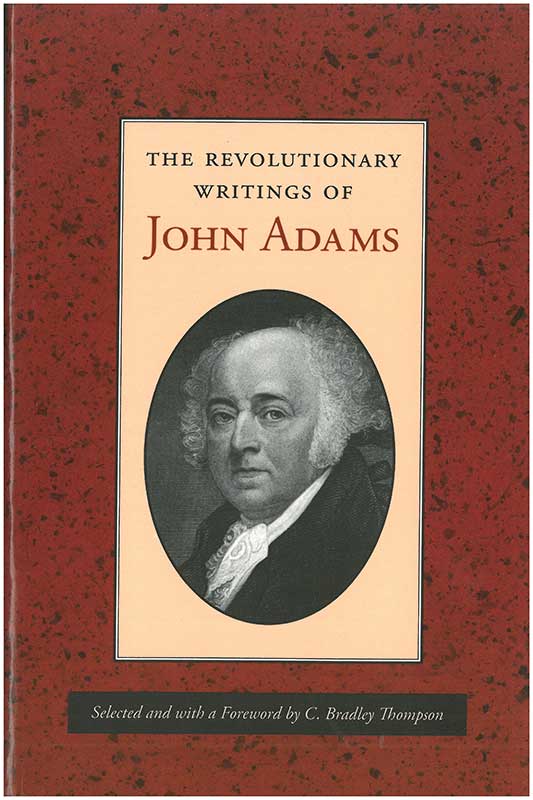
10: The Report of a Constitution, or Form of Government, for the Commonwealth of Massachusetts - John Adams, Revolutionary Writings [1763]Edition used:The Revolutionary Writings of John Adams, Selected and with a Foreword by C. Bradley Thompson (Indianapolis: Liberty Fund, 2000).
About Liberty Fund:Liberty Fund, Inc. is a private, educational foundation established to encourage the study of the ideal of a society of free and responsible individuals. Copyright information:The copyright to this edition, in both print and electronic forms, is held by Liberty Fund, Inc. Fair use statement:This material is put online to further the educational goals of Liberty Fund, Inc. Unless otherwise stated in the Copyright Information section above, this material may be used freely for educational and academic purposes. It may not be used in any way for profit.
10The Report of a Constitution, or Form of Government, for the Commonwealth of MassachusettsJohn Adams was elected in 1779 to a special convention to draft a constitution for Massachusetts. He was subsequently asked by the drafting committee to author a first report. The document that follows is the draft report approved and sent by the committee to the whole convention. Although a copy of Adams’s original draft is not known to exist, it is generally acknowledged that the draft report sent to the convention differs from Adams’s in only two respects: Article III of the Declaration of Rights, which provided tax support for religion, and Chapter VI, Section I, which protected the interests of Harvard College, were added in committee. In addition to various stylistic changes, the final document approved by the convention and ratified by the people differs from Adams’s draft in just two ways: it substitutes a qualified executive veto for an absolute veto and it did not include the governor’s power to appoint militia officers. Several principles and innovations are worth noting. First, Adams’s draft is remarkably democratic: the House of Representatives, Senate, and Governor were all to be elected annually. Second, with greater clarity and in greater detail than any other state constitution of that time, he organized his draft constitution around three independent and separate powers. Third, Adams provided for a true check-and-balance system. He established a tricameral legislature, with the Governor having an absolute veto. The Massachusetts Constitution is generally regarded as the most sophisticated and influential constitution produced during the Revolutionary period. As other states began to revise their constitutions in the post-Revolutionary period, they turned to the Massachusetts model for guidance, as did the framers of the United States Constitution. Agreed upon by the Committee,—to be laid before the Convention of Delegates, assembled at Cambridge, on the first day of September, 1779; and continued by adjournment to the twenty-eighth day of October followingPreambleThe end of the institution, maintenance, and administration of government is to secure the existence of the body politic; to protect it, and to furnish the individuals who compose it with the power of enjoying, in safety and tranquillity, their natural rights and the blessings of life; and whenever these great objects are not obtained, the people have a right to alter the government, and to take measures necessary for their safety, happiness, and prosperity. The body politic is formed by a voluntary association of individuals. It is a social compact, by which the whole people covenants with each citizen, and each citizen with the whole people, that all shall be governed by certain laws for the common good. It is the duty of the people, therefore, in framing a Constitution of Government, to provide for an equitable mode of making laws, as well as for an impartial interpretation and a faithful execution of them, that every man may, at all times, find his security in them. We, therefore, the delegates of the people of Massachusetts, in general convention assembled, for the express and sole purpose of framing a constitution, or form of government, to be laid before our constituents, according to their instructions, acknowledging, with grateful hearts, the goodness of the great Legislator of the universe, in affording to this people, in the course of His providence, an opportunity of entering into an original, explicit, and solemn compact with each other, deliberately and peaceably, without fraud, violence, or surprise; and of forming a new constitution of civil government for themselves and their posterity; and devoutly imploring His direction in a design so interesting to them and their posterity,—do, by virtue of the authority vested in us by our constituents, agree upon the following Declaration of Rights, and Frame of Government, as the Constitution of the Commonwealth of Massachusetts. Chapter iA Declaration of the Rights of the Inhabitants of the Commonwealth of MassachusettsArt. i.All men are born equally free and independent, and have certain natural, essential, and unalienable rights, among which may be reckoned the right of enjoying and defending their lives and liberties; that of acquiring, possessing, and protecting their property; in fine, that of seeking and obtaining their safety and happiness. ii. It is the duty of all men in society, publicly, and at stated seasons, to worship the Supreme Being, the great Creator and Preserver of the universe. And no subject shall be hurt, molested, or restrained, in his person, liberty, or estate, for worshipping God in the manner most agreeable to the dictates of his own conscience; or, for his religious profession or sentiments; provided he doth not disturb the public peace, or obstruct others in their religious worship. iii. Good morals being necessary to the preservation of civil society; and the knowledge and belief of the being of God, His providential government of the world, and of a future state of rewards and punishment, being the only true foundation of morality, the legislature hath, therefore, a right, and ought to provide, at the expense of the subject, if necessary, a suitable support for the public worship of God, and of the teachers of religion and morals; and to enjoin upon all the subjects an attendance upon their instructions at stated times and seasons; provided there be any such teacher on whose ministry they can conscientiously and conveniently attend. All moneys paid by the subject to the support of public worship, and of the instructors in religion and morals, shall, if he require it, be uniformly applied to the support of the teacher or teachers of his own religious denomination, if there be such whose ministry he attends upon; otherwise it may be paid to the teacher or teachers of the parish or precinct where he usually resides. iv. The people of this commonwealth have the sole and exclusive right of governing themselves, as a free, sovereign, and independent state; and do, and forever hereafter shall, exercise and enjoy every power, jurisdiction, and right, which are not, or may not hereafter be by them expressly delegated to the United States of America, in congress assembled. v. All power residing originally in the people, and being derived from them, the several magistrates and officers of government, vested with authority, whether legislative, executive, or judicial, are their substitutes and agents, and are at all times accountable to them. vi. No man, nor corporation or association of men, have any other title to obtain advantages, or particular and exclusive privileges, distinct from those of the community, than what arises from the consideration of services rendered to the public; and this title, being in nature neither hereditary nor transmissible to children, or descendants, or relations by blood, the idea of a man born a magistrate, lawgiver, or judge, is absurd and unnatural. vii. Government is instituted for the common good; for the protection, safety, prosperity, and happiness of the people; and not for the profit, honor, or private interest of any one man, family, or class of men; therefore, the people alone have an incontestable, unalienable, and indefeasible right to institute government; and to reform, alter, or totally change the same, when their protection, safety, prosperity, and happiness require it. viii. In order to prevent those who are vested with authority from becoming oppressors, the people have a right, at such periods and in such manner as may be delineated in their frame of government, to cause their public officers to return to private life, and to fill up vacant places by certain and regular elections. ix. All elections ought to be free; and all the male inhabitants of this commonwealth, having sufficient qualifications, have an equal right to elect officers, and to be elected, for public employments. x. Each individual of the society has a right to be protected by it in the enjoyment of his life, liberty, and property, according to standing laws. He is obliged, consequently, to contribute his share to the expense of this protection; and to give his personal service, or an equivalent, when necessary. But no part of the property of any individual can, with justice, be taken from him, or applied to public uses, without his own consent, or that of the representative body of the people. In fine, the people of this commonwealth are not controllable by any other laws than those to which their constitutional representative body have given their consent. xi. Every subject of the commonwealth ought to find a certain remedy, by having recourse to the laws, for all injuries or wrongs which he may receive in his person, property, or character. He ought to obtain right and justice freely, and without being obliged to purchase it; completely, and without any denial; promptly, and without delay, conformably to the laws. xii. No subject shall be held to answer for any crime or offence, until the same is fully and plainly, substantially and formally described to him. He cannot be compelled to accuse himself, or to furnish evidence against himself; and every subject shall have a right to be fully heard in his defence, by himself or his counsel at his election; to meet the witnesses against him face to face; to produce all proofs that may be favorable to him; to require a speedy and public trial by an impartial jury of the country, without whose unanimous consent, or his own voluntary confession, he cannot finally be declared guilty, or sentenced to loss of life, liberty, or property. xiii. In criminal prosecutions, the verification of facts in the vicinity where they happen, is one of the greatest securities of the life, liberty, and property of the citizen. xiv. No subject of the commonwealth shall be arrested, imprisoned, despoiled, or deprived of his property, immunities, or privileges, put out of the protection of the law, exiled, or deprived of his life, liberty, or estate, but by the judgment of his peers, or the law of the land. xv. Every man has a right to be secure from all unreasonable searches and seizures of his person, his houses, his papers, and all his possessions. All warrants, therefore, are contrary to this right, if the cause or foundation of them be not previously supported by oath or affirmation, and if the order in the warrant to a civil officer, to make search in suspected places, or to arrest one or more suspected persons, or to seize their property, be not accompanied with a special designation of the persons or objects of search, arrest, or seizure; and no warrant ought to be issued but in cases and with the formalities prescribed by the laws. xvi. In all controversies concerning property, and in all suits between two or more persons, the parties have a right to a trial by a jury; and this method of procedure shall be held sacred; unless in causes arising on the high seas, and such as relate to mariners’ wages, the legislature shall hereafter find it necessary to alter it. xvii. The people have a right to the freedom of speaking, writing, and publishing their sentiments. The liberty of the press, therefore, ought not to be restrained. xviii. The people have a right to keep and to bear arms for the common defence. And as in time of peace standing armies are dangerous to liberty, they ought not to be maintained without the consent of the legislature; and the military power shall always be held in an exact subordination to the civil authority, and be governed by it. xix. A frequent recurrence to the fundamental principles of the constitution, and a constant adherence to those of piety, justice, moderation, temperance, industry, and frugality, are absolutely necessary to preserve the advantages of liberty, and to maintain a free government. The people ought, consequently, to have a particular attention to all those principles, in the choice of their officers and representatives. And they have a right to require of their lawgivers and magistrates an exact and constant observance of them, in the formation and execution of the laws necessary for the good administration of the commonwealth. xx. The people have a right, in an orderly and peaceable manner, to assemble to consult upon the common good, give instructions to their representatives, and to request of the legislative body, by the way of addresses, petitions, or remonstrances, redress of the wrongs done them, and the grievances they suffer. xxi. The power of suspending the laws, or the execution of the laws, ought never to be exercised but by the legislature, or by authority derived from it, to be exercised in such particular cases only as the legislature shall expressly provide for; and there shall be no suspension of any law for the private interest, advantage, or emolument, of any one man, or class of men. xxii. The freedom of deliberation, speech, and debate, in either house of the legislature, is so essential to the rights of the people, that it cannot be the foundation of any accusation or prosecution, action or complaint, in any other court or place whatsoever. xxiii.The legislature ought frequently to assemble for the redress of grievances, for correcting, strengthening, and confirming the laws, and for making new laws as the common good may require. xxiv. No subsidy, charge, tax, impost, or duties ought to be established, fixed, laid, or levied, under any pretext whatsoever, without the consent of the people, or their representatives in the legislature. xxv. Laws made to punish for actions done before the existence of such laws, and which have not been declared crimes by preceding laws, are unjust, oppressive, and inconsistent with the fundamental principles of a free government. xxvi. No man ought in any case, or in any time, to be declared guilty of treason or felony by any act of the legislature. xxvii. No magistrate or court of law shall demand excessive bail, or sureties, impose excessive fines, or inflict cruel or unusual punishments. xxviii. In time of peace, no soldier ought to be quartered in any house without the consent of the owner; and in time of war, such quarters ought not to be made, but by the civil magistrate in a manner ordained by the legislature. xxix. No person can in any case be subjected to law martial, or to any penalties or pains by virtue of that law, except those employed in the army or navy, and except the militia in actual service, but by authority of the legislature. xxx. It is essential to the preservation of the rights of every individual, his life, liberty, property, and character, that there be an impartial interpretation of the laws, and administration of justice. It is the right of every citizen to be tried by judges as free, impartial, and independent as the lot of humanity will admit. It is, therefore, not only the best policy, but for the security of the rights of the people and of every citizen, that the judges should hold their offices as long as they behave themselves well, and that they should have honorable salaries ascertained and established by standing laws. xxxi. The judicial department of the state ought to be separate from, and independent of, the legislative and executive powers. Chapter iiThe Frame of GovernmentThe people inhabiting the territory heretofore called the Province of Massachusetts Bay, do hereby solemnly and mutually agree with each other to form themselves into a free, sovereign, and independent body politic, or State, by the name of The Commonwealth of Massachusetts. In the government of the Commonwealth of Massachusetts, the legislative, executive, and judicial power shall be placed in separate departments, to the end that it might be a government of laws, and not of men. Section IArt. i.The department of legislation shall be formed by two branches, a senate and house of representatives; each of which shall have a negative on the other. They shall assemble once, on the last Wednesday in May, and at such other times as they shall judge necessary, every year, and shall be styled The General Court of Massachusetts. And the first magistrate shall have a negative upon all the laws, that he may have power to preserve the independence of the executive and judicial departments. ii. The general court shall forever have full power and authority to erect and constitute judicatories and courts of record, or other courts, to be held in the name of the commonwealth, for the hearing, trying, and determining of all manner of crimes, offences, pleas, processes, plaints, actions, matters, causes, and things, whatsoever, arising or happening within the commonwealth, or between or concerning persons inhabiting, or residing, or brought within the same; whether the same be criminal or civil, or whether the said crimes be capital or not capital, and whether the said pleas be real, personal or mixt; and for the awarding and making out of execution thereupon. To which courts and judicatories are hereby given and granted full power and authority, from time to time, to administer oaths or affirmations, for the better discovery of truth in any matter in controversy, or depending before them. iii. And further, full power and authority are hereby given and granted to the said general court, from time to time, to make, ordain, and establish all manner of wholesome and reasonable orders, laws, statutes, and ordinances, directions, and instructions, either with penalties or without; so as the same be not repugnant or contrary to this constitution, as they shall judge to be for the good and welfare of this commonwealth, and for the government and ordering thereof, and of the subjects of the same, and for the necessary support and defence of the government thereof; and to name and settle annually, or provide by fixed laws, for the naming and settling all civil officers within the said commonwealth, such officers excepted the election and constitution of whom are not hereafter in this Form of Government otherwise provided for; and to set forth the several duties, powers, and limits, of the several civil and military officers of this commonwealth, and the forms of such oaths as shall be respectively administered unto them for the execution of their several offices and places, so as the same be not repugnant or contrary to this constitution; and also to impose fines, mulcts, imprisonments, and other punishments; and to impose and levy proportional and reasonable assessments, rates, and taxes, upon the persons of all the inhabitants of, and within the said commonwealth, and upon all estates within the same, to be issued and disposed of by warrant, under the hand of the governor of this commonwealth for the time being, with the advice and consent of the council, for the public service, in the necessary defence and support of the government of the said commonwealth, and the protection and preservation of the subjects thereof, according to such acts as are or shall be in force within the same and to dispose of matters and things whereby they may be religiously, peaceably, and civilly governed, protected, and defended. And that public assessments may be made with equality, there shall be a valuation of estates within the commonwealth taken anew once in every ten years at the least. Section IISenatei.There shall be annually elected by the freeholders and other inhabitants of this commonwealth, qualified as in this constitution is provided, forty persons, to be counsellors and senators for the year ensuing their election, to be chosen in and by the inhabitants of the districts into which the commonwealth may from time to time be divided by the general court, for that purpose. And the general court, in assigning the numbers to be elected by the respective districts, shall govern themselves by the proportion of the public taxes paid by the said districts; and timely make known to the inhabitants of the commonwealth, the limits of each district, and the number of counsellors and senators to be chosen therein; provided that the number of such districts shall be never more than sixteen, nor less than ten. And the several counties in this commonwealth shall, until the general court shall determine it necessary to alter said districts, be districts for the choice of counsellors and senators (except that the counties of Dukes County and Nantucket shall form one district for that purpose,) and shall elect the following number for counsellors and senators, namely,—
ii. The senate shall be the first branch of the legislature; and the senators shall be chosen in the following manner, namely,—There shall be a meeting on the first Monday in April, annually, forever, of the inhabitants of all the towns in the several counties of this commonwealth, to be called by the selectmen, and warned in due course of law, at least seven days before the first Monday in April, for the purpose of electing persons to be senators and counsellors. And at such meetings every male person of twenty-one years of age and upwards, resident in such towns one year next preceding the annual election of senators, having a freehold estate within the commonwealth of the annual income of three pounds, or other real or personal estate of the value of sixty pounds, shall have a right to give in his vote for the senators for the district. The selectmen of the several towns shall preside at such meetings, and shall be under oath, as well as the town-clerk, to preside impartially, according to their best skill and judgment; and to make a just and true return. The selectmen shall receive the votes of all the inhabitants of such towns, qualified to vote for senators, and shall sort and count them in open town meeting, and in presence of the town-clerk, who shall make a fair record, in presence of the selectmen, and in open town meeting, of the name of every person voted for, and of the number of votes against his name; and a fair copy of this record shall be attested by the selectmen and the town-clerk, and shall be sealed up, directed to the secretary of the commonwealth, for the time being, with a superscription, expressing the purport of the contents thereof, and delivered by the town-clerk of such towns to the sheriff of the county in which such town lies, thirty days at least before the last Wednesday in May, annually; or it shall be delivered into the secretary’s office seventeen days at least before the said last Wednesday in May; and the sheriff of each county shall deliver all such certificates by him received into the secretary’s office, seventeen days before the said last Wednesday in May. And the inhabitants of plantations unincorporated, qualified as this constitution provides, who are or shall be empowered and required to assess taxes upon themselves toward the support of government, shall have the same privilege of voting for counsellors and senators in the plantations where they reside, as town inhabitants have in their respective towns; and the plantation meetings for that purpose shall be held annually, on the same first Monday in April, at such place in the plantations respectively, as the assessors thereof shall direct; which assessors shall have like authority for notifying the electors, collecting and returning the votes, as the selectmen and town-clerks have in their several towns by this constitution. And all other persons living in places unincorporated (qualified as aforesaid) who shall be assessed to the support of government by the assessors of an adjacent town, shall have the privilege of giving in their votes for counsellors and senators, in the town where they shall be assessed, and be notified of the place of meeting by the selectmen of the town where they shall be assessed for that purpose accordingly. iii. And that there may be a due convention of senators on the last Wednesday in May, annually, the governor, with five of the council, for the time being, shall, as soon as may be, examine the returned copies of such records; and fourteen days before the said day he shall issue his summons to such persons as shall appear to be chosen by a majority of voters, to attend on that day, and take their seats accordingly; provided, nevertheless, that, for the first year, the said returned copies shall be examined by the president and five of the council of the former constitution of government; and the said president shall, in like manner, issue his summons to the persons so elected, that they may take their seats, as aforesaid. iv. The senate however shall be the final judge of the elections, returns, and qualifications of their own members, and shall, on the said last Wednesday in May, annually, determine and declare who are elected by each district to be senators, by a majority of votes. And, in case there shall not appear to be the full number of senators returned, elected by a majority of votes for any district, the deficiency shall be supplied in the following manner, namely:—The members of the house of representatives, and such senators as shall be declared elected, shall take the names of twice the number of senators wanting, from those who shall be found to have the highest number of votes in such district, and not elected; and out of these shall elect, by ballot, a number of senators sufficient to fill up the vacancies in such district. And in this manner all such vacancies shall be filled up in every district of the commonwealth; and in like manner all vacancies in the senate, arising by death, removal out of the state, or otherwise, shall be supplied as soon as may be after such vacancies shall happen. v. Provided, nevertheless, that no person shall be capable of being elected as a senator, who is not of the Christian religion, and seised in his own right of a freehold within this commonwealth, of the value of three hundred pounds at least, and who has not been an inhabitant of this commonwealth for the space of seven years, three of which immediately preceding his election, and in the district for which he shall be chosen. vi. The senate shall have power to adjourn themselves, provided such adjournments do not exceed two days at a time. vii. The senate shall choose its own president, appoint its own officers, and determine its own rules of proceedings. viii. The senate shall be a court, with full authority to hear and determine all impeachments made by the house of representatives, against any officer or officers of the commonwealth, for misconduct and maladministration in their offices. But previous to the trial of every impeachment, the members of the senate shall respectively be sworn, truly and impartially to try and determine the charge in question, according to evidence. Their judgment, however, shall not extend farther than to removal from office, and disqualification to hold or enjoy any place of honor, trust, or profit under this commonwealth. But the party so convicted shall be, nevertheless, liable to indictment, trial, judgment, and punishment, according to the laws of the land. Section IIIHouse of Representativesi.There shall be in the legislature of this commonwealth a representation of the people annually elected, and founded in equality. ii. And, in order to provide for a representation of the citizens of this commonwealth, founded upon the principle of equality, every corporate town, containing one hundred and fifty ratable polls, may elect one representative. Every corporate town, containing three hundred and seventy-five ratable polls, may elect two representatives. Every corporate town, containing six hundred ratable polls, may elect three representatives; and proceeding in that manner, making two hundred and twenty-five ratable polls the mean increasing number for every additional representative. And forever, hereafter, the least number of ratable polls necessary to entitle a corporate town to elect one representative, when increased by the addition of a number equal to half the said least number, shall be the mean increasing number of ratable polls for every additional representative any corporate town may elect. And, to prevent hereafter the house of representatives from becoming unwieldy, and incapable of debating and deliberating, by the great additions it would continually receive from the increasing settlement and population of this commonwealth, no corporate town shall, from and after the year of our Lord, one thousand seven hundred and ninety, be entitled to elect one representative, unless it shall contain two hundred ratable polls; nor to elect two representatives, unless it shall contain five hundred ratable polls; nor to elect three representatives, unless it shall contain eight hundred ratable polls; and so proceeding in that manner, making, by the aforesaid rule, three hundred ratable polls the mean increasing number for every additional representative. And every tenth year, from and after the said year of our Lord, one thousand seven hundred and ninety, and until such time as the number of representatives which may be elected for this commonwealth shall not exceed the number of two hundred, the least number of ratable polls which, at that time, any corporate town must contain to entitle it to elect one representative, shall be increased by the addition of fifty; and the least number aforesaid, thus increased by the said addition, shall be the number of ratable polls any corporate town must contain to entitle it to elect one representative; and the number of representatives any corporate town may elect shall be regulated accordingly, by the rules aforesaid. The freeholders and other inhabitants of this commonwealth, qualified to vote for representatives, living in corporate towns, which, severally, shall contain a less number of ratable polls than is necessary to entitle them, respectively, to elect one representative, shall, nevertheless, have a right to associate with some town or towns adjoining, for the election of representatives; and, in such cases, the voters thus united, shall have a right to elect the same number of representatives as they would have done were they inhabitants of one corporate town; which representatives may be elected out of either of the associated towns, indifferently. And the legislature shall, from time to time, determine what towns shall thus associate, the manner of the association, and the method and manner of calling and conducting the meetings of the associated towns for the election of representatives. iii. The members of the house of representatives shall be chosen by written votes; and no person shall be qualified or eligible to be a member of the said house, unless he be of the Christian religion, and, for one year at least, next preceding his election, shall have been an inhabitant of, and have been seised in his own right of a freehold of the value of one hundred pounds, within the town or towns he shall be chosen to represent; and he shall cease to represent the said town or towns immediately on his ceasing to be a freeholder within the same. iv. Every male person, being twenty-one years of age, and resident in any particular town in this commonwealth for the space of one year next preceding, having a freehold estate within the same town, of the annual income of three pounds, or other estate real or personal or mixt of the value of sixty pounds, shall have a right to vote in the choice of a representative or representatives for the said town, or for the towns united as aforesaid. v. The members of the house of representatives shall be chosen annually in the month of May, ten days at least before the last Wednesday of that month, from among the wisest, most prudent, and virtuous of the freeholders. vi. The house of representatives shall be the grand inquest of this commonwealth; and all impeachments made by them shall be heard and tried by the senate. vii. All money-bills shall originate in the house of representatives; but the senate may propose or concur with amendments, as on other bills. viii. The house of representatives shall have power to adjourn themselves; provided such adjournment shall not exceed two days at a time. ix. Not less than sixty members of the house of representatives shall constitute a quorum for doing business. x. The house of representatives shall choose their own speaker, appoint their own officers, and settle the rules and orders of proceeding in their own house. They shall have authority to punish, by imprisonment, every person who shall be guilty of disrespect to the house, in its presence, by any disorderly or contemptuous behavior; or by threatening or ill-treating any of its members; or, in a word, by obstructing its deliberations; every person guilty of a breach of its privileges, in making arrests for debts, or by assaulting one of its members during his attendance at any session, or on the road, whether he be going to the house or returning home; in assaulting any one of its officers, or in disturbing him in the execution of any order or procedure of the house; in assaulting or troubling any witness or other person ordered to attend the house, in his way in going or returning, or in rescuing any person arrested by order of the house. xi. The senate shall have the same powers in the like cases; and the governor and council shall have the same authority to punish in like cases. Provided, that no imprisonment on the warrant or order of the governor, council, senate, or house of representatives, for either of the above described offences, be for a term exceeding thirty days. Chapter iiiExecutive PowerSection IGovernorArt. i.There shall be a supreme executive magistrate, who shall be styled, the Governor of the Commonwealth of Massachusetts, and whose title shall be, His Excellency. ii. The governor shall be chosen annually; and no person shall be eligible to this office unless, at the time of his election, he shall have been an inhabitant of this commonwealth for seven years next preceding; and unless he shall at the same time be seised in his own right of a freehold within the commonwealth, of the value of one thousand pounds; and unless he shall be of the Christian religion. iii. Those persons who shall be qualified to vote for senators and representatives within the several towns of this commonwealth, shall, at a meeting to be called for that purpose, on the first Monday of April annually, give in their votes for a governor, to the selectmen, who shall preside at such meetings; and the town clerk, in the presence and with the assistance of the selectmen, shall in open town meeting sort and count the votes, and form a list of the persons voted for, with the number of votes for each person against his name, and shall make a fair record of the same in the town books, and a public declaration thereof in the said meeting; and shall, in the presence of the inhabitants, seal up copies of the said list, attested by him and the selectmen, and transmit the same to the sheriff of the county, thirty days at least before the last Wednesday in May; or shall cause returns of the same to be made to the office of the secretary of the commonwealth, seventeen days at least before the said day, who shall lay the same before the senate and the house of representatives, on the last Wednesday in May, to be by them examined; and, in case of an election by a majority of votes through the commonwealth, the choice shall be by them declared and published. But if no person shall have a majority of votes, the house of representatives shall, by ballot, elect two out of four persons who had the highest number of votes, if so many shall have been voted for, but if otherwise, out of the number voted for; and make return to the senate of the two persons so elected, on which the senate shall proceed, by ballot, to elect one, who shall be declared governor. iv. The person chosen governor, and accepting the trust, shall, in the presence of the two houses, and before he proceed to execute the duties of his office, make and subscribe the following declaration, and take the following oaths, to be administered by the president of the senate, namely,— I, A B, being declared duly elected governor of the commonwealth of Massachusetts, do now declare, that I believe and profess the Christian religion, from a firm persuasion of its truth; and that I am seised and possessed, in my own right, of the property required by law, as one qualification for that office. I, A B, do solemnly swear, that I bear faith and true allegiance to the commonwealth of Massachusetts; that I will faithfully and impartially discharge and perform all the duties incumbent on me, as a governor of this commonwealth, according to the best of my abilities and understanding, agreeably to the rules and regulations of the constitution, and that I will not attempt or consent to a violation thereof. So help me God. v. The governor shall have authority, from time to time, at his discretion, to assemble and call together the counsellors of this commonwealth, for the time being; and the governor, with the said counsellors, or five of them at least, shall and may, from time to time, hold and keep a council for the ordering and directing the affairs of the commonwealth according to law. vi. The governor, with advice of council, shall have full power and authority, in the recess of the general court, to prorogue the same from time to time, not exceeding ninety days in any one recess of the said court; and during the session of the said court, to adjourn or prorogue it to any time the two houses shall desire, and to dissolve the same, at their request, or on the Wednesday next preceding the last Wednesday in May; and to call it together sooner than the time to which it may be adjourned or prorogued, if the welfare of the commonwealth shall require the same. vii. In cases of disagreement between the two houses, with regard to the time of adjournment or prorogation, the governor, with advice of the council, shall have a right to adjourn or prorogue the general court, as he shall determine the public good shall require. viii. The governor of this commonwealth, for the time being, shall be the commander-in-chief of the army and navy, and of all the military forces of the state by sea and land; and shall have full power, by himself or by any chief commander, or other officer or officers, to be appointed by him, from time to time to train, instruct, exercise, and govern the militia and navy; and for the special defence and safety of the commonwealth, to assemble in martial array and put in warlike posture, the inhabitants thereof; and to lead and conduct them, and with them to encounter, expulse, repel, resist, and pursue, by force of arms, as well by sea as by land, within or without the limits of this commonwealth, and also to kill, slay, destroy, and conquer, by all fitting ways, enterprises, and means whatsoever, all and every such person and persons as shall at any time hereafter, in a hostile manner, attempt or enterprise the destruction, invasion, detriment, or annoyance of this commonwealth; and to use and exercise over the army and navy, and over the militia in actual service, the law martial in time of war, invasion, or rebellion, as occasion shall necessarily require; and also from time to time to erect forts, and to fortify any place or places within the said commonwealth, and the same to furnish with all necessary ammunition, provisions, and stores of war, for offence or defence, and to commit from time to time the custody and government of the same to such person or persons as to him shall seem meet; and in times of emergency the said forts and fortifications to demolish at his discretion; and to take and surprise, by all ways and means whatsoever, all and every such person or persons, with their ships, arms, ammunition, and other goods, as shall in a hostile manner invade, or attempt the invading, conquering, or annoying this commonwealth, and in fine that the governor be intrusted with all other powers, incident to the offices of captain-general and commander-in-chief and admiral, to be exercised agreeably to the rules and regulations of the constitution and the laws of the land. Provided, that the said governor shall not at any time hereafter, by virtue of any power by this constitution granted, or hereafter to be granted to him by the legislature, transport any of the inhabitants of this commonwealth, or oblige them to march, out of the limits of the same, without their free and voluntary consent, or the consent of the general court, nor grant commissions for exercising the law martial upon any of the inhabitants of this commonwealth without the advice and consent of the council of the same. ix. The power of pardoning offences, except such as persons may be convicted of before the senate by an impeachment of the house, shall be in the governor, by and with the advice of council. But no charter of pardon granted by the governor, with advice of the council, before conviction, shall avail the party pleading the same, notwithstanding any general or particular expressions contained therein, descriptive of the offence or offences intended to be pardoned. x. All judicial officers, the attorney-general, the solicitor-general, all sheriffs, coroners, registers of probate, and registers of maritime courts, shall be nominated and appointed by the governor, by and with the advice and consent of the council; and every such nomination shall be made by the governor, and made at least seven days prior to such appointment. xi. All officers of the militia shall be appointed by the governor, with the advice and consent of the council; he first nominating them seven days at least before the appointment. xii. All moneys shall be issued out of the treasury of this commonwealth, and disposed of by warrant, under the hand of the governor for the time being, with the advice and consent of the council, for the necessary defence and support of the commonwealth; and for the protection and preservation of the inhabitants thereof, agreeably to the acts and resolves of the general court. xiii. All public boards, the commissary-general, all superintending officers of public magazines and stores, belonging to this commonwealth, and all commanding officers of forts and garrisons within the same, shall, once in every three months officially, and without requisition, and at other times, when required by the governor, deliver to him an account of all goods, stores, provisions, ammunition, cannon with their appendages, and small arms with their accoutrements, and of all other public property whatever under their care respectively; distinguishing the quantity, number, quality, and kind of each, as particularly as may be; together with the condition of such forts and garrisons. And the said commanding officers shall exhibit to the governor, when required by him, true and exact plans of such forts, and of the land and sea, or harbor or harbors, adjacent. And the said boards, and all public officers, shall communicate to the governor, as soon as may be after receiving the same, all letters, despatches, and intelligences, of a public nature, which shall be directed to them respectively. xiv. And to prevent an undue influence in this commonwealth, which the first magistrate thereof may acquire, by the long possession of the important powers and trusts of that office; as also to stimulate others to qualify themselves for the service of the public in the highest stations, no man shall be eligible as governor of this commonwealth, more than five years in any seven years. xv. As the public good requires that the governor should not be under the undue influence of any of the members of the general court, by a dependence on them for his support; that he should, in all cases, act with freedom for the benefit of the public; that he should not have his attention necessarily diverted from that object to his private concerns; and that he should maintain the dignity of the commonwealth, in the character of its chief magistrate, it is necessary that he should have an honorable stated salary, of a fixed and permanent value, amply sufficient for those purposes, and established by standing laws; and it shall be among the first acts of the general court, after the commencement of this constitution, to establish such salary by law accordingly. Permanent and honorable salaries shall also be established by law for the justices of the superior court. And if it shall be found that any of the salaries aforesaid, so established, are insufficient, they shall from time to time be enlarged, as the general court shall judge proper. Section IILieutenant-Governor, and the ascertaining the Value of the Money mentioned in this Constitution, as Qualifications to Office, &c.i.There shall be annually elected a lieutenant-governor of the Commonwealth of Massachusetts, whose title shall be His Honor, and who shall be qualified, in point of religion, property, and residence in the commonwealth, in the same manner with the governor. He shall be chosen on the same day, in the same manner, and by the same persons. The return of the votes for this officer, and the declaration of his election shall be in the same manner. And if no one person shall be found to have a majority of votes, the vacancy shall be filled by the senate and house of representatives, in the same manner as the governor is to be elected, in case no one person has a majority of votes to be governor. ii. The lieutenant-governor shall always be, ex-officio, a member, and, in the absence of the governor, president, of the council. iii. Whenever the chair of the governor shall be vacant, by reason of his death, or absence from the commonwealth, or otherwise, the lieutenant-governor, for the time being, shall, during such vacancy, have and exercise all the powers and authorities which, by this constitution, the governor is vested with, when personally present. iv. “The respective values assigned by the several articles of this constitution to the property necessary to qualify the subjects of this commonwealth to be electors, and also to be elected into the several offices, for the holding of which such qualifications are required, shall always be computed in silver, at the rate of six shillings and eight pence per ounce.” v. And it shall be in the power of the legislature, from time to time, to increase such qualifications, of the persons to be elected to offices, as the circumstances of the commonwealth shall require. Section IIICouncil, and the Manner of settling Elections by the Legislature; Oaths to be taken, &c.i.There shall be a council for advising the governor in the executive part of government, to consist of nine persons besides the lieutenant-governor, whom the governor, for the time being, shall have full power and authority, from time to time, at his discretion, to assemble and call together. And the governor, with the said counsellors, or five of them at least, shall and may, from time to time, hold and keep a council, for the ordering and directing the affairs of the commonwealth, according to the laws of the land. ii. Nine counsellors shall out of the persons returned for counsellors and senators, be annually chosen, on the last Wednesday in May, by the joint ballot of the senators and representatives assembled in one room. The seats of the persons thus elected into the council and accepting the trust, shall be vacated in the senate, and, in this manner, the number of senators shall be reduced to thirty-one. iii. The counsellors, in the civil arrangements of the commonwealth, shall have rank next after the lieutenant-governor. iv. Not more than two counsellors shall be chosen out of any one county of this commonwealth. v. The resolutions and advice of the council shall be recorded in a register, and signed by the members present; and this record may be called for at any time by either house of the legislature; and any member of the council may insert his opinion contrary to the resolution of the majority. vi. Whenever the office of the governor and lieutenant-governor shall be vacant, by reason of death, absence, or otherwise, then the council, or the major part of them, shall, during such vacancy, have full power and authority to do and execute all and every such acts, matters, and things, as the governor or the lieutenant-governor might or could, by virtue of this constitution, do or execute, if they, or either of them, were personally present. vii. And whereas, the elections appointed to be made by this constitution, on the last Wednesday in May, annually, by the two houses of the legislature, may not be completed on that day, the said elections may be adjourned from day to day, until the same shall be completed. And the order of elections shall be as follows,—the vacancies in the senate, if any, shall first be filled up; the governor and lieutenant-governor shall then be elected, provided there should be no choice of them by the people; and afterwards the two houses shall proceed to the election of the council. The lieutenant-governor, counsellors, senators, and members of the house of representatives shall, before they enter on the execution of their respective offices, make and subscribe the same declaration, and take the same oath, (mutatis mutandis,) which the governor is directed by this constitution to make, subscribe, and take. And every person appointed to any civil or military office of this commonwealth shall, previous to his entering on the execution of his office, make and subscribe the following declaration, (mutatis mutandis,) namely,— I, A B, being appointed NA do now declare, that I believe and profess the Christian religion, from a firm persuasion of the truth thereof. And he shall likewise take an oath of the form following, (mutatis mutandis,) namely,— I, A B, do solemnly swear, that I will bear faith and true allegiance to the commonwealth of Massachusetts; that I will faithfully and impartially discharge and perform all the duties incumbent on me, as NA according to the best of my abilities and understanding, agreeably to the rules and regulations of the constitution; and that I will not attempt or consent to a violation thereof. So help me God. Provided, notwithstanding, that any person so appointed, who has conscientious scruples relative to taking oaths, may be admitted to make solemn affirmation, under the pains and penalties of perjury, to the truth of the matters contained in the form of the said oath, instead of taking the same. Section IVSecretary, Treasurer, Commissary, &c.i.The secretary, treasurer, and receiver-general, and the commissary-general, notaries-public, and naval officers shall be chosen annually, by joint ballot of the senators and representatives, in one room. And that the citizens of this commonwealth may be assured, from time to time, that the moneys remaining in the public treasury, upon the settlement and liquidation of the public accounts, are their property, no man shall be eligible as treasurer and receiver-general more than five years successively. ii. The records of the commonwealth shall be kept in the office of the secretary, who shall attend the governor and council, the senate, and house of representatives in person, or by his deputies, as they shall respectively require. Chapter ivJudiciary PowerArt. i.The tenure, that all commission officers by law hold in their offices, shall be expressed in their respective commissions. All judicial officers, duly appointed, commissioned, and sworn, shall hold their offices during good behavior provided, nevertheless, the governor, with consent of the council, may remove them upon the address of both houses of the legislature. And all other officers, appointed by the governor and council, shall hold their offices during pleasure. ii. No justice of the superior court of judicature, court of assize, and general jail delivery, shall have a seat in the senate or house of representatives. iii. The senate, nevertheless, as well as the governor and council, shall have authority to require the opinions of the judges upon important questions of law, and upon solemn occasions. iv. In order that the people may not suffer from the long continuance in place of any justice of the peace, who shall fail of discharging the important duties of his office with ability or fidelity, all commissions of justices of the peace shall expire and become void, in the term of seven years from their respective dates; and, upon the expiration of any commission, the governor and council may, if necessary, renew such commissions, or appoint another person, as shall most conduce to the well-being of the commonwealth. v. The judges of probate of wills and for granting letters of administration, shall hold their courts at such place or places, on fixed days, as the convenience of the people shall require. And the legislature shall, from time to time, hereafter, appoint such times and places; until which appointments, the said courts shall be holden at the times and places which the respective judges shall direct. vi. All causes of marriage, divorce, and alimony, shall be determined by the senate; and all appeals from the judges of probate shall be heard and determined by the governor and council, until the legislature shall, by law, make other provision. Chapter vDelegates to Congress, Commissions, Writs, Indictments, &c.; Confirmation of Laws, Habeas Corpus, and enacting StyleArt. i.The delegates of this commonwealth to the Congress of the United States of America, shall, on the second Wednesday of November, if the general court be then sitting, or on the second Wednesday of the session next after, be elected annually, by the joint ballot of the senate and house of representatives, assembled together in one room. They shall have commissions under the hand of the governor, and under the great seal of the commonwealth; but may be recalled at any time within the year, and others chosen and commissioned, in the same manner in their stead. ii. All commissions shall be in the name of the commonwealth of Massachusetts, signed by the governor, and attested by the secretary or his deputy, and have the great seal of the commonwealth affixed thereto. iii. All writs issuing out of the clerk’s office in any of the courts of law, shall be in the name of the commonwealth of Massachusetts. They shall be under the seal of the court from whence they issue. They shall bear test of the chief justice, or first or senior justice of the court, to which they shall be returnable, and be signed by the clerk of such court. iv. All indictments, presentments, and informations, shall conclude, “against the peace of the Commonwealth and the dignity of the same.” v. All the statute laws of the province, colony, or state of Massachusetts Bay, the common law, and all such parts of the English or British statutes as have been adopted, used, and approved in the said province, colony, or state, and usually practised on in the courts of law, shall still remain and be in full force, until altered or repealed by the legislature; such parts only excepted as are repugnant to the rights and liberties contained in this constitution. vi. The privilege and benefit of the writ of habeas corpus shall be enjoyed in this commonwealth in the most free, easy, cheap, expeditious, and ample manner; and shall not be suspended by the legislature, except upon the most urgent and pressing occasions, and for a short and limited time. vii. The enacting style, in making and passing all acts, statutes, and laws, shall be: “Be it enacted, by his excellency the governor, the senate, and house of representatives, in general court assembled, and by the authority of the same;” or “By his honor the lieutenant-governor,” &c.; or “The honorable the council,” &c., as the case may be. Chapter viThe University at Cambridge, and Encouragement of Literature, &c.Section IThe UniversityArt. i.Whereas our wise and pious ancestors, so early as the year one thousand six hundred and thirty-six, laid the foundation of Harvard College, in which university many persons of great eminence have by the blessing of God been initiated in those arts and sciences which qualified them for public employments, both in church and state. And whereas the encouragement of arts and sciences, and all good literature, tends to the honor of God, the advantage of the Christian religion, and the great benefit of this and the other United States of America,—it is declared, That the President and Fellows of Harvard College, in their corporate capacity, and their successors in that capacity, their officers and servants, shall have, hold, use, exercise, and enjoy, all the powers, authorities, rights, liberties, privileges, immunities, and franchises, which they now have, or are entitled to have, hold, use, exercise, and enjoy; and the same are hereby ratified and confirmed unto them, the said President and Fellows of Harvard College, and to their successors, and to their officers and servants, respectively, forever. ii. And whereas there have been at sundry times, by divers persons, gifts, grants, devises, of houses, lands, tenements, goods, chattels, legacies, and conveyances, heretofore made, either to Harvard College, in Cambridge, in New England, or to the President and Fellows of Harvard College, or to the said College, by some other description, under several charters successively;—It Is Declared, That all the said gifts, grants, devises, legacies, and conveyances, are hereby forever confirmed unto the President and Fellows of Harvard College, and to their successors, in the capacity aforesaid, according to the true intent and meaning of the donor or donors, grantor or grantors, devisor or devisors. iii. And whereas, by an act of the general court of the colony of Massachusetts Bay, passed in the year one thousand six hundred and forty-two, the governor and deputy governor for the time being, and all the magistrates of that jurisdiction, were, with the president, and a number of the clergy, in the said act described, constituted the overseers of Harvard College. And it being necessary, in this new constitution of government, to ascertain who shall be deemed successors to the said governor, deputy-governor, and magistrates;—It Is Declared, That the Governor, Lieutenant-Governor, Council, and Senate of this Commonwealth, are, and shall be deemed, their successors; who, with the President of Harvard College for the time being, together with the Ministers of the Congregational Churches in the towns of Cambridge, Watertown, Charlestown, Boston, Roxbury, and Dorchester, mentioned in the said act, shall be and hereby are, vested with all the powers and authority belonging, or in any way appertaining to the overseers of Harvard College. Provided, that nothing herein shall be construed to prevent the legislature of this commonwealth from making such alterations in the government of the said university as shall be conducive to its advantage, and the interest of the republic of letters, in as full a manner as might have been done by the legislature of the NA province of the Massachusetts Bay. Section IIThe Encouragement of Literature, &c.Wisdom and knowledge, as well as virtue, diffused generally among the body of the people, being necessary for the preservation of their rights and liberties, and as these depend on spreading the opportunities and advantages of education in the various parts of the country, and among the different orders of the people, it shall be the duty of legislators and magistrates, in all future periods of this commonwealth, to cherish the interests of literature and the sciences, and all seminaries of them; especially the university at Cambridge, public schools and grammar schools in the towns; to encourage private societies and public institutions, rewards and immunities for the promotion of agriculture, arts, sciences, commerce, trades, manufactures, and a natural history of the country; to countenance and inculcate the principles of humanity and general benevolence, public and private charity, industry and frugality, honesty and punctuality in their dealings, sincerity, good humor, and all social affections and generous sentiments among the people. Chapter vii and lastContinuance of Officers, &c.ix.To the end there may be no failure of justice, or danger arise to the commonwealth from a change of the form of government, all officers, civil and military, holding commissions under the government and people of Massachusetts Bay in New England, and all other officers of the said government and people, at the time this constitution shall take effect, shall have, hold, use, exercise, and enjoy all the powers and authority to them granted or committed, until other persons shall be appointed in their stead. And all courts of law shall proceed in the execution of the business of their respective departments; and all the executive and legislative officers, bodies, and powers, shall continue in full force, in the enjoyment and exercise of all their trusts, employments, and authority, until the general court, and the supreme and executive officers, under this constitution, are designated, and invested with their respective trusts, powers, and authority. The text of this book is set in 11-point Adobe Garamond, a modern adaptation of the typeface originally cut around 1540 by the French typographer and printer Claude Garamond (d. 1561). Garamond, with its small lowercase height and restrained contrast between thick and thin strokes, is a classic “old-style” face, and has been one of the most influential and widely used typefaces since its creation. This book is printed on paper that is acid-free and meets the requirements of the American National Standard for Permanence of Paper for Printed Library Materials, z39.48-1992. (archival) Book design by Martin Lubin Graphic Design, Jackson Heights, New York Typography by Impressions Book and Journal Services, Inc., Madison, Wisconsin Printed and bound by Edwards Brothers, Inc., Ann Arbor, Michigan |

Titles (by Subject)