Econlib

The Library

Other Sites

Front Page arrow Titles (by Subject) arrow INTRODUCTION - Political Economy, Concisely

Return to Title Page for Political Economy, Concisely

Search this Title:

Also in the Library:

Subject Area: Economics
Subject Area: Political Theory
Collection: Books Published by Liberty Fund
Order this book from Liberty Fund

INTRODUCTION - Anthony de Jasay, Political Economy, Concisely [2009]

Edition used:

Political Economy, Concisely: Essays on Policy that does not work and Markets that do. Edited and with an Introduction by Hartmut Kliemt (Indianapolis: Liberty Fund, 2009).

About Liberty Fund:

Liberty Fund, Inc. is a private, educational foundation established to encourage the study of the ideal of a society of free and responsible individuals.


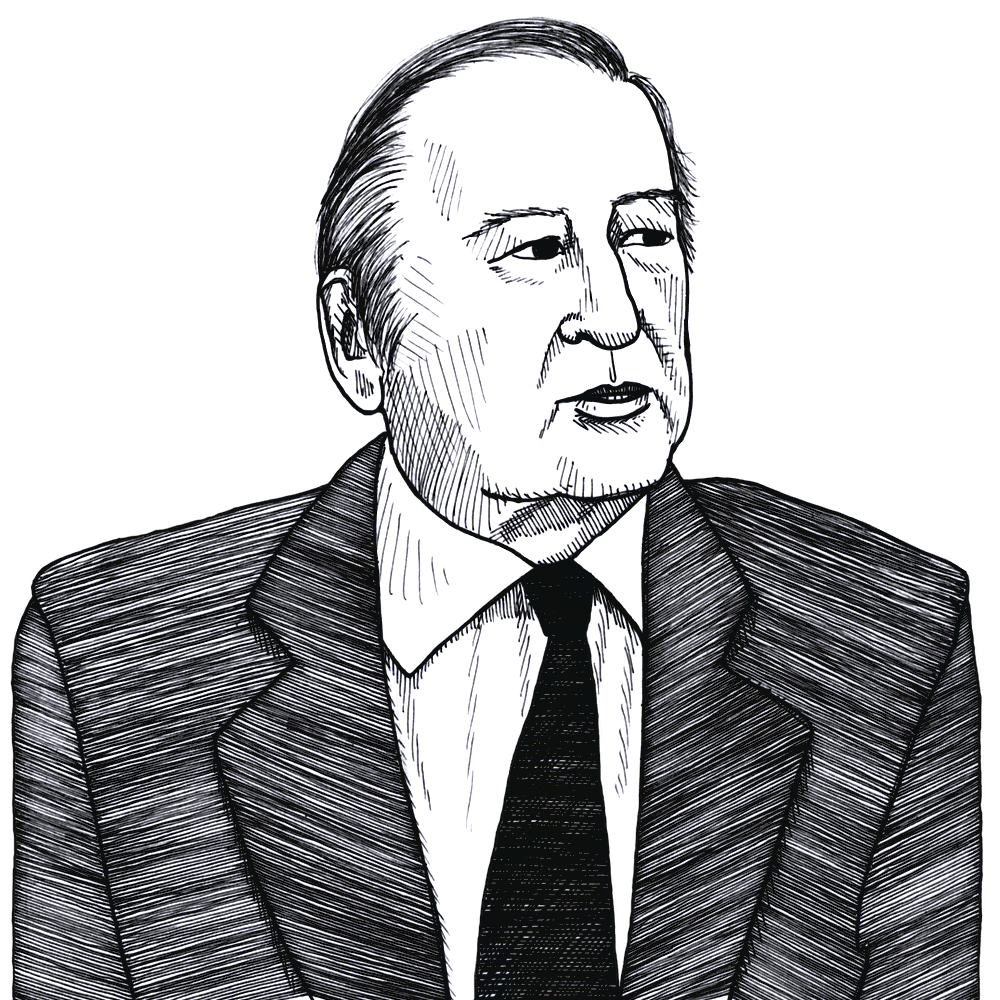
lf1535_figure_001

ANTHONY DE JASAY

INTRODUCTION

Anthony de Jasay may be seen in the role of a Frédéric Bastiat of our times. Like Bastiat, whom he admires (and credits with the discovery of opportunity cost, a cornerstone of economics), Jasay himself is a philosopher-economist with hard-won, practical experience. He displays an affinity for British classical liberalism, particularly for David Hume, but keeps his distance from the Utilitarians. A longtime resident of France, Jasay shares Bastiat’s encounters with the perversities of the centralized state. Like his great French forerunner, he took (and still takes) to the pen to express his criticism. However, unlike Bastiat, who was a Frenchman, Jasay came to France from Hungary, his native country, with stops in Austria, Australia, and finally Oxford, where he taught economics.

As a philosopher-economist, Jasay continues the British Moralist tradition originating in the work of Hobbes. Although the British Moralists often sought to refute Hobbes, the themes he initiated persist to the present day. Jasay’s first book, The State, is a paradigmatic case in point. Its first sentence asks, “What would you do if you were the state?” In response, Jasay spells out his version of what has been called the “Logic of Leviathan” but does not endorse the substantive Hobbesian claim that social order requires this dangerous animal as its creator. Quite to the contrary, Jasay claims, if individuals are left alone, they tend to coordinate their actions; conventional rules and social order will emerge spontaneously.

Always insisting on keeping key concepts in their proper place and not letting them get tangled together, Jasay draws a sharp distinction between freedoms and rights (and considers the “right to freedom” a confused notion). Freedoms are those feasible acts that fall within the spontaneous rules of the social order. Rights and their matching obligations evolve either from voluntary agreements (contracts) or “from above”—the rights being conferred and the obligations imposed by authority.

Drawing a distinction between freedom and rights leads directly to Jasay’s theory of property. He holds with Hume that property originates in finding, is transferred by consent, and is antecedent to society or the state; it is a freedom. He attacks the conventional view that property is a “right,” let alone a “bundle” of detachable rights conferred by some collective decision, with the state carrying out the matching obligation of enforcing the right. According to Jasay, this widely accepted view of property rights, proclaimed even by such staunch defenders of freedom as Armen Alchian, implicitly conveys that property is held at society’s pleasure, by its grace and favor. Society can withdraw any or all of the detachable “rights” to property just as it has conferred them. If, on the contrary, property is a liberty, the violation of this liberty is a breach of the ageless conventions that define what may and what must not be done.

Whether or not Jasay’s view is correct, the basic distinction he makes is of the utmost importance: there exist at least two concepts of property. According to one concept, property is defined by social conventions that are not subject to public law and that precede public enforcement. The other concept emphasizes that a property right represents a public obligation enforced by the state. Using the first concept, it is incongruous to think of property in the context of distributive justice; using the second, however, such an understanding comes naturally. Many of Jasay’s criticisms are based on this fundamental insight.

The state requires submission of some to the will of others. According to common wisdom, democratic procedures morally dignify a corresponding “rule of submission.” Contrary to that notion, Jasay insists that legitimate obligations must be self-imposed by those to whom they apply or must result from conventions that emerged from unforced acts of individuals. The first of the two sources of obligation is widely accepted. But in Jasay’s framework the second is crucial as well. Conventions that emerged in a spontaneous process bring about legitimate obligations. At the same time, conventions restrict that which can be legitimately accomplished through collective action, including law enactment.

Jasay’s view of the normative force of conventions is obviously in certain aspects similar to Hayek’s endorsement of common law, which is not the outcome of deliberate enactment. But, whereas in the Hayekian case the state is seen as an enforcer of order, Jasay conceives of the state as a source of distortions of social order. The state’s claim to the exclusive use of coercive power will endanger property in particular. Individuals who manage to capture the state machinery will use it for their own exploitative purposes. Whenever conventions as coordination devices are substituted by less-benign commands of central authorities, the potential exists for an infringement on individual liberties. And, in Jasay’s view, because of the ever-increasing growth and power of the state, these infringements nowadays abound.

Despite his criticism of state action, Jasay is too realistic to engage in the exercises of so-called anarcho-capitalist thinking. Rather, he accepts the realities of the state and collective action, knowing that his criticisms will not make the problems go away but believing that it is worthwhile to make us aware of the perversities of politics. Jasay’s aspiration is not to exert an influence on politics by imposing his own policies. To borrow from the title of another of his books, he is “against politics.” Because politics as such is a threat to liberty, the primary aim should be to contain it. In this context, the essays in this collection provide grassroots criticisms that make the follies of daily events at least more conspicuous and thereby containment, perhaps, more likely.

Political Economy, Concisely comprises fifty-eight essays that appeared in electronic form over a five-year period, from 2003 to 2007, on Liberty Fund’s Library of Economics and Liberty website (http://www.econlib.org/library/), as well as several other short essays published during the last ten years from various journals and newspapers. Further, as this collection shows, the era of the printed word and, for that matter, the printed book, is not over. When collected in printed form and given a thematic rather than a chronological arrangement, Jasay’s short essays become even more impressive, supporting one another like the stones in a Roman arch.

To supplement the shorter essays of this volume, the reader might turn to the more-extended essays in some of the companion volumes of this series. However, the essays in Political Economy, Concisely are not merely preparatory for the longer discussions. They have their own specific merits precisely because of the requirements dictated by brevity. The advantages of a concise format compensate for the occasional lack of elaboration. What is not in one will come up in another, complementary, essay. Although it is good economic common sense to insist that there should be no such thing as a free lunch, the essays herein challenge that maxim, at least to the degree that clarity and brevity can successfully coexist, with no hidden costs.

The ideas expressed in these essays reflect the wit and intellectual elegance of their author, challenging conventional wisdom in a subtle yet incisive manner. The editing in this volume has been kept to a minimum. Additions by the editors of the Econlib website, cross-references to essays that appeared earlier on the same website, and typographical errors have been eliminated. Some essay titles have been slightly changed, and in a very few instances subtitles to sections have been added. The assignment of the essays to categories corresponding to the seven parts of this volume seemed rather natural, whereas the particular sequence of parts, as well as the arrangement of the essays within each part, offered a great level of freedom that, it is hoped, has been used to provide a meaningful context for the reader. In the end, however, the essays can and do speak for themselves.

Hartmut Kliemt