Econlib

The Library

Other Sites

Front Page arrow Titles (by Subject) arrow 3.: Minimum Wages and Unemployment - Interventionism: An Economic Analysis

Return to Title Page for Interventionism: An Economic Analysis

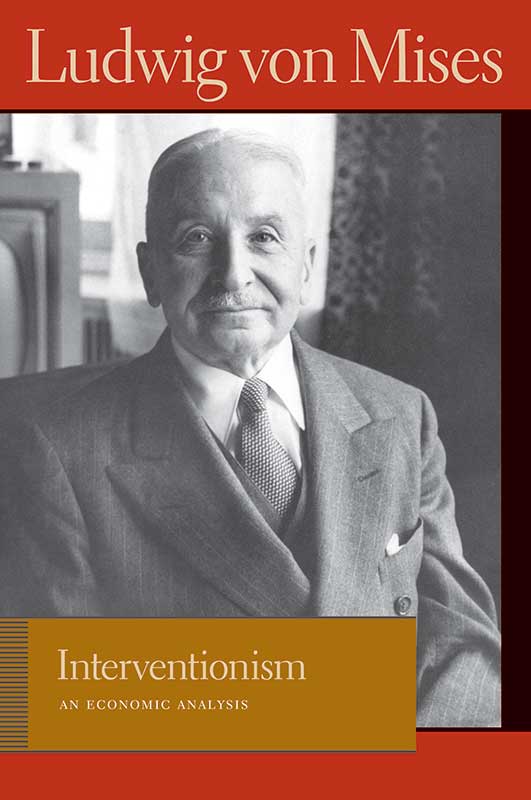
3.: Minimum Wages and Unemployment - Ludwig von Mises, Interventionism: An Economic Analysis [1940]

Edition used:

Interventionism: An Economic Analysis, Edited with a Foreword by Bettina Bien Greaves (Indianapolis: Liberty Fund, 2011).

About Liberty Fund:

Liberty Fund, Inc. is a private, educational foundation established to encourage the study of the ideal of a society of free and responsible individuals.


3.

Minimum Wages and Unemployment

Of greatest practical importance among the measures of price-fixing policy are wage scales determined by trade union action. In some countries minimum-wage rates were established by direct government action. The governments of other countries interfere with wages indirectly only, by acquiescing in the application of active pressure by unions and their members against enterprises and those willing to work who do not abide by their wage orders. The authoritatively fixed wage rate tends to cause permanent unemployment of a considerable part of the labor force. Here again the government usually intervenes by granting unemployment relief.

When we speak of wages we shall always mean real wages, not money wages. It is obvious that a change in the purchasing power of the monetary unit must be followed, sooner or later, by a change in the nominal money rate of wages.

Economists were always fully aware that wages, too, were a market phenomenon and that there were forces operative in the market which, should wages depart from market wages, tend to bring wages back to the point conforming to market conditions. If wages fall below the point prescribed by the market, then the competition of entrepreneurs who seek workers will raise them again. If wages rise above the market level, part of the demand for labor will be eliminated and the pressure of those who become unemployed will make wages fall again. Even Karl Marx and the Marxists have always maintained that it is impossible for the trade unions to raise the wages of all workers permanently above the level established by market conditions. The advocates of unionism have never answered this argument. They have merely condemned economics as a “dismal science.”

To deny that raising wages above the point prescribed by market conditions must necessarily lead to a reduction in the number of employed workers is tantamount to asserting that the size of the labor supply has no influence on wage rates. A few remarks will prove the fallacy of such assertions. Why are opera tenors so highly paid? Because the supply is very small. If the supply of opera tenors were as large as the supply of chauffeurs, their incomes would, given a corresponding demand, immediately sink to the level of chauffeur wages. What does the entrepreneur do if he requires especially skilled workers of whom only a limited number is available? He raises the wages he offers in order to induce workers to leave competing entrepreneurs and to attract those he seeks.

As long as only one part of the labor force, mostly skilled workers, was unionized, the wage raise forced by the union did not lead to unemployment but caused wages for unskilled labor to fall. The skilled workers who lost their jobs in consequence of the wage policy of the trade unions entered the market for unskilled labor and thereby increased the supply. The corollary of higher wages for organized labor was lower wages for unorganized labor. But, as soon as labor in all lines of production becomes organized, the situation changes. Then, the workers who become unemployed in one industry can no longer find employment in other lines; they remain unemployed.

The trade unions testify to the validity of this point of view when they try to prevent the influx of workers into their industry or into their country. When the trade unions refuse to admit new members or make their admission more difficult by high initiation fees, or when they fight immigration, they prove themselves convinced that a larger number of workers could only be employed if wages were lowered.

Also by recommending credit expansion* as a means of reducing unemployment, the trade unions admit the soundness of the wage theory of the economists whom they otherwise dismiss as “orthodox.” Credit expansion reduces the value of the monetary unit and thus makes prices rise. If money wages remain stable or at least do not rise to the same extent as commodity prices, this means a reduction of real wages. Lower real wages make it possible to employ more workers.

Finally, we have to consider it a tribute to the “orthodox” wage theory that the trade unions impose upon themselves restrictions in their fixing of wage rates. The same methods by which trade unions force the entrepreneur to pay wages which are 10 percent above the rates which would prevail in the unhampered market might make it possible to bring about even considerably higher wages. Why, therefore, not ask for a wage increase of 50 percent, or 100 percent? The trade unions refrain from such a policy because they know that an even greater number of their members would lose their jobs.

The economist considers wages a market phenomenon; he is of the opinion that at any given moment wages are determined by the prevailing data of the market supply of material means of production and of labor, and by the demand for consumers’ goods. If by an act of intervention wages are fixed at a point higher than the one given by market conditions, a part of the labor supply cannot be employed; unemployment rises. It is precisely the same situation as in the case of commodities. If the owners of commodities ask a price above the market they cannot sell their entire stock.

If, however, as those who advocate wage fixing by unions or by government maintain, wages are not definitely determined by the market, the question arises, why should wages not be made to rise still higher? It is, of course, desirable to have the workers receive as large incomes as possible. What then deters the trade unions, if not the fear of larger unemployment?

To this, the trade unions reply, we are not after high wages; all we want is “fair wages.” But what is “fair” in this case? If the raising of wages by intervention does not have effects which are injurious to labor’s interests, then it certainly is unfair not to go still further in raising wages. What prevents the trade unions and the government officials, who are entrusted with the arbitration of wage disputes, from raising the wages still more?

In some countries it was demanded that wages be fixed in such a way as to confiscate all the income of entrepreneurs and capitalists, other than salary for managerial activity, and to distribute it to the wage earners. To achieve this, orders were issued prohibiting the dismissal of workers without special permission of the government. By this measure an increase in unemployment was prevented in the short run. But it caused other effects which in the long run were contrary to the interests of the workers. If entrepreneurs and capitalists do not receive profits and interest payments they will not starve or ask for charity; they will live on their capital. The consumption of capital, however, changes the ratio of capital to labor, lowers the marginal productivity of labor, and thus ultimately lowers wages. It is in the interest of the wage earners that capital should not be consumed.

It should be emphasized that the preceding statements refer to one aspect only of trade union activity, namely their policy to raise wages above the rates which would prevail in the unhampered market. What other activities the trade unions are carrying on or might undertake has no bearing on the subject.

[* ][See chapter III.—Editor]