Econlib

The Library

Other Sites

Front Page arrow Titles (by Subject) arrow CHAPTER 9: Of the Principal Causes That Tend to Maintain the Democratic Republic in the United States a - Democracy in America: Historical-Critical Edition, vol. 2

Return to Title Page for Democracy in America: Historical-Critical Edition, vol. 2

Search this Title:

CHAPTER 9: Of the Principal Causes That Tend to Maintain the Democratic Republic in the United States a - Alexis de Tocqueville, Democracy in America: Historical-Critical Edition, vol. 2 [1835]

Edition used:

Democracy in America: Historical-Critical Edition of De la démocratie en Amérique, ed. Eduardo Nolla, translated from the French by James T. Schleifer. A Bilingual French-English editions, (Indianapolis: Liberty Fund, 2010). Vol. 2.

Part of: Democracy in America: Historical-Critical Edition, 4 vols.

About Liberty Fund:

Liberty Fund, Inc. is a private, educational foundation established to encourage the study of the ideal of a society of free and responsible individuals.


CHAPTER 9

Of the Principal Causes That Tend to Maintain the Democratic Republic in the United Statesa

The democratic republicb survives in the United States. The principal goal of this book has been to make the causes of this phenomenon understood.

The flow of my subject carried me, despite myself, close to several of these causes that I pointed out only from afar in passing. I could not deal with others. And those that I was allowed to expand upon have been left behind as if buried under details.

So I thought that before going further and speaking about the future, I had to gather together in a narrow scope all the reasons that explain the present.

In this type of summary I will be brief, for I will take care to recall only very summarily to the reader what he already knows, and among the facts that I have not yet had the occasion to put forth, I will choose only the principal ones.

I thought that all the causes that tend to maintain the democratic republicc in the United States could be reduced to three:d

The particular and accidental situation in which Providence placed the Americans forms the first;

The second results from laws;

The third follows from habits and mores.

Of the Accidental or Providential Causes That Contribute to Maintaining the Democratic Republic in the United Statese

The Union does not have neighbors.—No large capital.—The Americans have had the good fortune of birth in their favor.—America is an empty country.—How this circumstance serves powerfully to maintain the democratic republic.—Manner in which the wilderness of America is populated.—Eagerness of the Anglo-Americans to take possession of the empty wilderness areas of the New World.—Influence of material well-being on the political opinions of the Americans.

There are a thousand circumstancesf independent of the will of men that make it easy to have the democratic republic in the United States. Some are known, others are easy to make known: I will limit myself to explaining the principal ones.

The Americans do not have neighbors,g consequently no great wars, financial crisis, ravages, nor conquest to fear; they need neither heavy taxes nor a numerous army, nor great generals; they have almost nothing to fear from a plague more terrible for republics than all the others put together, military glory.

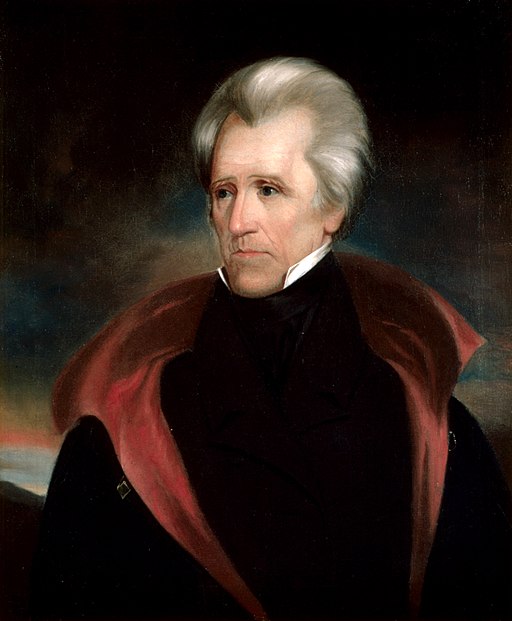
How to deny the incredible influence that military glory exercises on the spirit of the people? General Jackson, whom the Americans have twice chosen to put at their head, is a man of violent character and middling capacity; nothing in all the course of his career had ever proved that he had the qualities necessary to govern a free people; consequently, the majority of the enlightened classes of the Union have always been opposed to him. So who put him in the President’s seat and still keeps him there? The memory of a victory won by him, twenty years ago, under the walls of New Orleans; now, this victory of New Orleans is a very ordinary feat of arms which cannot be of much interest for long except in a country where no battles are fought; and the people who allow themselves to be thus carried away by the prestige of glory is, certainly, the coldest, most calculating, least military and, if I can put it this way, the most prosaic of all the peoples of the world.[*]h

America has no large capital1 whose direct or indirect influence is felt over the whole extent of the territory; I consider this one of the first causes for maintaining republican institutions in the United States.j In cities, you can hardly prevent men from consulting each other, from getting worked up together, from making sudden and impassioned resolutions. Cities form like great assemblies of which all the inhabitants are members. The people exercise a prodigious influence over their magistrates there, and often the people execute their will there without intermediary.

So to subject the provinces to the capital is to put the destiny of the whole empire, not only in the hands of a portion of the people, which is unjust, but also to put it in the hands of the people acting by themselves, which is very dangerous. So the preponderance of capitals strikes a grave blow at the representative system. It makes modern republics succumb to the fault of the ancient republics which all perished from not knowing this system.

It would be easy for me to enumerate here a great number of other secondary causes that have favored the establishment and assure the maintenance of the democratic republics in the United States. But in the middle of this host of fortunate circumstances, I see two principal ones, and I hasten to point them out.

I have already said previously that I saw in the origin of the Americans, in what I called their point of departure, the first and most effective of all the causes to which the present prosperity of the United States could be attributed. The Americans have had the good fortune of birth in their favor: long ago their fathers imported to the land that they inhabit equality of conditions and intellectual equality, from which the democratic republic was bound to emerge one day as if from its natural source. This is still not all; with a republican social state, they passed on to their descendants the habits, ideas and mores most appropriate to make the republic flourish. When I think about what this original fact produced, I seem to see the whole destiny of America contained in the first Puritan who reached its shores, like the whole human race in the first man.

Among the fortunate circumstances that also have favored the establishment and assure the maintenance of the democratic republic in the United States, the first in importance is the choice of the country itself that the Americans inhabit. Their fathers gave them the love of equality and liberty, but it is God who, by giving them an unlimited continent, granted them the means to remain equal and free for a long time.k

General well-being favors the stability of all governments, but particularly of democratic government, which rests upon the dispositions of the greatest number, and principally on the dispositions of those who are the most exposed to needs. When the people govern, they must be happy so that they do not overturn the State. Misery produces among them what ambition does among kings. Now, causes that are material and independent of the laws and that can lead to well-being are more numerous in America than they have been in any country in the world, in any period of history. [In Europe the culmination of good laws is to produce well-being; in America all the work of bad laws would scarcely succeed in preventing well-being from being produced.]

In the United States, it is not only legislation that is democratic; nature itself works for the people.

Where to find, in the memory of man, anything resembling what is happening before our eyes in North America?

The famous societies of antiquity were all founded in the midst of enemy peoples who had to be conquered for those societies to be established in their place. Modern peoples have found in several parts of South America vast countries inhabited by peoples who were less enlightened than they, but who had already appropriated the soil by cultivating it. To establish their new States, they had to destroy or subjugate large populations, and they made civilization ashamed of their triumphs.

But North America was inhabited only by wandering tribes who did not think of using the natural riches of the soil. North America was still, properly speaking, a vacant continent, a deserted land, that awaited inhabitants.

Everything is extraordinary among the Americans, their social state as well as their laws; but what is still more extraordinary is the land that holds them.

When the earth was given to men by the Creator, it was young and inexhaustible,m but they were weak and ignorant; and when they had learned to take advantage of the treasures that it held in its bosom, they already covered the face of the land, and soon they had to fight to gain the right to have a refuge and to dwell in liberty.

That is when North America comes into sight, as if God had held it in reserve and it had only just emerged from the waters of the flood.

It presents, as at the first days of creation, rivers whose sources do not run dry, green and moist wildernesses, limitless fields not yet broken by the farmer’s plow. In this state, it is no longer offered to the isolated, ignorant and barbaric man of the earliest ages, but to the man already master of the most important secrets of nature, united with his fellows, and educated by an experience of fifty centuries.

At the moment I speak, thirteen million civilized Europeans are spreading tranquilly across fertile wilderness areas whose resources or extent they do not yet exactly know. Three or four thousand soldiers push before them the wandering race of natives; behind the armed men, woodsmen advance who pierce the forests, drive away the wild game, explore the course of rivers and prepare the triumphant march of civilization across the wilderness.

Often, in the course of this work, I have alluded to the material well-being that the Americans enjoy; I have pointed it out as one of the great causes for the success of their laws. This reason had already been given by a thousand others before me: it is the only one that, falling in a way within the awareness of the Europeans, has become popular among us. So I will not expand upon a subject so often treated and so well understood; I will only add several new facts.n

It is generally imagined that the wilderness of America is populated with the help of European emigrants who arrive each year on the shores of the New World, while the American population increases and multiplies on the soil that their fathers occupied: that is a great error. The European who reaches the United States arrives there without friends and often without resources; to live, he is forced to hire out his services, and it is rare to see him go beyond the large industrial zone that extends along the ocean. You cannot clear the wilderness without capital or credit;[*] before risking yourself in the middle of the forest, the body must become accustomed to the rigors of a new climate. So it is the Americans who, daily abandoning the place of their birth, go to create for themselves vast domains far away. Thus the European leaves his cottage to go to inhabit the transatlantic shores, and the American, who is born on these very shores, disappears in turn into the emptiness of the central part of America. This double movement of emigration never stops: it begins in the heart of Europe, it continues across the great ocean, it keeps on across the solitude of the New World. Millions of men march at the same time toward the same point of the horizon: their language, their religion, their mores differ, their goal is shared. They have been told that fortune is found somewhere toward the West, and they go in haste to find it.o [What are they going to do, in what precise place must they stop? They themselves do not know, but they march forward guided by the hand of God.]

Nothing can be compared with this continual displacement of the human species, except perhaps what happened at the fall of the Roman Empire. Then, as today, you saw men rush all in a throng toward the same point and meet turbulently in the same places; but the designs of Providence were different. [Then God wanted to destroy; today He wants to create.] Each new arrival brought in his train destruction and death; today each of them carries with him a seed of prosperity and life.

The distant consequences of this migration of the Americans toward the West is still hidden from us by the future, but the immediate results are easy to recognize: because one part of the former inhabitants moves each year away from the states where they were born, these states, as they grow older, are becoming populated only very slowly; thus in Connecticut, which still numbers only fifty-nine inhabitants per square mile, the population has only grown by a quarter during the past forty years, while in England it has increased by a third during the same period. So the emigrant from Europe always arrives in a country half-full where industry needs hands; he becomes a worker who is well-off; his son goes to find his fortune in an empty country and becomes a wealthy landowner. The first amasses the capital that the second turns to good account, and there is no poverty either among the foreigners or among the natives.

Legislation, in the United States, favors as much as possible the division of property; but a cause more powerful than legislation prevents property from dividing too much.2 You can see it clearly in the states that are finally beginning to fill up. Massachusetts is the most populated country in the Union; the inhabitants number eighty per square mile, which is infinitely fewer than in France, where there are one hundred sixty-two gathered in the same space.

In Massachusetts, however, it is quite rare that small estates are divided: the eldest generally takes the land; the younger go to find their fortune in the wilderness.

The law abolished the right of primogeniture; but you can say that Providence reestablished it without anyone having to complain, and this time at least it does not offend justice.

You will judge by a single fact the prodigious number of individuals who leave New England in this way to go to move their homes into the wilderness. We are assured that in 1830, among the members of Congress, there were thirty-six who were born in the small state of Connecticut. So the population of Connecticut, which forms only one forty-third of that of the United States, provides one-eighth of the representatives.p

The state of Connecticut itself, however, sends only five representatives to Congress: the thirty-one others appear there as representatives of the new states of the West. If these thirty-one individuals had remained in Connecticut, it is probable that instead of being rich landowners, they would have remained small farmers and lived in obscurity without being able to open a political career, and that, far from becoming useful legislators, they would have been dangerous citizens

These considerations do not escape the mind of the Americans any more than ours.

Chancellor Kent writes in his Commentaries on American Law (vol. IV, p. 380):

It cannot be doubted that the division of property will produce great evils when it is carried to the extreme; to the extent that each portion of land can no longer provide for the support of a family; but these disadvantages have never been felt in the United States, and many generations will pass before they are felt. The immense area of our uninhabited territory, the abundance of adjacent lands and the continual flow of emigration that, departing from the shores of the Atlantic, goes constantly into the interior of the country, are sufficient and will be sufficient to prevent the breaking up of inherited lands for a long time yet to come.

It would be difficult to portray the greediness with which the American throws himself on this immense prize that fortune offers him. To pursue it he fearlessly defies the Indian’s arrow and the diseases of the wilderness; the silence of the woods holds nothing that astonishes him, the approach of ferocious beasts does not rouse him; a stronger passion than love of life constantly spurs him on. Before him extends a continent nearly without limits, and you would say that, already afraid of having no room there, he hurries for fear of arriving too late. I spoke about the emigration from the old states, but what will I say about that from the new? Not fifty years ago Ohio was founded; most of its inhabitants were not born there; its capital has not existed thirty years, and an immense expanse of uninhabited country still covers its territory; the population of Ohio, however, has already started to march again toward the West; most of those who come into the fertile prairies of Illinois are inhabitants of Ohio. These men have left their first home to be comfortable; they leave the second to be still better off: nearly everywhere, they find fortune, but not happiness. Among them, the desire for well-being has become a restless and ardent passion that grows as it is being satisfied. Formerly they broke the ties that bound them to their birthplace; they have formed no other ties since. For them, emigration began as a need; today, it has become in their eyes a kind of game of chance, which they love for the emotions as much as for the gain.

Sometimes man moves so quickly that the wilderness reappears behind him. The forest has only bent under his feet; the moment he passes, it rises up again. It is not unusual, while traveling through the new states of the West, to encounter abandoned dwellings in the middle of the woods; often you find the ruins of a cabin in the deepest solitude, and you are amazed while crossing rough-hewn clearings that attest simultaneously to human power and inconstancy. Among these abandoned fields, over these day old ruins, the ancient forest does not delay growing new shoots; the animals retake possession of their realm; nature comes happily to cover the vestiges of man with green branches and flowers and hastens to make the ephemeral trace of man disappear.

I remember that while crossingq one of the uninhabited districts that still cover the state of New York, I reached the shores of a lake entirely surrounded by forests as at the beginning of the world. A small island arose in the middle of the water. The woods that covered it, spreading their foliage, entirely hid its banks. On the shores of the lake, nothing announced the presence of man; you noticed only a column of smoke on the horizon that, going straight up into the clouds above the top of the trees, seemed to hang from rather than rise into the sky.

An Indian canoe was pulled onto the sand. I took advantage of it to go to visit the island that had first attracted my attention and soon after I reached its shore. The entire island formed one of those delightful uninhabited places of the New World that almost make civilized men feel nostalgia for savage life. A vigorous vegetation proclaimed by its wonders the incomparable fertility of the soil. As in all the wildernesses of North America, a profound silence reigned that was interrupted only by the monotonous cooing of the woodpigeons or by the blows that the woodpecker struck on the bark of the trees. I was very far from believing that this place had formerly been inhabited, nature there seemed so left to itself; but upon reaching the center of the island, I suddenly thought that I had found vestiges of man. Then I carefully examined all the objects in the area, and soon I no longer doubted that a European had come to find a refuge in this place. But how his work had changed appearance! The woods that, long ago, he had hastily cut down to make himself a shelter had since grown shoots; his fence had become living hedges, and his cabin had been transformed into a grove. In the middle of these bushes you still saw a few stones blackened by fire, scattered around a small pile of ashes; undoubtedly this was the place of the hearth: the chimney, collapsing, had covered it with debris. For some time I admired in silence the resources of nature and the weakness of man; and when finally I had to leave these enchanted places, I again repeated with sadness: What! Ruins already!r

In Europe we are used to regarding as a great social danger restlessness of spirit, immoderate desire for wealth, extreme love of independence. These are precisely all the things that guarantee a long and peaceful future to the American republic. Without these restless passions, the population would concentrate around certain places and, as among us, would soon experience needs difficult to satisfy. How fortunate a country is the New World, where the vices of man are nearly as useful to society as his virtues!

This exercises a great influence on the way in which human actions are judged in the two hemispheres. Often the Americans call praiseworthy industry what we name love of gain, and they see a certain cowardice of heart in what we consider moderation of desires.

In France, simplicity of tastes, tranquillity of mores, spirit of family and love of birthplace are regarded as great guarantees of tranquillity and happiness for the State; but in America, nothing seems more prejudicial to society than such virtues. The French of Canada, who have faithfully preserved the traditions of the old mores, already find it difficult to live in their territory, and this small group of people just born will soon be prey to the miseries of old nations. In Canada, the men who have the most enlightenment, patriotism and humanity, make extraordinary efforts to give the people a distaste for the simple happiness that is still enough for them. These men celebrate the advantages of wealth, just as among us they would perhaps praise the charms of honest mediocrity, and they take more care to incite human passions than is taken elsewhere to calm such passions. Nothing in their eyes merits more praises than to exchange the pure and tranquil pleasures presented by the native country to the poor man for the sterile enjoyments provided by well-being under a foreign sky; to flee the paternal hearth and the fields where his ancestors rest; to abandon the living and the dead in order to run after fortune.

In our time, America offers men resources always greater than the industry that develops those resources can be.

So in America, you cannot provide enough enlightenment; for all enlightenment, at the same time that it can be useful to whoever possesses it, still turns to the profit of those who do not. New needs are not to be feared there, because all needs are satisfied without difficulty. You do not have to fear giving birth to too many passions, because all passions find an easy and salutary means of satisfaction. You cannot make men too free, because they are almost never tempted to make bad use of liberty.

The American republics of today are like companies of merchants formed to exploit in common the uninhabited lands of the New World and occupied with a prospering commerce.

The passions that most profoundly agitate the Americans are commercial passions and not political passions, or rather they carry into politics the habits of business. They love order, without which business cannot prosper, and they particularly prize regularity of mores, which lays the foundation of good business establishments; they prefer good sense, which creates great fortunes, to genius, which often dissipates them; general ideas frighten their minds, accustomed to positive calculations, and among the Americans, practice is more honored than theory.

You must go to America to understand what power material well-beings exercises over political actions and even over opinions themselves, which should be subject only to reason. It is among foreigners that you principally discover the truth of this. Most of the emigrants from Europe bring to the New World the wild love of independence and change that is so often born out of the midst of our miseries. I sometimes met in the United States some of those Europeans who formerly had been forced to flee their country because of their political opinions. All astonished me by their speeches; but I was struck by one of them more than any other. As I crossed one of the most distant districts of Pennsylvania, night surprised me, and I went to ask for shelter at the door of a wealthy planter: he was a Frenchman. He made me sit down beside his hearth, and we began to talk freely, as happens to men who find themselves in the depths of the forest two thousand leagues from the country where they were born. I was not unaware that forty years ago my host had been a great leveler and an ardent demagogue. His name was known to history.t

So I was strangely surprised to hear him discuss the right of property as an economist, I was almost going to say a landholder, would be able to do; he spoke of the necessary hierarchy that fortune establishes among men, of obedience to established law, of the influence of good mores in republics, of the aid that religious ideas lend to order and to liberty: he even cited as if by accident, in support of one of his political opinions, the authority of Jesus Christ.

While listening to him, I wondered at the weakness of human reason. Something is either true or false; how to find out amid the uncertainties of knowledge and the diverse lessons of experience? A new fact arises that relieves all my doubts. I was poor, now I am rich; if at least well-being, while acting upon my conduct, left my judgment free! But no, my opinions have indeed changed with my fortune, and in the happy outcome from which I profit, I have really discovered the decisive reason that I had lacked until then.

Well-being exercises an influence still more freely over the Americans than over foreigners. The American has always seen before his eyes order and public prosperity linked together and marching in step, he does not imagine that they can live separately; so he has nothing to forget, and, unlike so many Europeans, does not need to lose what he retains from his first education.

[Political society, however, is constantly agitated in the United States. But the movement is slow and measured. It influences the details and not the whole of public fortune. It bears more upon men than upon principles. You want to improve constantly, but are afraid of upsetting things; and while desiring the best, you are even more afraid of the worst.

What could I add to succeed in making my thought understood? What occurred to so many of the French republicans under the Empire and to some of the liberals of today happens to the majority of men in America. They find in the end that society does well, or nearly so, because they are doing well.]

Of the Influence of Laws on Maintaining the Democratic Republic in the United States

Three principal causes for maintaining the democratic republic.—Federal form.—Town institutions.—Judicial power.

[≠The second general cause that I pointed out as serving to maintain the political institutions of the Americans is found in the very goodness of these institutions, that is to say in their conformity to the social state and physical position.≠]

The principal goal of this book was to make the laws of the United States known; if this goal has been reached, the reader has already been able to judge for himself which ones, among these laws, tend really to maintain the democratic republic and which ones put it in danger. If I have not succeeded in the whole course of this book, I will succeed even less in this chapter.

So I do not want to pursue the course that I have already covered, and a few lines must suffice for me to summarize.

Three causes seem to contribute more than all the others to maintaining the democratic republic in the New World:

The first is the federal form that the Americans adopted, and that allows the Union to enjoy the power of a large republic and the security of a small one.

I find the second in the town institutions that, by moderatingu the despotism of the majority, give the people at the same time the taste for liberty and the art of being free.

The third is found in the constitution of the judicial power. I have shown how much the courts serve to correct the errors of democracy and how, without ever being able to stop the movements of the majority, they succeed in slowing and directing them.

Of the Influence of Mores on Maintaining the Democratic Republic in the United States

I said above that I considered the mores as one of the great general causes to which maintaining the democratic republic in the United States can be attributed.

I understand the expression mores here in the sense that the ancients attached to the word mores; I apply it not only to mores strictly speaking, which could be called habits of the heart, but to the different notions that men possess, to the diverse opinions that are current among them, and to the ensemble of ideas from which the habits of the mind are formed.v

So by this word I understand the whole moral and intellectual state of a people. My goal is not to draw a picture of American mores; I limit myself at this moment to trying to find out what among them is favorable for maintaining the political institutions.

Of Religion Considered as a Political Institution, How It Serves Powerfully to Maintain the Democratic Republic among the Americans[*]

North America populated by men who professed a democratic and republican Christianity.—Arrival of Catholics.—Why today Catholics form the most democratic and the most republican class.

Alongside each religion is found a political opinion that is joined to it by affinity.w

Allow the human spirit to follow its tendency, and it will regulate in a uniform way political society and the holy city; it will seek, if I dare say so, to harmonize earth with heaven.x

Most of English America was populated by men who, after escaping from the authority of the Pope, submitted to no religious supremacy; so they brought to the New World a Christianity that I cannot portray better than by calling it democratic and republican: this will singularly favor the establishment of the republic and of democracy in public affairs. From the onset, politics and religion found themselves in accord, and they have not ceased to be so since.

About fifty years ago Ireland began to pour a Catholic population into the United States. For its part, American Catholicism made converts.y Today in the Union you find more than a million Christians who profess the truths of the Roman Church.

These Catholics show a great fidelity to the observances of their religion, and are full of ardor and zeal for their beliefs; however, they form the most republican and most democratic class that exists in the United States. This fact is a surprise at first glance, but reflection easily discloses the hidden causes.

[Christianity, even when it demands passive obedience in matters of dogma, is still of all religious doctrines the one most favorable to liberty, because it appeals only to the mind and heart of those whom it wants to bring into subjection.z No religion has so disdained the use of physical force as the religion of J[esus (ed.)]. C[hrist (ed.)]. Now, wherever physical force is not honored, tyranny cannot endure. Therefore you see that despotism has never been able to be established among Christians.a It has always lived there from day to day and in a state of alarm. When we say that a Christian nation is enslaved, it is in comparison to a Christian people that we judge. If we compare it to an infidel people, the Christian nation would seem free to us.

I will say something analogous concerning equality.

Of all religious doctrines, Christianity, whatever interpretation you give it, is also the one most favorable to equality. Only the religion of J[esus (ed.)]. C[hrist (ed.)]. has placed the sole grandeur of man in the accomplishment of duties, where each person can attain it; and has been pleased to consecrate poverty and hardship, as something nearly divine.

I will add that among the different Christian doctrines, Catholicism seems to me one of the least contrary to the leveling of conditions.]

I think that it is wrong to regard the Catholic religion as a natural enemy of democracy. Among the different Christian doctrines, Catholicism seems to me on the contrary one of the most favorable to equality of conditions. Among Catholics, religious society is composed of only two elements: priest and people. The priest alone rises above the faithful; everything is equal below him.b

In matters of dogma, Catholicism places all minds on the same level; it subjects to the details of the same beliefs the learned as well as the ignorant, the man of genius as well as the common man; it imposes the same observances on the rich as on the poor, inflicts the same austerities on the powerful as on the weak; it compromises with no mortal, and by applying the same measure to each human being, it loves to mix all classes of society together at the foot of the same altar, as they are mixed together in the eyes of God.

So, if Catholicism disposes the faithful to obedience, it does not prepare them for inequality. I will say the opposite about Protestantism,c which, in general, carries men much less toward equality than toward independence.d

Catholicism is like an absolute monarchy. Remove the prince, and conditions there are more equal than in republics.e

The Catholic priest has often come out of the sanctuary to enter into society as a power, and he has come to take a seat amid the social hierarchy; sometimes he then used his religious influence to assure the lasting existence of a political order of which he is part. Then you could see Catholics as partisans of aristocracy by spirit of religion.

But once priests are excluded or withdraw from government, as they are in the United States, there are no men who, by their beliefs, are more disposed than Catholics to carry the idea of equality of conditions into the political world.

So if Catholics in the United States are not strongly led by the nature of their beliefs toward democratic and republican opinions, at least they are not naturally against them, and their social position, as well as their small number, makes it a rule for them to embrace those opinions.f

Most Catholics are poor, and they need all citizens to govern in order to reach the government themselves. Catholics are in the minority, and they need all rights to be respected in order to be assured of the free exercise of theirs. These two causes push them, even without their knowledge, toward political doctrines that they would perhaps adopt with less ardor if they were rich and predominant.

The Catholic clergy in the United States have not tried to struggle against this political tendency; they seek instead to justify it. Catholic priests in America have divided the intellectual world into two parts: in one, they left revealed dogmas, and there they submit without discussion; in the other, they put political truth, and there they think that God abandoned political truth to the free search of men. Thus, Catholics in the United States are simultaneously the most submissive faithful and the most independent citizens [that there are in the world].

So you can say that in the United States not a single religious doctrine shows itself hostile to democratic and republican institutions. All the clergy there use the same language; [≠and while American publicists make all the miseries of society flow from despotism and inequality of conditions, priests represent despotism and inequality of conditions as the most fertile sources of moral evil≠] opinions there are in agreement with laws, and only one current so to speak rules the human mind.

I was living for a short while in one of the largest cities of the Union when I was invited to attend a political meeting the goal of which was to come to the aid of the Poles, and to send them arms and money.

I found two or three thousand persons gathered in a vast room that had been prepared to receive them. Soon after, a priest, dressed in his ecclesiastical robes, came forward to the edge of the platform intended for the speakers. Those attending, after removing their hats, stood in silence, and he spoke in these terms:

God all-powerful! God of armies! Thou who sustained the hearts and guided the arms of our fathers when they upheld the sacred rights of their national independence; Thou who made them triumph over an odious oppression, and who granted to our people the benefits of peace and liberty; oh Lord! turn a favorable eye toward the other hemisphere; look with pity upon a heroic people who today struggle as we once did and for the defense of the same rights! Lord, who created all men on the same model, do not allow despotism to come to distort Thy work and to maintain inequality on earth. God all-powerful! watch over the destiny of the Poles, make them worthy to be free; may Thy wisdom rule in their councils, may Thy strength be in their arms; spread terror among their enemies, divide the powers that plot their ruin, and do not allow the injustice that the world witnessed fifty years ago to be consummated today. Lord, who holds in Thy powerful hand the hearts of peoples as well as those of men, raise up allies for the sacred cause of right; make the French nation arise finally and, emerging from the sleep in which its leaders hold it, come to fight once again for the liberty of the world.

O Lord! never turn Thy face from us; allow us always to be the most religious people, as well as the most free.

God all-powerful, grant our prayer today; save the Poles. We ask Thee in the name of Thy beloved Son, Our Lord Jesus Christ, who died on the cross for the salvation of all men. Amen.

The entire assembly repeated Amen with reverence.

Indirect Influence Exercised by Religious Beliefs on Political Society in the United States

Morality of Christianity which is found in all sects.—Influence of religion on the mores of Americans.—Respect for the marriage bond.—How religion encloses the imagination of the Americans within certain limits and moderates among them the passion to innovate.—Opinion of Americans on the political utility of religion.—Their efforts to extend and assure its dominion.

I have just shown what the direct action of religion on politics was in the United States. Its indirect action seems even more powerful to me, and it is when religion is not speaking about liberty that it best teaches the Americans the art of being free.g

There is an innumerable multitude of sects in the United States. All differ in the worship that must be given to the Creator, but all agree on the duties of men toward one another. So each sect worships God in its way, but all sects preach the same morality in the name of God. If it is very useful to a man as an individual that his religion be true, it is not the same for society. Society has nothing either to fear or to hope concerning the other life; and what is most important for society is not so much that all citizens profess the true religion but that they profess a religion. All the sects in the United States are, moreover, within the great Christian unity, and the morality of Christianity is the same everywhere. [{In America there are Catholics and Protestants, but Americans profess the Christian religion.}]

You are free to think that a certain number of Americans, in the worship they give to God, follow their habits more than their convictions. In the United States, moreover, the sovereign is religious, and consequently hypocrisy must be common; but America is still the place in the world where the Christian religion has most retained true power over souls; and nothing shows better how useful and natural religion is to man, since the country where today it exercises the most dominion is at the same time the most enlightened and most free.

I said that American priests come down in a general way in favor of civil liberty, without excepting even those who do not allow religious liberty; you do not see them lend their support, however, to any political system in particular. They take care to keep out of public affairs and do not get mixed up in the schemes of the parties. So you cannot say that in the United States religion exercises an influence on laws or on the detail of political opinions, but it directs mores, and it is by regulating the family that it works to regulate the State.

I do not doubt for an instant that the great severity of mores that is noticed in the United States has its primary source in beliefs. Religion there is often powerless to restrain the man amid the innumerable temptations presented by fortune. It cannot moderate in him the ardor to grow rich that comes to goad everyone, but it rules with sovereign power over the soul of the woman, and it is the woman who shapes the mores.h America is assuredly the country in the world in which the marriage bond is most respected, and in which the highest and most sound idea of conjugal happiness has been conceived.

In Europe, nearly all of the disorders of society are born around the domestic hearth and not far from the marital bed. That is where men conceive scorn for natural bonds and permitted pleasures, taste for disorder, restlessness of heart, instability of desires. Agitated by the tumultuous passions that have often troubled his own dwelling, the European submits only with difficulty to the legislative powers of the State. When, coming from the agitation of the political world, the American returns to the bosom of his family, he immediately encounters the image of order and peace. There, all his pleasures are simple and natural, his joys innocent and tranquil; and as he achieves happiness by the regularity of life, he easily gets used to regulating his opinions as well as his tastes.j

While the European seeks to escape his domestic sorrows by troubling society, the American draws from his home the love of order that he then carries into the affairs of the State.

In the United States, religion regulates not only mores; it extends its dominion even to the mind.

Among the Anglo-Americans, some profess Christian dogmas because they believe them; others, because they fear not appearing to believe them. So Christianity rules without obstacles, with the consent of all; as a result, as I have already said elsewhere, everything is certain and fixed in the moral world, while the political world seems abandoned to discussion and to the experiments of men. Thus the human mind never sees a limitless field before it; whatever its audacity, it feels from time to time that it must stop before insurmountable barriers. Before innovating, it is forced to accept certain primary givens, and to subject its boldest conceptions to certain forms that retard and stop it.

So the imagination of the Americans, in its greatest departures, has only a circumspect and uncertain movement; its ways are hampered and its works incomplete. These habits of restraint are found in political society and singularly favor the tranquillity of the people, as well as the continued existence of the institutions that the people have given themselves. Nature and circumstances had made out of the inhabitant of the United States an audacious man; it is easy to judge so when you see how he pursues fortune. If the mind of the Americans were free of all hindrances, you would soon find among them the boldest innovators and the most implacable logicians in the world. But the revolutionaries of America are obliged to profess publicly a certain respect for Christian morality and equity that does not allow them to violate laws easily when the laws are opposed to the execution of their designs; and if they could rise above their scruples, they would still feel checked by the scruples of their partisans. Until now no one has been found in the United States who has dared to advance this maxim: that everything is allowed in the interest of society. Impious maxim, that seems to have been invented in a century of liberty in order to legitimate all the tyrants to come. [<In France a [illegible word] {man} seeks to justify this enormity by principles and facts, and he goes to take a seat in the councils of the prince.>]

Therefore, at the same time that the law allows the American people to do everything, religion prevents them from conceiving of everything and forbids them to dare everything.k

So religion, which among the Americans never directly takes part in the government of society, must be considered as the first of their political institutions; for if it does not give them the taste for liberty, it singularly facilitates their use of it.

It is also from this point of view that the inhabitants of the United States themselves consider religious beliefs. I do not know if all Americans have faith in their religion, for who can read the recesses of the heart? But I am sure that they believe it necessary for maintaining republican institutions. This opinion does not belong to one class of citizens or to one party, but to the whole nation; you find it among all ranks.

In the United States, when a politician attacks a sect, it is not a reason for even the partisans of that sect not to support him; but if he attacks all sects together, each one flees from him, and he remains alone.

While I was in America, a witness appeared before the assizes of the county of Chester (State of New York) and declared that he did not believe in the existence of God and in the immortality of the soul. The presiding judge refused to admit his oath, given, he said, that the witness had destroyed in advance any faith that could be given to his words.3 The newspapers reported the fact without comment.

Americans mix Christianity and liberty so completely in their mind that it is nearly impossible to make them conceive one without the other; and, among them, this is not one of those sterile beliefs that the past bequeaths to the present and that seem more to vegetate deep in the soul than to live.

I have seen Americans join together to send priests into the new states of the West and to found schools and churches there; they are afraid that religion may come to be lost in the middle of the woods, and that the people who are arising there may not be as free as those from whom they came. I met rich inhabitants of New England who abandoned the country of their birth with the goal of going to lay the foundations of Christianity and liberty on the banks of the Missouri or on the prairies of Illinois. This is how religious zeal in the United States constantly warms up at the hearth of patriotism. You think that these men act uniquely in consideration of the other life, but you are mistaken: eternity is only one of their concerns. If you question these missionaries of Christian civilization, you will be very surprised to hear them speak so often about the good things of this world and to find politicians where you thought to see only men of religion. “All the American republics stand together one with the others, they will say to you; if the republics of the West fell into anarchy or submitted to the yoke of despotism, the republican institutions that flourish on the shores of the Atlantic Ocean would be in great peril; so we have an interest that these new states are religious, in order that they allow us to remain free.”m

Such are the opinions of the Americans; but their error is clear. For each day someone proves to me very learnedly that everything is good in America, except precisely this religious spirit that I admire; and I learn that the only thing missing from the liberty and happiness of the human species, on the other side of the Ocean, is to believe with Spinozan in the eternity of the world, and to uphold with Cabanis that the brain secretes thought. To that I have nothing to reply, in truth, if not that those who use this language have not been to America, and have not seen religious peoples any more than free peoples. So I will await their return.

[≠For me, if something could make me despair of the destiny of Europe, it is to see the strange confusion that reigns there in minds. I see pious men who would like to suffocate liberty, as if liberty, this great privilege of man, was not a nearly holy thing. Further along, I see others who think to arrive at being free by attacking all beliefs, but I do not see any who seem to notice the tight and necessary knot that ties [v: the republic] religion to liberty.≠]

There are men in France who consider republican institutions as the temporary instrument of their grandeur. They measure with their eyes the immense gap that separates their vices and their miseries from power and riches, and they would like to pile up ruinso in this abyss in order to try to fill it. These men are to liberty what the free companies of the Middle Ages were to kings; they make war on their own behalf even when they wear his colors; the republic will always live long enough to pull them out of their present low position. I am not speaking to them. But there are others who see in the republic a permanent and tranquil state, a necessary end toward which ideas and mores lead modern societies each day, and who would sincerely like to prepare men to be free. When these men attack religious beliefs, they follow their passions and not their interests. Despotism can do without faith, but not liberty. Religion is much more necessary in the republic that they advocate than in the monarchy that they attack, and in democratic republics more than in all others. How could society fail to perish if, while the political bond grows loose, the moral bond does not become tighter? And what to do with a people master of itself, if it is not subject to God?

Of the Principal Causes That Make Religion Powerful in Americap

Care that the Americans have taken to separate Church and State.—Laws, public opinion, the efforts of priests themselves, work toward this result.—To this cause must be attributed the power that religion exercises on souls in the United States.—Why.—What is today the natural state of man in the matter of religion.—What particular and accidental cause, in certain countries, works against men conforming to this state.

The philosophers of the XVIIIth century explained the gradual weakening of beliefs in a very simple way. Religious zeal, they said, must fade as liberty and enlightenment increase. It is unfortunate that facts do not agree with this theory.q

There is such a European population whose disbelief is equaled only by its brutishness and ignorance, while in America you see one of the most free and most enlightenedr peoples in the world fulfill with ardor all the external duties of religion.

When I arrived in the United States, it was the religious aspect of the country that first struck my eyes.s As I prolonged my journey, I noticed the great political consequences that flowed from these new facts.

I had seen among us the spirit of religion and the spirit of liberty march almost always in opposite directions. Here, I found them intimately joined the one to the other: they reigned together over the same soil.

Each day I felt my desire to know the cause of this phenomenon increase.

To find it out, I asked the faithful of all communions; I sought, above all, the company of priests who are the keepers of the different faiths and who have a personal interest in their continued existence. The religion I profess brought me particularly close to the Catholic clergy, and I did not delay in striking up a sort of intimacy with several of its members.t To each of them I expressed my astonishment and revealed my doubts. I found that all of these men differed among themselves only on the details; but all attributed the peaceful dominion that religion exercises in their country principally to the complete separation of Church and State. I am not afraid to assert that, during my visit in America, I did not meet a single man, priest or laymen, who did not agree on this point.

This led me to examine more attentively than I had done until then the position that American priests occupy in political society. I realized with surprise that they fill no public position.4 I did not see a single one of them in the administration, and I discovered that they were not even represented within the assemblies.

The law, in several states, had closed a political career to them;5 opinion, in all the others.

When finally I found out what the mind of the clergy itself was, I noticed that most of its members seemed to remove themselves voluntarily from power, and to take a kind of professional pride in remaining apart from it.

I heard them anathematize ambition and bad faith, whatever the political opinions that ambition and bad faith carefully used to cover themselves. But I learned, by listening to them, that men cannot be blameworthy in the eyes of God because of these very opinions, when the opinions are sincere, and that there is no more sin in being wrong in matters of government than in being mistaken about the way in which your dwelling must be built or your furrow must be plowed.

I saw them separate themselves with care from all parties, and flee contact with all the ardor of personal interest.

These facts succeeded in proving to me that I had been told the truth. Then I wanted to go back from facts to causes. I asked myself how it could happen that by diminishing the apparent strength of a religion, you came to increase its true power, and I believed that it was not impossible to find out.

Never will the short space of sixty years enclose all of the imagination of man; the incomplete joys of this world will never be enough for his heart. Among all beings, man alone shows a natural distaste for existence and an immense desire to exist: he scorns life and fears nothingness. These different instincts constantly push his soul toward the contemplation of another world, and it is religion that leads him there. So religion is only a particular form of hope, and it is as natural to the human heart as hope itself.u It is by a type of mental aberration and with the help of a kind of moral violence exercised over their own nature, that men remove themselves from religious beliefs; an irresistible inclination brings them back to beliefs. Unbelief is an accident; faith alone is the permanent state of humanity.

So by considering religion only from a human viewpoint, you can say that all religions draw from man himself an element of strength that they can never lack, because it is due to one of the constituent principles of human nature.

I know that there are times when religion can add to this influence, which is its own, the artificial power of laws and the support of the physical powers that lead society. We have seen religions, intimately united with the governments of the earth, dominate souls by terror and by faith at the same time; but when a religion contracts such an alliance, I am not afraid to say, it acts as a man could: it sacrifices the future with the present in mind, and by obtaining a power that is not its due, it puts its legitimate power at risk.

When a religion seeks to found its dominion only on the desire for immortality that equally torments the hearts of all men, it can aim for universality; but when it comes to unite with a government, it must adopt maxims that are applicable only to certain peoples. Therefore, by allying itself to a political power, religion increases its power over some and loses the hope of reigning over all.

As long as a religion relies only on the sentiments that console all miseries, it can attract the heart of the human species. Mingled with the bitter passions of this world, religion is sometimes constrained to defend allies that have offered interest rather than love; and it must reject as adversaries men who often still love it, even as they fight those men with whom religion is united. So religion cannot share the material strength of those who govern without burdening itself with a portion of the hatreds caused by those who govern.

The political powers that appear most established have as a guarantee of their continued existence only the opinions of a generation, the interests of a century, often the life of a man. A law can modify the social state that seems most definitive and most firm, and with it everything changes.

The powers of society are all more or less fleeting, just as our years upon the earth; they rapidly follow one another, like the various cares of life; and you have never seen a government that relied on an invariable disposition of the human heart and that was able to base itself on an immortal interest.

As long as a religion finds its strength in the sentiments, the instincts, the passions that are reproduced in the same way in all periods of history, it defies the effort of time, or at least it can be destroyed only by another religion. [Political powers can do nothing against it.] But when religion wants to rely on the interests of this world, it becomes almost as fragile as all the powers of the earth. Alone, religion can hope for immortality; tied to ephemeral powers, it follows their fortune, and often falls with the passions of the day that sustain those powers.

So by uniting with different political powers, religion can only contract an onerous alliance. It does not need their help to live, and by serving them it can die.

The danger that I have just pointed out exists at all times, but it is not always as visible.

There are centuries when governments appear immortal, and others when you would say that the existence of society is more fragile than that of a man.

Certain constitutions keep citizens in a sort of lethargic sleep, and others deliver them to a feverish agitation.

When governments seem so strong and laws so stable, men do not notice the danger that religion can run by uniting with power.

When governments prove to be so weak and laws so changeable, the peril strikes all eyes, but then there is often no more time to escape. So you must learn to see it from afar.

To the extent that a nation assumes a democratic social state and you see societies lean toward the republic,v it becomes more and more dangerous to unite religion with authority; for the time is coming when power will pass from hand to hand, when political theories will succeed one another, when men, laws, constitutions themselves will disappear or change each day, and not for a time, but constantly. Agitation and instability stem from the nature of democratic republics, as immobility and sleep form the law of absolute monarchies.

If the Americans, who change the head of State every four years, who every two years choose new legislators, and replace provincial administrators every year; if the Americans, who have delivered the political world to the experiments of innovators, had not placed their religion somewhere outside of the political world, to what could they cling in the ebb and flow of human opinions? Amid the struggle of parties, where would the respect be that religion is due? What would become of its immortality when everything perishes around it?

American priests have seen this truth before anyone else, and they model their conduct on it. They have seen that religious influence had to be renounced, if they wanted to acquire a political power, and they preferred to lose the support of power than to share its vicissitudes.

In America, religion is perhaps less powerful than it has been in certain times and among certain peoples, but its influence is more durable. It has reduced itself to its own forces that no one can take away from it; it acts only within a single circle, but it covers it entirely and predominates within it without effort.

In Europe I hear voices that are raised on all sides; people deplore the absence of beliefs and ask how to give religion something of its former power.

It seems to me that we must first try attentively to find out what should be, today, the natural state of men in matters of religion. Then, knowing what we are able to hope and what we have to fear, we will see clearly the goal toward which our efforts must tend.

Two great dangers menace the existence of religions: schisms and indifference.

During centuries of fervor, men sometimes happen to abandon their religion, but they escape its yoke only to submit to the yoke of another religion. Faith changes objects; it does not die. The old religion then excites fervent love or implacable hatred in all hearts; some leave it with anger, others follow it with a new ardor: beliefs differ, irreligion is unknown.

But it is not the same when a religious belief is silently undermined by doctrines that I will call negative, because while asserting the falsity of one religion they establish the truth of no other.

Then prodigious revolutions take place in the human spirit, without man seeming to aid the revolutions with his passions and without suspecting them, so to speak. You see men who allow, as if by forgetfulness, the object of their most cherished hopes to escape. Carried along by an imperceptible current against which they do not have the courage to struggle, but to which they yield with regret, they abandon the faith that they love to follow the doubt that leads them to despair.

During the centuries that we have just described, you abandon your beliefs by coldness rather than by hatred; you do not reject them, they leave you. While ceasing to believe religion true, the unbeliever continues to judge it useful. Considering religious beliefs from a human aspect, he recognizes their dominion over mores, their influence over laws. He understands how they can make men live in peace and gently prepare men for death. So he regrets faith after losing it, and deprived of a good of which he knows the whole value, he is afraid to take it away from those who still possess it.

From his side, the one who continues to believe is not afraid to reveal his faith to all eyes. In those who do not share his hopes, he sees unfortunate men rather than adversaries; he knows that he can gain their esteem without following their example; so he is at war with no one; and not considering the society in which he lives as an arena in which religion must struggle constantly against a thousand fierce enemies, he loves his contemporaries at the same time that he condemns their weaknesses and is distressed by their errors.

Those who do not believe, hiding their unbelief, and those who do believe, showing their faith, create a public opinion in favor of religion; it is loved, it is upheld, it is honored, and you must penetrate to the recesses of souls to discover the wounds that it has received.

The mass of men, whom religious sentiment never abandons, then see nothing that separates them from established beliefs. The instinct of another life leads them without difficulty to the foot of altars and delivers their hearts to the precepts and consolations of faith.

Why does this picture not apply to us?

I notice among us men who have ceased to believe in Christianity without adhering to any religion.

I see others who have halted at doubt, and already pretend to believe no more.

Further along, I meet Christians who still believe and dare not say so.

Amid these lukewarm friends and fiery adversaries, I finally discover a small number of the faithful ready to defy all obstacles and to scorn all dangers for their beliefs. The latter have acted contrary to human weakness in order to rise above common opinion. Carried away by this very effort, they no longer know precisely where they should stop. Since they have seen that, in their country, the first use that man made of independence has been to attack religion, they fear their contemporaries and withdraw with terror from the liberty that the former pursue. Since unbelief appears to them as something new, they include in the same hatred everything that is new.w So they are at war with their century and their country, and in each of the opinions that are professed there they see a necessary enemy of faith.

Such should not be today the natural state of man in matters of religion.

An accidental and particular cause is found among us that prevents the human spirit from following its inclination and pushes it beyond the limits at which it should naturally stop.

I am profoundly persuaded that this particular and accidental cause is the intimate union of politics and religion.x

Unbelievers in Europe pursue Christians as political enemies, rather than as religious adversaries; they hate faith as the opinion of a party much more than as a mistaken belief; and in the priest they reject the representative of God less than the friend of power.

In Europe, Christianity allowed itself to be intimately united with the powers of the earth. Today these powers are falling and Christianity is as though buried beneath their debris. It is a living thing that someone wanted to bind to the dead: cut the ties that hold it and it will rise again.

I do not know what must be done to give Christianity in Europe the energy of youth. God alone would be able to do so; but at least it depends on men to leave to faith the use of all of the forces that it still retains.

How the Enlightenment, Habits, and Practical Experience of the Americans Contribute to the Success of Democratic Institutions

What must be understood by the enlightenment of the American people.—The human mind has received a less profound cultivation in the United States than in Europe.—But no one has remained in ignorance.—Why.—Rapidity with which thought circulates in the half-empty states of the West.—How practical experience serves Americans even more than literary knowledge.

In a thousand places in this work I have pointed out to readers what influence the enlightenment and habits of the Americans exercised on maintaining their political institutions. So now, few new things remain for me to say.

Until now America has had only a very small number of notable writers; it does not have any great historians and does not have one poet. Its inhabitants see literature strictly understood with a kind of disfavor; and a third-rank city in Europe publishes more literary works each year than the twenty-four states of the Union taken together.y

The American mind withdraws from general ideas; it does not turn toward theoretical discoveries. Politics itself and industry cannot lead it there. In the United States, new laws are made constantly; but great writers are still not found to seek out the general principles of laws.

The Americans have experts on the law and legal commentators; they lack writers on public affairs; and in politics, they give the world examples rather than lessons.[*]

It is the same for the mechanical arts.

In America, the inventions of Europe are applied with sagacity, and after perfecting them, they are marvelously adapted to the needs of the country. Men there are industrious, but they do not cultivate the science of industry. You find good workers and few inventors there. Fulton[†] peddled his genius for a long time among foreign peoples before being able to devote it to his country. [So in America you find none of those great intellectual centers from which fire and light burst forth at the same time {as in Europe}. I do not know if perhaps we should thank heaven. America already carries an immense weight in the destinies of the world; and perhaps it only lacks great writers to overturn violently in a moment all the old societies of Europe.]z

So whoever wants to judge the state of enlightenment among the Anglo-Americans opens himself to seeing the same subject from two different views. If he pays attention only to the learned, he will be astonished by their small number; and if he counts the ignorant, the American people will seem to him the most enlightened on earth.

The entire population is placed between these two extremes; I have already said it elsewhere.

[In the United States, you find fewer great landowners and infinitely more landowners than anywhere else; less wealth and more comfort. Minds have been subjected to the same law. There scientific and literary genius is as rare as ability is common, and if you do not find great writers, everyone knows how to write. What could be the state of a few minds seems to have been divided equally among all.]

In New England, each citizen receives the elementary notions of human knowledge; furthermore, he learns the doctrines and the proofs of his religion; he is taught the history of his country and the principal features of the Constitution that governs it. In Connecticut and Massachusetts, it is very rare to find a man who only imperfectly knows all these things, and one who is absolutely ignorant of them is in a way a phenomenon.a

When I compare the Greek and Roman republics to these republics of America, the manuscript libraries of the first and their coarse populace, to the thousand newspapers that crisscross the second and to the enlightened people that inhabit the republics of America; when I then think of all the efforts that are still made to judge the one with the aid of the others and to foresee what will happen today by what happened two thousand years ago, I am tempted to burn my books,b in order to apply only new ideas to a social state so new.

You must not indiscriminately extend to the whole Union, moreover, what I say about New England. The more you advance toward the West or toward the South, the more the instruction of the people diminishes. In the states neighboring the Gulf of Mexico, a certain number of individuals are found, as among us, to whom the elements of human knowledge are foreign; but in the United States you would seek in vain for a single district that was plunged into ignorance. The reason for it is simple: the peoples of Europe left the shadows and barbarism in order to advance toward civilization and enlightenment. Their progress was unequal; some ran along the course, others in a way only walked; still others stopped and they are still asleep along the road.

It was not the same in the United States.

The Anglo-Americans arrived fully civilized on the soil that their posterity occupies; they did not have to learn, it was enough for them not to forget. Now, it is the sons of these very Americans who, each year, carry into the wilderness, with their dwelling-place, knowledge already acquired and respect for learning. Education made them feel the usefulness of enlightenment and made them capable of transmitting this very enlightenment to their descendents. So in the United States, society has no childhood; it is born in manhood.

The Americans make no use of the word peasant; they do not employ the word, because they do not have the idea; the ignorance of the first ages, the simplicity of the fields, the rusticity of the village, have not been preserved among them, and they imagine neither the virtues, nor the vices, nor the coarse habits, nor the innocent graces of a civilization being born.

At the extreme limits of the confederated states, at the confines of society and wilderness, is a population of hardy adventurers who, in order to flee the poverty ready to strike them under the paternal roof, have not been afraid to plunge into the empty areas of America and seek a new country there. Having barely arrived at the place that must serve him as a refuge, the pioneer hastily cuts down a few trees and raises a cabin under the leafy branches. Nothing offers a more miserable sight than these isolated dwellings. The traveler who approaches them toward the evening notices from afar the flame of the hearth shining through the walls; and at night, if the wind comes up, he hears the roof of foliage move noisily amid the trees of the forest. Who would not believe that this poor cottage serves as a refuge for coarseness and ignorance? You must not, however, establish any correlation between the pioneer and the place that serves him as a refuge. Everything is primitive and savage around him, but he is so to speak the result of eighteen centuries of efforts and experience. He wears city clothing, speaks the language of the city, knows the past, is curious about the future, argues about the present; he is a very civilized man who, for a time, submits to living in the woods and who plunges into the wilderness of the New World with the Bible, an ax and some newspapers.c

It is difficult to imagine with what incredible rapidity thought circulates in the heart of these wilderness areas.6

I do not believe that there is as great an intellectual movement in the most enlightened and most populated districts of France.7

You cannot doubt that in the United States the instruction of the people serves powerfully to maintain the democratic republic. It will be so, I think, everywhere that the instruction that enlightens the mind is not separated from the education that regulates mores.

Nonetheless, I do not exaggerate this advantage, and I am still far from believing, as a great number of people in Europe do, that it is sufficient to teach men to read and write to make them citizens immediately. [<≠I do not consider elementary knowledge as the most potent means to educate the people; it facilitates the study of liberty for them, but it does not give them the art of being free.≠>]

True enlightenment arises principally from experience, and if the Americans had not been accustomed little by little to governing themselves, the book learning that they possess would not be a great help today in succeeding to do so.

I have lived a great deal with the people of the United States, and I cannot say how much I have admired their experience and their good sense.e

Do not lead the American to speak about Europe; he will ordinarily show a great presumption and a quite foolish pride. He will be content with those general and indefinite ideas that, in all countries, are such a great help to the ignorant. But interrogate him about his country, and you will see the cloud that enveloped his mind suddenly dissipate; his language will become clear, plain and precise, like his thought. He will teach you what his rights are and what means he must use to exercise them; he will know by what practices the political world operates. You will notice that the rules of administration are known to him and that he has made himself familiar with the mechanism of the laws. The inhabitant of the United States has not drawn this practical knowledge and these positive notions from books; his formal education may have prepared him to receive them, but has not provided him with them.

It is by participating in legislation that the American learns to know the laws; it is by governing that he finds out about the forms of government. The great work of society is carried out each day before his eyes and, so to speak, by his hands.

In the United States, the whole of the education of men is directed toward politics; in Europe, its principal goal is to prepare for private life. The activity of citizens in public affairs is too rare a fact to be anticipated in advance.

As soon as you cast your eyes on the two societies, these differences are revealed even in their external appearance.

In Europe, we often bring the ideas and habits of private existence into public life, and as we happen to pass suddenly from the interior of the family to the government of the State, you often see us discuss the great interests of society in the same way we converse with our friends.

In contrast, the Americans almost always carry the habits of public life into private life. Among them, the idea of the jury is found in school games, and you find parliamentary forms even in the order of a banquet.

That Laws Serve More to Maintain the Democratic Republic in the United States than Physical Causes, and Mores More than Laws

All the peoples of America have a democratic social state.—Democratic institutions only continue to exist however among the Anglo-Americans.—The Spanish of South America, as favored by physical nature as the Anglo-Americans, are not able to support the democratic republic.—Mexico, which has adopted the Constitution of the United States, is not able to do it.—The Anglo-Americans of the West support it with more difficulty than those of the East.—Reasons for these differences.

I said that maintaining democratic institutions in the United States had to be attributed to circumstances, laws and mores.8

Most Europeans know only the first of these three causes, and they give it a preponderant importance that it does not have.

It is true that the Anglo-Americans brought equality of conditions to the New World. Never were either commoners or nobles found among them; prejudices of birth there have always been as unknown as prejudices of profession. Since the social state is therefore democratic, democracy had no difficulty establishing its dominion.

But this fact is not particular to the United States; nearly all the colonies of America were founded by men equal among themselves or who became equal by inhabiting the colonies. There is not a single part of the New World where Europeans were able to create an aristocracy.

Democratic institutions prosper only in the United States, however.

The American Union has no enemies to fight. It is alone in the middle of the wilderness like an island in the heart of the Ocean.

But nature had isolated in the same way the Spanish of [{Mexico, those of Peru}] South America [{the Portuguese of Brazil, the French of the Antilles, the Dutch of Guyana}], and this isolation did not prevent them from maintaining armies. They made war on each other when foreigners were lacking. Only the Anglo-American democracy, until now, has been able to remain at peace.

The territory of the Union presents a limitless field to human activity; it offers an inexhaustible sustenance to industry and to work. So love of wealth takes the place of ambition there, and well-being quells the fervor of parties.

But in what portion of the world do you meet more fertile wildernesses, larger rivers, more untouched and more inexhaustible riches than in South America? Yet South America cannot support democracy. If, for peoples to be happy, it was sufficient to have been placed in a corner of the universe and to be able to spread at will over uninhabited lands, the Spanish of South America would not have to complain about their lot. And when they would not enjoy the same happiness as the inhabitants of the United States, they would at least make the peoples of Europe envious. There are, however, no nations on the earth more miserable than those of South America.

Therefore, not only can physical causes not lead to analogous results among the Americans of the South and those of the North, but they cannot even produce among the first something that is not inferior to what is seen in Europe, where physical causes act in an opposite direction.

So physical causes do not influence the destiny of nations as much as is supposed.f

I met men of New England ready to abandon a country where they would have been able to find ease and comfort, in order to go to seek their fortune in the wilderness. Nearby, I saw the French population of Canada squeeze itself into a space too small for it, when the same wilderness was near; and while the emigrant of the United States acquired a great estate at the cost of a few days of work, the Canadian paid as much for land as if he still lived in France.

Thus nature, while delivering the uninhabited areas of the New World to Europeans, offers them assets that they do not always know how to use.

I notice among other peoples of America the same conditions of prosperity as among the Anglo-Americans, without their laws and their mores; and these peoples are miserable. So the laws and mores of the Anglo-Americans form the special reason for their grandeur and the predominant cause that I am seeking.

I am far from pretending that there is an absolute good in American laws; I do not believe that they are applicable to all democratic peoples; and, among those laws, there are several that, even in the United States, seem dangerous to me.

You cannot deny, however, that the legislation of the Americans, taken as a whole, is well adapted to the genius of the people that it must govern and to the nature of the country.g

So American laws are good, and a great part of the success that the government of democracy achieves in America must be attributed to them; but I do not think that they are the principal cause. And if the laws appear to me to have more influence on the social happiness of the Americans than the very nature of the country, from another perspective I see reasons to believe that they exercise less influence than mores.

The federal laws surely form the most important portion of the legislation of the United States.

Mexico, which is as happily situated as the Anglo-American Union, appropriated these same laws, and it is not able to get accustomed to the government of democracy.

So there is a reason independent of physical causes and laws that makes democracy able to govern the United States.h

But here is what proves it even more. Nearly all the men who inhabit the territory of the Union are born of the same blood. They speak the same language, pray to God in the same way, are subject to the same physical causes, obey the same laws.

So what produces the differences that must be observed among them?

Why, in the [{North}] East of the Union, does republican government appear strong and well-ordered, why does it proceed with maturity and deliberation? What cause marks all its acts with a character of wisdom and lasting existence?

Why, in contrast, do the powers of society in the West [{and in the South}] seem to move haphazardly?

Why, in the movement of affairs, does something disorderly, passionate, you could almost say feverish, reign that does not herald a long future?

I am no longer comparing the Anglo-Americans to foreign peoples; now I am contrasting the Anglo-Americans to each other, and I am seeking why they do not resemble each other. Here all arguments drawn from the nature of the country and from the difference of laws are missing at the same time. I must resort to some other cause; and where will I find this cause, if not in mores?

It is in the East [{North}] that the Anglo-Americans have contracted the longest use of the government of democracy, and that they have formed habits and conceived ideas most favorable to maintaining it. [In the North] Democracy there has little by little penetrated customs, opinions, forms; you find it in all the details of social life as in the laws. It is in the East [{North}] that the book learning and the practical education of the people have been most perfected and that religion has best intermingled with liberty. What are all these habits, these opinions, these customs, these beliefs, if not what I called mores?

In the West, in contrast, a part of these same advantages is still lacking. Many Americans of the states of the West are born in the woods, and they mix with the civilization of their fathers the ideas and customs of savage life. Among them, passions are more violent, religious morality less powerful, ideas less settled. Men there exercise no control over each other, for they scarcely know each other.j So the nations of the West show, to a certain extent, the inexperience and the unruly habits of emerging peoples. Societies in the West are formed from old elements; but the assembly is new.k

So mores, particularly, make the Americans of the United States, alone among all Americans, capable of supporting the dominion of democracy; and mores also make the various Anglo-American democracies more or less well-regulated and prosperous.

Therefore, in Europe, the influence that the geographic position of the country exercises on the continued existence of democratic institutions is exaggerated. Too much importance is attributed to laws, too little to mores. These three great causes undoubtedly serve to regulate and to direct American democracy; but if they had to be classified, I would say that physical causes contribute less than laws, and laws infinitely less than mores.

I am persuaded that the most fortunate situation and the best laws cannot maintain a constitution in spite of mores, while the latter still turn to good account the most unfavorable positions and the worst laws. The importance of mores is a common truth to which study and experience constantly lead. It seems to me that I find it placed in my mind like a central point; I see it at the end of all my ideas.m

I have only one more word to say on this subject.

If, in the course of this work, I have not succeeded in making the reader feel the importance that I attributed to the practical experience of the Americans, to their habits, to their opinions, in a word, to their mores, in maintaining their laws, I have missed the principal goal that I set for myself by writing it.

Would Laws and Mores Be Sufficient to Maintain Democratic Institutions Elsewhere than in America?

The Anglo-Americans, transported to Europe, would be obliged to modify their laws.—Democratic institutions must be distinguished from American institutions.—You can imagine democratic laws better than or at least different from those that American democracy has given itself.—The example of America proves only that we must not despair of regulating democracy with the aid of laws and mores.

I saidn that the success of democratic institutions in the United States was due to the laws themselves and to mores more than to the nature of the country.

But does it follow that these same causes alone transported elsewhere have the same power, and if the country cannot take the place of laws and mores, can laws and mores in turn take the place of the country?

Here you will understand without difficulty that the elements of proof are lacking. In the New World you meet peoples other than the Anglo-Americans, and since these peoples are subject to the same physical causes as the latter, I have been able to compare them to each other.

But outside of America there are no nations that, deprived of the same physical advantages as the Anglo-Americans, have still adopted their laws and their mores.

Therefore we do not have a point of comparison in this matter; we can only hazard opinions.

It seems to me first that the institutions of the United States must be carefully distinguished from democratic institutions in general.

When I think of the state of Europe, its great peoples, its populous cities, its formidable armies, the complexities of its politics, I cannot believe that the Anglo-Americans themselves, transported with their ideas, their religion, their mores to our soil, could live there without considerably modifying their laws.

But you can imagine a democratic people organized in a different manner from the American people.

Is it impossible to conceive of a government based on the real will of the majority, but in which the majority, doing violence to its natural instincts of equality, in favor of order and the stability of the State, would consent to vest a family or a man with all the attributions of the executive power? Can you not imagine a democratic society in which national forces would be more centralized than in the United States, in which the people would exercise a less direct and less irresistible dominion over general affairs, and in which, nonetheless, each citizen, vested with certain rights, would, within his sphere, take part in the working of the government?o

What I saw among the Anglo-Americans leads me to believe that democratic institutions of this nature, introduced prudently into society,p which would mix little by little with the habits and would gradually merge with the very opinions of the people, would be able to subsist elsewhere than in America.q

If the laws of the United States were the only democratic laws that could be imagined or the most perfect that it is possible to find, I understand that you could conclude that the success of the laws of the United States proves nothing for the success of democratic laws in general, in a country less favored by nature.

But if the laws of the Americans seem to me defective in many points, and it is easy for me to imagine others, the special nature of the country does not prove to me that democratic institutions cannot succeed among a people where, physical circumstances being less favorable, the laws would be better.

If men showed themselves to be different in America from what they are elsewhere; if their social state gave birth among them to habits and opinions contrary to those that are born in Europe from this same social state, what happens in the American democracies would teach nothing about what should happen in other democracies.

If the Americans showed the same tendencies as all the other democratic peoples, and their legislators resorted to the nature of the country and to the favor of circumstances in order to keep these tendencies within just limits, the prosperity of the United States, having to be attributed to purely physical causes, would prove nothing in favor of peoples who would like to follow their example without having their natural advantages.r

But neither the one nor the other of these suppositions is justified by the facts.

I encountered in America passions analogous to those we see in Europe. Some were due to the very nature of the human heart; others, to the democratic state of society.

Thus I found in the United States the restlessness of heart that is natural to man when, all conditions being more or less equal, each one sees the same chances to rise. There I encountered the democratic sentiment of envy expressed in a thousand different ways. I observed that the people often showed, in the conduct of affairs, a great blend of presumption and ignorance, and I concluded that in America, as among us, men were subject to the same imperfections and exposed to the same miseries.

But when I came to examine attentively the state of society, I discovered without difficulty that the Americans had made great and happy efforts to combat these weaknesses of the human heart and to correct these natural defects of democracy.

Their various municipal laws appeared to me as so many barriers that held within a narrow sphere the restless ambition of citizens, and turned to the profit of the town the same democratic passions that could overturn the State. It seemed to me that American legislators had managed to oppose, not without success, the idea of rights to the sentiments of envy; the immobility of religious morality, to the continual movements of the political world; the experience of the people, to their theoretical ignorance; and their habit of affairs, to the hotheadedness of their desires.

So the Americans did not resort to the nature of the country to combat the dangers that arise from their constitution [v: social state] and from their political laws. To the evils that they share with all democratic peoples, they applied remedies that until now only they were aware of; and although they were the first to try them out, they succeeded.

The mores and laws of the Americans are not the only ones that can be suitable for democratic peoples; but the Americans have shown that we must not despair of regulating democracy with the help of laws and mores.

If other peoples, borrowing from America this general and fruitful idea, and without wishing to imitate the inhabitants of America in the particular application that they have made of this idea, attempted to adapt themselves to the social state that Providence imposes on men today, and thus sought to escape the despotism or the anarchy that threatens them, what reasons do we have to believe that they must fail in their efforts?s

The organization and the establishment of democracy among Christians is the great political problem of our time. The Americans undoubtedly do not solve this problem, but they provide useful lessons to those who want to solve it.

Importance of What Precedes in Relation to Europet

You easily discover why I have engaged in the research that precedes.u The question that I have raised interests not only the United States, but the entire world; not one nation, but all men.

If peoples whose social state is democratic could remain free only when they lived in the wilderness, we would have to despair of the future fate of the human species; for men are marching rapidly toward democracy, and wildernesses are filling.

If it were true that laws and mores were insufficient for maintaining democratic institutions, what other refuge would remain for nations, if not the despotism of one man?v

I know that today there are many honest men hardly frightened by this future, who, fatigued by liberty, would love finally to rest far from its storms.w

But the latter know very badly the port toward which they are heading. Preoccupied by their memories, they judge absolute power by what it was formerly, and not by what it could be today. [There are differences even in despotism, as in liberty.]

If absolute power came to be established once again among the democratic peoples of Europe, I do not doubt that it would take a new form and would show itself with features unknown to our fathers.

There was a time in Europe when the law, as well as the consent of the people, had vested kings with a power almost without limits. But they hardly ever happened to use it.

[They had the right rather than the practice of omnipotence.]

I will not talk about the prerogatives of the nobility, about the authority of the sovereign courts, about the right of corporations, about provincial privileges, which, while softening the blows of authority, maintained a spirit of resistance in the nation.

These political institutions, though often contrary to the liberty of individuals, nonetheless served to foster the love of liberty in souls, and in this respect their utility is easily conceived. Apart from these institutions, opinions and mores raised less known, but no less powerful barriers around royal power.

Religion, love of subjects, the goodness of the prince, honor, family spirit, provincial prejudices, custom and public opinion limited the power of kings and enclosed their authority within an invisible circle.

Then the constitution of peoples was despotic and their mores, free. Princes had the right, but neither the faculty nor the desire to do everything.

Of the barriers that formerly stopped tyranny, what remains to us today?

Since religion has lost its dominion over souls, the most visible limit that divided good and bad is overturned; all seems doubtful and uncertain in the moral realm; kings and people move there haphazardly, and no one can say where the natural limits of despotism and the bounds of license are.

Long revolutions have forever destroyed the respect that surrounded heads of State. Released from the weight of public esteem, princes can henceforth abandon themselves without fear to being drunk with power.x

When kings see, coming before them, the heart of peoples, they are lenient because they feel strong; and they treat the love of their subjects carefully, because the love of subjects is the support of the throne. Then, between the prince and the people, an exchange of sentiments is established whose gentleness recalls within society the interior of the family. Subjects, while murmuring against the sovereign, are still distressed to displease him, and the sovereign strikes his subjects with a light hand, as a father chastises his children.

But once the prestige of royalty has vanished amid the tumult of revolutions; when kings, following each other upon the throne, have one by one exposed to the view of the people the weakness of right and the harshness of fact,y no one any longer sees in the sovereign the father of the State, and each one sees a master there. If he is weak, he is scorned; he is hated if he is strong. He is himself full of rage and fear; he sees himself as a stranger in his country and treats his subjects as the vanquished.

When provinces and cities were so many different nations in the middle of the common native land, each one of them had a particular spirit that opposed the general spirit of servitude; but today when, after losing their franchises, their customs, their prejudices and even their memories and their names, all parts of the same empire have become accustomed to obeying the same laws, it is no more difficult to oppress all of them together than to oppress one separately from the rest.

While the nobility enjoyed its power, and still long after it had lost it, aristocratic honor gave an extraordinary strength to individual resistance.

Then you saw men who, despite their impotence, still maintained a high idea of their individual value, and dared to resist in isolation the exertion of public power. [<For honor is a religion; it cannot be conquered by force.>]z

But today, when all classes are merging together, when the individual disappears more and more in the crowd and is easily lost amid the common obscurity; today, when nothing any longer sustains man above himself, because monarchical honor has nearly lost its dominion without being replaced by virtue,a who can say where the exigencies of [absolute] power and the indulgences of weakness would stop?

As long as family spirit lasted, the man who struggled against tyranny was never alone; he found around him clients, hereditary friends, close relatives. And if this support were missing, he still felt sustained by his ancestors and roused by his descendants. But when patrimonies are dividing, and when in so few years races are merging, where to locate family spirit?

[≠Within a restless crowd a man surrounded by soldiers will come to take a place. No one will see in him the father of the State. Each one will see a master. He will no longer be respected; he will be feared; and love will be replaced by fear.

He himself will be agitated and restless. He will feel that he rules only by force and not by right, by fear and not by love. His subjects will be strangers in his eyes; he himself will be a stranger in theirs.≠]

What strength remains to customs among a people who have changed entirely and who change constantly, where all the acts of tyranny already have a precedent, where all crimes can rest on an example, where you can find nothing so old that you are afraid to destroy it, nor anything so new that you cannot dare to do it?

What resistance is offered by mores that have already given way so many times?

What can public opinion itself do, when not twentyb persons are gathered together by a common bond; when there is neither a man, nor a family, nor a body, nor a class, nor a free association that can represent and get this opinion to act?

When each citizen equally impotent, equally poor, equally isolated can oppose only his individual weakness to the organized strength of the government?

In order to imagine something analogous to what would then happen among us,c you must resort not to our historical annals. You must perhaps search the memorials of antiquityd and refer to those horrible centuries of Roman tyranny, when mores were corrupt, memories obliterated, habits destroyed, [religions shaken], opinions wavering; liberty, chased from the laws, no longer knew where to take refuge in order to find a shelter. Then nothing protected citizens any longer, and citizens no longer protected themselves; you saw men mock human nature and princes exhaust the mercy of heaven rather than the patience of their subjects.e

Those who think to rediscover the monarchy of Henry IV or Louis XIV seem very blind to me. As for me, when I consider the state which several European nations have already reached and toward which all the others are tending, I feel myself led to believe that among them there will soon no longer be a place except for democratic libertyf or for the tyranny of the Caesars.g

Doesn’t this merit reflection? If men must in fact reach the point where they must all be made free or all slaves, all equal in rights or all deprived of rights; if those who govern societies were reduced to the alternative of gradually raising the crowd up to their level or allowing all citizens to fall below the level of humanity, wouldn’t this be enough to overcome many doubts, reassure many consciences, and prepare each person to make great sacrifices easily?

Shouldn’t the gradual development of democratic institutions and mores then be considered, not as the best, but as the sole means that remains for us to be free; and without loving the government of democracy, wouldn’t we be disposed to adopt it as the most applicable and most decent remedy that may be opposed to the present ills of society?h

It is difficult to make the people participate in government; it is still more difficult to provide them with the experience and give them the sentiments that they lack to govern well.j

The will of democracy is changeable; its agents, crude; its laws, imperfect; I grant it. But if it were true that soon no intermediary must exist between the dominion of democracy and the yoke of one man, shouldn’t we tend toward the one rather than subject ourselves voluntarily to the other? And if it were necessary finally to arrive at a complete equality, wouldn’t it be better to allow ourselves to be leveled by liberty than by a despot?

Those who, after reading this book, would judge that by writing it I wanted to propose the Anglo-American laws and mores for the imitation of all peoples who have a democratic social state would have made a great error; they would be attached to the form, abandoning the very substance of my thought.k My goal has been to show, by the example of America, that laws and above all mores could allow a democratic people to remain free. I am, moreover, very far from believing that we must follow the example that American democracy has given and imitate the means that it used to attain the goal of its efforts;m for I am not unaware of the influence exercised by the nature of the country and antecedent facts on political constitutions, and I would regard it as a great misfortune for humankind if liberty, in all places, had to occur with the same features.n

But I think that if we do not manage little by little to introduce and finally to establish democratic institutions among us, and if we abandon giving all citizens the ideas and sentiments that first prepare them for liberty and then allow them the practice of those ideas and sentiments, there will be independence for no one, neither for the bourgeois, nor for the noble, nor for the poor, nor for the rich, but an equal tyranny for all; and I foresee that if we do not succeed over time in establishing among us the peaceful dominion of the greatest number, we will arrive sooner or later at the unlimited power of one man.o

[a. ] At first this chapter was the last in the book; the tenth was added later.

Melvin Richter (“The Uses of Theory: Tocqueville’s Adaptation of Montesquieu,” in Essays in Theory and History, Cambridge: Harvard University Press, 1970, pp. 74-102) compares the method of Tocqueville in this chapter with that followed by Montesquieu in Esprit des lois.

[b. ] In the manuscript: “A large democratic republic . . .”

[c. ] The manuscript says: “. . . the large democratic republic . . .”

[d. ] ≠Of the three causes the least influential is that of laws and it is, so to speak, the only one that depends on man. Peoples cannot change their position and the first conditions of their existence. A nation can in the long run modify its habits and its mores, but a generation cannot succeed in doing so. It can only change the laws. [In the margin: But what can the best laws do without circumstances and mores?] Now, of the three causes that we are speaking about, the least influential is precisely that which results from laws. So not only does man not exercise power around himself, but he possesses so to speak none over himself and remains almost completely a stranger to his own fate≠ (YTC, CVh, 4, p. 19).

[e. ] At first this part was entitled: What Tends {to Moderate the Omnipotence of the Majority in America} to Make the Democratic Republic Practicable in America. The first sentences of the initial draft show that this part was a continuation of that on the tyranny of the majority: “≠The causes that tend to moderate the omnipotence of the majority in the United States and to make the democratic republic practicable arise from the particular circumstances in which the country is or was, from laws and from mores.≠”

A note in the margin specifies: “≠To put immediately after the omnipotence of the majority what serves more particularly as a counterweight to it and then what in general favors the republic, for the omnipotence of the majority, which is the greatest obstacle to maintaining republics, is not the only one.≠”

[f. ] James T. Schleifer (The Making of Tocqueville’s “Democracy in America,” p. 61) noted that the meaning of the word “circumstances” appreciably narrows from the drafts to the final version and ends by designating only physical circumstances. It can be added, in the same way, that the importance of the influence of climate, as has been seen elsewhere, is manifestly greater in the drafts and manuscript than in the final version.

During his journey, as the correspondence attests, Tocqueville accorded a great importance to climatic conditions: “When you see men who tell you that climate does nothing to the constitution of peoples, assure them that they are mistaken. We saw the French of Canada: they are a tranquil, moral, religious people; in Louisiana we left other French who were restless, dissolute, lax in everything. Between them was 15 degrees of latitude; that is in truth the best reason that I can give for the difference” (Letter to Ernest de Chabrol of 16 January 1832, YTC, BIa2). Also see Correspondance avec Kergorlay, OC, XIII, 1, pp. 225-36 and a letter of 1829, before the American journey, in Correspondance avec Beaumont, OC, VIII, 1, pp. 93-94.

[g. ] For Rousseau, the absence of conflicts with neighbors constitutes one of the conditions for the existence of a good body of laws (Du contrat social, book II, chapter X, in Oeuvres complètes, Paris: Pléiade, 1964, III, p. 389). Jefferson often repeated the same idea.

[[*]. ] {which has not prevented one of our compatriots who became American forty years ago} ≠During our visit to America a medal was struck in honor of G[ener (ed.)]al. J[ackson (ed.)] having as an inscription: “quod Caesar fecit Jackson superavit,” which could have seemed a pleasant jest, but the author did not intend it as a joke. It is true that this unfortunate flatterer was a former French republican, a very ardent enemy of kings and the vices of the royal court [Edmond-Charles Genêt (ed.)].≠

[h. ] This paragraph appears almost literally in a note of 1 November 1831 (pocket notebook 3, YTC, BIIa, and Voyage, OC, V, 1, p. 186). Tocqueville and Beaumont met Andrew Jackson on 19 January 1832. The evening spent at the White House seems hardly to have impressed the two Frenchmen favorably. Nor did it modify their opinion about the American President. Beaumont gave an account of this visit in a letter to his mother (Lettres d’Amérique, pp. 210-11). Also see George W. Pierson, Tocqueville and Beaumont in America, pp. 663-66.

[1. ] America does not yet have a large capital, but it already has three large cities. In 1830, Philadelphia numbered 161,000 inhabitants, and New York 202,000. The lower classes who inhabit these vast cities form a populace more dangerous than even that of Europe. It is made up first of all of emancipated Negroes, who are condemned by law and opinion to a state of hereditary degradation and misery. Also in its midst is found a multitude of Europeans pushed daily by misfortune and loose behavior to the shores of the New World; these men bring to the United States our worst vices, and they have none of the interests that could combat the influence of those vices. Inhabiting the country without being citizens, they are ready to take advantage of all the passions that agitate the country; consequently we have for some time seen serious riots break out in Philadelphia and New York. Such disorders are unknown in the rest of the country, which is not worried about them, because until now the city population has not exercised any power or any influence on the rural population.

I regard the large size of certain American cities and above all the nature of their inhabitants, however, as a genuine danger that threatens the future of the democratic republics of the New World, and I am not afraid to predict that it is there that they will perish, unless their government succeeds in creating an armed force that, while remaining subject to the will of the national majority, is nevertheless independent of the people of the cities and can repress their excesses.

[j. ] Compare chapter VIII of book II of Ancien Régime et la Révolution (OC, II, 1, pp. 139-40), where Tocqueville cites the Marquis de Mirabeau and Montesquieu on the same theme. Later, the great anti-metropolitan will be Rousseau (Du contrat social, book III, chapter XIII, Oeuvres complètes, Paris: Pléiade, 1964, III, p. 427).

[k. ] To the side: “≠When a king finds himself troubled by his neighbors, he goes to war; when the people are discontent with their position, they make a revolution.≠”

[m. ] In the manuscript: “When God created the globe He at once gave part of it over to the efforts of its inhabitants. Providence held the rest in reserve, destined for happier generations.

“The land that thus became the first inheritance of man was young . . .”

[n. ] In the margin: “≠The Americans are so fortunate that everything, even including their vices, is useful to them.”

[[*]. ] A note of explanation and details.

[o. ] Cf. note h for p. 1313 of volume IV.

[2. ] In New England, the land is divided into small estates, but it is no longer being divided.

[p. ] Tocqueville got this information from Judge Dens of Hartford (non-alphabetic notebooks 2 and 3, YTC, BIIa, and Voyage, OC, V, 1, p. 102).

[q. ] The manuscript adds “by chance.” It is not at all by chance that Tocqueville found himself in this sparsely inhabited region of the state of New York. He was there expressly to visit the island that he describes here (see appendix I, Voyage to Lake Oneida).

[r. ] Hervé de Tocqueville: “I believe that in this place Alexis should add a note that would say a few words about the story of the emigrant” (YTC, CIIIb, 1, p. 57).

[s. ] See chapter X of the second part of the third volume.

[t. ] This person has not been identified.

[u. ] The manuscript says “by preventing.”

[v. ] “I understand by mores the whole of the dispositions that man brings to the government of society. Mores strictly speaking, enlightenment, habits, knowledge . . .” (YTC, CVh, 3, p. 58).

Melvin Richter (“The Uses of Theory: Tocqueville’s Adaptation of Montesquieu,” in Essays in Theory and History, Cambridge: Harvard University Press, 1970, pp. 90-91) remarks that Tocqueville, by the term mores, designates all that Montesquieu understood by general spirit: precedents, mores, habits, economy, style of thought, etc.—with the exception of laws, which he considers apart. But the explanation, which ascribes such a meaning to Tocqueville’s bad memory and imprecision of method, is difficult to accept. The distinction between laws and mores seems more understandable if you refer to Rousseau, who defines and understands mores in a fashion quite similar to that of Tocqueville. On this point as on others, Tocqueville read Montesquieu through Rousseau. See Du contrat social, book II, chapter XII, Œuvres complètes, Paris: Pléiade, 1964, III, pp. 393-94.

[[*]. ] ≠I will examine in the second volume the state of religion in the United States, the sects, the religious mores. Here I am considering it only from the political point of view.≠

[w. ] “Who could deny the fortunate influence of religion on mores and the influence of mores on the government of society?/

“The people see in religion the safeguard and the divine origin of liberty; the rich, the guarantee of their fortune and their life; the statesmen, the safeguard of society; the pioneer, something like his companion in the wilderness” (YTC, CVh, 3, p. 57).

[x. ] In the margin in the first version: “≠Despotism can do without religion, but not liberty.

“Unanimity of statesmen on the utility of religion.≠”

[y. ] In the manuscript: “American Catholicism spread for its part by numerous conversions.”

[z. ] In a first version of the drafts, this sentence is also found: “. . . wants to bring into subjection. If it loves to rule despotically over the will of man, it is after the will has by itself bent to its yoke. No religion . . .” (YTC, CVh, 3, p. 49).

[a. ] Hervé de Tocqueville:

Édouard’s advice is to delete this piece up to the words among the different Christian doctrines.

I share his opinion concerning only the first paragraph. It is not useful and besides many claims can be challenged. The author says: no religion has so disdained the use of physical force as much as the religion of Jesus Christ. Someone will put forward the Albigensians, the Inquisition, the massacre of the Cévennes, etc. Later despotism has never been able to be established among Christians is found. Someone will reply by citing Spain since Philip II.

The paragraph on equality, which goes straight to the point and serves as a transition, must be kept here (YTC, CIIIb, 1, pp. 50-51).

[b. ] In the margin: “≠Catholicism favors the spirit of equality in the manner of absolute power. It places one man beyond all rank and leaves all the others mingled together in the crowd.≠”

[c. ] “Protestantism is the government of the middle classes applied to the religious world” (YTC, CVh, 2, p. 85).

[d. ] Hervé de Tocqueville: “I would delete this sentence for three reasons: 1. It implies a sort of contradiction with the beginning of the chapter where the author attributes to Protestantism the calm and regular establishment of democracy. 2. The thought is little developed. 3. The sentence is not useful here” (YTC, CIIIb, 1, pp. 51-52).

[e. ] ≠I do not doubt that Protestantism, which places all religious authority in the universality of the faithful acting by themselves, is very favorable to the establishment of [v: indirectly supports the political dogma of the sovereignty of the people and thus serves] republican government. And Catholicism, subject to the intellectual authority of the Pope and Councils, seems to me to have more natural affinity with limited monarchy than with any other government≠ (YTC, CVh, 4, p. 71).

[f. ] Hervé de Tocqueville:

This paragraph is badly written. I would put it this way: If, moreover, Catholics in the United States were not led by the nature of their belief toward democratic and republican opinions, their social position as well as their small number would make it a rule for them to embrace those opinions. Delete all the rest. This turn of phrase seems to me to present ideas in a more logical way and to serve as a natural transition to the true reason why Catholics in the United States love the republic. For at bottom you cannot close your eyes to the fact that the ecclesiastical hierarchy of Catholics is much more an image of monarchical government than of republican institutions. Not a word of the prayer must be omitted (YTC, CIIIb, 1, pp. 52-53).

[g. ] To the side: “≠Patriotic affection of the Americans for religion.

“I am not sure that the Americans are convinced of the truth of religion, but I am sure that they are convinced of its utility.≠”

[h. ] See chapter IX of the third part of the fourth volume.

[j. ] Basil Hall finds that Tocqueville exaggerated the domestic happiness of Americans (cf. the letter of Tocqueville to Basil Hall reproduced in note d for pp. 819-21 of the third volume).

[k. ] In the margin: “≠American liberty was born in the bosom of religion and is still sustained in its arms.≠”

[3. ] Here are the words in which the New York Spectator of 23 August 1831 reports the fact:

The court of common pleas of Chester county (New York) a few days since rejected a witness who declared his disbelief in the existence of God. The presiding judge remarked that he had not before been aware that there was a man living who did not believe in the existence of God; that this belief constituted the sanction of all testimony in a court of justice and that he knew of no cause in a Christian country where a witness had been permitted to testify without such a belief.

[m. ] In the margin: “≠We would not give ourselves all these difficulties if a regulating force existed outside of society. But how to govern yourself [v: an entire people] without the existence [v: support] of beliefs and mores?≠”

[n. ] In place of Spinoza, the manuscript cites Voltaire.

[o. ] In the manuscript: “. . . ruins and riches and they would like to throw the republic down like a narrow passageway and flying bridge over the abyss.”

[p. ] In an initial plan of the work:

Religious society./

Nomenclature of the various sects.—From Catholicism to the sect that is furthest from it.

Quakers, Methodists.—Point out what is antisocial in the doctrine of Quakers, Unitarians.

Relations among the sects.

Freedom of worship.—Toleration: in the legal respect; with respect to mores.

Catholicism.

Place of religion in the political order and its degree of influence on American society (YTC, CVh, 1, pp. 26-27).

Several ideas of this part are roughed out in a letter from Tocqueville to Chabrol dated 26 October 1831. Tocqueville answers certain questions that Louis Bouchitté had asked him concerning religion in the United States (YTC, BIa2).

This passage is not without many similarities to “Note on the religious movement in the United States” by Gustave de Beaumont, very particularly to part III, “Relations of religions with the State” (Marie, II, pp. 213-25).

[q. ] I have heard it said in Europe that it was very unfortunate that these poor Americans had religion. When you have been in the United States, conviction that religion is more useful in republics than in monarchies, and in democratic republics more than anywhere else. Disastrous misunderstanding in France. Despotic powers of Europe favor religion./

As for these cut-throats, liberty is the greatest gift of God, it is the republicans, I have nothing to say to them . . . but the others . . . may they know that liberty is an almost holy thing [v: what distinguishes us from beasts] (YTC, CVh, 3, p. 57).

[r. ] The manuscript says: “. . . you see the most free and most enlightened . . .”

Hervé de Tocqueville: “Isn’t the expression a bit exaggerated?” (YTC, CIIIb, 1 p. 44).

[s. ] Several times Tocqueville uses the same expression in the book while referring to other aspects that attracted his attention, for example, the activity that reigns in the United States.

[t. ] Few questions have provoked more commentary than the religious beliefs of Tocqueville. All commentators nonetheless take as true the confession of faith made to Madame Swetchine in the famous letter of 26 February 1857 (Correspondance avec Madame Swetchine, OC, XV, 2, p. 315). There Tocqueville says that he lost his faith when he was sixteen years old, after reading several passages chosen haphazardly from his father’s library. His works and his correspondence allow us, however, to guess his assent to several great dogmas of Catholicism. As Luis Díez de Corral (La mentalidad política de Tocqueville con especial referencia a Pascal, Madrid: Real Academia de Ciencias Morales y Políticas, 1965, p. 118) notes, Tocqueville is closer to those who, in the words of Pascal, “seek while groaning,” eternally plagued by doubt and uncertainty, captives to the “wager.” In this regard, the author writes to Francisque de Corcelle:

If you know a recipe for belief, for God ! give it to me. But what power does the will have over the free processes of the mind? If will alone were sufficient for belief, I would have been devout a long time ago; or rather I would always have been devout, for doubt has always seemed to me the most unbearable of the ills of the world; I have constantly judged it to be worse than death and inferior only to illnesses (Correspondance avec Corcelle, OC, XV, 2, p. 29).

A little further in this chapter, Tocqueville explains what perhaps best corresponds to his own sentiment in the matter of religious beliefs. The latter, he says, are abandoned

by coldness rather than by hatred; you do not reject them, they leave you. While ceasing to believe religion true, the unbeliever continues to judge it useful. Considering religious beliefs from a human aspect, he recognizes their dominion over mores, their influence over laws. He understands how they can make men live in peace and gently prepare men for death. So he regrets faith after losing it, and deprived of a good of which he knows the whole value, he is afraid to take it away from those who still possess it (p. 486).

Also see Luis Díez del Corral, El pensamiento político de Tocqueville, Madrid: Alianza Universidad, 1989, pp. 227-71.

[4. ] Unless you give this name to the functions that many among them occupy in schools. Most education is confided to the clergy.

[5. ] See the Constitution of New York, art. 7 #4.

  • Id. of North Carolina, art. 31.
  • Id. of Virginia.
  • Id. of South Carolina, art. 1, #23.
  • Id. of Kentucky, art. 2, #26.
  • Id. of Tennessee, art. 8, #1.
  • Id. of Louisiana, art. 2, #22.

The article of the Constitution of New York is formulated as follows:

And whereas the ministers of the gospel are, by their profession, dedicated to the service of God and the care of souls, and ought not to be diverted from the great duties of their function; therefore, no minister of the gospel, or priest of any denomination whatsoever, shall, at any time hereafter, under any presence or description whatever, be eligible to, or capable of holding, any civil or military office or place within this State.

[u. ] What touches me more than the miracles and the prophecies is the very character of Christianity. There is the greatest sign of its divine origin. Give honor to all the religious codes of the world, you will see that they necessarily apply to a certain country, to certain mores, to a particular social state or people. I do not examine the proofs of these religions, and I say that they are false, because they are not made for all times and for all men. But Christianity seems universal and immortal like the human species./

The influence that religion exercises over mores in the United States must not be exaggerated; it is not sufficient to make a virtuous people, but an orderly one./

Its action on the women. It is the women who make mores.

I said that democracy was the form of government in which it was most desirable that the people be happy; it is also the one in which it is most desirable that the people be moral and for the same reason.

I would not hesitate to say, because I write in an irreligious century, that in the United States religion is the first of political institutions. And I even add that I am that much less afraid to say so because of this reason (YTC, CVh, 3, p. 58).

[v. ] In the manuscript: “. . . you see governments lean and rush toward the republic.”

Hervé de Tocqueville: “The words and rush, which are meaningless, must be struck out; you could put and are carried toward” (YTC, CIIIb, 1, p. 46).

[w. ] Hervé de Tocqueville:

Here are two thoughts that do not seem correct to me. Why would people be carried beyond truth because, to do good, they had the courage to defy prejudice? Then, you will never find faithful people foolish enough to believe that unbelief is something new. This paragraph is to review. The author has not arrived at the true cause of the estrangement of the clergy and of pious persons from free institutions. You must seek it in the memory of the persecutions that religion suffered as soon as the word liberty resounded in France, and in the fear that the persecutions are repeating. The impression was so strong that it is not erased and that pious persons believe that the aegis of an absolute power is necessary in order for priests to be out of danger and for religion to be able to resist philosophical intolerance. The author can link this thought well to earlier ones, for he speaks on page 15 of men without religion who persecute those who believe with all the fervor of proselytism.

Édouard de Tocqueville: “I agree with father. You must absolutely mention the memories of ’93 as a powerful cause of the antipathy of the French clergy for liberal ideas” (YTC, CIIIb, 1, pp. 46-48). The sentence “Since they have seen . . . pursue” was added following the comments of the family.

[x. ] As for me, I cannot believe that the evil is as great or as profound as is supposed. Never will the religious instinct perish in man, and what can better satisfy it than the religion of J[esus (ed.)]. C[hrist (ed.)].? Christianity is not defeated, it is only bowed down. Formerly religion [v: Christianity] allowed itself to be mingled with the powers of the earth, and today I see it as though buried very much alive under their debris. So let us try to extricate it; it still has enough strength to rise again, but not to lift the weight that overwhelms it. The Christian religion in Europe resembles an old man whose shoulders are loaded down with a heavy burden; he walks painfully across the obstacles in the road. He bends under the weight; his limbs are heavy, his breathing is labored. He walks only with difficulty and at each step you would say he was about to die (YTC, CVh, 4. p. 67; a nearly identical fragment is found in YTC, CVh, 4, pp. 31-32).

[y. ] See chapters XIII and XIV of the first part of the third volume.

[[*]. ] ≠Say a word about Livingston. He is more of a moralist.≠

[[†]. ] ≠He is the one who applied steam to navigation. He offered his secret to Bonaparte who, after an examination, declared the thing absurd and impractical. As we know, one of the weaknesses of Bonaparte {this extraordinary man} was to want to pass judgment at first sight on matters that were foreign to him. Despite his prodigious perspicacity, too frequently he happened to be mistaken.≠

[z. ] In the margin:

≠Knowledge of reading and writing (but less useful than you think).

Knowledge of laws.

Experience.

Practical habit of affairs.

Extensive and homogeneous civilization. Pioneer, an ax and newspapers.

[a. ] To the side: “≠Instruction of the Americans of New England is less advanced than in our colleges but more complete than in our schools.≠”

[b. ] Hervé de Tocqueville: “I do not like this idea. Why would you burn your books because a thousand newspapers crisscross the territory of the Union?” (YTC, CIIIb, 1, p. 42).

[c. ] Hervé de Tocqueville: “Could you not put: an ax, tea and newspapers? Tea, being something of a luxury, gives the idea of civilization” (YTC, CIIIb, 1, p. 43). See, in appendix II, volume IV, pp. 1315-16, the description of the dwelling of the pioneer.

[6. ] I traveled over a part of the frontiers of the United States in a type of open carriage that was called a coach. We moved along briskly day and night over roads scarcely cleared amid immense forests of green trees; when the darkness became impenetrable, my driver lighted branches of larch and we continued our route by their light. Here and there we encountered a cabin amid the woods: it was the post office. At the door of this isolated dwelling, the mailman threw an enormous packet of letters, and we resumed our course at a gallop, leaving to each inhabitant in the neighborhood the care of coming to find his part of the treasure.

[e. ] To the side: “It is truly from this side that the Americans are [v: the United States prove to be] superior to all the peoples of the world.”

[8. ] Here I recall to the reader the general sense in which I take the word mores; I understand by this word the whole of the intellectual and moral dispositions that man brings to the state of society.

[f. ] In the margin: “≠So the original equality of conditions and the nature of the country do not explain in a sufficient way what is happening in the United States. Because elsewhere these same causes do not produce the same effects.≠”

[g. ] To the side: “And in certain cases, it would be more correct to say that the Americans prosper despite their laws rather than thanks to them.”

[h. ] “Mexico is not able to support the republic, however. The republic prospers only within the Anglo-American Union. From so many similar causes, the Union a different one. And this cause of prosperity which is special prevails over all the others together. The people of the Union are not only the most religious and most enlightened in the world, they are also the ones whose political education is the most advanced” (YTC, CVh, 4, p. 45).

[j. ] In a slip of paper inserted in the manuscript:

Three centuries ago the English colonies were founded, but only sixty years ago national and centralized governments were established among them. Before this time citizens [v: subjects], dispersed in a vast wilderness two thousand leagues from the sovereign, lived in an almost complete independence. Which really explains why, among the Americans, individuals always appear experienced and [often] the State, inexperienced.

[k. ] In the North the republic is a strong and well-ordered government, which proceeds with maturity and deliberation, and which marks all its acts with a character of wisdom and lasting existence. In the West and in the South, the powers of society seem in contrast to move haphazardly, and there you observe, in the movement of affairs, something disorderly, passionate and you could almost say feverish that heralds neither strength nor continued existence [nor (ed.)] a long future (YTC, CVh, 4, p. 47).

[m. ] Of the superiority of mores over laws./

After I have reflected carefully about the principles that make governments act, about those that sustain them or ruin them; when I have spent a good deal of time carefully calculating what the influence of laws is, their relative goodness and their tendency, I always arrive at this point that, above and beyond all these considerations, beyond all these laws, I find a power superior to them. It is the spirit and the mores of the people, their character. The best laws are not able to make a constitution work in spite of the mores; mores turn to good account the worst laws. That is a common truth, but one to which my studies bring me back constantly. It is placed in my mind like a central point; I see it at the end of all my ideas.

Laws, however, work toward producing the spirit, the mores and the character of the people. But in what proportion? There is the great problem that we cannot think about too much (YTC, CVe, p. 52; you can find the same fragment with a few differences, in YTC, CVh, 4, pp. 46-47).

[n. ] In the manuscript: “I proved . . .”

Édouard de Tocqueville (or Louis de Kergorlay?): “I propose to put: I believe that I proved. The peremptory tone must be avoided” (YTC, CIIIb, 1, p. 27).

[o. ] Hervé de Tocqueville:

Here royalty or the monarchy, and if possible the hereditary monarchy, must find a place. It is indispensable that the author establish that the monarchical State is not incompatible with democratic institutions.

Alexis must pay the greatest attention to avoid a pitfall in which he would be destroyed, that of allowing the belief that he has written a book in favor of the republic. Beyond the fact that reason, enlightened by experience, rejects the possibility of establishing republics strictly speaking among the great European nations, the idea and even the word republic are antipathetic to the very great majority of the French. So if Alexis left the slightest doubt about his dispositions on this subject, he would be blamed by the very greatest number and applauded only by a few scatterbrains and a few muddleheads (YTC, CVh, 3, p. 15).

[p. ] In the margin: “I can imagine a democratic nation in which, because political life was more active and more threatened, the executive power was stronger and more active than it has been until now in the New World.”

[q. ] Édouard de Tocqueville or Louis de Kergorlay:

Here you seem to formulate a desire, and that seems to me to move away from the goal of your work, beyond other disadvantages that it can have in my view.

Your book can only aspire to a great and general influence if you are very careful not to make yourself into a party man. Now, if you show yourself or if some see you as a republican, you will be considered as a party man.

Take care that this ending does not appear as a plea on behalf of the republic. I tell you this from my soul and conscience, that ending has the appearance of being so and will be regarded as such; now this is what you have always told me you wanted to avoid.

To show, to demonstrate that free institutions can be established in a lasting way only sheltered by morality and religious spirit is a superb thought. It is your whole book. Try not to compromise it (YTC, CIIIb, 1, pp. 27-28).

[r. ] Édouard de Tocqueville or Louis de Kergorlay: “You give, it seems to me, in this paragraph and in a few others of the preceding chapter much too great an influence to the physical nature of a country on the mores and the tendencies of the inhabitants of this country. This influence is not non-existent, but it is far, I believe, from being what you suppose” (YTC, CIIIb, 1, p. 28).

[s. ] In the manuscript:

If other democratic nations less fortunately situated than the American people, but instructed by experience, succeeded in making use of its discoveries while rejecting its errors, what reason do we have to believe that they must fail in their efforts? So if the example of the United States does not prove in a sufficient way that all countries can adapt themselves to democratic institutions, you can infer even less from it that democratic institutions suit only the United States.

[t. ] Hervé de Tocqueville:

I begin my remarks with a general observation which is suggested to me by the very title of this chapter. The author speaks about all of Europe; but he draws his arguments only from the current social state of France, a social state which that of several other great nations of Europe will not resemble for many years to come. All his descriptions portray what is happening in France and not elsewhere. All his predictions relate to France; but he is addressing himself to the whole of Europe. Isn’t it to be feared that a strict and exact reader might make this remark with a sort of blame?” (YTC, CIIIb, 1, p. 36).

[u. ] “When I searched for the causes that serve most powerfully to maintain democratic institutions, I did not abandon myself to a vain curiosity. While looking at America, I still saw Europe; and while thinking about American liberty, I thought of that of all men” (YTC, CVh, 4, p. 68).

[v. ] In the manuscript: “if not {monarchy} {absolute power} slavery?”

Édouard de Tocqueville (?): “You must be careful not to use these expressions unstintingly: slavery, servitude, which perhaps smack a bit of the orator, as if there were not a thousand degrees between absolute liberty and complete enslavement!” (YTC, CIIIb, 1, pp. 29-30).

[w. ] In the margin:

≠Today.

Liberty with its storms.

Despotism with its rigors.

Nothing intermediate between.

Something like the Roman empire.

So there is only one path to salvation, which is to seek to regulate liberty. To moralize democracy.

As for me, I believe that the enterprise is possible.

I am not saying that we must do as America; I am not saying that the Americans have done the best.

(Is there only one type of republic, only one type of royalty?) in the same way there is more than one way to make democracy rule.≠

[x. ] Hervé de Tocqueville:

Released from the weight of public esteem, etc. First, I observe that this paragraph and the two following are badly placed; they are inserted in a series of ideas that they interrupt. As for the sentence of which I have quoted the first words, it is turned in a picturesque and energetic way, but it lacks clarity; the author wants to say that kings will more easily do ill because they will no longer have to fear the loss of public esteem. There is the sense; but one searches for it. Is the idea, moreover, very correct? Although the prestige of royalty is partially destroyed, a good king who is an honest man will always garner public esteem and this esteem will be a barrier to his passions (YTC, CIIIb, 1, pp. 37-38).

[y. ] Hervé de Tocqueville:

You must put the weakness of right and the harshness of fact. It is essential that Alexis be very careful not to strike the fallen Restoration and the deposed and unhappy sovereigns. It would perhaps even be appropriate enough that he not strike Louis-Philippe too hard. Alexis is beginning his career; it would be disagreeable for him to have all the government newspapers against him. This is undoubtedly a very secondary consideration, but it will be good to consider it (YTC, CIIIb, 1, pp. 38-39).

[z. ] Édouard de Tocqueville (?):

All that is good in thought and style. Nothing easier than to keep it while indicating precisely how far we are by our mores from the mores of the Americans. A truth that is good to put in relief, because if we succeed in changing our mores, we will perhaps be worthy of the pure democratic state that is perhaps in fact the best. But how far we are from that! And for how long a time still would a similar attempt be fatal! (YTC, CIIIb, 1, p. 30).

[a. ] Of virtue in republics./

The Americans are not a virtuous people and yet they are free. This does not absolutely prove that virtue, as Montesquieu thought, is not essential to the existence of republics. The idea of Montesquieu must not be taken in a narrow sense. What this g[reat (ed.)]. m[an (ed.)]. meant is that republics could subsist only by the action of society over itself. What he means by virtue is the moral power that each individual exercises over himself and that prevents him from violating the right of others.

When this triumph of man over temptation is the result of the weakness of the temptation or of a calculation of personal interest, it does not constitute virtue in the eyes of the moralist; but it is included in the idea of Montesquieu who spoke of the effect much more than of the cause. In America it is not virtue that is great, it is temptation that is small, which comes to the same thing. It is not disinterestedness that is great, it is interest that is well understood, which again comes back to almost the same thing. So Montesquieu was right although he spoke about ancient virtue, and what he says of the Greeks and Romans is still applicable to the Americans (YTC, CVe, pp. 66-67).

During his journey, however, Tocqueville had noted:

The principle of the ancient republics was the sacrifice of particular interest to the general good. In this sense, you can say that they were virtuous. The principle of this one appears to me to be to make particular interest part of the general interest. A kind of refined and intelligent egoism seems the pivot on which the whole machine turns. These people do not trouble themselves to find out if public virtue is good, but they claim to prove that it is useful. If this last point is true, as I think it is in part, this society can pass for enlightened, but not virtuous. But to what degree can the two principles of individual good and general good in fact be merged? To what point will a conscience that you could call a conscience of reflection and calculation be able to control the political passions that have not yet arisen, but which will not fail to arise? That is what the future alone will show us. Sing-Sing, 29 May, 1831 (alphabetic notebook A, YTC, BIIa, and Voyage, OC, V, 1, pp. 234-35).

[b. ] Allusion to the French law of association that demanded prior permission for all meetings of more than twenty persons.

[c. ] In the manuscript: “. . . among the nations of Europe.”

[d. ] Édouard de Tocqueville (?): “I contest this idea. Antiquity is so far away, so different from our current social state, that you cannot, I believe, draw from it any point of comparison to what exists today. And I think that amid the general divergence of opinions, the only incontestable point is that what is happening in our time is without precedents” (YTC, CIIIb, pp. 30-31).

[e. ] “Characteristics of Roman society./

No more {love of country} patriotism.

No more fear of God.

Individual egoism” (YTC, CVh, 4, p. 57). See note a for p. 18.

[f. ] “If peoples saw a stopping point between absolute power and democratic government, they would do well to settle there. But this point does not exist, and they must keep moving” (YTC, CVh, 4, pp. 53-54).

[g. ] Hervé de Tocqueville:

The two paragraphs of these two pages are very beautiful in style, written with great force, but the colors are too dark. The horrible state of Rome under the Caesars is not to be feared for many years, neither for France nor for Europe. For that to happen civilization would have to regress and the Christian religion would have to be destroyed.

Alexis must be careful that he is not accused of having presented a dismal phantasm in order to win acceptance for his democratic ideas. The expression of an orator who wants to move his listeners powerfully can be energetic beyond bounds. That of a writer must always be wise and measured. In all, I would like Alexis to launch out more into the future and apply these last portraits less to the present state.

What Alexis says is true in this sense, that the sovereign of France, like that of Rome, combined in his person a plenitude of powers and authority. He abused them undoubtedly, but not in the same way as the Caesars, nor with the same bloody and ignoble violence. The author could perhaps revise in this sense (YTC, CIIIb, 1, pp. 39-40).

Cf. note e for p. 1249 of the fourth volume.

[h. ] “If the establishment of liberty [v: democracy] was the sole means available to preserve human independence, shouldn’t it be followed with order even by those who do not judge it the most desirable?” (YTC, CVh, 4, p. 9).

[j. ] “I would like the upper classes and the middle classes of all of Europe to be as persuaded as I am myself that henceforth it is no longer a matter of knowing if the people will come to share power, but in what way they will use their power. That alone is where the great problem of the future is located” (YTC, CVh, 3, p. 32).

[k. ] Importance of this fact for Europe.

Irresistible march of democracy.

To regulate it, to instruct it, great problem of the present.

Misfortunes that would result for the human species from not doing so, intolerable despotism, without safeguard. . . . What is happening in America does not show that it can be done, although it does not prove that it must be done in the same way.

It is the thought, always present, of this future, irresistible that (illegible word) was always present to the author of this book.

I proved well that the physical situation of the Americans without their laws and their mores would not suffice, but I did not prove that their laws and their mores are sufficient without their physical situation (YTC, CVh, 2, p. 110).

[m. ] “What I wanted to say . . . that mores and laws had more power than the country. If that is true, why would we not hope to succeed? Why would we despair of making something stable and lasting?

“I am not saying that we must do as the Americans, but we can arrive at the same result by another path, and their example can provide useful light” (YTC, CVh, 4, p. 11).

[n. ] The paragraph is written this way in the manuscript:

The institutions of the United States are not the only ones that must assure the liberty of men. I am certainly far from believing so. I will admit without difficulty that a nation can remain free without having precisely the same habits and the same ideas as the American people. While retracing the laws and portraying the mores of the American democracy, I have not claimed that all democratic peoples can imitate the [iw0]first and adopt the second, for I am not unaware of the influence exercised by the nature of the country on its political constitution and I would regard it as a great misfortune for humankind if liberty could only occur under a single form. So I am far from believing that in everything we must imitate the government that American democracy has given itself.

[o. ] The question of knowing the name of the one who reigns, even the questions of royalty or republic, capital questions in ordinary times, have only a secondary interest, however, in the extraordinary century in which we live, unless they are attached to another still more vast. The great, the capital interest of the century is the organization and education of democracy.

[In the margin: We must not forget, today it is very much more a matter of the very existence of society than of one form of government rather than another, but it is of civilization as much as of laws [v: to know if we will be free or slave], of human dignity as much as of the prosperity of some, of the fate of three or four hundred million men and not of the destiny of a nation. It is much more about the very history of society . . .]

But that is what we scarcely consider. Placed in the middle of a rapid river, we obstinately fix our eyes on some debris that we still see on the bank, while the torrent carries us away and pushes us backward toward the abyss.

I spoke above about men who were present at the ruin of the Roman empire. Let us fear that the same fate (illegible word) us. This time the barbarians will come not out of the frozen North; they are rising from the heart of our fields and from the very midst of our cities (YTC, CVh, 3, p. 31).