EconlibThe LibraryOther Sites |
Front Page Titles (by Subject) Of the Remnants of the Aristocratic Party in the United States - Democracy in America: Historical-Critical Edition, vol. 2
Return to Title Page for Democracy in America: Historical-Critical Edition, vol. 2The Online Library of LibertyA project of Liberty Fund, Inc.Search this Title:Also in the Library:
Of the Remnants of the Aristocratic Party in the United States - Alexis de Tocqueville, Democracy in America: Historical-Critical Edition, vol. 2 [1835]Edition used:Democracy in America: Historical-Critical Edition of De la démocratie en Amérique, ed. Eduardo Nolla, translated from the French by James T. Schleifer. A Bilingual French-English editions, (Indianapolis: Liberty Fund, 2010). Vol. 2.
Part of: Democracy in America: Historical-Critical Edition, 4 vols.About Liberty Fund:Liberty Fund, Inc. is a private, educational foundation established to encourage the study of the ideal of a society of free and responsible individuals. Copyright information:This bilingual edition of Tocqueville’s work contains a new English translation of the French critical edition published in 1990. The copyright to the French version is held by J. Vrin and it is not available online. The copyright to the English translation, the translator’s note, and index is held by Liberty Fund. Fair use statement:This material is put online to further the educational goals of Liberty Fund, Inc. Unless otherwise stated in the Copyright Information section above, this material may be used freely for educational and academic purposes. It may not be used in any way for profit.
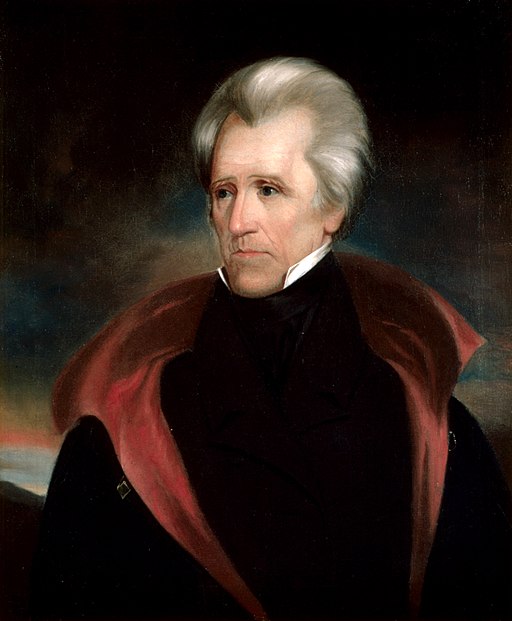
Of the Remnants of the Aristocratic Party in the United StatesSecret opposition of the rich to democracy.—They withdraw into private life.—Taste that they show inside their residences for exclusive pleasures and luxury.—Their simplicity outside.— Their affected condescension for the people. Sometimes among a people divided by opinions, when the equilibrium among parties is broken, one of them acquires an irresistible preponderance. It crushes all obstacles, overwhelms its adversary and exploits the entire society to its profit. The vanquished, then despairing of success, hide or fall silent. A universal immobility and silence develop. The nation seems united by the same idea. The conquering party stands up and says: “I have brought peace to the country; you owe me thanks.” But beneath this apparent unanimity, profound divisions and a real opposition are still hidden. This is what happened in America. When the democratic party gained preponderance, you saw it take exclusive possession of the leadership of public affairs. Since then, it has not ceased to model the mores and laws after its desires.h Today you can say that, in the United States, the wealthy classes of society are almost entirely out of public affairs, and that wealth, far from being a right, is a real cause of disfavor and an obstacle to reaching power. So the rich prefer abandoning the contest to sustaining an often unequal struggle against the poorest of their fellow citizens. Not being able to take a rank in public life analogous to the one they occupy in private life, they abandon the first in order to concentrate on the second. In the middle of the State, they form something like a society apart with its own tastes and enjoyments. The rich man submits to this state of things as to an evil without remedy; with great care, he even avoids showing that it wounds him. So you hear him publicly praise the sweet pleasures of republican government and the advantages of democratic forms. For, next to hating their enemies, what is more natural to men than flattering them? Do you see this opulent citizen? Wouldn’t you say, a Jew of the Middle Ages who is afraid of arousing suspicion of his wealth? His attire is simple; his gait is modest. Within the four walls of his dwelling, he adores luxury; into this sanctuary, he lets only a few chosen guests that he arrogantly calls his equals. You meet no nobleman in Europe who appears more exclusive in his pleasures than he, more envious of the slightest advantages that a privileged position assures. But here he is, leaving his house, to go to work in a tiny, dusty room that he occupies in the business center of the city, where everyone is free to come to meet him. Along his path, his shoemaker happens by, and they stop. They begin to converse with each other. What can they be saying? These two citizens are dealing with the affairs of the State, and they will not part without shaking hands. At the bottom of this enthusiasm for convention and in the midst of these obsequious forms toward the dominant power, it is easy to notice in the rich a great disgust for the democratic institutions of their country. The people are a power that they fear and despise. If, one day, the bad government of democracy led to a political crisis, if monarchy ever presented itself in the United States as something feasible, you would soon discover the truth of what I am advancing. The two great weapons that parties use to succeed are newspapers and associations.j CHAPTER 3Of Freedom of the Press in the United StatesDifficulty of limiting freedom of the press.—Particular reasons that certain peoples have for valuing this liberty.—Freedom of the press is a necessary consequence of the sovereignty of the people as it is understood in America.—Violence of the language of the periodical press in the United States.—The periodical press has its own instincts; the example of the United States proves it.—Opinion of the Americans about the judicial suppression of the crimes of the press.—Why the press is less powerful in the United States than in France. Freedom of the press not only makes its power felt over political opinions, but also over all of the opinions of men. It modifies not only laws, but also mores. In another part of this work, I will seek to determine the degree of influence that freedom of the press has exercised over civil society in the United States; I will try to discern the direction it has given to ideas, the habits it has imparted to the mind and sentiments of the Americans.a For now, I only want to examine the effects produced by freedom of the press in the political world. [{The greatest problem of modern societies is to know how to use freedom of the press.} I love freedom of the press enough to have the courage to say everything that I think about it.] I admit that to freedom of the press I do not bring that complete and instantaneous love that is given to things supremely good by their nature. [I do not see freedom of the press in the same way that I consider patriotism or virtue, for example.]b I love it much more from consideration of the evils it prevents than for the good things that it does.c If someone showed me an intermediate position where I could hope to stand firm between complete independence and total subservience of thought, I would perhaps take my position there; but who will find this intermediate position?d You start from license of the press, and you march in rank order; what do you do? First, you submit writers to juries. But the juries acquit them, and what was only the opinion of an isolated man becomes the opinion of the country. So you have done too much and too little. You have to move further. You deliver authors to permanent magistrates; but judges are obliged to hear before condemning. What someone was afraid to avow in a book, is proclaimed with impunity in the defense plea. Thus, what was said obscurely in one account is found repeated in a thousand others. The expression is the external form, and, if I can express myself in this way, the body of the thought; but it is not the thought itself. Your courts arrest the body, but the soul escapes them and subtly slips through their hands. So you have done too much and too little; you must continue to move.e Finally you abandon writers to censors. Very good; we are getting closer. But isn’t the political rostrum free? So you still haven’t done anything. I am wrong; you have made things worse. Would you, by chance, take thought for one of those material powers that grow with the number of their agents? Would you count writers like soldiers in an army? In contrast to all material powers, the power of thought often increases with the small number of those who express it. The spoken word of a powerful man, which spreads alone through the passions of a silent assembly, has more power than the confused cries of a thousand orators. And if only someone can speak freely in a single public place, it is as if he has spoken publicly in each village. So you must destroy the freedom to speak as well as to write. This time, here you are at your destination: everyone is quiet. But where have you arrived? You began from the abuses of liberty, and I find you under the feet of a despot. You have gone from extreme independence to extreme servitude without finding, on such a long journey, a single place where you could rest. Some peoples, apart from the general reasons that I have just set forth, have particular reasons that must attach them to freedom of the press. In certain nations claiming to be free, each of the agents of power can violate the law with impunity, and the constitution of the country does not give the oppressed the right to complain to the judicial system. Among these peoples, the independence of the press must no longer be considered as one of the guarantees, but as the sole remaining guarantee for liberty and for the security of the citizens. So if the men who govern these nations spoke about taking independence away from the press, the whole people could respond to them: Allow us to prosecute your crimes before ordinary judges, and perhaps then we will consent not to appeal to the court of opinion.f In a country where the dogma of sovereignty of the people openly reigns, censorship is not only a danger, but also a great absurdity.g When you grant each person a right to govern society, you must recognize his capacity to choose between the different opinions that trouble his contemporaries and to appreciate the different facts, the knowledge of which can guide him. So sovereignty of the people and freedom of the press are two entirely correlative things. Censorship and universal suffrage are, on the contrary, two things that contradict each other and that cannot exist together for long in the political institutions of the same people. Among the twelve million men who live within the territory of the United States, not a single one has yet dared to propose limiting freedom of the press. When I arrived in America, the first newspaper that came before my eyes contained the following article, which I translate faithfully: Throughout the whole of this affair, the tone and language of Jackson [the President] was that of a heartless despot, alone intent on preserving his power. Ambition is his crime and will yet prove his curse. Intrigue is his vocation, and will yet overthrow and confound him. Corruption is his element and will yet react upon him to his utter dismay and confusion. He has been a successful as well as a desperate political gangster, but the hour of retribution is at hand; he must disgorge his winnings, throw away his false dice, and seek the hermitage, there to blaspheme and execrate his folly, for to repent is not a virtue within the capacity of his heart to obtain (Vincennes Gazette). Many men in France imagine that the violence of the press among us is due to the instability of the social state, to our political passions and to the general malaise that follows. So they are constantly waiting for a time when, after society has regained a tranquil footing, the press in turn will become calm. As for me, I would willingly attribute the extreme ascendancy that the press has over us to the causes indicated above; but I do not think that these causes influence its language much. The periodical press seems to me to have its own instincts and passions, apart from the circumstances in which it works. What happens in American really proves it for me. America is perhaps at this moment the country in the world that contains within it the fewest seeds of revolution. In America, nevertheless, the press has the same destructive tastes as in France, and the same violence without the same reasons for anger. [<≠Most often it feeds on hate and envy; it speaks more to passions than to reason; it spreads falsehood and truth all jumbled together.≠>] In America, as in France, the press is an extraordinary power, a strange mixture of good and evil; liberty cannot live without it and order can hardly be maintained with it.h What must be said is that the press has much less power in the United States than among us. Nothing, however, is rarer in that country than seeing a judicial proceeding directed against the press. The reason is simple: the Americans, while accepting among themselves the dogma of sovereignty of the people, have applied it sincerely. They did not have the idea of establishing, with elements that change every day, constitutions that endured forever. So to attack existing laws is not criminal, as long as you do not want to evade them by violence. They believe, moreover, that the courts are powerless to moderate the press; that because the flexibility of human languages constantly escapes judicial analysis, crimes of this nature in a way slip out of the hand that reaches out to seize them. They think that to be able to act effectively on the press, a court would have to be found that was not only devoted to the existing order, but was also able to stand above the public opinion that stirs around it, a court that judged without allowing publicity, ruled without justifying its decisions, and punished the intention even more than the words. Whoever had the power to create and to maintain such a court would waste his time pursuing freedom of the press; for then he would be absolute master of society itself and would be able to rid himself of writers and their writings at the same time. In the matter of the press, therefore, there is really not a middle ground between servitude and license. To reap the inestimable advantages that freedom of the press assures, you must know how to submit to the inevitable evils that it produces. Wanting to gain the first while escaping from the second is to give yourself over to one of these illusions that usually delude sick nations when, tired by struggles and exhausted by efforts, they seek the means to allow hostile opinions and opposite principles to coexist at the same time on the same soil. The little power of newspapers in America is due to several causes; here are the principal ones: The freedom to write, like all other freedoms, is that much more to be feared, the newer it is. A people who has never heard the affairs of State treated in front of it believes the first popular orator who appears. Among the Anglo-Americans, this liberty is as old as the founding of the colonies. Moreover, the press, which knows so well how to inflame human passions, cannot create those passions by itself. [{What feeds freedom of the press, what gives it a hold on human will are political passions.}] Now, in America, political life is active, varied, even agitated, but it is rarely troubled by profound passions; rarely do the latter arise when material interests are not jeopardized, and in the United States these interests prosper. To judge the difference that exists on this point between the Anglo-Americans and us, I have only to glance at the newspapers of the two peoples. In France, the commercial advertisements occupy a very limited space; even the news items are few; the vital part of a newspaper is where the political discussions are found. In America, three quarters of the immense newspaper put before your eyes are filled by advertisements; the rest is usually occupied by political news or simple stories; only now and then, in an obscure corner, do you notice one of those heated discussions that among us are the daily food of the reader. Every power augments the action of its forces as their control is centralized; that is a general law of nature that examination demonstrates to the observer and that an even more certain instinct has always shown to the least of despots. In France, the press combines two distinct types of centralization. Nearly all of its power is concentrated in the same place and, so to speak, in the same hands, for the organs of the press are very few in number. Constituted in this way, in the middle of a skeptical nation, the power of the press is necessarily almost without limit. It is an enemy with which a government can reach a shorter or longer truce; but it is difficult for a government to live in confrontation with the press for long. Neither one nor the other of the two types of centralization that I have just spoken about exists in America. The United States has no capital.j [≠In America the press is even less centralized than the government it attacks.≠] Enlightenment, like power, is disseminated in all the parts of this vast country. There, the beams of human intelligence, instead of coming from a common center, cut across each other in all directions; the Americans have placed the general direction of thought nowhere, any more than they have that of public affairs. That is due to local circumstances that do not depend on men. But here are the ones that come from the laws: In the United States, there are no licenses for printers, no stamps or registration for newspapers; the rule of surety bonds is unknown. As a result, the creation of a newspaper is a simple and easy undertaking; a fewk subscribers suffice for the journalist to cover his expenses. The number of periodical or semi-periodical writings in the United States therefore surpasses all belief. The most enlightened Americans attribute the little power of the press to this incredible scattering of its forces. It is an axiom of political science in the United States that the only means to neutralize the effects of newspapers is to multiply their number. I cannot imagine that a truth so obvious has not yet become more common among us. I understand without difficulty that those who want to make revolutions with the aid of the press try to give it only a few powerful organs; but what I absolutely cannot conceive is that the official partisans of the established order and the natural supporters of existing laws believe that, by concentrating the press, its action can be attenuated. The governments of Europe seem to me to act toward the press in the same way that knights used to act toward their enemies. They had noticed from their own experience that centralization was a powerful weapon, and they wanted to provide it to their enemy, most probably to gain more glory in resisting him. In the United States, there is hardly any small town without its newspaper. It can be easily understood that, among so many combatants, neither discipline nor unity of action can be established. Therefore each one raises his banner. Not that all the political newspapers of the Union are lined up for or against the administration; but they attack and defend it in a hundred different ways. So in the United States newspapers cannot establish those great waves of opinions that rise up or overwhelm the most powerful dikes. This division of the forces of the press produces still other no less remarkable effects. Because the creation of a newspaper is so easy, everyone can do it. On the other hand, competition means that a newspaper cannot hope for very great profits; this prevents great industrial talents from getting involved in enterprises of this type. Even if newspapers were a source of riches, they are so excessively numerous that there would not be enough talented writers to run them. So in general journalists in the United States do not have a very high [social] position; their education is only rudimentary; and the turn of their ideas is often vulgar. Now, in all things the majority makes the law; it establishes certain behaviors to which each person then conforms. The ensemble of these common habits is called a spirit;m there is the spirit of the bar, the spirit of the court. The spirit of the journalist, in France, is to discuss in a violent, but elevated and often eloquent way, the great interests of the State; if this is not always so, it is because every rule has its exceptions. The spirit of the journalist, in America, is to attack in a coarse way, unaffectedly and without art, the passions of those whom he addresses, to leave principles behind in order to grab men, to follow men in their private life, and to lay bare their weaknesses and their vices [treat the secrets of the domestic hearth and the honor of the marital bed]. Such an abuse of thought must be deplored. Later I will have the opportunity to inquire into what influence newspapers have on the taste and morality of the American people; but I repeat that at the moment I am only dealing with the political world. You cannot hide from the fact that the political effects of this license of the press contribute indirectly to the maintenance of public tranquillity. The result is that men who already have an elevated position in the opinion of their fellow citizens do not dare to write in the newspapers; and they thereby lose the most formidable weapon that they could use to stir popular passion to their profit.1 The result is, above all, that the personal views expressed by journalists have no weight, so to speak, in the eyes of readers. What readers seek in a newspaper is knowledge of facts; only by altering or misrepresenting these facts can a journalist gain some influence for his opinion. Reduced to these resources alone, the press still exercises an immense power in America. It makes political life circulate in all parts of this vast territory. Always watchful, the press constantly lays bare the secret motivating forces of politics and compels public men, one by one, to appear before the court of opinion. It rallies interests around certain doctrines and formulates the creed of parties. Through the press, interests speak together without seeing each other, agree without having contact. When a large number of the organs of the press manage to follow the same path, their influence eventually becomes nearly irresistible; and public opinion, always struck from the same side, ends by yielding to their blows. In the United States, each newspaper individually has little power; but the periodical press, after the people, is still the first of powers.A [h. ] There is an often very effective means to reestablish peace in a country divided by opinion; it is to give so complete a preponderance to one of the parties that the other disappears or falls into silence. Experience has proved that this was buying peace at a high price. When Ferdinand and Isabella chased the Moors from Spain, they made a great cause of internal troubles disappear; but they impoverished the country and delivered a blow to its industry from which it has never recovered. The democratic party acted in the same way in America. Once in power, it took exclusive possession of the leadership of public affairs and modeled the mores and laws after its desires (YTC, CVh, 4, pp. 40-41). [j. ] “General picture. A mass, not impassioned, wanting the good. In the middle of it, parties that seek to create a majority to legalize their ideas” (YTC, CVh, 4, p. 40). [a. ] See chapter VI of the second part of the third volume. [b. ] Gustave de Beaumont: “Patriotism is a virtue, so there is no alternative. Moreover, why compare a political institution to a virtue? If you want to make your comparison with a political institution that you consider as essentially and absolutely good, begin by searching your mind. Is there a principle, an institution that appears so to you? Why don’t you take individual liberty?” (YTC, CIIIb, 2, p. 60). [c. ] Hervé de Tocqueville: In general the author should stay in the background in order to allow only his book to speak. His opinions should be appreciated by the reader because of a deduction of the ideas that the work develops. If you depart from this rule, it must at least be in the briefest possible way. I believe that the two paragraphs, the one beginning with the words I admit, the second with the words I love it, could be deleted. They have the disadvantage of delineating the author too openly, but without giving this picture very clear contours. There is a bit of obscurity both in the thought and in its expression. My proposition accepted, you will pass immediately to the paragraph that begins with the words: if someone” (YTC, CIIIb, 2, pp. 42-43). The phrasing of the last sentence of this paragraph is by Beaumont (YTC, CIIIb, 2, p. 60). In the manuscript, it finishes this way: “. . . from consideration of the evils that follow its ruin than for the good things that it does.” [d. ] The manuscript says a marker. Beaumont suggested putting an intermediate position (YTC, CIIIb, 2, p. 60). [e. ] This reflection is similar to the one that appears in the discussion about Malesherbes and freedom of the press in Essai sur la vie, les écrits et les opinions de M. de Malesherbes (Paris: Treuttel et Würtz, 1819-1821, I, pp. 179-83) of Count Boissy-d’Anglas. On the general ideas of this chapter, see the conversation with Spencer (non-alphabetic notebook 1, YTC, BIIa, and Voyage, OC, V, 1, pp. 69-70), and Beaumont, Lettres d’Amérique, p. 101. [f. ] “Freedom of the press is the sole guarantee for a people who cannot attack the agents of power through the courts, something seen among us. If the men who govern us allow us to prosecute their misdeeds and crimes before ordinary judges, perhaps we will consent not to attack their absurdities and their vices before the court of public opinion” (YTC, CVh, 3, p. 93). [g. ] In the margin: “≠After the people themselves, the press is the most irresistible power that exists in America.≠” [h. ] Variant: “The American press, like ours, is a power that you can speak ill of in quiet and that you bow before in public, that you can fight by surprise, but that no power can attack head on” Cf. note o of p. 78. [j. ] In the manuscript: “is fortunate enough not to have a capital.” Hervé de Tocqueville: “I would remove fortunate enough. With a single phrase, the author comes to a decision offhandedly on a question that is very susceptible to controversy. That is at least unnecessary” (YTC, CIIIb, 2, p. 45). [k. ] In the manuscript a blank indicates that Tocqueville thought about putting here the precise number of subscribers. Following this sentence you find: “The most reliable reports put it at [blank (ed.)] in 1832.” [m. ] In the manuscript: “what is called a spirit.” Gustave de Beaumont: I do not like that. Here is how I would conceive the sentence: I would delete what is called a spirit, which is certainly bad (there are many other things that are called a spirit, without counting the author) and I would say: in all, there is what is called the spirit of the thing. There is the spirit of the bar, the spirit of the court. Journalism also has its own. In France it consists . . .” (YTC, CIIIb, 2, p. 62). [1. ] They write in newspapers only in the rare cases when they want to address the people and speak in their own name; when, for example, slanderous charges have been spread about them, and they want to reestablish the true facts. |

Titles (by Subject)