Econlib

The Library

Other Sites

Front Page arrow Titles (by Subject) arrow CHAPTER XIV: War Between France and England. Mr. Pitt and Mr. Fox. - Considerations on the Principal Events of the French Revolution (LF ed.)

Return to Title Page for Considerations on the Principal Events of the French Revolution (LF ed.)

Search this Title:

CHAPTER XIV: War Between France and England. Mr. Pitt and Mr. Fox. - Germaine de Staël, Considerations on the Principal Events of the French Revolution (LF ed.) [2008]

Edition used:

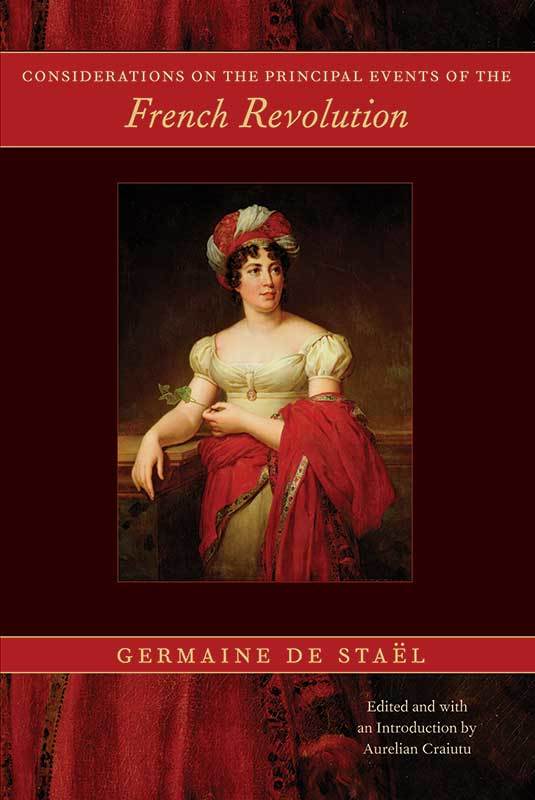
Considerations on the Principal Events of the French Revolution, newly revised translation of the 1818 English edition, edited, with an introduction and notes by Aurelian Craiutu (Indianapolis: Liberty Fund, 2008).

About Liberty Fund:

Liberty Fund, Inc. is a private, educational foundation established to encourage the study of the ideal of a society of free and responsible individuals.


CHAPTER XIV

War Between France and England. Mr. Pitt and Mr. Fox.

During many centuries the rivalries between France and England have been the source of misery to those two countries. It used to be a contest for power; but the struggle caused by the Revolution cannot be considered under the same aspect. If there have been, in the course of twenty-three years,1 circumstances in which England might have treated with France, it must also be allowed that during that time she has had strong reasons for making war upon her rival, and more frequently still, for defending herself against attack. The first rupture, which broke out in 1793, proceeded from motives the most just. If the Convention, while guilty of the murder of Louis XVI, had not professed and propagated principles subversive of all governments, if it had not attacked Belgium and Holland, the English might have taken no more concern in the death of Louis XVI than Louis XIV did in that of Charles I. But at the moment when the government dismissed the Ambassador of France, the English nation wished for war still more eagerly than its government.2

I think I have sufficiently shown, in the preceding chapters, that in 1791, during the continuance of the Constituent Assembly, and even in 1792, under the Legislative Assembly, foreign powers ought not to have acceded to the Convention of Pilnitz. If, then, English diplomacy had any share in that great political act, it interfered too soon in the affairs of France, and Europe found itself in a bad situation because of it, since immense military forces were thus acquired by the French. But at the moment when England formally declared war against France, in 1793, the Jacobins were in complete possession of the supreme power; and not only their invasion of Holland, but their crimes and the principles which they proclaimed, made it a duty to break off all communication with them. The perseverance of England at this epoch preserved her from the troubles which threatened her internal tranquillity at the time of the mutiny of the fleet, and of the fermentation of the popular societies;3 and likewise supported the hopes of the well-meaning, by showing them a spot upon the earth where morality and liberty were united to great power. Had the English nation been seen sending ambassadors to assassins, the true strength of that wonderful island would have abandoned her; the confidence which she inspires would have been lost.

It does not follow from these views that the Opposition, who wished for peace, and Mr. Fox,4 who by his astonishing talents represented a party in his own person, were not actuated by the most honorable sentiments. Mr. Fox complained, and with reason, that the friends of liberty were incessantly confounded with those who polluted it; and he feared lest the reaction of so unfortunate an attempt should weaken the spirit of freedom which is the vital principle of England. In fact, if the Reformation had failed three centuries ago, what would have become of Europe? And in what state would Europe now be, if France were to be deprived of all that she has gained by her political reform?

Mr. Pitt5 at this epoch rendered great services to England by holding with a firm hand the helm of affairs. But notwithstanding the perfect simplicity of his tastes and habits, he leaned too much to the love of power; having become minister at a very early age, he never had time to live in the capacity of a private man, and by that means to experience the action of authority upon those who are subject to it. His heart had no sympathy with weakness; and the political artifices which men have agreed to call Machiavellianism were not viewed by him with all the contempt which might have been expected from a genius like his. Yet his admirable eloquence made him love the debates of a representative government; he was predisposed to liberty even by his talents, for he was ambitious of convincing, whereas men of moderate powers aspire only at command. The sarcastic tone of his speeches was singularly adapted to the circumstances in which he was placed: when all the aristocracy of sentiment and principle triumphed at the sight of popular excesses, the energetic irony of Mr. Pitt suited the Patrician who throws upon his adversaries the odious color of irreligion and immorality.

The perspicuity, the sincerity, the warmth of Mr. Fox could alone escape these sharp-edged weapons. He had no mystery in politics; for he regarded publicity as still more necessary in the affairs of nations than in any other relations of men. Even when his opinion was not followed, he was better liked than his opponent; and although force of argumentation was the distinctive characteristic of his eloquence, so much of soul was perceived beneath his reasoning that it was impossible not to be moved by it. His character, like that of his antagonist, bore the stamp of English dignity; but he had a natural candor which contact with other people could not hinder, because the benevolence of genius is unalterable.

It is not necessary to decide between these two great men, nor is there any person who would dare to think himself qualified to judge in such a cause. But the salutary reflection which ought to arise from the sublime discussions of which the English Parliament was the theater is this—that the ministerial party was always in the right when it combated Jacobinism and military despotism, but always in the wrong, and greatly in the wrong, when it made itself the enemy of liberal principles in France. The members of the Opposition, on the contrary, deviated from the noble functions which are attributed to them when they defended men whose crimes were ruining the cause of the human race; and this same Opposition has deserved well of posterity when it supported the generous few of the friends of freedom who for twenty-five years have devoted themselves to the hatred of both parties in France, and who have no strength but what they derive from one powerful alliance—the alliance of truth.

One fact may give an idea of the essential difference which exists between the Tories and the Whigs, the members of the cabinet, and the Opposition, in relation to the affairs of France. The spirit of party goes the length of stripping the most glorious actions of their true qualities so long as those who performed them live; but it is not for this the less certain that antiquity offers nothing more noble than the conduct of General la Fayette, of his wife, and of his daughters in the prisons of Olmütz.* The General was confined in these on the one hand, for having quitted France after the imprisonment of the King, and on the other, for having declined any connection with the governments which were carrying on war against his country; and the admirable Madame de la Fayette, just escaped from the dungeons of Robespierre, lost not a single day in proceeding to incarcerate herself with her husband and expose herself to all the sufferings which have abridged her life. So much firmness in a man who had been for so long a time faithful to the same cause, so much conjugal and filial love in his family, could not but interest the country of whose soil these virtues are the native growth. General Fitz-Patrick demanded, therefore, that the English ministry should intercede with their allies to obtain from them the liberty of General la Fayette.6 Mr. Fox pleaded this cause; the English parliament heard the sublime speech, of which we shall transcribe the conclusion: and yet the representatives of a free country did not rise in a body to accede to the proposition of the orator, who on this occasion should have been only their interpreter. The ministers opposed the motion of General Fitz-Patrick by saying, as usual, that the captivity of General la Fayette concerned the powers of the Continent, and that England, in meddling with it, would violate the general principle which forbids her to interfere in the internal administration of foreign countries. Mr. Fox combated admirably this wily and evasive answer. Mr. Windham,7 Secretary of War, denied the eulogiums which Mr. Fox had pronounced on General la Fayette; and it was upon this occasion that Mr. Fox replied to him as follows:

The Secretary of War has spoken, and his principles are henceforth in open day. Those must never be pardoned who begin revolutions, and that, in the most absolute sense, without distinction of circumstances and of persons. However corrupt, however intolerant, however oppressive, however hostile to the rights and happiness of humanity a government may be; however virtuous, however moderate, however patriotic, however humane the reformer, the man who begins the justest reformation should be devoted to the most irreconcilable vengeance. If he is succeeded by men who tarnish the cause of liberty by their excesses, they may be pardoned. All our detestation of criminal revolution should be heaped upon him who begins a revolution that is virtuous. Thus, the Right Honorable Secretary of War pardons Cromwell with all his heart; for Cromwell appeared not till the second act, found things prepared, and only turned circumstances to his own profit; but our great, our illustrious ancestors, Pym, Hampden, Lord Falkland, the Earl of Bedford,8 all these personages to whom we have been accustomed to pay honors nearly divine, for the good which they have done to the human race and to their country, for the evils from which they delivered us, for the prudent courage, the generous humanity, the noble disinterestedness with which they prosecuted their plans; these are the men who, according to the doctrine professed this day, ought to be devoted to eternal execration.

We have hitherto considered Hume9 to be sufficiently severe when he said that Hampden died at the moment the most favorable for his glory, because, had he lived a few months longer, he would probably have displayed the latent fire of a violent ambition. But how gentle does Hume now appear when compared with the Right Honorable Secretary of War. According to the latter, men who by their crimes have blackened the glorious cause of liberty have been virtuous, in comparison of those who wished merely to deliver their country from the weight of abuses, from the scourge of corruption, and from the yoke of tyranny. Cromwell, Harrison, Bradshaw, the masked executioner by whose hand fell the head of Charles I—these are the objects of the tender commiseration and enlightened indulgence of the Right Honorable Secretary of War. Hampden, Bedford, Falkland killed in fighting for his king—such are the criminals for whom he does not find hatred enough in his heart, nor punishment enough upon earth. The Right Honorable Secretary of War has positively asserted it: in the eyes of his kings and his absolute ministers, Collot d’Herbois10 is far from meriting so much vengeance and hatred as La Fayette.

At first I was astonished at this opinion; I now begin to comprehend it. In fact, Collot d’Herbois is a vile person and a monster; La Fayette is a great character and a man of worth. Collot d’Herbois pollutes Liberty and renders her hateful by all the crimes which he dares to clothe with her name; La Fayette honors her; he makes her an object of love, by all the virtues with which he shows her to be surrounded, by the nobleness of his principles, by the unalterable purity of his actions, by the wisdom and force of his understanding, by the gentleness, the disinterestedness, the generosity of his soul. Yes, I acknowledge it, according to the new principles, it is La Fayette who is dangerous, he is the man whom we must hate; and the poor Collot d’Herbois is entitled to that tender accent with which the interest of the House has been solicited for him. Yes, I do justice to the sincerity of the Right Honorable Secretary of War; he has feigned nothing, I am sure; the tone of his voice has been only the expression of his soul as often as he has implored compassion for the poor Collot d’Herbois, or summoned from every corner of the earth hatred, vengeance, and tyranny to exterminate General La Fayette, his wife and his children, his companions, and his servants.

But I, who feel otherwise, I, who am still what I have always been, I, who will live and die the friend of order but of liberty, the enemy of anarchy but of slavery, have thought that it was not allowed to me to remain silent after such outrages, after such blasphemies vomited forth within the precincts of an English parliament, against innocence and truth, against the rights and the happiness of the human species, against the principles of our glorious Revolution; finally, against the sacred memory of our illustrious ancestors, of those men whose wisdom, whose virtues, and whose benefits will be revered and blessed by the people of England to the latest generation.

In spite of the incomparable beauty of these words, such was the terror with which the fear of the subversion of social order then inspired the English that even the name of liberty no longer echoed in their soul. Of all the sacrifices which a man can make to his conscience as a public character, there are none greater than those to which Mr. Fox doomed himself during the French Revolution. It is nothing to support persecutions under an arbitrary government; but to find oneself abandoned by public opinion in a free country; to be deserted by one’s old friends when, among them, there is such a man as Burke; to find oneself unpopular in the very cause of the people; this is a misery for which Mr. Fox deserves to be pitied as much as admired. He was seen to shed tears in the House of Commons as he pronounced the name of that illustrious Burke, who had become so violent in his new passions.11 He inclined toward him, because he knew that his heart was broken by the death of his son; for friendship, in a character such as that of Fox, could never be altered by political feelings.

It might, however, be advantageous for England that Mr. Pitt was at the head of the state in the most dangerous crisis in which that country ever found herself: but it was not less so that a mind enlarged as was that of Mr. Fox maintained principles in spite of circumstances and knew how to preserve the household gods of the friends of freedom in the midst of the conflagration. It is not to please the two parties that I thus praise them both, although they supported very opposite opinions. The contrary should perhaps be the case in France; the different factions are there almost always equally blamable; but, in a free country, the partisans of the ministry and the members of the opposition may all be right after their own way, and they are each frequently productive of good according to the times: the only point of importance is that the power acquired by the struggle should not be continued after the danger is past.

[1. ] Since 1793. This part of the book was written in 1816.

[2. ] After the battle of Valmy (September 20, 1792), the French armies advanced beyond the borders of France. Dumouriez occupied Belgium and gained possession of Anvers’s strategic location. The war between France and England began on February 1, 1793. Economic reasons played an important role, as the French occupation of Anvers threatened the commerce of the English in the North Sea.

[3. ] The mutiny of the fleet occurred from April 15 to June 30, 1797. Revolutionary societies also began to appear in England in 1789, and they were regarded with skepticism by Whigs (like Burke) and Tories alike. According to Burke, there were some forty thousand Jacobin sympathizers in England in 1793.

[4. ] Fox was opposed to the war with France.

[5. ] William Pitt (1759–1806), famous Tory leader and opponent of the French Revolution, served as prime minister from 1783 to 1800.

[* ] The most exact details on this affair are to be found in the excellent work of M. Emmanuel de Toulongeon, entitled History of France from 1789. It is of importance to strangers that they be made acquainted with the trustworthy writings of the Revolution; for never was there published on any subject so great a number of books and pamphlets in which falsehood turned itself into so many forms, that it might supply the place of talent and satisfy vanities of a thousand kinds.

[6. ] He was released only in 1797.

[7. ] William Windham (1750–1810) served as secretary of war 1794–1801 and 1806–7.

[8. ] The King’s attempt to arrest John Pym (1584–1643) in 1642 triggered the insurrection that eventually led to the civil war. John Hampden (1595–1643) opposed royal absolutism and supported Pym in Parliament. Lord Falkland (1610–43) was a partisan of the King. Francis Russell, Earl of Bedford, opposed royal absolutism.

[9. ] See Hume’s History of England, vol. V (Indianapolis: Liberty Fund, 1983).

[10. ] Jean-Marie Collot d’Herbois (1749–96) was a member of the Committee of Public Safety during the Reign of Terror and one of the authors of the first French republican Constitution of 1793.

[11. ] See Burke’s “An Appeal from the New to the Old Whigs,” in Burke, Further Reflections on the Revolution in France, 73–201. The break between Burke and Fox had occurred during the debates on the Quebec Bill (May 1791). Fox dismissed Burke’s “A Letter to a Member of National Assembly” as “sheer madness.” Madame de Staël’s praise of Pitt might be read as a vicarious critique of Burke’s unwillingness to distinguish between the ideas of 1789 and those of the Terror of 1793–94.