Econlib

The Library

Other Sites

Front Page arrow Titles (by Subject) arrow YALE BROZEN, Wage Rates, Minimum Wage Laws, and Unemployment - New Individualist Review

Return to Title Page for New Individualist Review

Search this Title:

Also in the Library:

Subject Area: Economics
Subject Area: Political Theory
Subject Area: History
Order this book from Liberty Fund

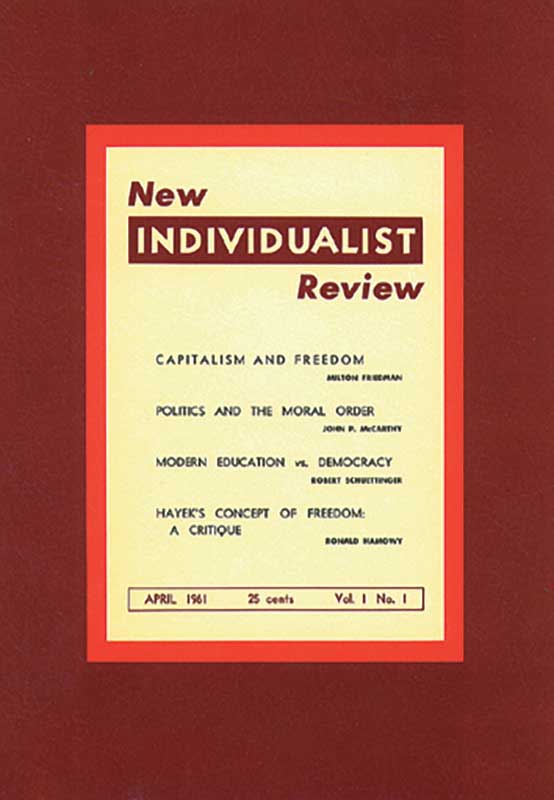
YALE BROZEN, Wage Rates, Minimum Wage Laws, and Unemployment - Ralph Raico, New Individualist Review [1961]

Edition used:

New Individualist Review, editor-in-chief Ralph Raico, introduction by Milton Friedman (Indianapolis: Liberty Fund, 1981).

About Liberty Fund:

Liberty Fund, Inc. is a private, educational foundation established to encourage the study of the ideal of a society of free and responsible individuals.


Wage Rates, Minimum Wage Laws, and Unemployment

ALONG WITH THE weather, sex, health, and taxes, one of the most widely discussed topics in America is wage rates. We have had an abundance of guide posts offered for determining the changes which should be made in wage rates. Union strategists have insisted in times past that wage rates should rise when the cost of living goes up, whatever “cost of living” may mean. They do not accept the converse proposition that wage rates should go down when the cost of living goes down, however. In the latter case, they argue that a decline in cost of living means a depression is coming or has arrived and, therefore, wage rates should be raised to increase purchasing power and prevent the depression.

Another guide post offered in times past (and last year by Mr. Reuther) concerns the relationship between wage rates and profits. Still another relates wage rates to an acceptable level of living. Most recently, wage rates and changes in them have been linked to changes in average output per man-hour. The General Motors contract of a decade ago provided for changes in wage rates linked to the change in the consumer price index of middle income urban families, plus an annual improvement factor which happened to be approximately the same as the increase in output per man-hour in the American economy in the preceding several decades.

Four years ago last January, the Council of Economic Advisors entered the discussion of guide posts for wage rate increases. They were moved to do this because, as they said at the time, “. . .wage decisions affect the progress of the whole economy” and, therefore, “. . .there is legitimate reason for public interest in their content and consequences.”1 They repeated their suggested guide posts in 1964 because, as they said, “If cost. . .pressures should arise through the exercise of market power. . .we would be forced once more into the dreary calculus of the appropirate trade off between ‘acceptable’ additional unemployment and ‘acceptable’ inflation.”

The Economic Advisers have advised that, “The general guide for wages is that the percentage increase in total employee compensation per man-hour be equal to the national trend rate of increase in output per man-hour.”2 The Council has provided a measure of recent trends (1952-64) in the annual rates of growth of output per man-hour in the private economy. They suggest that the latest five-year trend in productivity, amounting to 3.2 per cent, should be the guide for wage rate increases. They seem to believe that if wage rates plus fringe benefits in each industry rise by 3.2 per cent, then the average cost of labor will rise by 3.2 per cent.

If hourly labor costs increase by 3.2 per cent on the average in each industry, however, average compensation per man-hour would rise by 4 per cent. Many wage earners obtain wage increases by leaving low paying jobs (such as those in agriculture) for higher paying jobs—without any change in the rates paid for specific positions. The average wage does rise, then, without any change in wage rates, about 0.6 to 0.8 per cent per year. Subtracting this out of the 3.2 per cent rise in output per man-hour for the total private economy would imply that the Council’s suggested guide rate would be achieved with an average annual rate of change of 2.5 per cent per year in money wage rates (including fringe benefits as part of the wage, or employee compensation) in each industry.

The Council does not believe that every wage rate should be increased exactly by the rate of overall productivity increase. Their report says that “specific modifications must be made to adapt (the guide posts) to the circumstances of the particular industry.”3 For instance, they say “Wage rate increases would fall short of the general guide rate in an industry which could not provide jobs for its entire labor force.4 Also, they would fall short where “wage rates are exceptionally high because the bargaining position of workers has been especially strong.”5

THE COUNCIL OF Economic Advisors should be complimented for its recognition of the fact that wage rates in some industries are too high to permit all those who would like jobs in those industries to obtain them. They should also be complimented for recognizing that money wage rate increases must be smaller in the future if we are to have more rapid economic growth and decreased unemployment without inflation. The Council recognizes that the upward movement of some wage rates and prices is the result of agreements between strong unions and employers, and that “the post-Korean war years were marked by the coincidence of relatively large wage increases with declines in industry employment.”6

The fact that unduly high wage rates decrease the number of jobs available and the number of people working in an industry is obviously understood by the Council and is clearly implied in its report.

Several things are left unsaid, however, which should receive explicit recognition. The Council dwells on the inflation which may be caused by large wage rate increases. They fail to recognize that large wage rate increases for some workers come not only at the expense of causing some to become unemployed, absent inflation, but also at the expense of workers in other sectors of the economy.

I would estimate that 10 per cent of the labor force of the United States receives wage rates about 15 per cent higher than they would in the absence of wage laws and governmental support of trade unions.7 The result is that 90 per cent of the U.S. labor force receives wage rates about 5 per cent lower than they would otherwise obtain. The net result is greater inequality in the division of income and about 3 per cent less total wage income for U.S. wage earners, or about 10 billion dollars less than they would otherwise earn as a group (including those whose wage rate is excessive).

To illustrate this in terms of the experience of one state, let us consider some occurrences in Michigan. Wage rates in transportation equipment manufacturing in Michigan not only rose more than in other manufacturing industries in the state, but also rose, between 1950 and 1957, by 10 per cent more than in the same industry in the other four East North Central states (Wisconsin, Ohio, Indiana, and Illinois).8 Overall employment in the auto industry declined in part as a result of overly large employment cost increases. In Michigan, where the greatest increase in wage rates occurred, the decline in employment was greater than for the industry as a whole. Between 1954 and 1958, there were 85,000 more jobs lost in Michigan than in the other four East North Central states. In 1954, Michigan employed 41,000 more workers in transportation equipment manufacturing than the other four states. In 1958 it employed 44,000 fewer workers in the industry than the other states. Michigan became a depressed area, in employment terms, largely because employment costs increased so drastically in its major industry.

Not only did employment in Michigan suffer; in addition, workers in other industries in Michigan suffered. Those becoming unemployed in the transportation equipment industry sought jobs in other fields. Many found jobs in other manufacturing industries. The consequence was, however, lower compensation for those in the other industries. More jobs were made available only by restricting the rise in wages which otherwise would have occurred. Hourly earnings in these “other” industries rose 6 per cent less than the rise in these same industries in the other four East North Central states. Although employment in these industries in Michigan increased more than in other states, this represents a less productive use of the labor than its employment in transportation equipment. If wage rates and other employment costs in transportation equipment had not been raised so much in Michigan, hourly earnings would have gone up more in the other manufacturing industries. High hourly earnings for auto workers came at the expense of workers in other industries.

THIS BRINGS US TO the second point which the Council failed to make explicit in its concern over the inflationary impact of unduly large wage rate increases. The power of unions is focused on certain sectors of the economy, such as transportation, auto manufacturing, and coal mining. Their use of power and the consent of employers to agreements which incorporate unduly high costs of employment decreases the number of jobs available in these sectors of the economy. Since these are industries in which output per man-hour is high, declining employment in these industries forces men to take jobs in low productivity sectors of the economy. The net result is a lower average output per man-hour for the economy than otherwise would be attained. Excessive wage hikes in some parts of the economy cause our productivity to rise less rapidly (and average wage income to rise more slowly) than it otherwise would.

The experience of coal miners illustrates this point. Coal mining hourly earnings rose by $1.95 or 163 per cent from 1945 to 1960; bituminous coal mining employment dropped from 385,000 to 168,000. By way of comparison, in the same period, manufacturing production worker hourly earnings rose $1.24 or 122 per cent, and manufacturing employment rose from 15,524,000 to 16,762,000. The differential in hourly earnings in favor of coal miners increased from 18 to 39 per cent. Many of the coal miners who lost their jobs (and men who would have found employment in coal mines) took manufacturing jobs. In these jobs, their productivity and their wage income is lower than in coal mining. If we had more coal miners mining coal and fewer coal miners in other industries today, average output per man-hour in the private sector of the economy would be higher (and the record of the annual rate of increase in output per man-hour would be better), average wage income would be higher, and inequality would be less.

Excessive wage hikes in some industries slow the increase in output per man-hour in the economy as a whole for another reason besides forcing people out of high productivity into low productivity occupations. To make men worth employing in coal mining or auto manufacturing at high wage rates, the amounts of capital per man employed must be increased enough to raise the productivity of the men remaining in the industry to the point where employment costs can be covered. This is the process known as automation. Concentration of large amounts of the available capital on a few men in these industries reduces the capital available per man in the rest of the economy. With less capital per man, output per man-hour in other industries is lower than it otherwise would be. The distortion in the allocation of capital caused by distortions in the wage structure prevents average output per man-hour from reaching otherwise attainable levels. The result is a poorer record of increase in output per man-hour, a poorer record of growth, and lower incomes on the average for all.

The most important point that the Council has overlooked is that their proposed guides will have no influence on the determination of wage rates anyway. They worry about some wage rates being too high, about the unemployment caused in some areas of the economy by the overpricing of labor, about the slowing in the growth rate caused by increasing unemployment; but they suggest no effective means for preventing these unhappy events from occurring. They suggest that “an informed public. . .can help create an atmosphere in which the parties to (wage decisions) will exercise their powers responsibly.”9 This is much like expecting the flood waters rolling toward a threatened town to stop because an informed public recognizes the tremendous damage that will be done.

If an “intormed public” does recognize that it and the country are being damaged by excessive wage increases, and that these excessive wage increases are the result of union power and legislative enactments, what should it do? The Council proposed no action! It seemes to be sufficient for the Council that the public recognize that the wage increases are excessive and damaging. The President has added that it is his intention to “draw public attention to major actions by either business or labor that flout the public interest in non-inflationary price and wage standards.”

IT IS UP TO THE public, evidently, to figure out what it should do. The Council is not about to tackle this thorny problem. One thing the public might do is to tell the Council to tell the Secretary of Labor to stop raising the minimum wage rates he sets under the powers vested in him by the Walsh-Healy and Davis-Bacon Acts. In 1964, he raised a great many rates. Most of these he raised by much more than 2.5 per cent—usually by 5 per cent or more. Most of these rates were excessive before he raised them. According to the Council’s guide posts, they should not have been raised at all. He raised rates in one case to $6.10 an hour, surely a clear instance in which the advice of the Economic Advisors would have been not to raise such a high minimum wage rate.

Since the Secretary of Labor has surely read the Council’s report, however, I would advise the public to forget about asking the Council to speak to the Secretary of Labor. Instead, the public should speak to its Congressmen about repealing the Walsh-Healy and the Davis-Bacon Acts. These are pernicious Acts which, on the one hand, increase costs to the government and increase our taxes, and, on the other hand, prevent people from getting jobs who would like to have them.

Additional steps I would suggest to make the Council’s advice effective is to reduce the power of labor unions. The public should insist on enforcment of laws during strikes. Assaulting and threatening people on their way to work is against the law in any jurisdiction about which I know.

Still another step I would suggest is the repeal of the increases which have occurred in the minimum wage rate set by the Fair Labor Standards Act. On September 3, 1965, there was an increase in the minimum wage from $1.15 to $1.25 an hour for a large group of employees, in addition to the group whose minimum wage was raised to $1.25 in September 1963. This will be and was an increase of 8.7 per cent in the wage rate of the very groups now suffering the greatest incidence of unemployment. It comes on top of a 15 per cent increase made two years ago. Not only is this a much greater increase than the 3.2 per cent rate of rise suggested by the Council—it is an increase for a group of people who cannot now find jobs. The Council has said “wage rate increases [should] fall short of the general guide rate (in occupations) which cannot provide jobs for their [entire] labor force.”10 The greatest unemployment we have is among the less educated, less skilled, low productivity, low wage groups. Teen-age unemployment amounts to 13 per cent, and Negro unemployment is 9 per cent. The Council’s advice points strongly to the inadvisability of any wage rise in this group, much less an 8.7 per cent increase.

Certainly, this is not a time to enact still higher minimum wage rates. Yet, a bill is now before Congress which would increase rates from $1.25 to $1.60 and extend coverage to seven million additional jobs. When this passes we will doubtless find the number of applicants for the Job Corps skyrocketing.

We have seen the damage done by previous increases in the minimum wage rates. Newspapers a few months ago reported 1,800 women discharged in crab meat packing plants in North Carolina because of the increase in the minimum from $1.15 to $1.25 which went into effect last September. When the rate was increased from 75 cents to $1.00 in 1956, unemployment among workers under nineteen and females over forty-five rose, despite an increase in total employment by 1.8 million in 1956 over the levels prevailing in 1955, and a decline in unemployment in all other groups. Normally, increasing employment decreases unemployment in all groups.11 It failed to do so in 1956 because of the overpricing of less skilled workers.

I remember vividly a dramatic example of the effect of the increase in the 1956 minimum wage. I visited friends in Nashville late in 1956 and remarked on the fact that they had acquired a maid since my previous visit in 1955. They told me that they had hired a Negro girl because the wage rate of maids had dropped, and they had to pay only 50 cents an hour. I expressed my astonishment and asked what had happened. They told me that local textile mills had been hiring girls at 80 cents an hour in 1955. When the minimum wage rate went up to $1.00 an hour in 1956, many of the mills reduced their work force and were no longer hiring Negro girls.12

Similar results occurred in 1950 when the minimum wage rate was raised from 40 cents to 75 cents an hour. Professor John Peterson of the University of Arkansas found, from surveys of large southern pine saw mills before and after the imposition of the 75 cent minimum wage in January 1950, that 17 per cent of the workers in mills whose average wage had been below the minimum lost their jobs.13 Again, when the Fair Labor Standards Act came into operation in October 1938, workers in the seamless hosiery industry in Western Pennsylvania suffered unemployment. The imposition of a minimum wage rate of 25 cents an hour at that time caused layoffs and a drop in employment in Western Pennsylvania at the very time when employment in the United States was rising.

IN ADDITION TO THE actual unemployment caused by increased minimum wage rates, there is also a decrease in the opportunities for youngsters to obtain training which prepares them for productive employment. To put this in terms of a specific example, an automobile parts jobber testified: “We had always had a training program for new employees which in itself is expensive, and when the minimum wage was increased, we had to discontinue this training program and hire only people as we needed them on a productivity basis. In other words, the average number of employees that we now have is about 5 per cent lower than before the minimum wage was increased.”

I could go on giving illustrations of the unemployment caused by minimum wage laws and their effects on freedom of choice among occupations, but this should be sufficient to convey the point. Instead, let me turn to another kind of minimum wage imposition and its effect.

We are very concerned in Chicago about the large number of adolescents who drop out of high school and are unable to find jobs. The problem manifests itself in part in high juvenile delinquency rates. These boys would like to engage in some kind of activity, preferably filling a job. Many of them used to be employed as elevator operators at $1.00 to $1.25 an hour. The elevator operators, union has succeeded in imposing a minimum wage of $2.50 an hour for operators in downtown Chicago buildings. The result is that owners of buildings have found it economical to spend $30,000 per elevator to automate their lifts and make them self-operating. Since the tax, insurance, depreciation, and interest costs of automating an elevator amount to $8,000 per year, it did not pay to automate when two shifts of operators cost only $5,000 per year. The union has succeeded in driving the two-shift cost of operation to over $10,000 per year. The result is elevator automation, no jobs for elevator operators, and a policing problem of unskilled teen-agers which is getting out of hand. I think this example speaks for itself. Thirteen per cent of the teen-agers who would like to have jobs cannot find them because of the minimum wage rates set by the unions, by the Secretary of Labor, and by law.

Perhaps I should quote the words of a U.S. Senate report at this point, “The conditions of insecurity and hopelessness that characterize the lives of many unemployed young people threaten their acceptance of traditional American ideals. What they need and cannot find is jobs. Given jobs, many of them will make a successful transition into the adult world and a useful contribution to the nation’s strength. Without jobs, continuing moral degeneration is inevitable.”

The power of unions to prevent people from taking jobs they would like to have is a major factor in causing some people to suffer the circumstances described in this Senate report. Perhaps it is an anticlimax to add that the power concentration in union hands is also a major factor in causing some wage rates to rise much more rapidly than the Council of Economic Advisors’ guide lines would allow. Yet the Council has made no suggestion for limiting concentrations of power. It simply offers some meaningless rhetoric about the necessity for having an informed public opinion as a way of enforcing its suggestions.

There is quite a list of actions the Council could have suggested which would make its words meaningful. The fact that its words are not is demonstrated by a series of wage rate increases which have occurred since their guide posts were suggested—wage rate increases exceeding 3.2 or even 4 per cent. The New York electricians’ increase is a notorious instance. Typo. graphers on New York newspapers struck for a 26 per cent increase in compensation, surely an amount far in excess of 3.2 per cent. Longshoremen were granted an 8 per cent increase as a result of the pressures exerted by the Federal government during a strike. The Teamsters negotiated a contract providing a 5 per cent annual increase just a year ago. In the first six months of this year, the average wage increase in new settlements amounted to 4 per cent, exclusive of increases in fringe benefits. One-third of the workers covered by new settlements received increases of 5 per cent or more. The agreement negotiated last fall between the Communication Workers and the Michigan Bell Telephone Company provided a 5 per cent increase in wage rates and fringe benefits. The U.A.W. won a 4.9 per cent annual increase for each of three years in 1964. This is 50 per cent higher than the guide line.

THE COUNCIL’S GUIDE lines for wage setting are meaningless in terms of informing the public, providing a guide for employer-union bargaining, or for guiding employers who have no union with which to contend. Certainly, no one has paid much attention to the Council’s guide posts, except where unions have used them as an argument for getting a bigger wage increase than they might otherwise be able to justify. However, they are meaningless for very good reasons other than the fact that no one uses them.

First, the increase in average output per man-hour is highly variable year to year. The overall trend of several past years has no necessary relationship to the change in any one year. If one examines productivity changes from year to year, it is clear that average output per man-hour decreased between 1920 and 1921, increased between 1923 and 1924, decreased between 1926 and 1928, decreased again between 1929 and 1933, etc. This is highly variable behavior. Any constant rate of increase even in real wage rates, much less money wage rates, would result in unemployment in some years, shortages of labor in other years, and allocation of much labor to the wrong places every year.

Aside from the fact that past output-per-hour trends do not provide a guide for real-wage rate changes in a specific year, they are of no help at all in judging proper changes in money wage rates. Money rates fell from 56 cents an hour in 1920 to 52 cents an hour in 1921—a 7 per cent decrease—yet real wage rates went up 4 per cent because of an even greater decline in consumer prices. If money wage rates had been increased 3 per cent between 1920 and 1921, we would have had a 14 per cent rise in real wage rates and 10 million unemployed instead of 5 million in 1921.

The Council pays little attention to the possibility that real wage rates may increase through a declining level of product prices as well as by a rising level of money wage rates. In view of our balance of payments problems at this time, this should be the preferred method of raising real wage rates.

If we are going to engage in the sport of setting guide posts for wage increases, I would like to enter a candidate. I would like to suggest my guide post in the form of an answer to the question, “How can employers recognize the circumstances which dictate a change in the wage level or wage structure?” Of course, any time a company’s profits fall or it incurs a loss, it would like to decrease its wage costs. In some cases, this may be the proper action to take; but, in other cases, a decrease in wage rates may increase costs or may cause the company to lose even more.

On the other hand, when profits increase, as they did for General Motors last year, for example, should wage rates be raised? Again this may or may not be the proper action. It depends upon the circumstances. How can we tell what to do, then, if the proper action is not directly related to profitability?

THE BEST SINGLE guide to the proper action is the relationship of the quit rate of currently employed persons to the rate of receipt of qualified applications for jobs. If the quit rate in a given company exceeds the qualified-applicant rate, the wage rate may be too low. People do not ordinarily quit jobs in appreciable numbers unless alternative jobs are available which are more attractive than those they are leaving. If the quit rate is high, we would probably find that better paying jobs, or jobs more attractive for some other reason, are available. A low qualified-applicant rate also indicates this sort of situation. Retaining a work force, then, may require an increase in the level of wage rates.

Now, one may notice that my suggested guide line is in the form of advice to employers. I am not interested in getting the public into the act, nor in getting government into the act. The only people in the act should be those who are employing men, and the men who would like to have the jobs. This is true for the determination of overtime rates as well as straight time wage rates. We should not impose penalty rates by law on employers for employing men over forty hours a week. If men desire additional income, wish to work more than forty hours per week, and are willing to do so for rates less than those required by the Fair Labor Standards Act, that should be their privilege as free men.

Further, one may notice that my advice to management is hardly necessary. It simply says, pay as much as you must to obtain the labor force you require; but do not pay any more than you must. Any company not trying to do this is not a business—it is a philanthropic operation. How long it can survive depends only on how long it can go on giving money away, or rather, how long the stockholders are willing to hold stock in a company giving away their money. Also, any company paying higher wage rates than it must to attract the work force it wants, and keep turnover rates as low as is profitable, is not serving the public well. It is providing fewer jobs than men would like to have and less product than its customers would like to have. If employers will follow their own interests by raising wage rates only when their quit rates go up (or threaten to do so), they will be serving the economy in general as well as their own interests.

In advising that quit rates should be the primary indicator in determining the appropriateness of a wage change, all I have really said is that wage rates should be set at the levels at which free marekts would set wage rates. Perhaps this might be better said by using a quotation from Henry Simons. He pointed out that

The proper wage in any area or occupational category is....the wage that will permit the maximum transfer of workers from less attractive, less remunerative, less productive employments....We imply that any wage is excessive if more qualified workers are obtainable at that wage than are employed—provided only that the industry is reasonably competitive as among firms. Reduction of rates (in these circumstances) would permit workers to enter who otherwise would be compelled to accept employment less attractive to them and less productive for the community or to accept involuntary unemployment....

The basic principle here is the freedom of entry—freedom of migration, between localities, between industries, between occupational categories. If such freedom is to exist....wages must fall to accommodate new workers in any area to which many qualified persons wish to move. Freedom of migration implies freedom of qualified workers, not merely to seek jobs but to get them; free entry implies full employment for all qualified persons who wish to enter. Whether the wage permits an adequate family scale of living, according to social service workers, is simply irrelevant ....what really matters is the judgment of workers who would be excluded by an excessive wage as to the relative merits of the employment in question and of employment in less attractive alternatives actually open to them. Other things equal, the wage is too high if higher than the wage in actually alternative employments. Ethically, one cannot go beyond the opinion of qualified workers seeking to transfer. If in large numbers they prefer employment here to the alternatives and cannot get it, the wage is excessive.14

I should add that the Council of Economic Advisors itself believes this, although it tries to avoid saying so. The Council does not think much of its own guide posts and prefers the one suggested here, as I will demonstrate shortly.

WHAT IS FRIGHTENING about the Council’s discussion of guide lines for the economy is the implication that they know how to make wage decisions and price decisions which are in the public interest. Some idiot is likely to take this seriously and set up a regulatory agency to set wage rates and prices. It is not a long step from setting guide lines for the economy to guiding the economy. Down that road lies tyranny.

That the possibility is real is evidenced by the appointment two years ago of a member of the Council who believes the government should set up an Industry Economics Agency which would set specific prices and wage rates—not just generalized national guide lines—and which would hold corporations over a certain size and unions to “new standards of public accountability.” The Council has not yet gone this far, but there is talk about a so-called early warning group to watch for price and wage changes which do not conform to the guide lines.

The Council of four years ago did not even take its own rule for wage setting in terms of change in output per man-hour seriously. After offering its general rule it said, “wage rate increases would exceed the general guide rate in an industry which would otherwise be unable to attract sufficient labor.”15 This, of course, is what any employer does when he finds he cannot obtain as many employees as he wishes. He bids a higher wage to attract more people, frequently bidding substantial premiums above even union-set wage rates when he cannot find enough men. Also, the Council said, “wage rate increases would fall short of the general guide rate in an industry which could not provide jobs for its entire labor force.”16 This, of course, usually occurs in markets where there are large numbers of unemployed men—and no legal minima, or union power to prevent this. What the Council has said in these statements is that supply and demand in free markets should determine wage rates.

I am heartily in favor of those measures and those laws which maximize wage income and minimize inequality. If the labor legislation which I have discussed, and the guide lines proposed for determining changes in wage rates were good for labor as a whole, that would be the end of the matter for me. I question the virtue of these measures because they decrease labor income, limit the opportunity to obtain jobs and to engage in meaningful activity, and increase inequality.

Reprints of this article are available for 15 cents each. Ten or more copies may be ordered for 10 cents each. Rates for larger quantities will be furnished upon request.

[* ] Yale Brozen is Professor of Business Economics at the University of Chicago and an Editorial Advisor to New Individualist Review. He has contributed a number of articles to professional journals.

[1 ] “Annual Report of the Council of Economic Advisors,” Economic Report of the President (Washington: Government Printing Office, 1962), p. 185.

[2 ] “Annual Report of the Council of Economic Advisors,” Economic Report of the President (Washington: Government Printing Office, 1965), p. 108. This same advice appeared first in the 1962 report where the Advisors said, “The general guide for non-inflationary wage behavior is that the rate of increase in wage rates (including fringe benefits) in each industry be equal to the trend rate of over-all productivity increase.” (p. 189).

[3 ] “Annual Report of the Council of Economic Advisors,” Economic Report of the President (Washington: Government Printing office, 1962), p. 189.

[4 ]Ibid.

[5 ]Ibid.

[6 ]Ibid., p. 175.

[7 ] For the data on which this estimate is based, see H.G. Lewis, Unionism and Relative Wages in the United States (Chicago: University of Chicago Press, 1963), pp. 8-9, 286-95.

[8 ] S.P. Sobotka, “Michigan’s Employment Problem: The Substitution Against Labor,” Journal of Business, XXXIV (1961), 124. For a fuller treatment of the subject see S.P. Sobotka, Profile of Michigan (New York: Free Press of Glencoe, 1963).

[9 ] “Annual Report of the Council of Economic Advisors,” Economic Report of the President (Washington: Government Printing Office, 1962), p. 185.

[10 ]Ibid., p. 189.

[11 ]Ibid., p. 232.

[12 ] Y. Brozen, “Minimum Wage Rates and Household Workers,” Journal of Law and Economics, V (1962), 103-9.

[13 ] J M Peterson, “Employment Effects of Minimum Wages, 1938-50,” Journal of Political Economy, LXV (1957), 419.

[14 ] H.C. Simons, “Some Reflections on Syndicalism,” Economic Policy for a Free Society (Chicago: University of Chicago Press, 1948), pp. 140-41.

[15 ] “Annual Report of the Council of Economic Advisors,’ Economic Report of the President (Washington: Government Printing Office, 1962), p. 189.

[16 ]Ibid.