Econlib

The Library

Other Sites

Front Page arrow Titles (by Subject) arrow CHAPTER III.: ANCESTOR-WORSHIP. - Dissertations on Early Law and Custom

Return to Title Page for Dissertations on Early Law and Custom

Search this Title:

Also in the Library:

Subject Area: History
Subject Area: Law

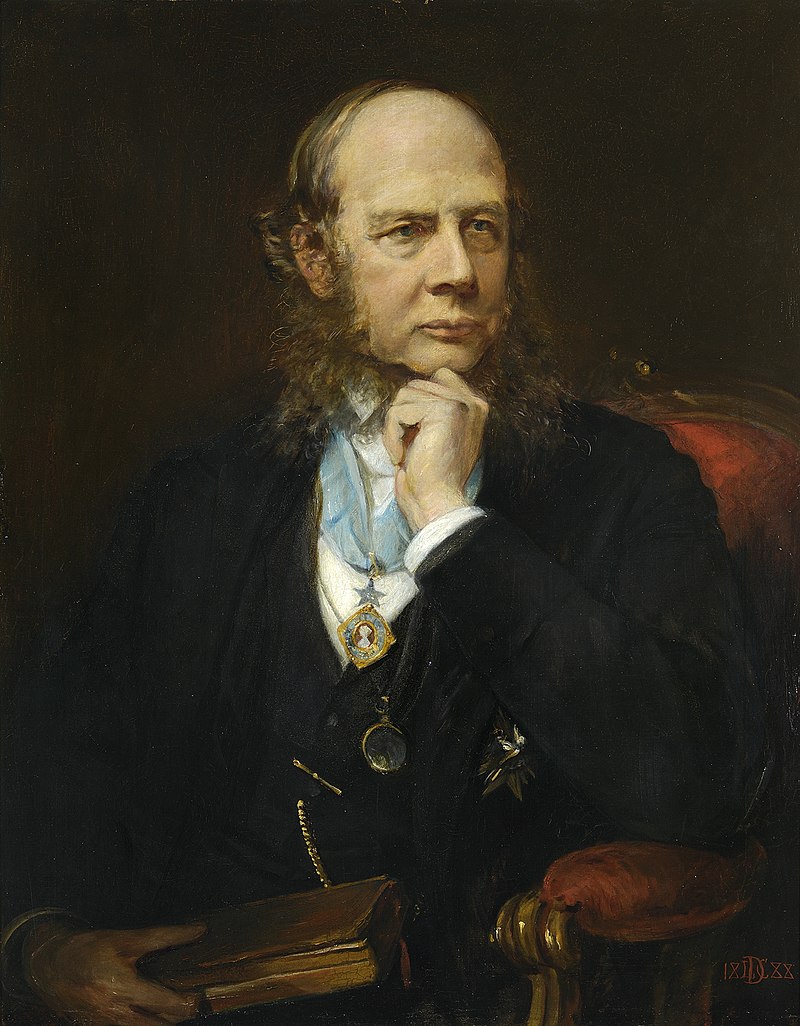
CHAPTER III.: ANCESTOR-WORSHIP. - Sir Henry Sumner Maine, Dissertations on Early Law and Custom [1883]

Edition used:

Dissertations on Early Law and Custom, chiefly selected from Lectures delivered at Oxford (London: John Murray, 1883).

About Liberty Fund:

Liberty Fund, Inc. is a private, educational foundation established to encourage the study of the ideal of a society of free and responsible individuals.


CHAPTER III.

ANCESTOR-WORSHIP.

I have said that the rules of life contained in the most ancient of the sacred law-books of the Hindus are strongly affected by two systems of religious belief which were probably at one time independent of one another. Although welded together by the Hindu sacerdotal lawyers, the purgation of sin by posthumous punishment in a series of hells, and the purgation of sin by transmigration from body to body, are distinct solutions of the same problem. The breach of the rules set forth in the law-books afflicts the law-breaker with a special taint, which, unless he be cleansed from it by proper penances in his lifetime, will cling to his spirit after death, and can only then be purged away by far severer expiations. Two separate views of the life after death would appear to have contributed the theory of successive special Purgatories, and the theory of Transmigration, to the maturer Hindu system which has joined them together. But besides the traces of this two-fold religious speculation, there is plain evidence of yet a third, and perhaps a still older religion, standing quite by itself, in these treatises. This is the Worship of Ancestors, which has shaped the entire Hindu law of Inheritance. The connection between Ancestor-Worship and Inheritance is not, however, peculiar to the Hindus. The most ancient law of a considerable number of the communities which have contributed most to civilisation shows us the performance of some part of this worship as a duty incumbent on expectant heirs and as the condition of their succession. This rude and primitive belief has thus very strongly influenced the branch of jurisprudence which, as linking the generations each to each, is of the greatest importance to all advancing societies.

Ancestor-worship is not here to be understood in the sense in which the expression has usually been taken by scholars. It is not the cult of some long-descended and generally fabulous ancestor, of some Hero, the name-giving progenitor of a Race, a Nation, a Tribe, a House or a Family; an Ion, a Romulus, or an Eumolpus. Nor, again, can it be visibly connected with the superstitious reverence of savages for their Totem, even though it symbolise to them the living creature from which they conceive themselves to have sprung. In the case before us the ancestors sought to be propitiated by sacrifices and prayers are ancestors actually remembered, or, at all events, capable of being remembered by the worshipper. Proximity in time is essential to the worship of which I am speaking. There are signs that, according to the early ideas of many communities—communities, for example, so far removed from one another as the Hindus and the Irish—a man living as a member of a Joint Household or Family could at most expect to see at some time during life three generations above him and three generations below him. In accordance with this expectation, the ancestors worshipped are three: the father first, then the grandfather, and then the great-grandfather. The reverence paid to remoter ancestors, not personally remembered, may be believed to be a later off-growth of these ideas. Their original character, and the nature of the feelings associated with them, may be gathered from the account of its own ancestor-worship which Canon Callaway (apud Tylor, ‘Primitive Culture,’ ii. 106) attributes to a group of South African tribes. ‘Although they worship the many Amatongo (ancestral spirits) of their tribe, making a great fence around them for protection, yet their father is before all others when they worship the Amatongo. Their father is a great treasure to them even when he is dead; and those who have grown up, knew him thoroughly, his gentleness and his bravery. . . . . Black people do not worship all Amatongo indifferently—that is, all the dead of their tribe. Speaking generally, the head of each house is worshipped by the children of that house, for they do not know the ancients who are dead. But their father, whom they knew, is the head by whom they begin and end in their prayer, for they knew him best. . . . . We do not know, they say, why he should regard others besides us: he will regard us only.’

‘Manes-worship,’ says Mr. Tylor (‘Primitive Culture,’ ii. 108), ‘is one of the great branches of the religion of mankind. Its principles are not difficult to understand, for they plainly keep up the social relations of the living world. The dead ancestor, now passed into a deity, goes on protecting his family and receiving from them suit and service as of old. The dead chief still watches over his own tribe, still holds his authority, by helping friends and harming enemies, still rewards the right and sharply punishes the wrong.’

Ancestor-worship, the worship of father, grandfather, and great-grandfather, has among the Hindus a most elaborate liturgy and ritual, of which the outlines are given in the law-books, and with special fulness in the Book of Vishnu. In the eye of the ancient Hindu sacerdotal lawyer, the whole law of Inheritance is dependent on its accurate observance. What is more remarkable is that the same close interdependence of ritual and inheritance exists in the eye of the modern Anglo-Indian Judge, who, after long ages, strives to interpret the old books and to apply their doctrine to the case before him. There are few more curious meetings of the Past and Present than when an English Judge, in the High Court (let us say) of Calcutta, carefully weighs the exact amount of Spiritual Benefit derived by a deceased Hindu from the sacrifices of a descendant or collateral, and the exact degree of blessing reflected on the kinsman who has offered the sacred water and the sacred cake. All the main juridical conceptions of the Roman law of Succession are to be found in the Hindu law, but the terms expressing them (suus hæres, agnate, cognate, actio de familiâ erciscundâ, and so forth) mostly translate into phrases taking their meaning from the liturgy and sacrificial order of Hindu Ancestorworship.

It must be added, for the full understanding of the subject, that the Hindu worship of ancestors does not merely affect the Hindu law of Inheritance. It influences the everyday life of that vast majority of the people of India who call themselves in some sense Hindus, and indeed in the eyes of most of them their household divinities are of more importance than the whole Hindu pantheon. ‘It is a common saying among us,’ says the author of an instructive treatise on the ‘Law of Inheritance’ (Professor Rajkumar Sarvadhikari) ‘that a man may be pardoned for neglecting all his social duties, but he is for ever cursed if he fails to perform the funeral obsequies of his parents, and to present them with the offerings due to them.’ Ancestors, as divine beings to be worshipped, are referred to in the Vedas, and stand rather obscurely, under the name of Pitris, in the background among the Hindu gods; but every day1 in the dwelling of a Hindu the shradda is offered to father, grandfather, and great-grandfather; and the offering is made with special observances on particular days and on particular occasions. The most solemn oblation of all is made at a funeral, and the rules for it are already set forth in minute detail by the oldest of our authorities (Gautama, xv. i. 30). The first-fruits of the earth, the first portions at all meals, all ἀπαρχαὶ and primitiæ, are the special share of these ancestral gods; the special blessing which they confer is length of days and the unbroken continuity of the family. M. Fustel de Coulanges was the first modern writer to bring into full light, in his brilliant book ‘La Cité Antique,’ the hitherto little observed importance of the private or family worship of the Greeks and Romans. Almost all attention had been concentrated on the greater Gods of these societies. In their honour, temples were raised, oxen were led to the altar, processions moved along the streets, religious confraternities were formed. These were Gods of Nations or Tribes, Gods born of primitive observation of Nature and primitive reverence for her, Gods sprung from wide-spreading emotional movements, like Dionysus and Cybele. But they lived far away in their own Olympus, and the real effective worship of the Roman was to the Lares and Penates. Their clay or metal images stood in the lararium or penetralia, in the innermost recesses of the house, and represented forefathers who in the earliest days had actually been buried in it before the hearth. At their head was the eldest of them, the Lar Familiaris. This private worship, like the public worship of the greater Gods, had its ritual, its liturgy, and its priesthood within the circle of the family; and the intimacy with which it mixed itself with all family relations is the staple of the striking argument which fills ‘La Cité Antique.’

Ancestor-worship is still the practical religion of much the largest part of the human race. We who belong to Western civilisation are but dimly conscious of this, mainly on account of the Hebrew element in the faith of Western societies. Sacrifice to ancestors was certainly not unknown to the Hebrews either as a foreign practice or as a prohibited idolatry. ‘They joined themselves unto Baal-Peor,’ it is written in Psalm cvi. 28, ‘and ate the sacrifices of the dead.’ And again in Deuteronomy xxvi. 14: ‘Thou shalt say before the Lord thy God . . . I have brought away the hallowed things out of my house . . . I have not transgressed thy commandments, neither have I forgotten them . . . I have not eaten thereof in my mourning; nor have I taken away ought thereof for any unclean use; nor given ought thereof to the dead.’ But it has been generally allowed that the Hebrew Scriptures contain few allusions to this wide-spread practice;2 and any contact with it which may be found in Christianity or Mahommedanism is due to accidental causes. A wild Turkoman, though he passes as a fanatical Mahommedan, may occasionally worship at his ancestor’s grave, as did his forefathers in the extreme East, and here and there a locally reverenced Christian saint may have succeeded to the supposed miraculous power of a local heathen divinity who, in his origin, may have been a deified ancestor. But all sects of Hindus, and all the multitudes affected by Hinduism, worship their ancestors. The ancient religion lately revived by State authority in Japan at the expense of Buddhism, and known as Shintoism, appears to be a form of ancestor-worship; the Chinese universally worship their ancestors; and these, with ancestor-worshipping savages, make up the majority of the human race.

The Chinese are the great example of a community earnestly devoted to this system of religious belief and observance. The evidence of its antiquity and of its prevalence among them is extremely abundant. Let me quote what is probably the oldest and the newest testimony on the subject. The most ancient Chinese records are the earlier portions of those famous collections in prose and verse, the Shu-King and the Shih-King. A fairly trustworthy chronology carries back the earliest prose documents in the Shu-King to the twenty-fourth century before the Christian era, and the oldest liturgical odes of the Shih-King are thought to be contemporaneous with the eighteenth century bc The second of the pieces in the Shu-King speaks of Yao retiring from government ‘in the temple of his accomplished ancestor,’ and the first and most ancient hymn in the Shih-King, which celebrates a sacrifice to ancestors, represents the practice as even then old. ‘Here are set our hand-drums and drums. The drums resound harmonious and loud, to delight our meritorious ancestor. The descendant of Thang invites him with the music that he may soothe us with the realisation of our thoughts . . . From of old, before our time, the former men set us the example how to be mild and reverent from morning to night, and to be reverent in discharging the service.’

For the most recent evidence I refer to a paper published in 1882, and manifestly based on missionary information.3

‘Great (in China) are the expenses entailed by the dead on the living. In no land can the loss of a kinsman be more severely felt. The body must be dressed in fine new clothes, and another good suit must be burnt. A handsome coffin is essential, and the priests must be largely paid for funeral services at the house of the deceased, and again for their services in ascertaining the lucky day for burial. . . . From the tenth to the seventeenth day after death, the priests, whether Taoist or Buddhist, hold service in the house to protect the living from the inroads of hosts of spirits who are supposed to crowd in, in the wake of their new friend. . . . Many families are permanently impoverished by the drain to which they are subjected, and which is likely to recur again and again. To omit them would be to incur the anger of the spiteful dead, who are now in a position to avenge themselves on the living by inflicting all manner of sickness and suffering. . . . The priests pretend to have had revelations from the spirit-world, showing the unfortunate dead to be tortured in Purgatory, and that he can only be extricated by a fresh course of costly services in the house. The price to be paid is fixed at the highest sum they think it possible to extract. It ends in the family raising every possible coin, and even selling their jewels, to procure the necessary sum.’

Finally, I will repeat Mr. Tylor’s reflections on the whole of this marvellous system of belief and practice (‘Primitive Culture,’ ii. 108): ‘Interesting problems are opened out to the Western mind by the spectacle of a great people who for thousands of years have been seeking the living among the dead. Nowhere is the connection between parental authority and conservatism more graphically shown. The worship of ancestors, begun during their life, is not interrupted but intensified when death makes them deities. The Chinese, prostrate bodily and mentally before the memorial tablets which contain the souls of his ancestors, little thinks that he is all the while proving to mankind how vast a power unlimited filial obedience, prohibiting change from ancestral institutions, may exert in stopping the advance of civilisation. The thought of the souls of the dead as sharing the glory and happiness of their descendants is one which widely pervades the world; but most such ideas would seem vague and weak to the Chinese, who will try hard for honours in his competitive examination with the special motive of glorifying his dead ancestors, and whose titles of rank will raise his deceased father and grandfather a grade above him, as though with us Zachary Macaulay or Copley the painter should have viscounts’ coronets officially placed on their tombstones. As so often happens, what is jest to one people is sober sense to another. There are 300 millions of Chinese who would hardly see a joke in Charles Lamb, reviling the stupid age that would not read him, and declaring that he would write for antiquity.’

The relations of Ancestor-worship to other religions held in honour by those who practise it appear to have varied much from community to community, and from time to time within the same community. In China it seems to have more than held its ground against the other more famous faiths. Confucianism is deeply implicated with it, and the creeds of Buddha and of Lao-Tze have assimilated it, and their priests indifferently perform its ceremonies. Sir Alfred Lyall has amusingly described the liberties which the Chinese Government takes with war-gods and river-gods, promoting and deposing them by acts of State; but it may be doubted whether it would venture on any serious interference with the service of the dead. Among the Hindus, the ancestral deities are but dimly seen amid the Vedic gods, but the later sacerdotal law-writers seem conscious of a rivalry between them and these greater divinites. The ritual of ancestor-worship given in the book of Vishnu begins with sacrifice to the gods (lxxiv. 1), and Manu expressly says (iii. 205), ‘Let an offering to the gods be made at the beginning and end of the shraddha; it must not begin and end with an offering to ancestors, for he who begins and ends it with an oblation to the Pitris quickly perishes with his progeny.’ Nevertheless, although the greater Hindu gods, like the greater divinities of the Greeks and Romans, have their temples, rites, and sacrifices, though they have their special devotees, though they are honoured by pilgrimages and festivals, in which multitudes take part, the worship offered every day by Hindus in their private dwellings to their immediate ancestors is perhaps more genuine, and is certainly far more continuous. I have already quoted the statement of a learned contemporary native lawyer, that every other crime may be forgiven to his co-religionists, but not the neglect of ancestral sacrifices. On the other hand, the comparatively scanty Roman evidence concerning the sacra privata would seem to show that they dwindled in importance and popular respect. In Cicero’s time the charges for them were still a heavy burden on Inheritances, but they seem to have followed a course of change not unusual elsewhere, and the payments for them were in the nature of fees or dues to the College of Pontiffs. There are signs, too, that the household gods were losing their divinity. The Lares became hardly distinguishable from the Larvæ—a word of the same origin, which is said to have at first meant spirits not laid to rest with the proper rites4 —and indeed from the Lemures, mere goblins who haunted tombs. The ‘Lars and Lemurs,’ who moaned ‘with midnight plaint’ at the Nativity, are thus not improperly coupled together in Milton’s verse. But though this most ancient religion died, its effects on civil law remained, and indeed still survive. One curious relic of it may be found in the Codes of the Christian Emperors. There is a classification of ‘Things’ which divides them into their kinds, and then subdivides ‘things which are not the property of anybody’ into Res Sacræ, Res Sanctæ, and Res Religiosæ. Res Sacræ are things consecrated to the greater gods; Res Religiosæ are expressly defined as things dedicated to the spirits of the dead, the Manes; and some part of the Roman rules relating to this last class of things still affects our law of churchyards. But, further than this, there can be no doubt that our law of Inheritance is still partially shaped by the old worship of the Manes, though the exact degree in which it has been influenced is not now ascertainable. Almost all the English law on the subject of the descent of Personalty, a great deal of Continental law on the same subject, and some part of our law of Realty, has for its foundation the 118th Novel, or Novella Constitutio, of Justinian. This Novel is the last revision of the older Roman law of Succession after death, which was formed by the fusion of the rules of inheritance contained in the venerable Twelve Tables with the Equity of the Prætor’s Edict; two streams of law profoundly influenced at their source, as no reader of M. Fustel de Coulanges can doubt, by the worship of ancestors.

Modern investigators who have made it their special business to search for the earliest forms of mental conceptions among the present ideas of savages have based a theory of the origin of ancestor-worship upon the phenomena of sleep and unconsciousness as they present themselves to men not yet escaped, or barely escaped, from savagery. ‘The idol,’ writes Sir John Lubbock, ‘usually assumes the human form, and idolatry is closely connected with that form of religion which consists in the worship of ancestors. We have already seen how imperfectly civilised man realises the conception of death, and we cannot wonder that death and sleep should long have been connected together in the human mind. The savage, however, knows well that in sleep the spirit lives, even though the body appear to be dead. Morning after morning he wakes himself and sees others rise from sleep. Naturally, therefore, he endeavours to rouse the dead. Nor can we wonder at the very general custom of providing food and other necessaries for the use of the dead. Among races leading a settled and quiet life this habit would tend to continue longer and longer. Prayers to the dead would reasonably follow from such customs, for even without attributing a greater power to the dead than to the living, they might yet, from their different sphere and nature, exercise a considerable power, whether for good or evil. But it is impossible to distinguish a request to an invisible being from prayer, or a powerful spirit from a demi-god’ (‘Origin of Civilisation and Primitive Condition of Man,’ 4th ed. 1882). In harmony with this theory, the various societies of mankind, in their relation to belief in a spirit world, have been thus classed by Mr. Herbert Spencer (‘Principles of Sociology,’ p. 322): ‘Taking the aggregate of the human peoples, tribes, societies, nations, we find that nearly all of them have a belief, vague or wavering, or settled and distinct, in a reviving other-self of the dead man. Within this class of peoples, almost coextensive with the whole, we find a class, not quite so large, by the members of which the other self of the dead man, definitely believed in, is supposed to exist for a considerable period after death. Nearly as numerous is the class of peoples included in this who show us ghost propitiation, not only at the funeral but for a subsequent interval. Then comes the narrower class included in the last, the more settled and advanced peoples who, along with the developed belief in a ghost that permanently exists, show us a persistent ancestor-worship. Again, somewhat further restricted, though by no means small, we have a class of peoples whose worship of distinguished ancestors begins to subordinate that of undistinguished. And eventually the subordination, growing decided, becomes most marked when the ancestors were leaders of conquering races.’

The theory, fully developed, appears to be that the dead are believed by savage men to live the life which they themselves live in dreams, a life very like that of their waking hours and yet unlike it. It is thought that in death, as in the visions of the night, the spirit meets its everyday companions and kinsmen, but that it meets, besides, others who have disappeared from the living world, and especially those whom it loved, feared, or hated. They eat, drink, and speak as of old; the only difference between their world and that of life is perhaps that they melt into other forms with an ease and rapidity which are new, but which have ceased to surprise. In this region, the visitant most frequently meets the dead whose life had most contact with his own, and specially the Father armed with his Paternal Power. This is the figure which, when sleep leaves him, he best remembers. In such a state of belief and feeling, the first impulse of the kinsmen whose chief is seen to have finally departed for the spirit-world, is to provide him with food and drink, perhaps with arms, ornaments, and attendants, for his new home, which is to be so like his old one. In these impulses the bloody funeral rites, which are still described in the Homeric poems, are supposed to have had their origin, and another survival is the sacrifice of the Hindu to his ancestors with the ‘water and the cake.’ I myself certainly think that the theory has been made to account for more than it will really explain by some of the eminent writers who have adopted it; but there is some interesting evidence that, so far as the early Hindus are concerned, it goes far to show the origin of their ancestor-worship. There is manifest perplexity in the minds of the sacerdotal law-writers at the contradictions between the various religious doctrines underlying the law. How is the doctrine of benefit to ancestors by ritual and sacrifice to be reconciled with the theory of transmigration and of the purgation of sin by punishment after death? Nothing seems clearer to them than the principle that, as a man has made himself by his acts, so he leaves this life for the next, pure or impure, sinful or sinless. He dies when that result is entailed by the result of his acts in some past state; he goes into the next state according to the result of his acts here. These principles are laid down in solemn and sometimes eloquent language. ‘Single is each man born; single he dies; single he receives the reward of his good, and single the punishment of his evil deeds. When he leaves his corpse like a log or a heap of clay upon the ground, his kindred retire with averted faces; but his virtue accompanies his soul. Continually, therefore, by degrees let him collect virtue, for the sake of securing an inseparable companion; since, with virtue for his guide, he will traverse a gloom, how hard to be traversed!’ (Manu, iv. 240). ‘What thou hast to do to-morrow, do it to-day. What thou hast to do in the afternoon, do it in the forenoon, for death may come at any moment.’ ‘When a man’s mind is fixed upon his field, or his traffic, or his house, or while his thoughts are engrossed by some beloved object, death suddenly carries him away as his prey, as a she-wolf catches a lamb. Time is no one’s friend, and no one’s enemy. When the effect of his acts in a former existence, by which his present existence is caused, has expired, Time snatches him away forcibly. He will not die before his time has come, even though he has been pierced by a thousand shafts; he will not live after his time is out, though he has only been touched by a blade of kusa grass’ (Vishnu, xx. 44). If this be so, it is a rigorous logical conclusion that nothing which the living can do will help the dead. But the writer I am quoting finds a solution in what seems to us the most unnatural of principles—that relatives of the dead ought not to mourn for him, but nevertheless should offer the sacrifices. ‘As both a man’s good and bad actions will follow him after death like associates, what does it matter to him whether his relatives mourn over him or not? But, as long as his relatives remain impure, the departed spirit finds no rest, and returns to visit his relatives, whose duty it is to offer up to him the funeral ball of rice and the water libation. Till the Sapindikarana has been performed, the dead man remains a disembodied spirit, and suffers both hunger and thirst. Give rice and a jar with water to the man who has passed into the abode of disembodied spirits. . . . Perform therefore the Shradda always, abandoning bootless grief’ (Vishnu, xx. 31-36). It is impossible to state the ancient superstitious belief more nakedly; if the ghost be not supplied by his mourning kinsmen with food he will ‘walk;’ but the law-writer before us evidently finds the doctrine unaccountable, and maintains it because there is authority for it. It is at the same time to be observed that the problem is solved in a different way by the latest Hindu law, which declares that the effect of sacrificing to a dead ancestor is to deliver him from one special purgatory, the ‘Hell called Put.’ The doctrine of direct posthumous punishment has to this extent absorbed the opinion that the perturbed spirit revisits his ancient haunts.

There is one peculiarity of ancestor-worship which recent speculations on primitive human institutions invest with a great deal of interest. The ancestors worshipped appear to have been at first always male ancestors. ‘Although,’ says Sir John Lubbock, ‘descent amongst the lowest savages is traced in the female line, I do not know of any instance in which female ancestors were worshipped.’ Female ancestors in the direct line are now worshipped by the civilised Chinese, but the evidence shows that the posthumous honours paid to women are of later origin than the worship of men. In the oldest of the Chinese sacrificial odes, plausibly dated at not much less than two thousand years before Christ, the ‘accomplished’ and ‘meritorious’ ancestor celebrated is manifestly a man. The worship of female ancestors does not appear till a much later division of the hymns. ‘We have our high granaries,’ runs the ode called the ‘Fang Nien’—‘We have our high granaries, with myriads and hundreds of thousands and millions of measures in them, for spirits and sweet spirits, to present to our forefathers, male and female;’ and again, the sacrificer in another hymn is made to say, ‘O great and august father, comfort me, your filial son. . . . I offer this sacrifice to my meritorious father, and to my accomplished mother.’ It is thought that the still existing practice of placing spirit tablets of wives along with those of husbands in their shrines had by this time begun. So too in the most ancient Hindu law-books, the funeral oblation is confined to male ancestors. At this rite, says Apastamba (ii. vii. 16. 3), the manes of one’s father, grandfather, and great-grandfather are the deities to whom the sacrifice is offered. The rite is to be performed in the latter half of the month of which the luckiest day is the fifth. ‘If he performs it on the fifth day, sons will be born to him; he will have numerous and distinguished offspring, and he will not die childless.’ But if he performs it on the first day of the half-month, the caution is given that the issue of the sacrificer will consist chiefly of daughters. When, however, we come to writers of a much later era, like Vishnu, we find a distribution of the sacrifices which is very significant. Vishnu gives us a summary of the whole ritual of ancestor-worship as practised at the date of the treatise called by this name (Vishnu, chap. lxxiii.) First of all the sacrificer is to worship the (greater) Gods. Then on particular days—the ninth days of the dark halves of certain months—he is to consecrate an offering with proper hymns and scriptural texts and present it to three Brahmans present, who represent his father, grandfather, and great-grandfather. The liturgy and ritual which he is to follow are indicated, head by head, and it is essential for the virtue of the sacrifice that a company of Brahmans should have been invited. On certain other sacred days, the Anvashtakas, he is to sacrifice to his mother, his paternal grandmother, and his paternal great-grandmother; and lastly, says the writer, ‘an intelligent man’—an expression which, as it appears to me, is always used of a doubtful point—‘must offer shraddas to his maternal grandfather, and to the father and grandfather of him in the same way.’ The order of celebration seems to me to follow the historical order, and to show that the ancestors first worshipped by the Hindus were the father, grandfather, and great-grandfather.

It is clear then, I think, that wherever ancestor-worship arose, Paternity was fully recognised; and as the texts relating to this worship are as old as any others in the sacerdotal law-books, and indeed are probably the oldest, I attach small importance to casual expressions found here and there in these treatises which have been thought to show that their writers preserved traditions of the savage custom of tracing descent through females only. Still, as we cannot doubt the existence and prevalence among some part of mankind of this savage usage, sometimes called ‘Mother-law,’ it is impossible not to ask oneself the question, Did the worship of the dead bring about the recognition of paternity, or is ancestor-worship a religious interpretation of, or a religious system founded upon, an already existing institution? M. Fustel de Coulanges, without referring to the custom of ‘Mother-law,’ certainly seems to me to express himself occasionally as if he thought that all the characteristics of the so-called Patriarchal Family were created by the worship of ancestors which was ever celebrated in the recesses of the household; and that from this worship sprang the Father’s Power as its high-priest, and also the denial of kinship to persons no longer able to participate in it, as the married daughter and the emancipated son. It may well be believed that ancestor-worship, by consecrating, strengthened all family relations, but in the present state of these inquiries the evidence certainly seems to be in favour of the view that the Father’s Power is older than the practice of worshipping him. Why should the dead Father be worshipped more than any other member of the household unless he was the most prominent—it may be said, the most awful—figure in it during his life? It was he, according to the theory which I have described, who would most frequently show himself, affectionate or menacing, to his sleeping children. This opinion is fortified by the recent investigations into the customary law of the Punjab, the earliest Indian home, I must repeat, of the Aryan Hindus after their descent from the mountain-land of their origin. Ancestor-worship does exist among the Hindus of the Punjab. But it is a comparatively obscure superstition. It has not received anything like the elaboration given to it by the priesthood in the provinces to the south-east, many of whose fundamental doctrines are unknown to the Punjabee communities of Hindus. Nevertheless, the constitution of the Family is entirely, to use the Roman phrase, ‘agnatic;’ kinship is counted through male descents only. There is a very strong resemblance between these usages and the most ancient Roman law, and their differences, where they differ, throw very valuable light on the more famous of the two systems.

The truth seems to be that, although Ancestor-worship had at first a tendency to consolidate the ancient constitution of the Family, its later tendency was to dissolve it. Looking at the Hindu system as a whole, we can see that, as its historical growth proceeded, the sacerdotal lawyers fell under a strong temptation to multiply the persons who were privileged to offer the sacrifices, partly in the interest of the dead ancestor, chiefly in the interest of the living Brahman. In this way, persons excluded from the ancient family circle, such as the descendants of female kinsmen, were gradually admitted to participate in the oblations and share in the inheritance. Some traces of a movement in this direction are to be found throughout the law-books; and a very learned Indian lawyer (Mr. J. D. Mayne, ‘Hindu Law and Usage,’ chap. xvi.) has shown that, wherever in modern India the doctrine of Spiritual Benefit—that is, of an intimate connection between the religious blessing and the civil right of succession—is most strongly held, women and the descendants of women are oftenest permitted to inherit. It is remarkable that the Equity of the Roman Prætor, which was probably a religious before it was a philosophical system, had precisely the same effect in breaking up the structure of the ancient Roman family, governed by the Father as its chief.

[1 ]Sarvadhikari, Hindu Law of Inheritance, pp. 83 et seq.

[2 ]The Fifth Commandment, which promises length of days as the blessing earned by honouring father and mother during their lifetime, may be compared with the very ancient Chinese liturgical odes in which the long duration of the family is described as the special reward for honouring dead parents with sacrifice. See the fine Chinese hymn, taken from the ritual of Ancestor-worship, and translated by Dr. Legge (Shih-King, Sacred Books of the East, vol. iii. pp. 348, 349). ‘With happy auspices and purifications thou bringest the offerings and dost present them, in spring, summer, autumn, and winter, to the dukes and former kings. And they say, “We give to thee, we give to thee myriads of years, duration unlimited. The spirits come and confer on thee many blessings. . . . Like the moon advancing to the full. Like the sun ascending the heavens. Like the everlasting southern hills. Never waning, never falling. Like the luxuriance of the fir and the cypress. May such be thy succeeding line!” ’

[3 ]‘Ningpo and the Buddhist Temples,’ by Constance Gordon Cumming (Century, September 1882).

[4 ]The ancestor-worshipping peoples appear to have agreed in thinking that the gravest consequences depended on properly disposing of the bodies of the dead. But there was no such agreement as to what was the proper mode of disposal. There is a startling contrast between the last prayer of Ajax to Zeus that he be at least buried, so that dogs and birds eat not his body, and the prayer of the devout Zoroastrian that he be not buried, and that dogs and birds do eat his remains. Compare Sophocles, Ajax, 826, et seq. with the Zend Avesta, iii. 4, 30 (Sacred Books of the East, vol. iv.): ‘ “O Maker of the material universe, Thou Holy One, if a man shall bury a corpse in the earth and if he shall not disinter it within the second year, what is the penalty for it? What is the atonement for it?” Ahura Mazda answered, “For that deed there is nothing can pay, nothing can atone; nothing can cleanse from it; it is a trespass for which there is no atonement for ever and ever.” ’ And again, at vi. 4, 44: ‘ “O Maker of the material world, Thou Holy One, whither shall we bring, where shall we lay, the bodies of the dead?” Ahura Mazda answered, “On the highest summits, where they know there are always corpse-eating dogs and corpse-eating birds, O holy Zarathrusta.” ’ We can sympathise with the Greek feeling, though not in its full strength; but it would be hardly credible that a vigorous and comparatively civilised nation once followed the Zoroastrian usage, were it not for the stubborn survival of it among the Parsees, whose ‘Towers of Silence’ are among the first objects which strike the eye of the traveller on landing in Western India.