Econlib

The Library

Other Sites

Front Page arrow Titles (by Subject) arrow CHAPTER XI.: Comparison of the Constitution of the United States, with that of Great Britain. - Collected Works of James Wilson, vol. 1

Return to Title Page for Collected Works of James Wilson, vol. 1

CHAPTER XI.: Comparison of the Constitution of the United States, with that of Great Britain. - James Wilson, Collected Works of James Wilson, vol. 1 [2007]

Edition used:

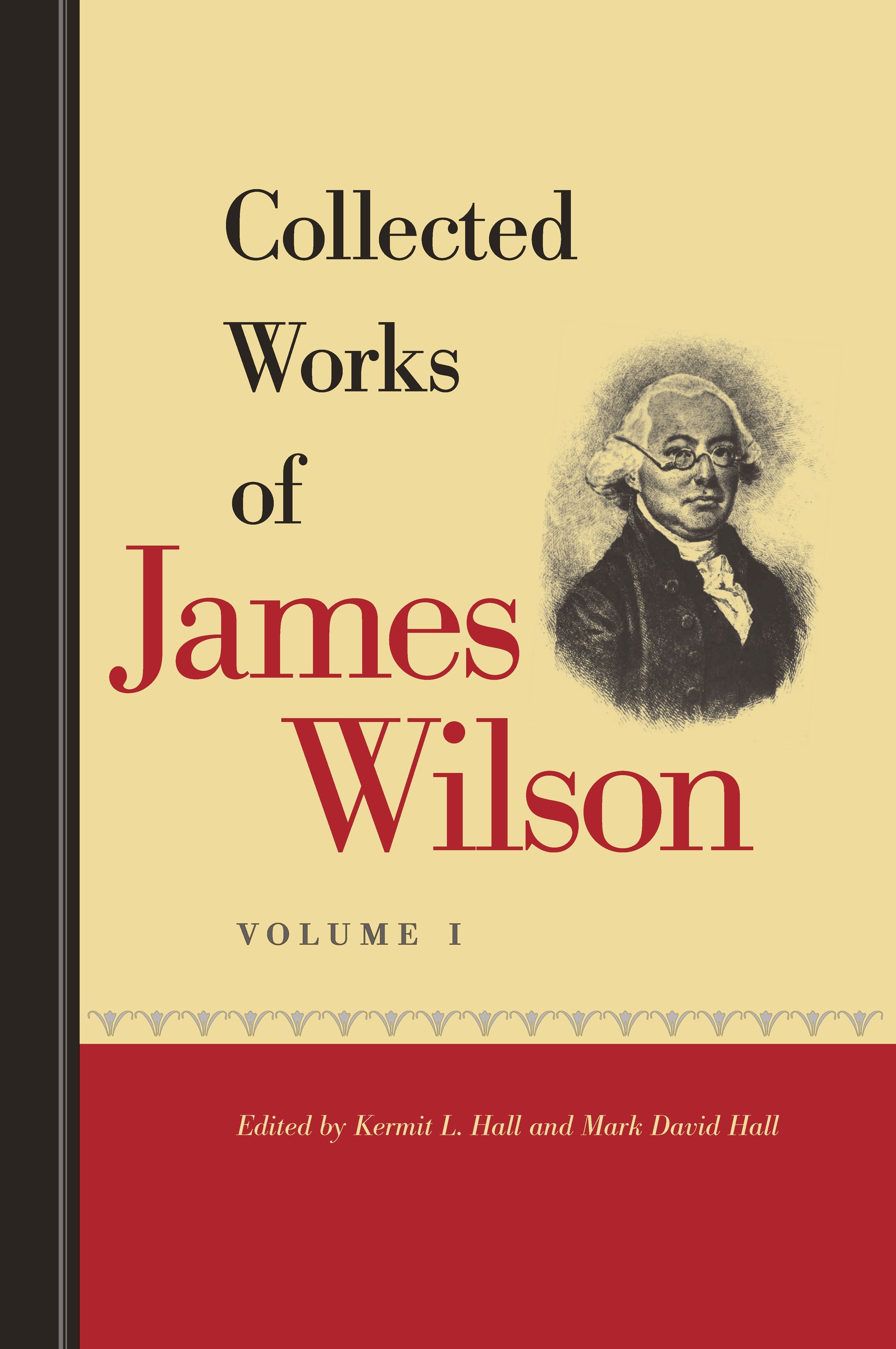
Collected Works of James Wilson, edited by Kermit L. Hall and Mark David Hall, with an Introduction by Kermit L. Hall, and a Bibliographical Essay by Mark David Hall, collected by Maynard Garrison (Indianapolis: Liberty Fund, 2007). Vol. 1.

Part of: Collected Works of James Wilson, 2 vols.

About Liberty Fund:

Liberty Fund, Inc. is a private, educational foundation established to encourage the study of the ideal of a society of free and responsible individuals.


CHAPTER XI.

Comparison of the Constitution of the United States, with that of Great Britain.

The British constitution has been celebrated in the most sublime and in the most elaborate strains by poets, by orators, by lawyers, and by statesmen. “As for us Britons,” says the elegant Shaftesbury, comparing them, in the spirit of a fond and a just preference, with many other nations, “as for us Britons, thank heaven, we have a better sense of government, delivered to us from our ancestors. We have a notion of a publick, and a constitution; how a legislative and how an executive is modelled. We understand weight and measure in this kind; and can reason justly on the balance of power and property. The maxims we draw from hence, are as evident as those in mathematicks. Our increasing knowledge shows us every day, more and more, what common sense is in politicks.”a

My Lord Bolingbroke,b in his masterly and animated style, represents this constitution as “a noble fabrick, the pride of Britain, the envy of her neighbours, raised by the labour of so many centuries, repaired at the expense of so many millions, and cemented by such a profusion of blood—a fabrick, which has resisted the efforts of so many races of giants.”

You will be surprised on being told, that, if the nature and characteristick qualities, which I have described, are the true nature and characteristick qualities of a constitution; no such thing as a constitution, properly so called, is known in Great Britain. What is known, in that kingdom, under that name, instead of being the controller and the guide, is the creature and the dependent of the legislative power. The supreme power of the people is a doctrine unknown and unacknowledged in the British system of government. The omnipotent authority of parliament is the dernier resort, to which recourse is had in times and in doctrines of uncommon difficulty and importance. The natural, the inherent, and the predominating rights of the citizens are considered as so dangerous and so desperate a resource, as to be inconsistent with the arrangements of any government, which does or can exist.

The order of things in Britain is exactly the reverse of the order of things in the United States. Here, the people are masters of the government; there, the government is master of the people.

That, on this very interesting subject of contrast, you may be enabled to judge for yourselves, I shall lay before you some passages from British writers of high reputation. From those passages, you can draw your own inferences.

“Most of those,” says Mr. Paley, “who treat of the British constitution, consider it as a scheme of government formally planned and contrived by our ancestors, in some certain era of our national history; and as set up in pursuance of such regular plan and design. Something of this sort is secretly supposed, or referred to in the expressions of those, who speak of the principles of the constitution, of bringing back the constitution to its first principles, of restoring it to its original purity, or primitive model. Now this appears to me an erroneous conception of the subject. No such plan was ever formed; consequently no such first principles, original model, or standard exist.

“The constitution is one principal division, head, section, or title of the code of publick laws, distinguished from the rest only by the particular nature, or superiour importance of the subject, of which it treats. Therefore the terms constitutional and unconstitutional, mean legal and illegal. The distinction and the ideas, which these terms denote, are founded in the same authority with the law of the land upon any other subject; and to be ascertained by the same inquiries. The system of English jurisprudence is made up of acts of parliament, of decisions of courts of law, and of immemorial usages; consequently, these are the principles of which the constitution itself consists; the sources, from which all our knowledge of its nature and limitations is to be deduced, and the authorities, to which all appeal ought to be made, and by which every constitutional doubt or question can alone be decided. This plain and intelligible definition is the more necessary to be preserved in our thoughts, as some writers upon the subject absurdly confound what is constitutional with what is expedient; pronouncing forthwith a measure to be unconstitutional, which they adjudge in any respect to be detrimental or dangerous; whilst others again ascribe a kind of transcendent authority, or mysterious sanctity to the constitution, as if it was founded in some higher original, than that, which gives force and obligation to the ordinary laws and statutes of the realm, or were inviolable on any other account than its intrinsick utility.

“An act of parliament, in England, can never be unconstitutional, in the strict and proper acceptation of the term: in a lower sense it may; viz. when it militates with the spirit, contradicts the analogy, or defeats the provision of other laws, made to regulate the form of government. Even that flagitious abuse of their trust, by which a parliament of Henry the eighth conferred upon the king’s proclamation the authority of law, was unconstitutional only in this latter sense.”c

Sir William Blackstone uses the term, constitution, as commensurate with the law of England. “Of a constitution,” says he, “so wisely contrived, so strongly raised, and so highly finished, it is hard to speak with that praise, which is justly and severely its due. It hath been the endeavour of these Commentaries, however the execution may have succeeded, to examine its solid foundations, to mark out its extensive plan, to explain the use and distribution of its parts, and from the harmonious concurrence of those several parts to demonstrate the elegant proportion of the whole.”d

Mr. Paley uses the word in a more confined and, perhaps, a more proper sense, when applied to Great Britain; as meaning that part of the law, which relates to the designation and form of the legislature; the rights and functions of the several parts of the legislative body; the construction, office, and jurisdiction of the courts of justice.e In this sense I shall use the term, when I speak of the British constitution. And in this sense, the superiority of our constitution to that of Great Britain will eminently appear from the comparison, which we now institute, between their principles, their construction, their proportion, and their properties.

The extension of the theory and practice of representation through all the different departments of the state is another very important acquisition made, by the Americans, in the science of jurisprudence and government. To the ancients, this theory and practice seem to have been altogether unknown. To this moment, the representation of the people is not the sole principle of any government in Europe. Great Britain boasts, and she may boast with justice, that, by the admission of representation, she has introduced a valuable improvement into the science of jurisprudence. The improvement is certainly valuable, so far as it extends; but it is by no means sufficiently extensive.

Is the principle of representation introduced into the executive department of the constitution of Great Britain? This has never been attempted. Before the revolution of one thousand six hundred and eighty eight, some of the kings claimed to hold their thrones by divine, others by hereditary right; and even at the important era of that revolution, nothing farther was endeavoured or obtained, than the recognition of certain parts of an original contract, supposed, at some former period, to have been made between the king and the people. A contract seems to exclude, rather than to imply delegated power. The judges of Great Britain are appointed by the crown. The judicial department, therefore, does not depend upon a representation of the people, even in its remotest degree. Is representation a principle operating in the legislative department of Great Britain? It is; but it is not a predominating principle; though it may serve as a very salutary check. The legislature consists of three branches, the king, the lords, and the commons. Of these, only the latter are supposed, by the constitution, to represent the authority of the people. We now see clearly, to what a narrow corner of the British government the principle of representation is confined. In no other government in Europe does it extend farther: in none, I believe, so far. The American States enjoy the glory and the happiness of diffusing this vital principle throughout all the different divisions and departments of the government. Representation is the chain of communication between the people and those, to whom they have committed the important charge of exercising the delegated powers necessary for the administration of publick affairs. This chain may consist of one link, or of more links than one; but it should always be sufficiently strong and discernible.

As, in England, the house of commons alone represents, or is supposed to represent, the people at large; so, in that house alone are we to look for the constitutional and authoritative expression of the people’s will. But even in that house, this will is but very feebly and very imperfectly expressed, for the representation in that house is very unequal and inadequate; and it is protracted through a period of time much too long.

It is very unequal and inadequate. In England, we may, from information which seems to be unexceptionable, compute six hundred and thirty nine thousand taxable inhabitants. This number would assign one representative to twelve hundred constituents. But the fact is, that a number not exceeding six thousand are sufficient to return more than one half of the members of the house of commons. This is in the proportion of twenty three constituents for one representative. The consequence is, that a majority of the house of commons may be returned by less than a fiftieth part of the constituents, that ought to be requisite for returning that majority. What is the situation of the other forty nine parts? Need I repeat, this representation is very unequal and inadequate? As to the number of electors, it certainly is.

It may, perhaps, be expected, that this deficiency in their numbers is, in some measure at least, compensated by the worth, the respectability, the independence, and the enlarged influence of the individuals, who are empowered to vote. To this expectation, the fact is directly reverse. That small part are the most dependent and the least respectable part of the commons of England. They are emphatically styled the rotten part of the constitution. In dignity and respectability, therefore, as well as in numbers, the representation of the commons of England is extremely inadequate and unequal.

The softness of a whisper may sometimes communicate sound with a more distinct impression than the report of a cannon. Sir William Blackstone admits that “if any alteration might be wished or suggested in the present frame of parliament, it should be in favour of a more complete representation of the people.”f

The inequality of the representation of the people of England is evinced, in the most striking manner, by another comparative view, in which it may be placed. Ninety two members represent the landed interest; about one hundred members represent the great cities and towns; above three hundred members represent small and inconsiderable boroughs.

But further; the representation of the commons is not renewed by them at periods sufficiently near one another. Parliaments were at first annual; they were afterwards triennial; now they are septennial. This last period is surely too long. The members will be apt to forget the source from which they have received their powers. Every government, in order to preserve its freedom, has frequent need of some new provisions in favour of that freedom. Such new provisions are most likely to spring from those, who have been recently animated by the inspiration of the people.

A representation, inadequate, unequal, and continued too long, is inconsistent with the principles of free government: for by such a representation, it is probable that the sense of the people will be misapprehended, or misrepresented, or despised. This probability has, in England, been converted into fact and experience. During many years past, the politicks of the house of commons have been moved by the direction of the court and ministers, and not by the sense of the nation. Numerous and striking instances of this might be produced. But I can only point to those paths of investigation; I cannot pursue them.

How immensely different is the state of representation in the house of commons, from that which is established in the United States. With us, every freeman who possesses an attachment to the community, and a common interest with his fellow citizens, and is in a situation not necessarily dependent, is entitled to a vote for members. With us, no preference is given to any party, any interest, any situation, any profession, or any description over another. With us, those votes, equally, freely, and universally diffused, will have their frequent and powerful operation and influence. With us, therefore, it may be expected, that the voice of the representatives will be the faithful echo of the voice of the people.

Having seen that the house of representatives of the United States will not suffer by being compared, in its proportion and in its duration, with the house of commons of Great Britain; let us proceed to a comparison of the senate with the house of lords.

That house is divided into two orders; the lords spiritual, and the lords temporal. The lords spiritual are composed of the archbishops and bishops. All these hold, or are supposed to hold, certain ancient baronies under the crown; and, in right of succession to those baronies, which were inalienable from their respective dignities, they obtained their seats in the house of lords. With the other lords they intermix in their votes; and the majority of such intermixture binds both estates. The lords temporal consist of all the peers of the realm, by whatever title of nobility they are distinguished. Of these, some sit by descent, as all ancient peers; others, by creation, as all new made ones; others, since the union with Scotland, by election of the nobility of that country. The number of peers is indefinite; and may be increased at the pleasure of the crown.

The writers on the British constitution view the distinctions of rank and honours as necessary in every well governed state, in order to reward such as are eminent for their services to the publick; exciting thus a laudable ardour in others; and diffusing, by such ardour, life and vigour through the whole community. A body of nobility, they say, creates and preserves that gradual scale of dignity, which proceeds from the peasant to the prince; rising, like a pyramid, from a broad foundation, and diminishing as it rises, till, at last, it terminates in a single point. It is this ascending and contracting proportion, they conclude, which adds stability to any government.

That eminent services ought to be rewarded, that devotion to the publick ought to receive the warmest encouragement, will not be denied here. But does this encouragement—do these rewards grow only in an aristocratick soil? Has republicanism no rewards or honours for her meritorious sons? She is accused, it is true, of ingratitude. But the facts, which have given rise to the accusation, have not, we hope, been owing peculiarly to her disposition or principles, but have sprung from a spirit of envy and malevolence, predominating, alas! too much in all communities, and discovering too often more activity and zeal in doing mischief, than the opposite qualities display in doing good. Besides; instances have not been unfrequent, in which publick gratitude has been expressed by commonwealths, most generously and most effectually, both in words and actions. It is true, that the publick testimonials of gratitude and esteem have no hereditary descent among republicans; because it is true, that no regular course of descent is established in the qualities and services which merit them.

The nobility, we are told, are necessary in the British constitution, to form a barrier against the mutual encroachments of the king and of the people. In the government of the United States, separate orders of men do not exist; no encroachments of this kind can take place; and there is no occasion to provide barriers against them. The pyramid of government may certainly be raised with all the graces of fair proportion, and also with the more substantial qualities of firmness and strength, although the materials, of which it is constructed, be not an assemblage of different and dissimilar kinds. These are more likely to recal to our minds the composition and the fate of a heterogeneous and disjointed piece of workmanship, so well described by the prophet Daniel. But to drop the idea of approving and disapproving by metaphor; we find that, in Britain, there being two orders, the king and the people, it was necessary that there should be a third, to hold the balance between them. But different orders, we apprehend, may well be dispensed with in a good and perfect government.

Wisdom, it is said, is found in an aristocracy. Why? Because its members are formed by education, and matured by experience, for the discharge of their duty. Education and experience, it will be readily allowed, are excellent for forming and finishing the habits and characters of statesmen. But on whom will the best education be probably bestowed? On whom will it be likely to produce the strongest and most beneficial influence? On him, whose parents know, and who himself will soon know, that, whether he receive it or not, or, receiving it, whether he improve it or not, still he must succeed to all the preeminences of aristocratick power?—or on him, whose parents foresee, and who himself will be soon sensible, that his prospects of success in publick life must depend on the qualities, acquired as well as natural, which he can bring into publick life along with him? Whom will experience best teach? Him, who sees, that, as estimable acquirements have not been necessary for introducing him to the dignities of the state, they are as little necessary for continuing him in the enjoyment of them? or him, who is aware, that, as the good opinion of his fellow citizens concerning his talents and virtues procured him admission to the honours of his country, his continuance in the possession of those honours must depend on his justifying that good opinion, on his improving it into confidence, and on his showing, by a progressive display of services and accomplishments, that his conduct becomes daily more and more worthy of publick sanction and esteem? He is, it is true, in some measure, dependent: but his dependence is not of an irrational or illiberal kind. It is of a kind, which, instead of depressing, will rouse and elevate the temper and character.

We thus seize the strong outworks of aristocracy, and successfully turn on herself her most formidable batteries.

In drawing a contrast between the executive magistrates of the United States and Great Britain, I wave every degree of comparison with regard to some of the characters applied to the latter, in the description given of him by the British law and the British lawyers. They ascribe to him certain qualities as inherent in his royal capacity, distinct from and superiour to those of any other individual in the nation: they assign to him certain properties of a great and transcendent nature: by these means, it is thought, the people will consider him in the light of a superiour being; and will pay him that awful respect, which may enable him, with greater ease, to carry on the business of government. The law clothes him with the attributes of sovereignty, of ubiquity, and of absolute perfection: he can do no wrong: he can think no wrong: in him no folly—in him no weakness can be found: royal wisdom is ascribed to the infant of a span long, as much as to the experienced sire, who has seen three generations: the man dies; but the king satisfies the wish of eastern adulation: he lives for ever!

Prepossessions long entertained, habits long formed, and practices long established may, possibly, have interwoven those ideas into the system of the British constitution in such a manner, that it would be difficult now to disentangle them, without tearing or injuring some more useful parts of the fabrick. But in forming a new system, it is certainly neither necessary nor proper to introduce into it qualities and pretensions so disproportioned to the sober consideration and management of human affairs. Power may be conferred without mystery; and may be exercised, for every wise and benevolent purpose, without challenging attributes, to which our frail and imperfect state of humanity stands in daily and marked contradiction.

On what foundation is the monarchical part of the British constitution supported? Are the rights of the monarch supposed, by it, to flow from the authority of those, over whom he is placed? Is the majesty of the people recognised as the august parent of the prerogative of the prince? No. Such principles have never received the sanction of the British constitution. Concerning the origin of the powers and rights of their monarchs, very different opinions have, at different times, been entertained and propagated. The dark foundations of conquest have, in some reigns, been uncovered and exposed to view. Divine right has, in others, been impiously summoned to sanctify claims and pretensions, too exorbitant to have derived their source from human authority. At some periods, the title to the crown has been supposed to be founded on hereditary right, a right derived, by succession, from a long list of ancestors. But, in tracing this succession upwards, we necessarily come, at last, in fact, or in idea, to some one, who was the first possessor. How did he acquire his possession? The solution, now received, of this question, is, that it was in consequence of an original contract, made, at some former distant period, between the king and the people. The terms of this contract have, indeed, been the subject of frequent and doubtful disputation. At the revolution, however, some of them were reduced to a certainty: and the existence of the contract itself was explicitly recognised. But a contract does not imply the idea of derivative power; it seems rather to imply an equality between the parties contracting. Besides; the crown, on whomever it may be devolved by virtue of this contract, still retains its descendible quality, and becomes hereditary in the wearer. Even in this enlightened century, the most determined champions of liberty in Great Britain have not instituted the claim, that the power of every part of government, the monarchical not excepted, should be founded on the authority of the people. Hear in what a humiliating manner one of their boldest and most energetick writers has described their power on this interesting subject. “The British liberties are not the grants of princes. They are original rights, conditions of original contracts, coequal with the prerogative, and coeval with the government.”g

How different is this language, and how different are these sentiments, from the language and sentiments, which, under our improved systems of government, we are entitled to hold and express! We have no occasion to enter a caveat against the supposition, that our liberties are the grants of princes. With us, the powers of magistrates, call them by whatever name you please, are the grants of the people. With us, no prerogative or government can be set up as coequal with the authority of the people. The supreme power is in them; and in them, even when a constitution is formed, and government is in operation, the supreme power still remains. A portion of their authority they, indeed, delegate; but they delegate that portion in whatever manner, in whatever measure, for whatever time, to whatever persons, and on whatever conditions they choose to fix.

Those, who have traced and examined the subject of the appointment of governours, find, or think they find, an irreconcilable opposition between the principles of what they admit to be sound theory, and the rules of what they contend to be exclusively the safe and eligible practice. That what appears right in theory may be wrong in practice, is, no doubt, a possible case: but I am apt to believe that, generally, this contrariety is more apparent than real: and proceeds either from inaccurate investigation, or from improper conduct.

It has been the sentiment of many writers, that to have elective governours is best in speculation; but that to have hereditary ones is best in fact. The sense of nations has often, on this subject, coincided with the sentiments of writers; and therefore, they have trusted to chance rather than to choice, the succession of those, who hold the reins of power over them. They admit, that the chance is even a bad one. They admit that one born to govern is, by education, generally disqualified, both in body and mind, rather than qualified for government. They admit, that he will probably be debased by ignorance, enervated by pleasure, intoxicated by flattery, and corrupted by pride. They admit, that this chance may give them a fool, a madman, a tyrant, or a monster: and yet they hold it safer to depend on all the caprices of this very chance, than to commit their fortune and their fate to the discernment of choice.

And whence this strong antipathy to choice? Popular clamours, popular disturbances, popular distractions, popular tumults, and popular insurrections are ever present to their view. The unfortunate and fluctuating example of Poland dances perpetually before their eyes. They reflect not on the cause of this example. Poland is composed only of slaves, headed and commanded by a few despots. Those despots have private purposes to serve; and they head their slaves as the instruments for executing those private purposes. In Poland, we search in vain for a people. Need we be surprised, that, at an election in Poland, where there are only tyrants and slaves, all the detestable and pernicious extremes of tyranny and slavery should unite?

But surely, in the United States, we have no occasion to be apprehensive of such an odious and destructive union. In the United States, we have freemen and fellow citizens. To freemen and fellow citizens, and to those selected, for this very purpose, by freemen and fellow citizens, we may trust the appointment of our first and most important magistrate. In this appointment, no one can participate, either immediately or indirectly, who does not possess a common interest with the community. We are justified, therefore, in abandoning chance, and confiding in choice: our practice corresponds with our theory; and our theory is admitted to be just. An election made by those, whom we have described, authorized by the constitution, directed by the laws, held on the same day and for the same purpose, but at different and at distant places—such an election may certainly be carried on with fairness and with regularity; and its event may be considered as the genuine production of design, and not as the casual result of a “lottery.”h

In one important particular—the unity of the executive power—the constitution of the United States stands on an equal footing with that of Great Britain. In one respect, the provision is much more efficacious.

The British throne is surrounded by counsellors. With regard to their authority, a profound and mysterious silence is observed. One effect, we know, they produce; and we conceive it to be a very pernicious one. Between power and responsibility, they interpose an impenetrable barrier. Who possesses the executive power? The king. When its baneful emanations fly over the land; who are responsible for the mischief? His ministers. Amidst their multitude, and the secrecy, with which business, especially that of a perilous kind, is transacted, it will be often difficult to select the culprits; still more so, to punish them. The criminality will be diffused and blended with so much variety and intricacy, that it will be almost impossible to ascertain to how many it extends, and what particular share should be assigned to each.

But let us trace this subject a little further. Though the power of the king’s counsellors is not, as far as I can discover, defined or described in the British constitution; yet their seats are certainly provided for some purpose, and filled with some effect. What is wanting in authority may be supplied by intrigue; and, in the place of constitutional influence, may be substituted that subtle ascendency, which is acquired and preserved by deeply dissembled obsequiousness. To so many arts, secret, unceasing, and well directed, can we suppose that a prince, in whose disposition is found any thing weak, indolent, or accommodating, will not be frequently induced to yield? Hence spring the evils of a partial, an indecisive, and a disjointed administration.

In the United States, our first executive magistrate is not obnubilated behind the mysterious obscurity of counsellors. Power is communicated to him with liberality, though with ascertained limitations. To him the provident or improvident use of it is to be ascribed. For the first, he will have and deserve undivided applause. For the last, he will be subjected to censure; if necessary, to punishment. He is the dignified, but accountable magistrate of a free and great people. The tenure of his office, it is true, is not hereditary; nor is it for life: but still it is a tenure of the noblest kind: by being the man of the people, he is invested; by continuing to be the man of the people, his investiture will be voluntarily, and cheerfully, and honourably renewed.

The president of the United States has such powers as are strictly and properly executive; and, by his qualified negative on the legislature, is furnished with a guard to protect his powers against their encroachments. Such powers and such a guard he ought to possess: but a just distribution of the powers of government requires that he should possess no more. In this important aspect, the constitution of the United States has much more regular, more correct, and better proportioned features, than are those of the constitution of Great Britain. It will be well worth while to trace this observation through various instances: its truth and its interesting consequences will, by this means, clearly appear.

As the king is the sole fountain of honour; he has, without limitation, the constitutional prerogative of creating peers; and of exalting to higher dignities those already created. He has also the power of appointing and promoting the bishops and archbishops. Those lords spiritual and temporal form one branch of the legislature. The number, therefore, and the rank of the members composing that branch depend entirely on the pleasure of the crown. This is a reprehensible dependency of the legislative on the executive power. Indeed, experience has proved it to be so. A single century has not yet revolved, since twelve peers were created at one time, with the avowed purpose of securing, by their necessary votes, the success of a favourite court system. A conviction, that, on any great crown emergency, recourse can be had to a similar expedient, will naturally lead the house of lords to be cautious, in an undue degree, of giving pointed opposition to the crown, however just or well grounded such opposition might be.

Another instance of the dependency of the house of lords on the king deserves to be mentioned: the speaker of that house, whose office it is to preside there and manage the forms of their business, is the lord chancellor, whose appointment and commission are at the pleasure of the crown.

Indeed, this undue and dangerous dependency of the house of lords seems to be acknowledged and dreaded—for, in one instance, provision is made against its effects—by the British constitution itself. It is the indisputable right of the house of commons—a right, over which they have constantly watched with a jealous solicitude—that all grants of parliamentary aid begin in their house. Several reasons have been assigned for this exclusive privilege—but the true one, arising from the spirit of the constitution, is this. The lords, being created, at pleasure, by the king, are supposed more liable to be influenced by the crown; and, being a permanent hereditary body, are, when once influenced, supposed more likely to continue so, than the commons, who are a temporary body elected by the people. It would, therefore, be extremely dangerous to give the lords any power of framing new taxes for the subject: it suffices that they have the power of rejecting, if they think the commons too lavish or improvident in their grants.

By the constitution of the United States, money bills originate in the house of representatives: the reason is, that as that house are more numerous than the other, and its members are elected more frequently; the most local and recent information of the circumstances of the people may be found there. But, as the senate derive their authority ultimately from the same origin with the other house; they have a right to propose and concur in amendments in these as well as in other bills.

But further; the power of conferring nobility is a source of influence, which the crown possesses over the house of commons, as well as over the house of lords. A coronet, and all the proud preeminences and gilded glories which encircle a coronet, are objects of ambition, whose tempting charms, few—very few indeed—are capable of resisting. Even the great commoner wishes and sighs to be something more. Will not his views be directed to that power, by which alone his wishes can be gratified? Will not his conduct receive a bias from the longing, expecting turn of his mind? When his towering hopes of elevation are suspended on the crown; will he easily run the risk of seeing them dashed to the ground, by speaking, and voting, and acting in opposition to its views and measures?

We are now arrived, in our progress, at another fountain, from which, in Great Britain, the waters of bitterness have plentifully flowed—I mean the fountain of office. We reprehend not the nature of this power, nor the place, where, by the British constitution, it is deposited. In every government there must be such a power; and it is proper, that it should be lodged in the hands of him, who is placed at the head of the executive department. What we censure is, that this power is not circumscribed by the necessary limitations. It may be—it is exercised in favour of the members of both houses of parliament. Offices of trust and profit are scattered, with a lavish hand, among those, by whom a return, very dangerous to the liberties of the nation, may be made; and from whom such a return is but too often expected.

This is the box of Pandora, which has been opened on Britain. To its poisonous emanations have been owing the contaminated and contaminating scenes of venality, of prostitution, and corruption, which have crowded and disgraced her political theatre. To the same efficacy have been owing the indiscriminate profligacy and universal degeneracy, which have been diffused through every channel, into which the treasures of the publick have procured admission. In the house of lords, this stream of influence may flow without measure and without end. Some attempts have been made to confine it in the house of commons; but they have been feeble and unavailing. If any member of that house accepts an office under the crown, his seat, it is true, is vacated; but he may be immediately reelected. This provision, flimsy as it is, extends not to officers in the army or navy accepting new commissions. The ardent aspirations after military preferment are thus left to be exerted, with all their energetick vigour, in promoting the designs of the crown, or of the ministers of the crown.

But fears, as well as hopes, operate in favour of the influence, which we have been tracing in so many directions. For the members hold their offices and commissions, and, consequently, may be dismissed from them, at the pleasure of the crown.

Indeed, this influence has been so great and so uniform, that for more than a century past, it has been found, that reliance could be placed on it implicitly. Accordingly, during that whole period, the king has never once been under the disagreeable necessity of interposing his negative to prevent the passing of an obnoxious law. It has been discovered to be a less ungracious, though not a less efficacious method, to stop its progress in one of the two houses of parliament.

To the power of the crown to confer offices on members of parliament, we may also ascribe those numerous and violent dissensions, which, on so many occasions, and some of them very critical ones, have convulsed the national councils, and sacrificed the national interests. Ample though the means are, which the crown can employ in gaining and securing members, by the offices in its gift, they are insufficient to gratify all. To a sure majority, the object must be confined. But of a majority, gained by the interest of the court, the necessary consequence is, a minority in opposition to its measures.i

The above is a plain and simple account of the manner, in which the parties in parliament have been formed, and in which they have, without interruption, been continued; though, on both sides, a very different account has been uniformly attempted to be palmed upon the publick. Neither side has chosen to give a true history and character either of themselves or of their antagonists: each finds its interest in appearing, and in representing the other, under a borrowed dress. While the influence of the crown, produced by offices of trust and profit bestowed upon members of parliament, shall continue, this state of formed and irreconcilable parties will continue also.

The result is, that a provision, by which the members of the legislature will be precluded, while they remain such, from offices, finds, with great propriety, a place in the constitution of the United States. In this important particular, it has a decided superiority over the constitution of Great Britain.

Perhaps the qualified negative of the president of the United States on the proceedings of the senate and house of representatives in congress, possesses advantages over an absolute negative, such as that vested in the crown of Great Britain over the proceedings of the lords and commons. To this last, recourse would not be had, unless on occasions of the greatest emergency. A determination not to interpose it without the last necessity, would prevent the exercise of it in many instances, in which it would be proper and salutary. In this manner, it would remain, like a sword always in the scabbard, an instrument, sometimes of distant apprehension, but not of present or practical utility. The exercise of the qualified negative is not an experiment of either dangerous or doubtful issue. A small bias it turns without noise or difficulty. To the operation of a powerful bias, which cannot be safely checked or diverted, it decently and leisurely gives way.

The qualified negative will be highly advantageous in another point of view: it will form an index, by which, from time to time, the strength and height of the current of publick opinions and publick movements may, with considerable exactness, be ascertained. Whenever it is exercised, the votes of all the members of both the houses must be entered on their journals. The single point, that there is a majority, will not be the only one, which will appear: it will be evinced also, how great that majority is. If it consists of less than two thirds of both houses, it seems reasonable, that the dissent of the executive department should suspend a business, which is already so nearly in equilibrio. On the other hand, if, after all the discussion, investigation, and consideration, which must have been employed upon a bill in its different stages, before its presentment to the prèsident of the United States, and after its return from him with his objections to it, two thirds of each house are still of sentiment, that it ought to be passed into a law; this would be an evidence, that the current of publick opinion in its favour is so strong, that it ought not to be opposed. The experiment, though doubtful, ought to be made, when it is called for so long and so loudly.

Besides; the objections of the president, even when unsuccessful, will not be without their use. If the law, notwithstanding all the unfavourable appearances, which accurate political disquisition discovered against it, proves, upon trial, to be beneficial in practice; it will add one to the many instances, in which feeling may be trusted more than argument. If, on the contrary, experience shows the law to be replete with all the inconveniences, which sagacious scrutiny foresaw in its operations, the disease will no sooner appear, than the remedy will be known and applied.

Another advantage, of very general and extensive import, will flow from the qualified negative possessed by the president of the United States. His observations upon the bills and acts of the legislature will, in a series of time, gradually furnish the most valuable and the best adapted materials for composing a practical system of legislation. In every successive period, experience and reasoning will go hand in hand; and will, jointly, produce a collection of accurate and satisfactory knowledge, which could be the separate result of neither.

By the British constitution, the power of judging in the last resort is placed in the house of lords. It is allowed, by an English writer on that constitution, that there is nothing in the formation of the house of lords; nor in the education, habits, character, or professions of the members who compose it; nor in the mode of their appointment, or the right, by which they succeed to their places in it, that suggests any intelligible fitness in the nature of this regulation.j Ecclesiasticks, courtiers, naval and military officers, young men, just of age, born to their elevated station, in other words, placed there by chance, are, for the most part, the members, who compose this important and supreme tribunal. These are the men, authorized and assigned to revise and correct the decisions, pronounced by the sages of the law, who have been raised to the seat of justice on account of their professional eminence, and have employed their lives in the study and practice of the jurisprudence of their country. There is surely something, which, at least in theory, appears very incongruous in this establishment of things. The practical consequences of its impropriety are, in a considerable degree, avoided, by placing in the house of lords some of the greatest law characters in the kingdom; by calling to their assistance the opinions of the judges upon legal questions, which come before the house for its final determination; and by the great deference which those, who are uninformed, naturally pay to those, who are distinguished by their information. After all, however, there is a very improper mixture of legislative and judicial authority vested and blended in the same assembly. This is entirely avoided in the constitution of the United States.

It may, perhaps, be objected, that, by this constitution, one branch of the legislature is to present, and the other is to try impeachments. The answer is obvious. Impeachments, and offences and offenders impeachable, come not, in those descriptions, within the sphere of ordinary jurisprudence. They are founded on different principles, are governed by different maxims, and are directed to different objects: for this reason, the trial and punishment of an offence on an impeachment, is no bar to a trial and punishment of the same offence at common law.

In the judicial establishments of Great Britain, there is, we cheerfully confess, much to admire, and much to imitate. The judges are the grand depository of the fundamental laws of the kingdom; and have gained a known and stated jurisdiction, regulated by certain and established rules, which cannot be altered, but by act of parliament. By the statute 13. W. III. c. 2. “An act for the further limitation of the crown, and better securing the rights and liberties of the subject,” provision is made, that after the said limitation shall take effect, the commissions of the judges shall be, not, as formerly, “durante bene placito,” but “quamdiu bene se gesserint;”1 that their salaries shall be ascertained and established; but that it may be lawful to remove them on the address of both houses of parliament.

Though, in virtue of this law, the judges received commissions to hold their offices during their good behaviour; it was supposed, that their seats were immediately vacated by the demise of the crown. When their seats were vacated, their salaries terminated. A new commission, it is true, might be given, and, if given, must be given during good behaviour; but a new commission might also be refused, by the successour to the throne. Under the new commission, if given, a different salary might be assigned. In this state of dependence, not so degrading, indeed, as it had been, but still very precarious, and, as it respected the heir apparent of the throne, very embarrassing and humiliating, the judges of England continued till the first year of the reign of George the third.2

That Prince, soon after his accession, declared, from the throne, to both houses of parliament, that he looked upon the independency and uprightness of judges as essential to the impartial administration of justice, as one of the best securities to the rights and liberties of the subjects, and as most conducive to the honour of his crown. He, therefore, recommended it to the consideration of parliament, to make further provision for continuing the judges in the enjoyment of their offices during their good behaviour, notwithstanding the demise of the crown; and for enabling him to secure their salaries during the continuance of their commissions. Provision was accordingly made, by parliament, for both those purposes. But the judges are still liable to be removed by the king, upon the address of both houses of parliament.

This establishment for the administration of justice appears, in the opinion of Mr. Paley, no undiscerning judge of the subject, to approach so near to perfection, as to justify him in declaring, that a politician, who should sit down to delineate a plan for the dispensation of publick justice, guarded against all access to influence and corruption, and bringing together the separate advantages of knowledge and impartiality, would find, when he had done, that he had been transcribing the judicial constitution of England.k “It may teach,” continues he, “the most discontented among us to acquiesce in the government of his country, to reflect that the pure, wise, and equal administration of the laws forms the first end and blessing of social union; and that this blessing is enjoyed by him in a perfection, which he will seek in vain in any other nation of the world.”

Notwithstanding this high encomium, pronounced from a motive of which I cannot but approve, I hesitate not to institute a comparison between the judicial establishment of England, and that which is introduced by the constitution of the United States. Nay, I am sanguine, that, on a just comparison, the latter will be found to contain many very useful and valuable improvements on the former.

The laws, in England, respecting the independency of the judges, have been construed as confined to those in the superiour courts.l In the United States, this independency extends to judges in courts inferiour as well as supreme. This independency reaches equally their salaries and their commissions.

In England, the judges of the superiour courts do not now, as they did formerly, hold their commissions and their salaries at the pleasure of the crown; but they still hold them at the pleasure of the parliament: the judicial subsists, and may be blown to annihilation, by the breath of the legislative department. In the United States, the judges stand upon the sure basis of the constitution: the judicial department is independent of the department of legislature. No act of congress can shake their commissions or reduce their salaries. “The judges, both of the supreme and inferiour courts, shall hold their offices during good behaviour, and shall, at stated times, receive for their services a compensation, which shall not be diminished during their continuance in office.”m It is not lawful for the president of the United States to remove them on the address of the two houses of congress. They may be removed, however, as they ought to be, on conviction of high crimes and misdemeanors.

The judges of the United States stand on a much more independent footing than that on which the judges of England stand, with regard to jurisdiction, as well as with regard to commissions and salaries. In many cases, the jurisdiction of the judges of the United States is ascertained and secured by the constitution: as to these, the power of the judicial is coordinate with that of the legislative department. As to the other cases, by the necessary result of the constitution, the authority of the former is paramount to the authority of the latter.

It will be proper to illustrate, at some length, the nature and consequences of these important doctrines concerning the judicial department of the United States; and, at the same time, to contrast them with the doctrines held concerning the same department in England. Much useful and practical information may be drawn from this comparative review.

It is entertaining, and it may be very instructive, to trace and examine the opinions of the English courts and lawyers concerning the decision, which may be given, in the judicial department, upon the validity or invalidity of acts of parliament.

In some books we are told plainly, and without any circumlocution or disguise—that an act of parliament against law and reason is, therefore, voidn —that, in many cases, the common law will control acts of parliament; and sometimes adjudge them to be utterly void: for when an act of parliament is against common right and reason, or repugnant, or impossible to be performed; the common law will control it, and adjudge such act to be void. Some statutes are made against law and right, which those who made them perceiving, would not put them in executiono —that an act of parliament made against natural equity, as to make a man judge in his own cause, is void in itself; for jura naturae sunt immutabilia, and they are leges legum.p

My Lord Chief Justice Holt expresses himself, upon this delicate and embarrassing subject, in his usual blunt and decided manner: “It is a very reasonable and true saying, that if an act of parliament should ordain, that the same person should be a party and a judge, or, which is the same thing, judge in his own cause; it would be a void act of parliament; for it is impossible that one should be judge and party; for the judge is to determine between party and party, or between the government and the party; and an act of parliament can do no wrong; though it may do several things, that look pretty odd.”q

These doctrines and sayings, however reasonable and true they appear to be, have been, nevertheless, deemed too bold; for they are irreconcilable with the lately introduced positions concerning the supreme, absolute, and uncontrollable power of the British parliament. Accordingly, Sir William Blackstone, on the principles of his system, expresses himself in the following manner, remarkably guarded and circumspect, as to the extent of the parliamentary power. “If there arise out of acts of parliament, collaterally, any absurd consequences, manifestly contradictory to common reason; they are, with regard to those collateral consequences, void. I lay down the rule with these restrictions; though I know it is generally laid down more largely—that acts of parliament contrary to reason are void. But if the parliament will positively enact a thing to be done, which is unreasonable; I know of no power that can control it: and the examples usually alleged in support of this sense of the rule do none of them prove, that, where the main object of a statute is unreasonable, the judges are at liberty to reject it: for that were to set the judicial power above that of the legislature, which would be subversive of all government.” “No court has power to defeat the intent of the legislature, when couched in such evident and express words, as to leave no doubt concerning its intention.”r

The successour of Sir William Blackstone in the Vinerian chair walks in his footsteps. “It is certain,” he admits, “no human authority can rightfully infringe or abrogate the smallest particle of natural or divine law; yet a British judge, of highly deserved estimation, seems in some measure unguarded in asserting from the bench, that an act of parliament made against natural equity, is void in itself. The principle is infallibly true; the application of it, and the conclusion, dangerous. We must distinguish between right and power; between moral fitness and political authority. We cannot expect that all acts of legislators will be ethically perfect; but if their proceedings are to be decided upon by their subjects, government and subordination cease.”s

It is very true—we ought to “distinguish between right and power:” but I always apprehended, that the true use of this distinction was, to show that power, in opposition to right, was devested of every title, not that it was clothed with the strongest title, to obedience. Is it really true, that if “the parliament will positively enact an unreasonable thing—a thing manifestly contradictory to common reason—there is no power that can control it?” Is it really true that such a power, vested in the judicial department, would set it above the legislature, and would be subversive of all government? If all this is true; what will the miserable, but unavoidable consequence be? Is it possible, in the nature of things, that all which is positively enacted by parliament can be decreed and enforced by the courts of justice? It will not be pretended. The words in two different laws may be clearly repugnant to one another. The law supposes that, sometimes, this is the case; and accordingly has provided, as we are told in the Commentaries, that, in this case, the later law takes place of the elder. “Leges posteriores, priores contrarias abrogant,”3 we are told, and properly told, is a maxim of universal law, as well as of the English constitutions.t Suppose two such repugnant laws to be produced in the same cause, before the same court: what must it do? It must control one, or obey neither. In this last instance, the remedy would be worse than the disease: but there is not the least occasion to have recourse to this desperate remedy. The rule which we have cited from the Commentaries, shows the method that should be followed. In the case supposed, the first law is repealed by the second: the second, therefore, is the only existing law.

Two contradictory laws, we have seen, may flow from the same source: and we have also seen, what, in that case, is to be done. But two contradictory laws may flow likewise from different sources, one superiour to the other: what is to be done in this case?

We are informed, in another part of the Commentaries, that, “on the two foundations of the law of nature, and the law of revelation, all human laws depend; that is to say, no human laws should be suffered to contradict these”—“that, if any human law should enjoin us to commit what is prohibited by these, we are bound to transgress that human law, or else we must offend both the natural and the divine.u What! are we bound to transgress it?—And are the courts of justice forbidden to reject it? Surely these positions are inconsistent and irreconcilable.

But to avoid the contradiction, shall it be said, that we are bound to suppose every thing, positively and plainly enacted by the legislature, to be, at least, not repugnant to natural or revealed law? This may lead us out of intricate mazes respecting the omnipotence; but, I am afraid, it will lead us into mazes equally intricate and more dangerous concerning the infallibility of parliament. This tenet in the political creed will be found as heterodox as the other.

“I know of no power,” says Sir William Blackstone, “which can control the parliament.” His meaning is obviously, that he knew no human power sufficient for this purpose. But the parliament may, unquestionably, be controlled by natural or revealed law, proceeding from divine authority. Is not this authority superiour to any thing that can be enacted by parliament? Is not this superiour authority binding upon the courts of justice? When repugnant commands are delivered by two different authorities, one inferiour and the other superiour; which must be obeyed? When the courts of justice obey the superiour authority, it cannot be said with propriety that they control the inferiour one; they only declare, as it is their duty to declare, that this inferiour one is controlled by the other, which is superiour. They do not repeal the act of parliament: they pronounce it void, because contrary to an overruling law. From that overruling law, they receive the authority to pronounce such a sentence. In this derivative view, their sentence is of obligation paramount to the act of the inferiour legislative power.

In the United States, the legislative authority is subjected to another control, beside that arising from natural and revealed law; it is subjected to the control arising from the constitution. From the constitution, the legislative department, as well as every other part of government, derives its power: by the constitution, the legislative, as well as every other department, must be directed; of the constitution, no alteration by the legislature can be made or authorized. In our system of jurisprudence, these positions appear to be incontrovertible. The constitution is the supreme law of the land: to that supreme law every other power must be inferiour and subordinate.

Now, let us suppose, that the legislature should pass an act, manifestly repugnant to some part of the constitution; and that the operation and validity of both should come regularly in question before a court, forming a portion of the judicial department. In that department, the “judicial power of the United States is vested” by the “people,” who “ordained and established” the constitution. The business and the design of the judicial power is, to administer justice according to the law of the land. According to two contradictory rules, justice, in the nature of things, cannot possibly be administered. One of them must, of necessity, give place to the other. Both, according to our supposition, come regularly before the court, for its decision on their operation and validity. It is the right and it is the duty of the court to decide upon them: its decision must be made, for justice must be administered according to the law of the land. When the question occurs—What is the law of the land? it must also decide this question. In what manner is this question to be decided? The answer seems to be a very easy one. The supreme power of the United States has given one rule: a subordinate power in the United States has given a contradictory rule: the former is the law of the land: as a necessary consequence, the latter is void, and has no operation. In this manner it is the right and it is the duty of a court of justice, under the constitution of the United States, to decide.

This is the necessary result of the distribution of power, made, by the constitution, between the legislative and the judicial departments. The same constitution is the supreme law to both. If that constitution be infringed by one, it is no reason that the infringement should be abetted, though it is a strong reason that it should be discountenanced and declared void by the other.

The effects of this salutary regulation, necessarily resulting from the constitution, are great and illustrious. In consequence of it, the bounds of the legislative power—a power the most apt to overleap its bounds—are not only distinctly marked in the system itself; but effectual and permanent provision is made, that every transgression of those bounds shall be adjudged and rendered vain and fruitless. What a noble guard against legislative despotism!

This regulation is far from throwing any disparagement upon the legislative authority of the United States. It does not confer upon the judicial department a power superiour, in its general nature, to that of the legislature; but it confers upon it, in particular instances, and for particular purposes, the power of declaring and enforcing the superiour power of the constitution—the supreme law of the land.

This regulation, when considered properly, is viewed in a favourable light by the legislature itself. “It has been objected,” said a learned memberv of the house of representatives, in a late debate, “that, by adopting the bill before us, we expose the measure to be considered and defeated by the judiciary of the United States, who may adjudge it to be contrary to the constitution, and therefore void, and not lend their aid to carry it into execution. This gives me no uneasiness. I am so far from controverting this right in the judiciary, that it is my boast and my confidence. It leads me to greater decision on all subjects of a constitutional nature, when I reflect, that, if from inattention, want of precision, or any other defect, I should do wrong, there is a power in the government, which can constitutionally prevent the operation of a wrong measure from affecting my constituents. I am legislating for a nation, and for thousands yet unborn; and it is the glory of the constitution, that there is a remedy for the failures even of the legislature itself.”

It has already appeared, that the laws, in England, respecting the independency of the judges, have been construed as confined to those in the superiour courts. In many courts, nay in almost all the courts, which have jurisdiction in criminal, even in capital cases, the judges are still appointed and commissioned occasionally, and at the pleasure of the crown. Those courts, though possessing only a local jurisdiction, and confined to particular districts, are yet of a general nature, and are universally diffused over the kingdom. Such are the courts of oyer and terminer and general gaol delivery. They are held twice in every year in every county of the kingdom, except the four northern ones, in which they are held only once, and London and Middlesex, in which they are held eight times. By their commissions, the judges of those courts have authority to hear and determine all treasons, felonies, and misdemeanors; and to try and deliver every prisoner who shall be in the gaol, when they arrive at the circuit town, whenever indicted, or for whatever crime committed. Sometimes also, upon particular emergencies, the king issues a special or extraordinary commission of oyer and terminer and gaol delivery, confined to those offences which stand in need of immediate inquiry and punishment. Those courts are held before the king’s commissioners, among whom are usually—but not necessarily, as it would seem—two judges of the courts at Westminster.w

It is somewhat surprising, that, in a nation where the value of liberty and personal security has been so long and so well known, less care has been taken to provide for the independency of the judges in criminal than in civil jurisdiction. Is property of more consequence than life or personal liberty? Is it more likely to become the selected and devoted object of ministerial vengeance or resentment? If peculiar precaution was necessary or proper to ensure the independence of the judges on the crown, one would think it most reasonable to apply that precaution to the independence of those judges, who exercise criminal jurisdiction. Even treason may be tried before judges, named, for the occasion, and during pleasure, by him, who, in law, is supposed to be personally as well as politically offended.

To the constitution of the United States, and to those who enjoy the advantages of that constitution, no judges are known, but such as hold their offices during good behaviour.

With regard to the institution and establishment of juries, as well as those of judges, an advantage is possessed under the constitution of the United States, greater than what is possessed under the constitution of Great Britain. This subject deserves to be placed in the clearest and strongest point of view.

To be tried only by men of one’s own condition, is one of the greatest blessings—to know that one can be tried only by such men, is one of the greatest securities—which can be enjoyed under any government.

If the trial of causes was committed entirely to one selected body of men, deprived, by their situation, of having many opportunities of knowing particularly the circumstances and characters of the parties, who come before them; it could not be expected, that the proper and practical adjustment of facts to persons would, in every instance, be made. The transactions of life will be best investigated by a competent number of sensible and unprejudiced jurymen, summoned and assembled for each particular cause. Such men will be triers not only of the facts; but also of the credibility of the witnesses. They will know whom and what to believe, as well as whom and what to hear. Truth will be estimated by the character, and not by the number, of those, who give their testimony. The testimony of one witness will not be rejected merely because it stands single; nor will the testimony of two witnesses be believed, if it be encountered by reason and probability. These advantages of a trial by jury are important in all causes: in criminal causes, they are of peculiar importance.

In criminal causes, the accusation charges not only the particular fact, which has been committed, but also the motive or design, to which it owed its origin, and from which it receives its complexion. This design is often so closely interwoven with the transaction, that the elucidation of both depends on a collected view of particulars, arising not merely from the testimony, but also from the conduct and character of the witnesses, and sometimes likewise from the character and conduct of the person accused. Of such conduct and character, men of the same condition with that person, and probably of the same condition with the witnesses too, are the best qualified to make the proper comparison and estimate; and consequently to determine, upon the whole, whether the conduct of the prisoner, comprehending both the fact and the motives, is, or is not, within the meaning of the law, upon which the accusation against him is founded.

This institution does honour to human policy: it is the most excellent method for the investigation and discovery of truth; and the best guardian of both publick and private liberty, which has been hitherto devised by the ingenuity of man. We are told by the celebrated Montesquieu, that Rome, that Sparta, that Carthage—states, once so free and so prosperous—have lost their liberties, and have perished. Their fate he holds up to the view of other states, as a memento of their own. But there is one consolatory distinction, which he did not take, and which we will apply in our favour. In Rome, in Sparta, in Carthage, the trial by jury did not exist, or was not preserved. Liberty can never be insecure in that country, in which “the trial of all crimes is by jury.”x

Is it not, then, of the last consequence, that, in criminal causes, this most excellent mode of trial should be placed on the most solid and permanent foundation? Is it enough that its establishment be legal,—supported by the legislature? Is it not proper that it should be constitutional—supported by authority superiour to that of the legislature? Such an establishment it has not in Great Britain; but it has in the United States.

I have now finished the parallel between the pride of Europe—the British constitution—and the constitution of the United States. Let impartiality hold the balance between them: I am not solicitous about the event of the trial.

THE END OF THE FIRST VOLUME.

[a. ]1. Shaft. 108.

[b. ]Diss. on Part. let. 10. p. 151. 152.

[c. ]2. Paley. 203. 205.

[d. ]4. Bl. Com. 435. 436.

[e. ]2. Paley. 203.

[f. ]1. Bl. Com. 172.

[g. ]Bol. Rem. let. 4.

[h. ]See Bol. Pat. King. 89.

[i. ]It was the saying of King William, that if he had places enough to give, the names of whig and tory would soon be lost.

[j. ]2. Paley. 282. 283.

[1. ]“Not during good pleasure,” but “as long as they conduct themselves well.”

[2. ]George III (1783–1820) was king of England from 1760 to 1820.

[k. ]2. Paley. 284. 285.

[l. ]1. Bl. Com. 267.

[m. ]Con. U. S. art. 3. s. 1.

[n. ]4. Rep. 13.

[o. ]8. Rep. 118.

[p. ]Hob. 87. “The laws of nature are immutable, and they are the laws of laws.”

[q. ]12. Mod. 687. 688.

[r. ]1. Bl. Com. 91.

[s. ]El. Jur.(4to.) 48.

[3. ]“Later laws annul earlier laws to the contrary.”

[t. ]1. Bl. Com. 59.

[u. ]Id. 42. 43.

[v. ]Mr. Elias Boudinot.4

[w. ]4. Bl. Com. 266. 267.

[x. ]Con. U. S. art. 3. s. 2.

[v. ]Mr. Elias Boudinot.4

[4. ]Elias Boudinot (1740–1821) was a prominent American politician and lawyer. He served in the U.S. House of Representatives for New Jersey and as president of the Continental Congress in 1782–1783.