Econlib

The Library

Other Sites

Front Page arrow Titles (by Subject) arrow [44]: Joseph Lathrop 1731-1820: A Miscellaneous Collection of Original Pieces (Selections) - American Political Writing During the Founding Era: 1760-1805, vol. 1

Return to Title Page for American Political Writing During the Founding Era: 1760-1805, vol. 1

Search this Title:

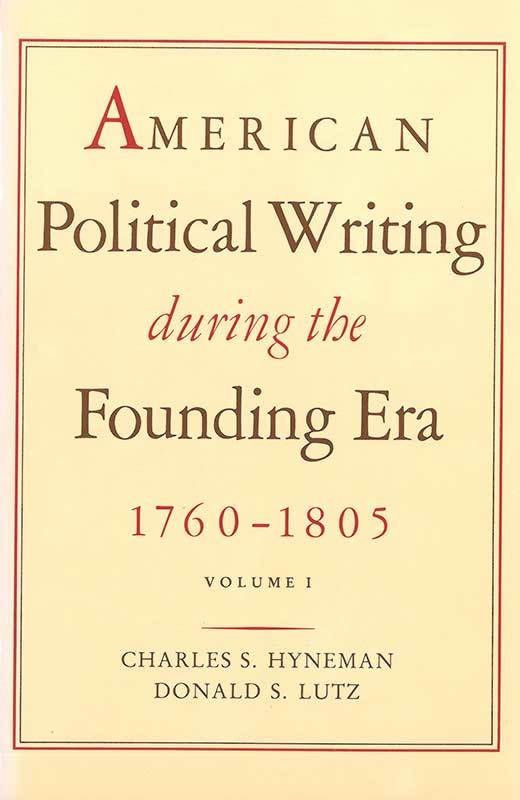
[44]: Joseph Lathrop 1731-1820: A Miscellaneous Collection of Original Pieces (Selections) - Charles S. Hyneman, American Political Writing During the Founding Era: 1760-1805, vol. 1 [1983]

Edition used:

American Political Writing During the Founding Era: 1760-1805, ed. Charles S. Hyneman and Donald Lutz (Indianapolis: Liberty Fund, 1983). 2 vols. Volume 1.

Part of: American Political Writing During the Founding Era: 1760-1805, 2 vols.

About Liberty Fund:

Liberty Fund, Inc. is a private, educational foundation established to encourage the study of the ideal of a society of free and responsible individuals.


[44]

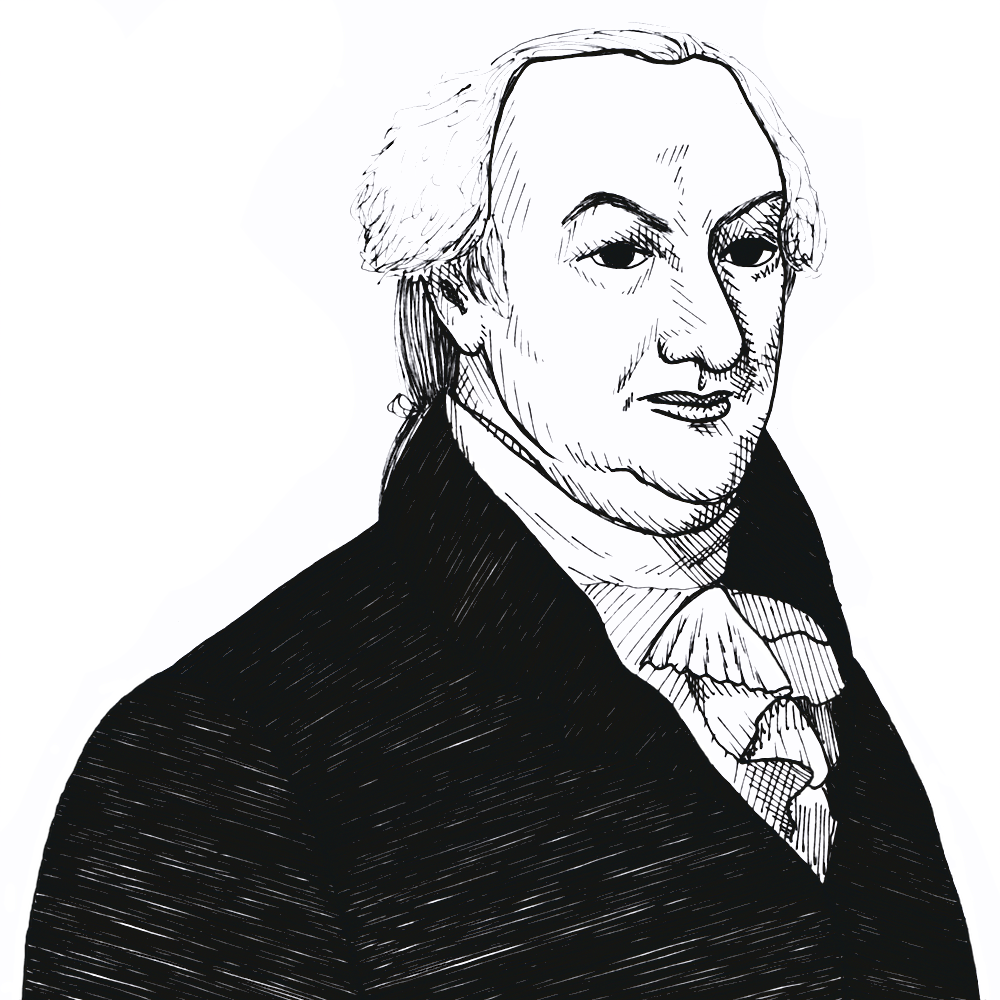
Joseph Lathrop 1731-1820

A Miscellaneous Collection of Original Pieces (Selections)

The first Lathrop arrived at Massachusetts Bay Colony in 1634, but the family moved west, and Joseph was born in Norwich, Connecticut. Immediately after graduating from Yale he was ordained as pastor of the Congregational Church in West Springfield, Massachusetts, a post that he held for more than sixty years. He became one of the most widely known and highly respected ministers of the gospel in New England. A seven-volume collection of his sermons was published near the end of his career, but many other sermons and essays are found only as separate pamphlets. Reproduced here are three pieces published under the name Censor and five published under The Reformer. Industry, frugality, virtue, religion, and their relation to government were typical topics for Lathrop. Reading Lathrop back to back with the pieces by John Leland, a Baptist, that appear later in this collection will dramatize the split during the founding era on the relationship of religion to politics. Leland defends a position most comfortable to the Federalists, while Lathrop here assumes a relationship between religion and politics congruent with the position held by the Whigs dominant before the advent of the Federalists.

The CENSOR. NUMBER II. GOVERNMENT.

  • Quid tristes querimoniae,
  • Si non supplicio culpa reciditur?
  • Quid leges sine moribus
  • Vanae proficiunt—?

The natural passions of mankind lead them, and their natural wants impel them to society; for neither can their desires be gratified, nor their miseries relieved in a state of solitude. In society there must be government. Not only the vices, but the natural imperfections of the human race require it. Were men ever so virtuous, yet unless they were also perfectly wise, a diversity of interest, opinion, humour and inclination would call for some superintending and controuling power. In the prophetick descriptions of the happiest period, that mankind are ever to enjoy below the skies, government makes an essential part; nor is it omitted in the inspired representations of celestial bliss. In a society as virtuous as may be supposed, government would have little more to do, than direct the common prudentials; but so much, at least, must be done. A virtuous society cannot be happy without government; a vicious one cannot subsist without it. Peccant humours prevailing to a certain degree destroy the natural body; and there is a certain pitch of vice that dissolves society; government must restrain the latter, as medicine checks the former. In proportion as society is more extensive and populous; more civilized and refined, more opulent and commercial, and is farther removed from the simplicity of nature, government necessarily becomes more complex and difficult; and as vice more prevails, government must be more severe. Various forms have taken place among the nations of the earth. Which form is most eligible, has been much controverted among politicians: but as well may physicians dispute, what is the best remedy for diseases. In both cases, the condition of the subject is to be considered. Medicine will not make a patient healthy without a proper regimen, nor government render a people happy without virtue. The preference of one form to another is perhaps more in speculation than reality. A virtuous people under any form well administered will be happy; a people deep sunk in vice and corruption will be miserable under the best form. A people will usually run sooner or later into such a kind of government as is most suitable to their manners and habits. Among a virtuous people there is always a love of liberty, and their government, whatever be the form, will be administered in such a manner as to gratify this passion. A people that have lost their virtue, soon lose their passion for liberty, and of course lose the object. Their government, however liberal in its principles, becomes rigorous in its administration; and they can subsist under no other. Virtue will be free; vice must be enslaved. A people that would be happy must support the honour and dignity of government; and, that they may enjoy the greatest possible freedom under it, they must zealously cultivate and generously encourage knowledge and virtue. The main body of a people cannot be politicians. They have not leisure to attend to, opportunity to be informed of, nor ability to understand all that variety of matters, which concern the community. Many things they must leave with implicit confidence to the wisdom and integrity of their rulers. But they all understand the nature and obligations of virtue. There is therefore no way, in which they can so effectually promote their own and the general freedom and happiness, as by maintaining virtue in private practice, and encouraging it in society. No man is so inconsiderable, but he may render important services to mankind in this way. He that practises every virtue in private life, and trains up a family in virtuous principles and manners, is no useless or unimportant member of society. In elective governments the people may encourage and promote virtue by a wise and judicious choice of rulers. They should always esteem it unsafe to commit their interests into the hands of men who are themselves void of those virtues on which the happiness of society depends. Virtue exemplified in government will diffuse its salutary influence through the society. The foundation of all social virtue is a belief in the existence and government of a Deity. A regard to the Deity cannot be maintained without some publick exercises of religion. Social worship is therefore necessary to the happiness of society, and to the easy administration of government, and in this view worthy the attention of every legislature, while in a higher view it deserves the regard of the individual.

The CENSOR. NUMBER III. INDUSTRY.

  • —Labor omnia vincit
  • Improbus, et duris urgens in rebus egestas.

Most of the evils, which are matters of complaint at the present day, are such as it is in our own power to remedy. If we would be as virtuous as a people may be, we should be as happy as a people need to be. Virtue would remove many of our grievances, and enable us to bear the rest. It will be replied, ‘Virtue generally prevailing might do great things, but this is not to be expected.’ Will you then look for happiness in some other way? You cannot succeed, unless the course of nature, and the plan of the supreme government should be reversed. ‘But will it avail for me singly to be virtuous, when I cannot expect the generality will be so?’ Make the experiment: Perhaps others will be as wise as you: Your example may possibly have some influence; at least you may relieve your own mind, and lighten your own burthens. If general virtue helps society, private virtue will help the individual: And then how do you know, but there is another world where your virtue will turn to your account, though it should do you but little good here? ‘But what are the virtues of immediate use to society, and of chief importance at the present day?’ Industry is undoubtedly one. This is a country which affords all the means not only of subsistence, but of wealth. But means must be applied or the end is not attained. Greater industry may be necessary here, than in some other climes; but this is no unhappiness. A people that grow rich suddenly and without much labour, soon become luxurious and effeminate. They presently sink again into poverty, or their wealth is confined to a few. They lose their strength and vigour and the spirit of liberty, and fall an easy prey to the first powerful invader or ambitious usurper. A habit of industry is first acquired by necessity, and, once acquired, it may continue for a while, after the necessity abates, unless their circumstances alter too suddenly. It strengthens the body, braces the mind, aids other virtues; it gives patience in adversity, courage in danger, and perseverance in difficulty. No people ever maintained their liberty long, after they ceased to be industrious, and became dissolute and luxurious. Agriculture ought to be one main object of industry in such a country, and at such a time as this. Our lands are our chief source of wealth; but lands uncultivated are like gold sleeping in the mines. It is culture only that makes them useful. Too great attention to commerce will soon introduce idleness and luxury; and though it may enrich a few particular persons, it will impoverish the country.

Our husbandry ought to be directed into such a channel, that after supplying our own necessary consumption, the surplus may bring us not merely luxuries, but such foreign articles as will be really useful, and a sufficiency of silver and gold for a medium. Grain of various kinds, flax, sheep, pork, beef, butter, and cheese are commodities that may be turned to much better advantage, than those cargoes of horses and lumber, which are shipped for the West-Indies, only to bring in upon us a flood of ardent spirits, to drown our vitals and our morals.

To agriculture we must join the necessary arts of life, and the more useful and important branches of manufacture. We may purchase many articles cheaper, than we can manufacture them: but if we purchase them, they must be paid for: if we make them they are our own. Manufactures will promote industry, and industry contributes to health, virtue, riches and population. If we purchase our cloathing one half of our women must be idle, or only trifling: how then will those young women who depend on their labour, procure the next suit when they have worn out the present? If we manufacture, our men will be employed in procuring and preparing the materials; and our women will not be under a necessity of spending five afternoons in a week in giving and receiving visits, and chatting round the tea-table. What they do is so much added to the wealth of the country. When industry becomes reputable among ladies in higher life, it will of course take place among all ranks. And the rosy cheek, the ruby lip, and the sparkling eye will then be deemed more beautiful, than the pale, sickly countenance. Vivacity, strength and activity will not then be thought too indelicate, coarse and masculine for a fine lady, nor will affected timidity, artificial faintings and laboured shrieks and startings be supposed to have charms.

The CENSOR. NUMBER IV. FRUGALITY.

  • Vivitur parvo bene, cui paternum
  • Splendet in mensa tenui falinum:
  • Nec leves somnos timor aut cupido
  • Serdidus aufert.

Industry and frugality are kindred virtues and similar in their principles and effects. They ought always to accompany each other and go hand in hand, for neither without the other can be a virtue, or answer any valuable purpose to the individual or to society. He that is laborious only that he may have the means of extravagance and profuseness; and he that is parsimonious only that he may live in laziness and indolence, are alike remote from virtue. Each is governed by his strongest passion, and enslaved to his predominant vice. To live sparingly for the sake of amassing a useless heap, is not frugality, but sordidness. To live within the bonds of nature, that we may enjoy better health and may be more free from wordly embarrassments, is prudence. To live frugally, that we may be just to all men; may do more good to the indigent, and may be more useful to society is virtuous. Decency and propriety ordinarily require, that we live according to our rank and ability. But there are times, when patriotism calls upon those in affluence and high life, to fall a little below the usual mark, that their example may encourage moderation among others. As private oeconomy enriches the individual, so the prevalence of it would enrich the community. A country so deeply in debt, and subjected to so great expences, as this country now is, should consider frugality as a cardinal virtue. Let it begin with particular persons and spread through the community; let it take place in families, nor be over looked in government; let it not be confined to the poorest, or the middle ranks; but appear among the rich and great. While the poor are frugal from necessity, and the common farmers and mechanics are frugal from prudence, let the opulent be frugal from patriotism: and if they would make their patriotism a still more excellent virtue, let the savings of extraordinary frugality be applied to some charitable purpose. For the rich no certain rules can be prescribed; their frugality must be voluntary and discretionary. People of moderate fortunes, and moderate incomes should aim at a regular conduct. Excuse a few hints, even though they may appear too trifling to be observed. If they appear worthy of notice, let them be carried into practice.

Spend not your money before you have earned it, nor promise it before you are sure of it. Promises made on other men’s credit, or on mere contingencies are liable to fail. If you disappoint your neighbour often, you lose your credit, and his confidence, and perhaps provoke a suit, which breaks friendship, disturbs your peace, augments your expence, and throws your money into the hands of those, whom you chiefly envy. Estimate your probable incomes, making some allowance for disappointments, and let your expences fall so much short, that something may be left at the year’s end. He that daily consumes the fruits of daily labour is unprepared for the day of misfortune. Most men, if they will live within the bounds of nature, may by moderate industry, provide for themselves and their families. It is always reputable to live moderately, when we have not the means of living splendidly. Compute the needless consumption of ardent spirits for one year, and will it not make a sum worth saving? The example of others is not the standard by which we are to judge of extravagance, but our own circumstances and abilities. That may be extravagance in one, that would be parsimony in another. Enter not into too close connections with those of superior fortunes, if they are disposed to live faster, than you can follow. Never make a vain ostentation of wealth, which you don’t possess, nor live at other men’s expence, so long as you can live at your own. Waste not in indulgence, that time which you owe to the duties of life, the culture of your mind, and the support and education of your family. Consume not in luxury the money, which you owe to your creditor or to the publick, or by which you might relieve your family from distress. When you see another grow rich, or seem to grow rich in any calling, conclude not that you could do the same, nor quit your own profession for one which you don’t understand and have not the means of pursuing. Many have fallen by reaching at things too high for them. Lay out for yourself business to fill up your time, but not more than you can manage well. Be not in too great haste to be rich: The moderate profits of your own proper business are the surest, and the honest gains of industry and frugality are the most sweet, reputable and durable.

The REFORMER. NUMBER I.

Virtue the happiness of a people.

Men often complain of those evils, which are wholly of their own procuring, and which it is in their own power to remove, whenever they please. There is nothing more evident from reason, revelation and common experience, than the tendency of virtue to the happiness, and the tendency of vice to the misery of mankind, both in private and social life; but while this is generally acknowledged in speculation, it is much disregarded in practice. All expedients to relieve the burthens and distresses of the day, without a general reform of manners, will be but palliatives:This will effect a radical cure.

Let rulers, influenced by the fear of God, and by love to mankind use all their power and authority to encourage righteousness, protect innocence, redress wrongs and banish iniquity; let laws be made with a single design to advance the general interest, and be executed with diligence and fidelity; let people, in all ranks, conscientiously discharge the duties of their respective stations; let justice and integrity take place in all private intercourse; let benevolence operate in all exigencies to excite mutual aid and succour, so that no man shall be miserable, while it is in his neighbour’s power to relieve him; in all controversies between man and man or in society, let condescension immediately step in to adjust the difference; let every man, in his private capacity, maintain sobriety, purity, temperance, industry and self-government, and attend more to the culture of his mind, the improvement of his virtue, and the regulation of the manners of his domesticks, than to the indulgence of pleasure or the accumulation of wealth; let this be the general spirit and conduct of mankind, and what will be wanting to make them as happy as the condition of mortals will permit, or as beings in a state of probation can reasonably desire?

But if, on the contrary, pride, selfishness, and the love of pleasure reign among all ranks: if injustice, fraud, idleness, luxury, oppression and other vices generally prevail, there is no need of special judgements to make them miserable, and no need of a spirit of prophesy to foresee their destruction. Every man therefore, as he regards his own and the general happiness, is bound to practice virtue himself, and promote it among others. This obligation immediately results from his present condition as a man, and from his relation to society, abstractly from the consideration of those more grand and solemn motives which religion proposes.

We have seen the time, when the people of this country, alarmed at the dangers which threatened them from a usurping and invading power, could unite in arms for the common defence. They thought no expence too great to be incurred, no sacrifice too dear to be made, that they might rescue their trembling liberties from the devouring jaws of oppression. Our social happiness is now in danger from another quarter, from the prevalence of vice and impiety, from our increasing luxury, extravagance, selfishness and injustice: let us exert ourselves, with the same united ardour, to extirpate this internal enemy, as we have to repel a foreign enemy, and we may hope for equal success; and success in this attempt will give our liberties a firmer establishment and a more permanent security than all the successes of war.

The REFORMER. NUMBER II.

Piety the basis of Virtue.

The necessity of virtue to the happiness of society, was shewn in a former number. It is no less evident that a belief of, and regard to the government of a Diety, is the only sure foundation of virtue. What motive can there be sufficient to engage men in the general practice of sobriety, justice, integrity and beneficence, and to restrain them from the contrary vices, if they can once disbelieve the doctrines of a divine government and a future retribution? The beauty and reasonablness of virtue, and its tendency to the happiness of mankind in private and social life, though an argument of real truth and importance, yet is, in some respects, too refined to be clearly perceived, and in other respects, too disinterested to be strongly felt by men not used to such speculations, or not already formed to a benevolent temper. But the consideration of an ever present Deity, who exercises a righteous government in the world, and will bring his rational subjects to a solemn judgment, and distribute his rewards and punishments in the most equitable manner, according to their real characters, is an argument of awful weight, and level to the lowest capacity. To talk of virtue independent of piety, is as absurd in morals, as it is, in nature, to talk of an animal that lives without breath. But how shall a sense of the Deity, his perfections and providence, and a future state, be generally diffused and maintained among a people, so as to become a principle prompting them to virtue, without some publick forms of social worship? No means can be imagined so conducive to this end, as that divine institution, which requires us, at stated times, to intermit the common labours and amusements of life, and unite in acknowledging the supreme governour of the universe, in paying our devout adorations to him, and in hearing our duty to him and to one another inculcated upon us. The sabbath is an institution co-eval with man’s creation; revived in the time of Moses, numbered with and placed on the same foot as the most important moral precepts, and constantly observed by the great founder of the christian dispensation and by his servants, whom he immediately authorized to disseminate his religion in the world. The observance of a sabbath and of social worship, is of such importance to the preservation of religion, and to the happiness of a people, that God enjoins it as a grand condition of his favour, and second only to a belief of his existence. ‘Ye shall make no idols—I am the Lord your God. Ye shall keep my sabbaths and reverence my sanctuary; I am the Lord. If ye shall walk in my statutes, then will I give you rain in due season, and the land shall yield her increase; ye shall dwell therein safely. I will set my tabernacle among you, and my soul shall not abhor you.’ If sabbaths, social worship and publick instructions should be discontinued, ignorance, vice and savageness of manners would soon ensue; virtue and even civility would, in a great measure, be lost; government would either be subverted, or changed into downright tyranny; society must either disband, or be held together by absolute force. For as there can be no piety without the worship of the Deity, nor real virtue without piety; so there can be no voluntary union nor mutual confidence in society without virtue, and consequently no government but that which is of the most arbitrary kind consisting in mere force and violence.

The REFORMER. NUMBER III.

Religion patronized by Government.

From the foregoing reasonings it follows, that the civil government of a people ought to provide for the encouragement of divine worship, because, without this, no people can long subsist in a state of freedom and happiness. It is sometimes asked, Why should government have any thing to do with religion? But the answer is obvious; Because religion has much to do with government. If any imagine, that rulers should never interpose in matters that relate to religion, let them consider, what would be the consequence, if all laws against injustice, fraud, perjury, profaneness, theft, and drunkenness, were abolished and men were left to pursue without controul the dictates of their own lusts. Could society subsist? They will at once say: ‘This is carrying liberty too far. There must be laws against vice. But why should rulers enjoin men to observe a sabbath, or support and attend publick worship?’ The reason is plain; If publick worship is a proper means of preventing vice and promoting virtue, there is the same reason why they should make laws in favour of that, as why they should make laws for the punishment of vice. This is to secure the existence and happiness of society, in a way much more consistent with the dignity of human nature and the liberty of mankind, than to do every thing by whips, prisons and cords.

No free government was ever maintained without some form of religion. No religion is so perfect and rational, so intelligible in its doctrines, pure in its precepts, powerful in its sanctions and benovolent in its design as the christian religion. It must then be the wisdom of any government to protect and encourage it, because this is to provide for the preservation of itself.

The law of Christ expressly requires, that divine worship be publickly maintained, and that all christians, according to their abilities, contribute their aid to this purpose. But it has not particularly pointed out the manner in which they shall do it. This is left to human prudence. All that government does in the case, is to prescribe the mode of doing that, which the law of Christ requires, and which every christian owns must be done in some mode or other. And there can be nothing unjust in this, more than in pointing out certain ways for the relief of the poor, which the gospel requires us to relieve in some way or other; or in procuring schools for the education of youth, whom reason and religion require us to educate in knowledge and virtue by some means or other, or in annexing penalties to certain dangerous vices, which religion obliges us to bear testimony against in some form or other.

The great end of divine worship is the salvation of men’s souls. When we consider it only in this view, we think it absurd, that government should concern itself in the matter; for what has government to do, to direct me, how I shall be saved? Must I not judge for myself what is the way of salvation? Yes by all means. But though this is the principal end of publick worship, yet there is another end which it in fact serves, the present peace and happiness of mankind; and considered in this view, it as properly falls under the patronage of government, as learning or virtue, or any thing else, with which the happiness of society is essentially connected. The latter bear as real and as important a relation to men’s future hopes, and on this principle might as reasonably be wrested out of the hands of government, as the former. But government encourages learning and virtue, not on the foot of their connection with futurity, but on account of their tendency to the present happiness of society: and on the same principle it patronizes the worship of the Deity.

It would be absurd to prescribe certain forms of worship and compel men to conform to these and to these only; for every man must be at liberty to judge what is truth, and what is the most acceptable way of serving his Maker, and to conduct himself accordingly, provided his conduct no way interferes with the peace and safety of others. But to require an abstinence from the common labours of life one day in seven, and an attendance on the worship of God in some form or other, is no more an invasion on the rights of conscience, than a prohibition of vice or an injunction to maintain the poor and support schools, is an invasion on the rights of conscience; for though men may conscientiously differ as to the particular forms of worship, yet christians, and almost all mankind are agreed, that God is to be worshipped in some mode or other; and he that is allowed to choose his own mode of doing that, which he owns himself obliged and professes himself willing to do, very absurdly complains of oppression.

Men may, if they please, traduce religion under the name of tradition, or government under the name of tyranny; but to call things by ill names alters not their nature. Truth ceases not to be truth, nor does a usage good in itself, become evil, because the one has been believed, and the other practised by our fathers, or even by Jews. If our faith and practice are founded only in human authority, or human custom, they are essentially defective in a religious view; but to make the practice of others the mark of evil is as absurd, as to make it the standard of right. If we must reject every thing in the gross as wrong, which was adopted by our fathers religion must of course change its nature every generation.

The observance of fasts, sabbaths, and publick worship has lately been reproached as mere tradition. But however well the writer may mean, he reasons very ill. Instead of shewing it to be of evil tendency with respect to the morals, or the happiness of mankind, contrary to reason or revelation, his only argument is, that it is mere tradition or judaism; that is, it is doing as others have done; and therefore should be done no more: and it was enjoined on Jews, and therefore ought to be abhorred by Christians. But this rule would lead us as much to discard the virtues as the vices of our fathers; and to reject the whole decalogue as the fourth commandment. His arguments to prove that there ought to be no laws in favour of religion, operate alike against all laws in support of learning, virtue and good manners, that is, they operate not at all, unless it be in the minds of the thoughtless and the undiscerning.

The REFORMER. NUMBER IV.

Submission to Civil Government.

Mankind cannot subsist without society, nor society without government. If there were no way to controul the selfishness, check the passions and restrain the vices of men, they would soon become so intolerable to one another, that they must disperse, and, being dispersed, must perish or be miserable. Government is a combination of the whole community against the vices of each particular member. The design of it is not merely to provide for the general defense against foreign power, but to exercise a controul over each member, to restrain him from wrong and compel him to right, so far as common safety requires. Mankind, by entering into society and coming under government, put the protection of their rights and the redress of their wrongs out of their own hands, and instead of defending or recovering their rights by private force, they agree to submit to the more impartial decision of the society, or of those whom the society has constituted judges.

That a people may be free and happy under government, they must be wise and virtuous. A well framed constitution may be some security; the wisdom and virtue of the people is a greater. A virtuous people may subsist under a mild government; a corrupt and vicious people must be ruled with rigour. They who are governed by rational principles of their own, need but little other government; they who are wholly destitute of such principles must be governed by external force and terrour. ‘The law is not made for a righteous man, but for the lawless.’

We have, by force, repelled a foreign encroachment on our liberties, and established a government of our own. Whether we shall be safe and happy now, depends much more on our own conduct, than on the form of government, which we have adopted, or any other that can be devised.

We should always be careful to commit the powers of government into the hands of wise and virtuous men; for it is manifestly absurd to trust the common safety with those, whose ability and integrity would not entitle them to our confidence in private life.

We should contribute our aid to carry into execution the wholesome laws of the community, especially those which immediately relate to the virtue and morals of the people.

We should educate our children in rational notions of civil liberty, but, at the same time, in just sentiments of subordination and submission to authority, and instill into their minds such principles of honour, benevolence, integrity, piety and universal virtue, that they may have little occasion for the restraints of publick laws.

A wise people will inspect the conduct of their rulers, and guard their rights from every invasion. But they will not indulge an excessive jealousy, nor complain of measures which they understand not, or which could not be avoided.

When a people are greatly burthened, they may justly demand the severest œconomy in the application of publick treasures but they should be careful, that they impute not to prodigality those expenses, which arise from necessity.

If rulers are profuse, we may prefer men of more frugality, but let us, in private life, exercise the same frugality, which we expect of them in their publick station. The man that wastes his own substance, would not be very sparing of publick money, if it was committed to his disposal, and such a man complains of extravagance with a very ill grace.

If the general character of a people is frugal, such of course will be the prevailing disposition of rulers because men of this character will be chosen to places of publick trust, and their conduct will be much influenced by the prevailing taste and manners of the people.

We commonly say, Rulers ought to be our examples. And so they ought. And why ought not we also to be theirs? In absolute governments, where the people are dependent on the will of their rulers, the publick examples very much govern private manners. In popular and elective governments, like ours, the case is, in some measure, the reverse. Rulers are here chosen by, and dependent on the people, and it may naturally be expected, that they will be good or bad, frugal or profuse, very much according to the prevailing character of their constituents.

If we would have the government reformed, we must reform ourselves. The more virtue there is among private persons, the more there will be among rulers, and the more easy it will be for government to carry into execution laws for the suppression of vice and the encouragement of virtue. The best laws are impotent things, when the general disposition is to violate them. They are but cobwebs, which may happen now and then to entangle some feeble insect, while the strong will break through and escape. But good laws carry force and terrour, when the main body of the people approve them, and are resolved to obey and support them.

The REFORMER. NUMBER V.

The mischiefs of Idleness.

The Creator has so framed the world and the condition of mankind in it, that industry is necessary to the support of human life. ‘He becometh poor’ says the wise king of Israel, ‘that dealeth with a slack hand, but the hand of the diligent maketh rich. The hand of the diligent shall bear rule, but the slothful shall be under tribute. Slothfulness casteth into a deep sleep, and the idle soul shall suffer hunger. The sluggard will not plow by reason of the cold, therefore shall he beg in harvest and have nothing.’—These observations are often verified in experience. It is rare that we see a prudent and industrious man reduced to real want, or a slothful, indolent creature prosperous.

Industry is not only necessary to the subsistence, but conducive to the health of the body. This can no more be preserved without action, than the salubrity of the air can be preserved without winds, or the purity of waters without motion. Dead puddles soon become foul and putrid, so the indolent and inactive soon contract diseases. The fluids of the human body, like other fluids, purge off their peccant humours by motion.

The idle are not only useless, but mischievous members of society. An Apostle describes them ‘as strolling about from house to house, meddling with other peoples matters, tatling and speaking things which they ought not.’ Soloman gives a similar description of them. ‘They are wise in their own conceit; apt to meddle with strife which belongs not to them; they deceive their neighbours in sport, as a madman casts about firebrands; they serve as talebearers to reveal secrets and hand round mischievous reports, which separate nearest friends. As coals, to burning coals, and as wood to fire, so are such contentious people to kindle strifes.’

The idle are they who make the most disturbance in neighbourhoods and societies. They are usually very conceited and self-important, and imagine themselves much wiser than their neighbours. As they have no business of their own, they are at leisure to find fault with every body else. The times are always bad for them, and they are extremely apt to complain, that times are so bad. They always ascribe to other people the grievances which they bring on themselves by their own laziness. If by indolence and negligence they are reduced to poverty, then the government is severe, the laws are unreasonable, their neighbours are inhuman and their creditors cruelly oppressive. They justify themselves and curse the times, and look for relief by exciting disquietudes.

Idleness is not a solitary vice. Intemperance is one of its usual companions; gaming is frequently an attendant, and it is soon joined with a perverseness of temper, tormenting to itself and vexatious to all around. The day of calamity and distress is at hand; sickness or age is coming on, when they, who once were idle from habit or inclination, will become inactive through necessity. Then they must live on the labours of others, or live no longer. They have made no provision for such a day, and can make none now. One would think the consideration of future impotence might be a sufficient motive with every man to improve the healthful and vigorous part of life in some honest and useful labours, that, in the day of infirmity and affliction, he may relieve his unavoidable wants by the fruits of former industry, and soothe the distresses of his body by some agreeable reflections of mind. If any are incapable of being influenced by such considerations, they should be called upon in a way more efficacious.

Christianity instructs us to ‘work with our hands the thing that is good, that we may have to give to him that needeth.’ He that needeth constant supplies from the hand of charity is not the person able to work with his hands, for he is directed to work that he may give. The apostolick church was ordered to exclude not only from her communion, but from her charitable support, such as refused to contribute to their own maintenance by honest industry. The same rule should be still observed by those societies which are charged with the care of the poor. They should cheerfully relieve those who are really needy; but that they may not be overburthened, they should exercise their benevolence, in a different way, towards such members as are spending their time and substance in vain.