Econlib

The Library

Other Sites

Front Page arrow Titles (by Subject) arrow CHAPTER X: Of Treaties and Ambassadors, and the Entire Dissolution of States. - Philosophiae moralis institutio compendiaria with a Short Introduction to Moral Philosophy

Return to Title Page for Philosophiae moralis institutio compendiaria with a Short Introduction to Moral Philosophy

CHAPTER X: Of Treaties and Ambassadors, and the Entire Dissolution of States. - Francis Hutcheson, Philosophiae moralis institutio compendiaria with a Short Introduction to Moral Philosophy [1747]

Edition used:

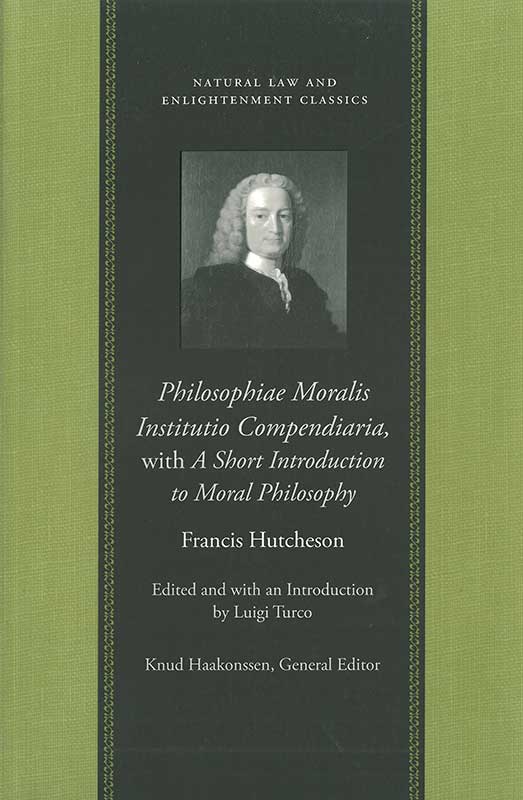
Philosophiae moralis institutio compendiaria with a Short Introduction to Moral Philosophy, edited and with an Introduction by Luigi Turco (Indianapolis: Liberty Fund, 2007).

About Liberty Fund:

Liberty Fund, Inc. is a private, educational foundation established to encourage the study of the ideal of a society of free and responsible individuals.


CHAPTER X

Of Treaties and Ambassadors, and the Entire Dissolution of States.

I. <Wars in general are setled by treaties>. The chief laws of nature about treaties were explained in the doctrine of contracts in natural liberty.{* } But we must remember that the exception of unjust force and fear cannot be admitted against the obligation of any treaties of peace; otherwise the old controversies <that occasioned the war> might always be kept a-foot. And yet such exceptions may justly take place when the war is manifestly and avowedly unjust on one side; or if the terms imposed {by the more potent side} are manifestly injurious and contrary to all humanity. In these cases the party injured may insist upon an arbitration; and if the other side refuse to submit to it, each side must by force consult its own safety and the maintenance of its rights{, by what aids it can find}.1

Treaties are divided into real, and personal: the personal, which are less in use, are entered into in favour of the prince’s person, and cease to bind upon his demise. The real, respect the body of the people, or the nation, which is deemed immortal.2 Treaties are also divided into the equal, {such as bring equal or proportionable burdens on each side,} and unequal {which bring unequal burdens}.3 But ’tis not every unequal treaty that any way impairs or diminishes the majesty and independency of the side submitting to the greater burden.

Hostages in former ages were securities commonly given for performance of treaties, but they are now gone into disuse; because it would be exceedingly <barbarous and> inhumane to treat the innocent hostages any way harshly because of the perfidy of their country.

II. In making treaties ambassadors <or intermediaries> are employed. Their rights are all the same, whatever names are given them, if they are entrusted to transact the affairs of a sovereign state. Their persons should be sacred and inviolable, as we said above. They have a just natural right to demand that their proposals should be delivered. But as to an allowance to reside any time in the state to which they are sent, they may claim it as due out of humanity, but cannot insist on it as a perfect right. Since the business of the more active ambassadors is much the same with that of spies upon the nations where they reside. If they are allowed to reside; the law of nature would give them no higher rights or immunities, than any other foreigner might claim without any publick character.4

But by the voluntary laws of nations, they have many singular privileges and immunities, both for themselves and all their necessary retinue: all which however any state might without any iniquity refuse to grant them, if they give timeous intimation of their design to do so to all concerned.

1. This is customary in the first place, that no action can be brought against an ambassador or his necessary retinue{, such as his secretaries, or domesticks,} in any courts to which he was not subject previously to his taking this character. What has been in view in this custom, was this; that an ambassador, the more vigilant he is in his office, will be generally so much the more disliked and hated in the state where he resides: and therefor were he subject to its courts, he would not have a fair hazard for justice in a nation prejudiced against him. The subjects of the state where he resides may easily abstain from any contracts with him in which they may be wronged, since they can have no action against him. Should an ambassador {or his retinue} commit any outragious crimes; he may be sent home, and justice demanded of his constituents; the refusal of which may be a just cause of war. If any ambassador intermeddles in trade, his merchant-goods, except such as are necessary for his support in his embassy, are liable to attachments or arrests for the debts he contracts in trade [are subject to the state where he resides].

2. An ambassador’s house is deemed a sanctuary to himself and all his retinue and attendants: of which however a list may justly be demanded upon his admission; and the state where he is to reside have a right to fix what retinue of his they will receive {or grant immunities to}. But an ambassador by this privilege must not impair the jurisdiction of the state where he resides over its own subjects, by making his house a sanctuary for any criminals among them.

3. An ambassador has the ordinary power of the head of a family over his own domesticks; or such jurisdiction in their civil actions as his constituents have granted him. But neither an ambassador, nor even a prince residing in a foreign state, has a criminal jurisdiction or power of inflicting capital punishments upon his own subjects, except by permission of the state where he resides.

4. Inhibitions may justly be used against an ambassador, to restrain him from any outrages against our subjects: and they themselves have the natural right of repelling force by force.

5. No state is bound to admit any exiled criminal or fugitive subject of theirs, as an ambassador from any neighbouring state. But if such a one is sent with such commission, he cannot justly be seized or punished{, but he may be immediately ordered to quit our country}.

6. The honours and precedencies of ambassadors must be determined by express conventions or the tacit ones of long custom. The sole natural causes of precedency would be the superior excellency of the constitution of the state he represents; or his own superior personal worth <or virtue>. The absolute or hereditary power of his constituent is the worst reason of all; if we regard true merit, and not customs introduced by barbarians.

III. As to the dissolution of our political relations, we may <briefly> observe: that by perpetual banishment, one ceases to be a subject any further. But it is not so in temporary banishments; much less [nor] in perpetual confinements {to any remote parts of the state}.5

2. No man can claim it as his perfect right to quit his country without the permission of the civil powers or the laws, while it remains unaltered.

3. Where the old constitution is much altered, either by foreign force or any potent faction; subjects who dissent from these changes have a right to consult their own safety elsewhere. And provinces may resume their independency if they can: as they were subjected, as we said above,* only by their own consent, and that to a state constituted in a very different manner.

4. But upon any improvements made in a constitution, subjects [citizens] can have no just right to desert it.

5. Whatever changes be made by the citizens themselves in their own constitution, their treaties with foreigners still remain obligatory on both sides.

IV. We may from what was said above see, what right any state can have to give up any part of its district, or any province with the people dwelling in it, to an enemy, or any foreign potentate. For first, as the several parts of any community, and even provinces, submitted themselves to the whole body for the common utility of the whole, in which each one was to share; the community has no right to give up or alienate any parts or any provinces without their own consent; or to oblige them to be subject to any other power, when they think they can otherways better consult their own interest. But on the other hand, as there can be no obligation to impossibilities; if a state cannot defend its more exposed parts, or its provinces; it must leave them unprotected: nay, if the safety of the whole cannot otherways be maintained, it may bind itself by a treaty to give no further defence to these parts or provinces. But such a treaty imposes no obligation upon the part or province so deserted, to submit to this new claimant. It may justly consult its own interest any other way; either by obtaining new confederates, or giving itself up to some other state upon as good terms as it can; that it may be protected against the present invader. For that covenant about the common defence of all, by which the several parts were united into one state, is now come into the case of contracts{* } about what proves impossible to be performed.

What is said about any part of a people or a province, holds also as to any brave citizen, whom an enraged enemy demands to be given up to him. Such a brave man in cases of the utmost extremity may be as it were abandoned; or no further protected. But his country has not a right to seize and deliver him to the enemy, or to hinder him to consult his safety elsewhere.

V. As to the entire dissolution of states; these maxims hold: when a state is entirely conquered, the several subjects of it, and the provinces too, have a right to secure themselves as well as they can; whether by adjoining themselves to any other state, or by attempting to set up a new sovereign state to themselves in the province. Citizens no doubt are bound to hazard all for their country, and not to despair too hastily about its safety. But if they have made all possible efforts for their country, and yet all in vain, they may justly consult their own safety as they can.

2. If by any unexpected accidents, a state which seemed extinct and conquered for some considerable time, finds opportunity of setting up again independently, its former subjects and provinces seem bound to reunite themselves to it; provided that during the conquest they came under no new and just engagements {inconsistent with this re-union}. For such engagements as the citizens or provinces of the ruined state have entered into with foreigners, without any fraud, while their former country seemed destroyed, must be as obligatory as any.

3. A state which has long continued conquered, and was made a province to the conqueror, has lost all its rights over any of its former citizens who have fled to other countries, and over its former provinces. And tho’ after a course of ages a new state should be formed in the same tracts of land formerly occupied by the old state; this new state can claim none of the peculiar rights of the old one. The states occupying the same lands in different ages may be quite different political bodies: and the political body may remain the same when they change entirely their lands, nay while they have none at all in possession.

While our country remains, all good men should be united in this purpose, to deem nothing too hard to be endured or done for its interest; provided it be consistent with the laws of that more antient and sacred association of all mankind, of which God is the parent and governor. “Our children are dear to us, our wives are dear, so are our parents, our kinsmen, our friends and acquaintance. But our country contains within it all these objects of endearment, and preserves them to us: and therefor every good man should be ready to lay down his life for it, if he can thus do it service.”6

finis

BIBLIOGRAPHY OF ANCIENT LITERATURE REFERRED TO BY HUTCHESON

  • Andronicus. De passionibus
  • Aristotle. Ethica Nicomachea
  • ———. Politica
  • Cicero. De finibus bonorum et malorum
  • ———. De officiis
  • ———. Tusculanae disputationes
  • ———. De natura deorum
  • ———. De inventione
  • ———. Lelius de amicitia
  • ———. Cato maior de senectute
  • ———. Pro Milone
  • Epictetus. Enchiridion
  • ———. Dissertationes ab Arriano digestae
  • Livius. Ab urbe condita libri
  • Horace. Carmina
  • ———. Epistulae
  • Justinian. Corpus iuris civilis
  • Nemesius. De natura hominis
  • Ovid. Metamorphoses
  • Persius. Saturae
  • Plato. Phaedrus
  • ———. Respublica
  • ———. Timaeus
  • Tacitus. Annales
  • Xenophon. Memorabilia

BIBLIOGRAPHY OF MODERN LITERATURE

The list comprises works referred to by Hutcheson and by the Editor in the notes and Introduction.

  • Barbeyrac, Jean. Discours sur le benéfice des loix, où l’on fait voir, qu’un honnête homme ne peut pas toujours se prévaloir des droits et des privilèges que le loix donnent. Amsterdam, 2d ed. 1717. (See below, Pufendorf.)
  • ———. Discours sur la permission des loix, où l’on fait voir, que ce qui est permis par le loix, n’est pas toujours juste et honnête, Amsterdam, 1716. (See below, Pufendorf.)
  • Bynkershoek, Cornelis van. De dominio maris dissertatio. 1702. A photographic reproduction of the second edition, in Opera minora, 1744, pp. 352–424. New York: Oxford University Press, 1923.
  • ———. De foro legatorum liber singularis. A monograph on the jurisdiction over ambassadors in both civil and criminal cases. A photographic reproduction of the text of 1744 with an English translation by Gordon J. Laing and an introduction by the late Jan de Louter. Oxford: Clarendon Press, 1946.
  • ———. Quaestionum juris privati libri quatuor. Leiden, 1744.
  • ———. Traité du juge competent des ambassadeurs: Tant pour le civil, que pour le criminel. Traduit du Latin de Mr. de Bynkerhoek par Jean Barbeyrac. The Hague, 1723.
  • Campbell, Archibald. An Enquiry into the Original of Moral Virtue. Edinburgh, 1733.
  • Carmichael, Gershom. Natural Rights on the Threshold of the Scottish Enlightenment:The Writings of Gershom Carmichael, ed. J. Moore and M. Silverthorne. Indianapolis: Liberty Fund, 2002.
  • Cumberland, Richard. De legibus naturae, 1672. Translated by John Maxwell, London, 1727.
  • Filmer, Robert. Patriarcha, or the Natural Power of Kings. London, 1680.
  • Greig, J. Y. T. The letters of David Hume. Oxford: Clarendon Press, 1932.
  • Grotius, Hugo. De iure belli ac pacis libri tres, in quibus ius naturae et gentium, item iuris publici praecipua explicantur. Paris, 1625.
  • ———. Les Droit de la guerre et de la paix. Trans. Jean Barbeyrac, 2 vols., Amsterdam, 1724.
  • Haakonssen, Knud. Natural Law and Moral Philosophy: From Grotius to the Scottish Enlightenment. Cambridge: Cambridge University Press, 1996.
  • Harrington, James. The Commonwealth of Oceana. London, 1656.
  • Heineccius, Johann Gottlieb. Antiquitatum Romanarum jurisprudentiam illustrantium Syntagma,secundum ordinem Institutionum Justiniani digestum, in quo multa iuris romani atque auctorum veterum loca explicantur atque illustrantur. Strassbourg, 1724.
  • Hooker, Richard. Of the Laws of Ecclesiastical Polity. London, 1593.
  • Hume, David. A Treatise of Human Nature. London, 1739–40.
  • Hutcheson, Francis. An Essay on the Nature and Conduct of the Passions and Affections. With Illustrations on the Moral Sense. London, 1742.
  • ———. An Inquiry into the Original of our Ideas of Beauty and Virtue; In Two Treatises. I. Concerning Beauty, Order, Harmony, Design. II. Concerning Moral Good and Evil. London,1738.
  • ———. Synopsis metaphysicae, ontologiam & pneumatologiam complectens. Glasgow, 1744.
  • ———. Philosophiae moralis institutio compendiaria, Ethices & Jurisprudentiae Naturalis elementa continens. Glasgow, 1742, 2d ed. 1745.
  • ———. A Short Introduction to Moral Philosophy. Glasgow, 1747.
  • ———. A System of Moral Philosophy. London, 1755.
  • ———. “Observations on the Fable of the Bees,” The Dublin Weekly Journal 4, 12, and 19 February 1726. Reprinted in Collected Works, vol. VII. New York: Garland, 1971.
  • ———. “Reflections upon Laughter,” The Dublin Weekly Journal, 5, 12, and 19 June 1725. Reprinted in Collected Works, vol. VII. New York: Garland, 1971.
  • Iustinianus. Corpus iuris civilis.
  • King, William. De Origine Mali. London, 1702.
  • La Bruyère, Jean de. Les caractères de Théophraste traduit du Grec avec Les caracterères ou le moeurs de ce siècle. Bruxelles, 1688.
  • Leechman,William. Preface to A system of Moral Philosophy. Glasgow, 1755.
  • Leibniz, Gottfried Wilhelm von. Jugement d’un anonyme sur l’orginal de cet abrégé [De officio]: avec des réflexions du Traducteur. (Published in Pufendorf, Les Devoirs de l’homme, et du citoien. pp. 429–95; see below.)
  • Locke, John. An Essay concerning Human Understanding. London, 1690.
  • ———. Two Treatises of Government. London, 1690.
  • Malebranche, Nicolas. De la recherche de la verité: Ou l’on traite de la nature de l’esprit de l’homme et de l’usage qu’il en doit faire pour éviterl’erreur dans les Sciences. Paris, 1674–78. (First English translation by Thomas Taylor with the title Father Malebranche’s Treatise concerning the Search after Truth. Oxford, 1694.)
  • Mautner, Thomas. Francis Hutcheson: On Human nature. Cambridge: Cambridge University Press, 1993.
  • Moore, James. “The Two Systems of Francis Hutcheson: On the Origins of the Scottish Enlightenment.” In Studies in the Philosophy of Scottish Enlightenment, edited by M. A. Stewart, 1990, pp. 37–59.
  • More, Henry. Enchiridion Ethicum, 1679, 2d ed., in Opera Omnia, London, 1629.
  • More, Thomas. The Utopia of Sir Thomas More. In Latin from the edition of March 1518, and in English from the first edition of Ralph Robynson’s translation in 1551, with additional translations, introduction and notes, by J. H. Lupton. Oxford: Clarendon Press, 1895.
  • Pufendorf, Samuel von. De jure naturae et gentium libri octo. Lund, 1672.
  • ———. Le droit de la nature et des gens ou systeme general des principes les plus importans de la morale, de la jurisprudence, et de la politique. Trans. Jean Barbeyrac, 2 vols., Basle, 1732.
  • ———. De officio hominis et civis iuxta legem naturalem libri duo. Lund, 1673.
  • ———. Les Devoirs de l’homme, et du citoien. Ed. J. Barbeyrac. Amsterdam, 1718.
  • ———. The Whole Duty of Man According to the Law of Nature. Together with Two Discourses and a Commentary by Jean Barbeyrac. Edited by Ian Hunter and David Saunders. Indianapolis: Liberty Fund, 2002.
  • Scott, William Robert. Francis Hutcheson: His Life, Teaching and Position in the History of Philosophy. Cambridge: Cambridge University Press, 1900.
  • Shaftesbury, Anthony Ashley Cooper, Third Earl of. Characteristicks of Men, Manners, Opinions, Times. London, 1714. 2d ed. Edited by L. E. Klein, Cambridge: Cambridge University Press, 1999.
  • Sidney, Algernon. Discourses Concerning Government. London, 1698.
  • Titius, Gottlieb Gerhard. Observationes in Samuelis L. B. de Pufendorf De officio hominis et civis juxta legem naturalem libri duos. Leipzig, 1703.
  • Vinnius, Arnoldus. In quattuor libros Institutionum imperialium Commentarius academicus et forensic. Amsterdam, 1692.
  • Wicquefort, Abraham van. L’Ambassadeur et ses fonctions. La Haye, 1681.

This book is set in Adobe Garamond, a modern adaptation by Robert Slimbach of the typeface originally cut around 1540 by the French typographer and printer Claude Garamond. The Garamond face, with its small lowercase height and restrained contrast between thick and thin strokes, is a classic “old-style” face and has long been one of the most influential and widely used typefaces.

Printed on paper that is acid-free and meets the requirements of the American National Standard for Permanence of Paper for Printed Library Materials, z39.48-1992. (archival)

Book design by Louise OFarrell Gainesville, Florida

Typography by Apex Publishing, LLC Madison, Wisconsin

Printed and bound by Worzalla Publishing Company Stevens Point, Wisconsin

[* ]{Book II. ix.}

[1. ]Cf. System 3.10.10, vol. II, pp. 363–65; Pufendorf, De iure nat. 8.8.1; Grotius, De jure belli 2.17.19 and 3.19.11.

[2. ]Cf. Pufendorf, De officio 2.17.7.

[3. ]Cf. ibidem 2.17.3–4.

[]Book III. v. 5.

[4. ]This section is parallel to System 3.10.12–14, vol. II, pp. 366–71, and perhaps a more orderly account. Grotius devoted a chapter to the right of legacies (De jure belli 2, 18). See also footnote 1 by Jean Barbeyrac to Pufendorf, De iure nat. 8.9.12. In System Hutcheson refers to Cornelius van Bynkershoek’s De Foro Legatorum Liber Singularis and to the Dutch diplomat (1606–1682) Abraham de Wicquefort’s L’Ambassadeur et ses fonctions, 1682.

[5. ]These last three sections of the Institutio are more orderly and complete than the parallel sections of System 3.11.1–3, vol. II, pp. 372–76.

[* ]Book III. vii. 8, 9, 10.

[]<Book III.iv and v.>

[* ]{Book III. vii. 8, 9, 10.}

[6. ]Cicero, De officiis 1.57.5.