Econlib

The Library

Other Sites

Front Page arrow Titles (by Subject) arrow 4.: Unlimited Dependence on the Discretion of Government Bureaus - Bureaucracy

Return to Title Page for Bureaucracy

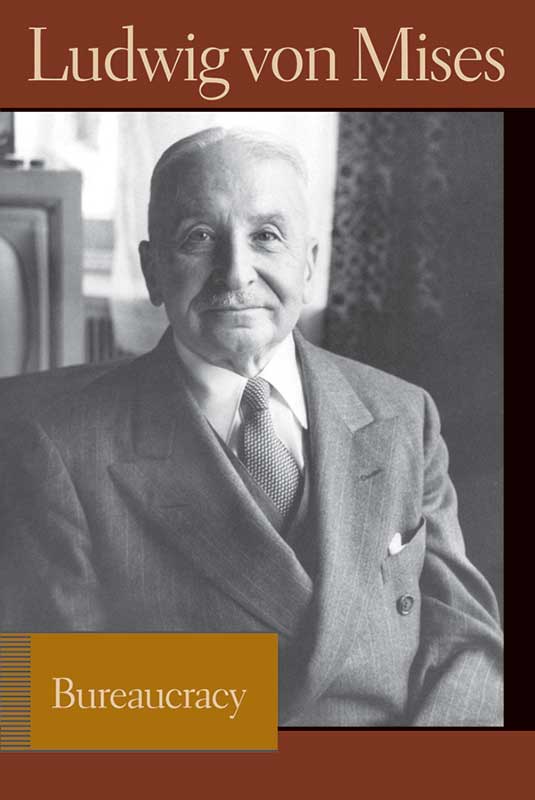
4.: Unlimited Dependence on the Discretion of Government Bureaus - Ludwig von Mises, Bureaucracy [1944]

Edition used:

Bureaucracy, edited and with a Foreword by Bettina Bien Greaves (Indianapolis: Liberty Fund, 2007).

About Liberty Fund:

Liberty Fund, Inc. is a private, educational foundation established to encourage the study of the ideal of a society of free and responsible individuals.


4.

Unlimited Dependence on the Discretion of Government Bureaus

Every American businessman who has had the opportunity to become acquainted with economic conditions in Southern and Eastern Europe condenses his observations into two points: The entrepreneurs of these countries do not bother about production efficiency, and the governments are in the hands of corrupt cliques. This characterization is by and large correct. But it fails to mention that both industrial inefficiency and corruption are the consequences of methods of government interference with business as applied in these countries.

Under this system the government has unlimited power to ruin every enterprise or to lavish favors upon it. The success or failure of every business depends entirely upon the free discretion of those in office. If the businessman does not happen to be a citizen of a powerful foreign nation whose diplomatic and consular agents grant him protection, he is at the mercy of the administration and the ruling party. They can take away all his property and imprison him. On the other hand, they can make him rich.

The government determines the height of tariffs and freight rates. It grants or denies import and export licenses. Every citizen or resident is bound to sell all his proceeds in foreign exchange to the government at a price fixed by the government. On the other hand, the government is the only seller of foreign exchange; it is free to refuse ad libitum applications for foreign exchange. In Europe where almost every kind of production depends upon the importation of equipment, machinery, raw materials, and half-finished goods from abroad, such a refusal is tantamount to a closing of the factory. The final determination of taxes due is practically left to the unlimited discretion of the authorities. The government can use any pretext for the seizure of any plant or shop. Parliament is a puppet in the hands of the rulers; the courts are packed.

In such an environment the entrepreneur must resort to two means: diplomacy and bribery. He must use these methods not only with regard to the ruling party, but no less with regard to the outlawed and persecuted opposition groups which one day may seize the reins. It is a dangerous kind of double-dealing; only men devoid of fear and inhibitions can last in this rotten milieu. Businessmen who have grown up under the conditions of a more liberal age have to leave and are replaced by adventurers. West European and American entrepreneurs, used to an environment of legality and correctness, are lost unless they secure the services of native agents.

This system, of course, does not offer much incentive for technological improvement. The entrepreneur considers additional investment only if he can buy the machinery on credit from a foreign firm. Being a debtor of a corporation of one of the Western countries is deemed an advantage because one expects that the diplomats concerned will interfere for the protection of the creditor and thus help the debtor too. New branches of production are inaugurated only if the government grants such a premium that huge profits are to be hoped for.

It would be a mistake to place the blame for this corruption on the system of government interference with business and bureaucratism as such. It is bureaucratism degenerated into racketeering in the hands of depraved politicians. Yet we must realize that these countries would have avoided the evil if they had not abandoned the system of free enterprise. Economic postwar reconstruction must start in these countries with a radical change in their policies.

V

The Social and Political Implications of Bureaucratization