Econlib

The Library

Other Sites

Front Page arrow Titles (by Subject) arrow CHAPTER VI: Of the immediate source, and foundation of sovereignty. - The Principles of Natural and Politic Law

Return to Title Page for The Principles of Natural and Politic Law

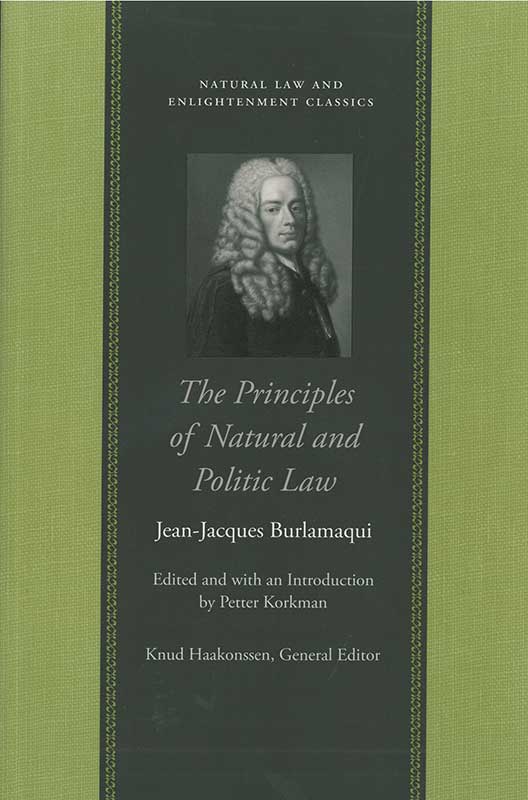
CHAPTER VI: Of the immediate source, and foundation of sovereignty. - Jean-Jacques Burlamaqui, The Principles of Natural and Politic Law [1747]

Edition used:

The Principles of Natural and Politic Law, trans. Thomas Nugent, ed. and with an Introduction by Peter Korkman (Indianpolis: Liberty Fund, 2006).

About Liberty Fund:

Liberty Fund, Inc. is a private, educational foundation established to encourage the study of the ideal of a society of free and responsible individuals.


CHAPTER VI

Of the immediate source, and foundation of sovereignty.

I. Though what has been said in the fourth chapter concerning the structure of states, is sufficient to shew the original and source of sovereignty, as well as its real foundation; yet as this is one of those questions on which political writers are greatly divided, it will not be amiss to examine it somewhat more particularly; and what remains still to be said upon this subject, will help to give us a more complete idea of the nature and end of sovereignty.

II. When we inquire here into the source of sovereignty, our intent is to know the nearest and immediate source of it; now it is certain, that the supreme authority, as well as the title on which this power is established, and which constitutes its right, is derived immediately from the very covenants<38> which constitute civil society, and give birth to government.1

III. And indeed, upon considering the primitive state of man, it appears most certain, that the appellations of sovereigns and subjects, masters and slaves, are unknown to nature. Nature has made us all of the same species, all equal, all free and independent of each other; in short, she was willing that those, on whom she has bestowed the same faculties, should have all the same rights. It is therefore beyond all doubt, that, in this primitive state of nature, no man has of himself an original right of commanding others, or any title to sovereignty.

IV. There is none but God alone that has, in consequence of his nature and perfections, a natural, essential, and inherent right of giving laws to mankind,2 and of exercising an absolute sovereignty over them. The case is otherwise between man and man; they are in their own nature as independent of one another, as they are dependent on God. This liberty and independance is therefore a right naturally belonging to man, of which it would be unjust to deprive him against his will.

V. But if this be the case, and there is yet a supreme authority subsisting amongst mankind, whence can this authority arise, unless it be from the compacts or covenants, which men have made amongst themselves upon this subject? For as we have a right of transferring our property to another by a covenant; so, by a voluntary submission, a person may convey<39> to another, who accepts of the renunciation, the natural right he had of disposing of his liberty and natural strength.3

VI. It must therefore be agreed, that sovereignty resides originally in the people, and in each individual with regard to himself; and that it is the transferring and uniting the several rights of individuals in the person of the sovereign,4 that constitutes him such, and really produces sovereignty. It is beyond all dispute, for example, that when the Romans chose Romulus and Numa for their kings, they must have conferred upon them, by this very act, the sovereignty, which those princes were not possessed of before, and to which they had certainly no other right than what was derived from the election of the people.

VII. Nevertheless, though it be evident, that the immediate original of sovereignty is owing to human covenants, yet nothing can hinder us from affirming, with good ground, that it is of divine as well as human right.5

VIII. And indeed, right reason having made it plainly appear, after the multiplication of mankind, that the establishment of civil societies and of a supreme authority, was absolutely necessary for the order, tranquillity, and preservation of the species, it is as convincing a proof that this institution is agreeable to the designs of Providence, as if God himself had declared it to mankind by a positive revelation. And since God is essentially fond of order, he is doubtless willing that there should be a supreme<40> authority upon earth, which alone is capable of procuring and supporting that order amongst mankind, by enforcing the observance of the laws of nature.

IX. There is a beautiful passage of Cicero’s to this purpose.*Nothing is more agreeable to the supreme Deity, that governs this universe, than civil societies lawfully established.

X. When therefore we give to sovereigns the title of God’s vicegerents upon earth, this does not imply that they derive their authority immediately from God; but it signifies only, that by means of the power lodged in their hands, and with which the people have invested them, they maintain, agreeably to the views of the Deity, both order and peace, and thus procure the felicity of mankind.6

XI. But if these magnificent titles add a considerable lustre to sovereignty, and render it more respectable, they afford likewise, at the same time, an excellent lesson to princes. For they cannot deserve the title of God’s vicegerents upon earth, but inasmuch as they make use of their authority, pursuant to the views and purposes for which they were intrusted with it, and agreeably to the intention of the Deity, that is, for the happiness of the people, by using all their endeavours to inspire them with virtuous principles.7 <41>

XII. This, without doubt, is sufficient to make us look upon the original of government as sacred, and to induce subjects to shew submission and respect to the person of the sovereign. But there are political writers who carry the thing further, and maintain that it is God who confers immediately the supreme power on princes, without any intervention or concurrence of man.8

XIII. For this purpose, they make a distinction betwixt the cause of the state, and the cause of the sovereignty. They confess indeed that states are formed by covenants, but they insist that God himself is the immediate cause of the sovereignty. According to their notions, the people, who chuse to themselves a king, do not, by this act, confer the supreme authority upon him, they only point out the person whom heaven is to entrust with it. Thus the consent of the people to the dominion of one or more persons, may be considered as a channel, through which the supreme authority flows, but is not its real source.

XIV. The principal argument which these writers adopt, is, that as neither each individual amongst a number of free and independent people, nor the whole collective multitude, are in any wise possessed of the supreme authority, they cannot confer it on the prince. But this argument proves nothing: it is true that neither each member of the society, nor the whole multitude collected, are formally invested with the supreme authority, such as we behold it in the sovereign, but it is sufficient that they possess it vir-<42>tually, that is, that they have within themselves all that is necessary to enable them, by the concurrence of their free will and consent, to produce it in the sovereign.

XV. Since every individual has a natural right of disposing of his natural freedom according as he thinks proper, why should he not have a power of transferring to another that right which he has of directing himself? Now is it not manifest, that if all the members of this society agree to transfer this right to one of their fellow-members, this cession will be the nearest and immediate cause of sovereignty? It is therefore evident, that there are, in each individual, the seeds, as it were, of the supreme power. The case is here very near the same as in that of several voices, collected together, which, by their union, produce a harmony, that was not to be found separately in each.

XVI. But it will be here objected, that the scripture itself says, that every man ought to be subject to the supreme powers, because they are established by God.* I answer, with Grotius, that men have established civil societies, not in consequence of a divine ordinance, but of their voluntary motion, induced by the experience they had had of the incapacity which separate families were under, of defending themselves against the insults and attacks of human violence. From thence (he adds) arises the civil power, which St. Peter, for this<43> reason, calls a human power, though in other parts of scripture it bears the name of a divine institution, because God has approved of it as an establishment useful9 to mankind.§

XVII. The other arguments, in favour of the opinion we have been here refuting, do not even deserve our notice. In general, it may be observed, that never were more wretched reasons produced upon this subject, as the reader may be easily convinced by reading Puffendorf on the law of nature and nations, who, in the chapter corresponding to this, gives these arguments at length, and fully refutes them.*

XVIII. Let us therefore conclude, that the opinion of those, who pretend that God is the immediate cause of sovereignty, has no other foundation than that of adulation and flattery, by which, in order to render the authority of sovereigns more absolute, they have attempted to render it independent of all human compact, and dependent only on God. But were we even to grant, that princes hold their authority immediately of God, yet the consequences, which some political writers want to infer, could not be drawn from this principle.

XIX. For since it is most certain, that God could never entrust princes with this supreme authority,<44> but for the good of society in general, as well as of individuals, the exercise of this power must necessarily be limited by the very intention which the Deity had in conferring it on the sovereign; insomuch that the people would still have the same right of refusing to obey a prince, who, instead of concurring with the views of the Deity, would, on the contrary, endeavour to cross and defeat them, by rendering his people miserable, as we shall prove more particularly hereafter.

[1. ]This is from DNG VII.2 §1.

[2. ]The original states that only God has a natural and inherent right to give laws to men (“aux hommes”). Burlamaqui would certainly agree with the translator, that only God can give laws to mankind as a whole, but he is also saying that only God’s right to impose laws on even a single human being is natural and inherent.

[3. ]Burlamaqui thus subscribes to the standard picture, which compares the social contract with a person’s act of selling himself into slavery—a parallel made more explicit in Pufendorf ’s DNG VII.3 §1 in fine.

[4. ]Unlike Pufendorf, Burlamaqui explicitly insists on popular sovereignty, but he also argues that the contract results in the transfer of “all the rights of every individual” (“tous les droits de tous les particuliers”). The translation makes Burlamaqui’s view less transparent.

[5. ]This and the following paragraphs are almost verbatim from DNG VII.3 §2.

[* ]Nihil est illi principi Deo, qui omnem hunc mundum regit, quod quidem in terris fiat acceptius, quam consilia coetusque hominum jure sociati, quae civitates appellantur. Somn. Scip. cap. 3.

[6. ]This paragraph is drawn word for word from DNG VII.3 §2, with the exception of an added “and thus procure the felicity of mankind.” The following paragraph on happiness is Burlamaqui’s.

[7. ]The original ends “… to make them wise and virtuous” (“… à les rendre sages & vertueux”).

[8. ]This discussion of the divine right of kings is from DNG VII.3 §§3–4.

[* ]Rom. xiii.

[]Ep. i. chap. ii. v. 13.

[]Rom. xiii. 1.

[9. ]Burlamaqui’s original reads (like Barbeyrac’s translation of Grotius in note 1 on page 307) “felicitous” (“salutaire”) rather than “useful.”

[§ ]Grotius on the right of war and peace, book i. chap. iv. § 7, No. 3. See above, No. 7, and following.

[* ]See the Law of nature and nations, book vii. chap. iii.