|
|
Front Page Quotations Other Quotes Week of 20 April, 2009
About this Quotation:
Once again we have a classical liberal warning us about the problem of “who will guard against the guardians.” In this case it is John Stuart Mill in On Liberty and he uses some very colorful language to describe those who use the government for their own benefit (“vultures”) at the expence of the ordinary people. The vultures have their followers and accomplices, which he calls “harpies” (named after the mythical Greek winged spirits who stole food by snatching it away). The people supposedly set up government in the first place in order to protect themselves from the “vultures” and their “harpies” but inevitably the government is seized by “the king of the harpies” and the cycle of struggle begins again. Mill thought that only constitutional limits on government power, a system of checks and balances, and a vigorous legal and political protection of basic rights could keep the “vultures” at bay. The passage is also significant for his broad perspective on history as an ongoing struggle between “Liberty and Authority” (or “Power” as we call it in this collection of quotations).
Other quotes from this week:Other quotes about Politics & Liberty:- 2013: David Hume believes we should assume all men are self-interested knaves when it comes to politics (1777)
- 2011: Leggett on the tendency of the government to become “the universal dispenser of good and evil” (1834)
- 2011: Socrates as the “gadfly” of the state (4thC BC)
- 2011: Ferguson on the flourishing of man’s intellectual powers in a commercial society (1767)
- 2011: Spooner on the “knaves,” the “dupes,” and “do-nothings” among government supporters (1870)
- 2011: Jefferson on the right to change one’s government (1776)
- 2011: Tocqueville on the spirit of association (1835)
- 2011: Bastiat on the need for urgent political and economic reform (1848)
- 2011: Bastiat on the fact that even in revolution there is an indestructible principle of order in the human heart (1848)
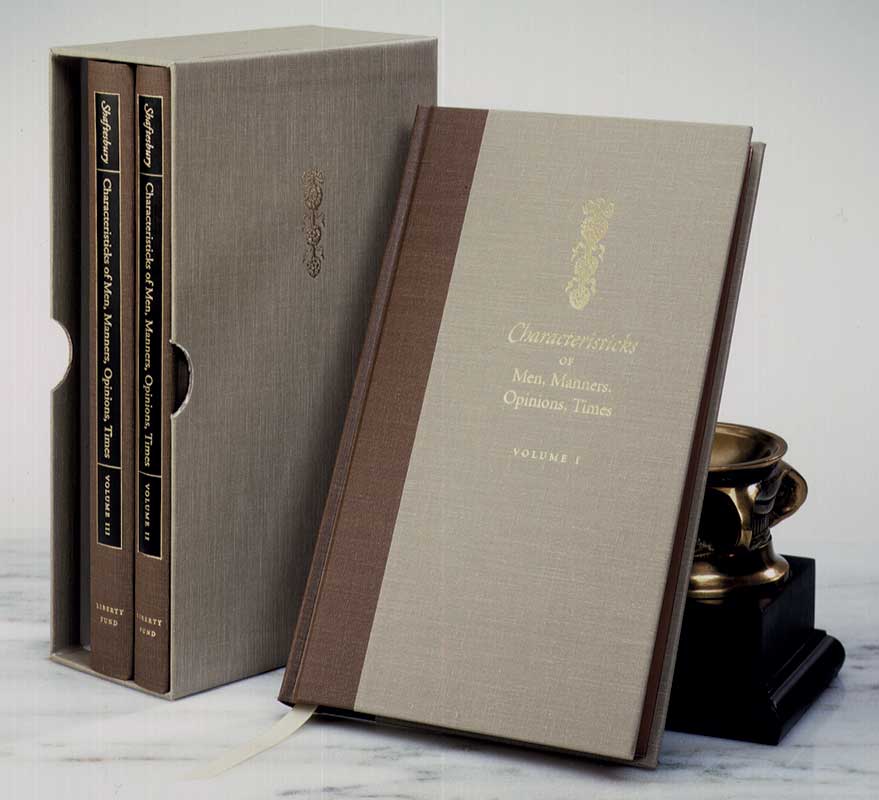
- 2010: Shaftesbury on the need for liberty to promote the liberal arts (1712)
- 2010: The State of New York declares that the people may “reassume” their delegated powers at any time they choose (1788)
- 2010: Georg Jellinek argues that Lafayette was one of the driving forces behind the French Declaration of the Rights of Man and of the Citizen (1789)
- 2010: Lord Acton on the destruction of the liberal Girondin group and the suicide of Condorcet during the French Revolution (1910)
- 2009: The Abbé de Mably argues with John Adams about the dangers of a “commercial elite” seizing control of the new Republic and using it to their own advantage (1785)
- 2009: Samuel Smiles on how an idle, thriftless, or drunken man can, and should, improve himself through self-help and not by means of the state (1859).
- 2009: John Adams thought he could see arbitrary power emerging in the American colonies and urged his countrymen to “nip it in the bud” before they lost all their liberties (1774)
- 2009: Edward Gibbon called the loss of independence and excessive obedience the "secret poison" which corrupted the Roman Empire (1776)
- 2009: Mercy Otis Warren asks why people are so willing to obey the government and answers that it is supineness, fear of resisting, and the long habit of obedience (1805)
- 2008: James Madison on the need for the “separation of powers” because “men are not angels,” Federalist 51 (1788)
- 2008: James Madison on the mischievous effects of mutable government in The
Federalist no. 62 (1788)
- 2007: Viscount Bryce reflects on how modern nation states which achieved their own freedom through struggle are not sympathetic to the similar struggles of other repressed peoples (1901)
- 2006: Catharine Macaulay supported the French Revolution because there were sound "public choice" reasons for not vesting supreme power in the hands of one’s social or economic "betters" (1790)
- 2006: Edward Gibbon wonders if Europe will avoid the same fate as the Roman Empire, collapse brought on as a result of prosperity, corruption, and military conquest (1776)
- 2006: J.S. Mill was convinced he was living in a time when he would experience an explosion of classical liberal reform because “the spirit of the age” had dramatically changed (1831)
- 2005: The Australian radical liberal Bruce Smith lays down some very strict rules which should govern the actions of any legislator (1887)
- 2005: William Emerson, in his oration to commemorate the Declaration of Independence, reminded his listeners of the “unconquerable sense of liberty” which Americans had (1802)
- 2005: Andrew Fletcher believed that too many people were deceived by the “ancient terms and outwards forms” of their government but had in fact lost their ancient liberties (1698)
- 2004: Bernhard Knollenberg on the Belief of many colonial Americans that Liberty was lost because the Leaders of the People had failed in their Duty (2003)
- 2004: Richard Price on the true Nature of Love of One’s Country (1789)
- 2004: George Washington on the Difference between Commercial and Political Relations with other Countries (1796)
20 April, 2009Read the full quote in context here. This year is the 150th anniversary of the publication of John Stuart Mill’s On Liberty (1859), one of the key texts in 19th century classical liberal thought. In the second paragraph of this work, Mill states that societies need a system of legal and political rights and constitutional checks and balances in order to prevent the stronger, the "innumerable vultures" and their allied "minor harpies", from oppressing ordinary people in a perpetual struggle between "Liberty and Authority":
To prevent the weaker members of the community from being preyed upon by innumerable vultures, it was needful that there should be an animal of prey stronger than the rest, commissioned to keep them down. But as the king of the vultures would be no less bent upon preying on the flock than any of the minor harpies, it was indispensable to be in a perpetual attitude of defence against his beak and claws. The aim, therefore, of patriots was to set limits to the power which the ruler should be suffered to exercise over the community; and this limitation was what they meant by liberty. It was attempted in two ways. First, by obtaining a recognition of certain immunities, called political liberties or rights, which it was to be regarded as a breach of duty in the ruler to infringe, and which, if he did infringe, specific resistance, or general rebellion, was held to be justifiable. A second, and generally a later expedient, was the establishment of constitutional checks, by which the consent of the community, or of a body of some sort, supposed to represent its interests, was made a necessary condition to some of the more important acts of the governing power.
The full passage from which this quotation was taken can be be viewed below (front page quote in bold):The struggle between Liberty and Authority is the most conspicuous feature in the portions of history with which we are earliest familiar, particularly in that of Greece, Rome, and England. But in old times this contest was between subjects, or some classes of subjects, and the aGovernmenta . By liberty, was meant protection against the tyranny of the political rulers. The rulers were conceived (except in some of the popular governments of Greece) as in a necessarily antagonistic position to the people whom they ruled. They consisted of a governing One, or a governing tribe or caste, who derived their authority from inheritance or conquest, who, at all events, did not hold it at the pleasure of the governed, and whose supremacy men did not venture, perhaps did not desire, to contest, whatever precautions might be taken against its oppressive exercise. Their power was regarded as necessary, but also as highly dangerous; as a weapon which they would attempt to use against their subjects, no less than against external enemies. To prevent the weaker members of the community from being preyed upon by innumerable vultures, it was needful that there should be an animal of prey stronger than the rest, commissioned to keep them down. But as the king of the vultures would be no less bent upon preying on the flock than any of the minor harpies, it was indispensable to be in a perpetual attitude of defence against his beak and claws. The aim, therefore, of patriots was to set limits to the power which the ruler should be suffered to exercise over the community; and this limitation was what they meant by liberty. It was attempted in two ways. First, by obtaining a recognition of certain immunities, called political liberties or rights, which it was to be regarded as a breach of duty in the ruler to infringe, and which, if he did infringe, specific resistance, or general rebellion, was held to be justifiable. A second, and generally a later expedient, was the establishment of constitutional checks, by which the consent of the community, or of a body of some sort, supposed to represent its interests, was made a necessary condition to some of the more important acts of the governing power. To the first of these modes of limitation, the ruling power, in most European countries, was compelled, more or less, to submit. It was not so with the second; and, to attain this, or when already in some degree possessed, to attain it more completely, became everywhere the principal object of the lovers of liberty. And so long as mankind were content to combat one enemy by another, and to be ruled by a master, on condition of being guaranteed more or less efficaciously against his tyranny, they did not carry their aspirations beyond this point.
[More works by John Stuart Mill (1806 – 1873)] |