|
We believe that the first written reference to the concept
of liberty is the ancient Sumerian cuneiform symbol "amagi" which Liberty Fund uses as its logo.
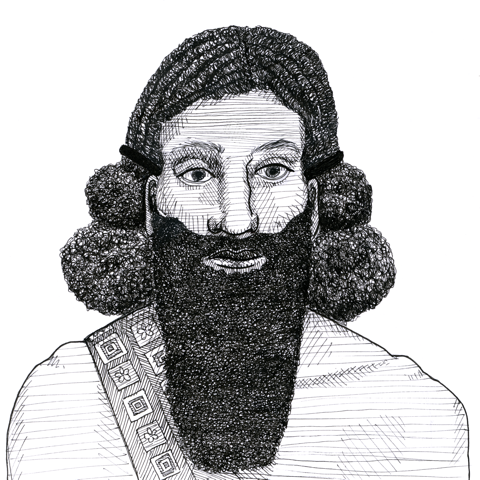
Urukagina, the leader of the
Sumerian city-state of Girsu/Lagash, led a popular movement that resulted in
the reform of the oppressive legal and governmental structure of Sumeria. The
oppressive conditions in the city before the reforms is described in the new
code preserved in cuneiform on tablets of the period: "From the borders
of Ningirsu to the sea, there was the tax collector." During his reign
(ca. 2350 B.C.) Urukagina implemented a sweeping set of laws that guaranteed
the rights of property owners, reformed the civil administration, and instituted
moral and social reforms. Urukagina banned both civil and ecclesiastical authorities
from seizing land and goods for payment, eliminated most of the state tax collectors,
and ended state involvement in matters such as divorce proceedings and perfume
making. He even returned land and other property his predecessors had seized
from the temple. He saw that reforms were enacted to eliminate the abuse of
the judicial process to extract money from citizens and took great pains to
ensure the public nature of legal proceedings.
In this important code is found the first written reference to the concept
of liberty (amagi or amargi, literally, "return to the
mother"), used in reference to the process of reform. The exact nature
of this term is not clear, but the idea that the reforms were to be a return
to the original social order decreed by the gods fits well with the translation.
Additional information: The translation of the inscription literally means “return to the mother,” but why this should be a reference to liberty has always been a matter of some interest. Subsequent work to Kramer’s History Begins at Sumer (1958) has shed further light on the context in which amar-gi was used. J. N. Postgate’s Early Mesopotamia. Society and Economy at the Dawn of History (1992), reveals that early Mesopotamians used the expression when referring to the freeing of one for debt. Early monarchs used indebtedness for taxes as a means of binding the people for service to the king. To release one back to one’s family was often literally to be returned to one’s mother. When Urukagina assumed power in the Lagash region, following a revolt over the massive increases in taxes, he released large segments of the population from such compulsory service. The entire reform was designated as “amar-gi,” meaning that they were at liberty to return home, but it also included elimination of many unpopular restrictions and the return of seized property.?
|